
Research and lived experience challenge stereotypes about gay relationships and make room for individual choices.
You know the stereotypes—gay men aren't interested in long-term, committed relationships. Or they can't sustain them. It's all about sex, the quickies, the one-night stands. But current research tells a very different story. Recent survey data shows that 92% of LGBTQ adults in same-sex relationships report their relationship is going at least fairly well, including 63% who say it is going very well. Nearly 600,000 same-sex couples have married since marriage equality became legal nationwide, and the vast majority say they married for love (93%), companionship (74%), and legal protections (75%), with many reporting that marriage improved their sense of safety and security (83%), life satisfaction (75%), and relationship stability (67%). Another stereotype bites the dust! (Or should, anyway.) It seems that we've been looking at it the wrong way around.
How stereotypes shape expectations
Stereotypes are used to oppress. Research suggests that LGBTQ+ individuals face health disparities linked to societal stigma, discrimination, and denial of their civil and human rights. They are often a reaction to fear. Even the rare complimentary ones—"Those people are very smart!"—are offensive because, just like the negative ones, they make assumptions about large groups of individuals. Both positive and negative stereotypes create expectations and attitudes that affect people's behavior toward the group in question, with stigma involving negative stereotypes and misconceptions surrounding LGBTQ individuals. In the case of gay people, stereotypes about their relationships belittle their humanity and their morals (and thereby justify hate and deprivation of their basic rights). But in reality, it may be a "chicken or the egg" situation of sorts. That is, did the relationship styles create the stereotype or did the social condemnation cause the relationship style?
If one is not allowed to engage in gay relationships because of societal and legal prohibitions, what other recourse is there but to keep them hidden? And if they are hidden from public view, how can anyone know they exist? How easy it is then to proclaim that they do not exist! Historical evidence supports this pattern. During Prohibition and earlier eras, LGBTQ+ individuals often gathered in hidden speakeasies and underground venues, creating communities that remained invisible to mainstream society. Then there are the great numbers of gay men who had to enter into an "acceptable" relationship—marriage to a woman—in order to maintain the illusion of heterosexuality. Society created a situation where this was barely a choice; anyone believed to be gay would have been subject to loss of employment, banishment from religious institutions, ostracization from family and friends, and violence. Sadly, in many places this is still true. The only chance these people had to express their true sexuality was in brief, clandestine encounters. We must ask: if gay had always been an accepted human variation, would those stereotypes have had the chance to form?
Find a Therapist for Relationships
Recognizing internalized stigma
The flip side of this is that when you are gay and grow up hearing lies about your relationships all the time, you may start to buy into them at a subconscious level. Research shows this internalized stigma can significantly impact mental health.
Internalised stigma or internalized homophobia refers to the process of voluntarily accepting social prejudices about the LGBTQ+ population and manifesting feelings of shame, self-doubt and low self-esteem. These do not stem from organic feelings but are a result of having exposed to the same societal views or pressures for so long that it becomes “internalized”. How might you recognize if the views or thoughts you are having represent internalised stigma? Here are some common themes:
- Persistent shame – Feeling a persistent sense that something is fundamentally wrong with you, often without being able to articulate exactly what or why.
- Denial and suppression – Telling yourself attraction is "just a phase," and that you will get over it. Finding yourself mentally pushing same-sex thoughts away, only to have them return more forcefully.
- Distancing from queer identity – Consciously avoiding LGBTQ+ spaces, media, or visibly queer people, even when privately drawn to them, to avoid self-confrontation or association.
- Sabotaging intimacy – Pulling yourself away from same-gender partners when relationships become real or visible, as though closeness with someone of the same gender feels dangerous or undeserved.
- Feeling undeserving of joy – Reaching positive milestones (coming out, a relationship, community) and feeling strangely flat or guilty rather than happy, as though good things aren't meant for you or something you should be guilty for.
What this can sometimes mean for gay couples is that they may have inhibitions towards displaying their love publicly, leading to confusion in relationships on whether their partner truly loves them. One might even push away a loving relationship due to internalised guilt and shame leading to heartbreak and dissatisfaction with their love lives.
The bisexual and transgender communities have the highest rates of mental health concerns within the LGBTQ+ population, with younger members of the LGBTQ+ community struggling the most with mental health concerns of all age groups. It is therefore important for young gay people to really think about whom they are as individuals and what they want for themselves, while being aware of how internalized stigma might show up in day to day experiences. Because today more than ever, there are options. Gay is "out." Gay people from all walks of life are speaking out about their sexual identity, which is reassuring and reflective of more growing acceptance. There are new laws being passed. Though it's worth noting that support has seen some fluctuation in recent years. While support for same-sex marriage dipped slightly to 67% in 2023 from a record high of 69% the year before, it remains significantly higher than it was a decade ago. In fact, for more and more of the public, gay is a nonissue. It is mainstream. But where there are options, one has to think about the choices.
Current research reveals the complexity of modern LGBTQ+ relationships. Studies show that cisgender sexual minority women are more likely than cisgender sexual minority men to engage in monogamous relationships, and the latter are more likely than the former to be in open relationships, with some research suggesting that lesbian women may have a greater adhesion to heteronormative gender roles prescribing monogamy, marriage, and family than do gay men. This diversity in relationship structures reflects the freedom to choose what works best for each individual and couple.
Choosing what you want for yourself
Choice is freedom and that's a great thing. But with choice comes the need for self-examination and responsibility. You can't just be along for the ride. YOU are in the driver's seat now. What do you want for yourself? Do you enjoy the single life? Is marriage what you've always dreamed of? Is it something you want, just not right now? How about parenthood? Do you understand that dating is a process of learning about one another? Do you know what you want out of a relationship and how to have a healthy one? These are all things you need to ask yourself, but may not have been able to realistically consider until recently.
Today's data shows the reality of these expanded opportunities. The largest share of LGBTQ+ adults — 51.1% — report that they are single or have never married, reflecting that young adults are disproportionately likely to identify as lesbian, gay, bisexual, transgender or something other than heterosexual, compared to 23.7% of all U.S. adults who have never married. Overall, 14.4% of all LGBTQ+ adults are in a cohabiting relationship with a same-sex partner, including 8.0% who are married and 6.4% who are living with a domestic partner.
In the past, other people labeled the relationships of the gay community based on prejudices and discrimination. The gay rights movement has, and continues to, open up doors so that each individual can decide what is meaningful and chart the course of his or her own life. While challenges remain, particularly for LGBTQ+ youth, most LGBTQ+ individuals are incredibly resilient and will thrive in the face of adversity, with the help of supportive families, communities, and peers.
If you're navigating questions about your sexual identity or relationship goals, consider speaking with an LGBTQ+-affirming therapist who can provide support tailored to your unique experiences and needs.
Medical Disclaimer: The information in this article is not intended as a substitute for professional medical advice, diagnosis, or treatment. Always seek the advice of your physician or other qualified health provider with any questions you may have regarding a medical condition.
References
Community Marketing and Insights & UCLA Williams Institute. (2024). Perspectives on marriage equality in 2024. Williams Institute. https://williamsinstitute.law.ucla.edu/wp-content/uploads/Perspectives-Marriage-Equality-Jun-2024.pdf
Pew Research Center. (2025). Rising number of U.S. households are headed by married same-sex couples. https://www.pewresearch.org/wp-content/uploads/sites/20/2025/06/ST_2025.6.12_same-sex-couples_report.pdf
Mental Health America. (2025). LGBTQ+ communities and mental health. https://mhanational.org/resources/lgbtq-communities-and-mental-health/
Cannas Aghedu, F., Blais, M., & Séguin, L. J. (2024). Romantic relationship configurations and their correlates among LGBTQ+ persons: A latent class analysis. PLoS One, 19(9), e0309954. https://pmc.ncbi.nlm.nih.gov/articles/PMC11398688/
Lavietes, M. (2024, March 12). Support for same-sex marriage and LGBTQ protections dipped in 2023, survey shows. NBC News. https://www.nbcnews.com/news/amp/rcna142751
Williams Institute. (2025). Nearly 600,000 same-sex couples have married since Obergefell v. Hodges. https://williamsinstitute.law.ucla.edu/press/ss-marriage-data-media-alert/
Gallup. (2025). Share of married LGBTQ+ Americans down slightly from peak. https://news.gallup.com/poll/691199/share-married-lgbtq-americans-down-slightly-peak.aspx
History Channel. (2025). How gay culture blossomed during the roaring twenties. https://www.history.com/articles/gay-culture-roaring-twenties-prohibition
Arcadia Publishing. (2024). The hidden and heroic history of LGBTQ+ America: From shadows to visibility. https://www.arcadiapublishing.com/blogs/news/the-hidden-and-heroic-history-of-lgbtq-america-from-shadows-to-visibility
Saunders, C. L. (2024). Mental health challenges within the LGBTQ community: A societal imperative. Journal of Family Medicine and Primary Care, 13(9), 3529-3535. https://pmc.ncbi.nlm.nih.gov/articles/PMC11504819/
Find support for your relationships
Explore the GoodTherapy directory to find support that fits your needs.
Find a therapist I recently agreed to do part of an online course in LGBT studies. I’m doing the “Bâ€: bisexuality. They had a hard time finding someone to do it; no one thought they could fill the time with enough info on the subject! After all, we still live in a world where a lot of people think there is “no such thing†as bisexuality.
The more I dig, the more I feel that understanding bisexuality is the key to understanding a LOT of things about sexual orientation, behavior, attractions, and gender itself. Here are 10 things I’ve learned so far:
[fat_widget_sex_right]
- There are more bisexual people than gay and lesbian people. That’s right. Not only does bisexuality exist, those who self-label as bi outnumber those who identify as gay or lesbian. A 2011 study in The Journal of Sexual Medicine found that 3.1% of respondents in a national survey said they were bi and only 2.5% lesbian or gay. Other studies have found similar results.
- Younger people embrace the identity more than older people. Lisa Diamond and Ritch Savin-Williams’ research shows that people under 40, and especially those under 30, think it’s no big deal to acknowledge attractions to both men and women. But then again, young people tend to think marriage equality is a no-brainer, too.
- Women may be more bisexual than men—or they just accept it more. About 15 years ago, Meredith Chivers did lab research showing that women—regardless of their sexual identity—respond more to bisexual erotica than men. And recent analyses of national youth surveys by Nanette Gartrell show about 15% of adolescent girls have had a same-sex experience, not just attractions.
- But men may be catching up. Savin-Williams is doing research on “mostly heterosexual†men—those with a little bit of same-sex attraction and behavior. There are a LOT of them. And Diamond, once an advocate of the position that women were more bisexual and fluid than men, recently published a paper called “I Was Wrong—Men Are Pretty Darn Fluid Too.â€
- Bisexuals threaten heterosexuals because they “blur the line.†In case you haven’t noticed, many heterosexuals still fear and reject gay people. They want to distance from same-sex attraction in every way. If the world is divided neatly into two “campsâ€â€”those who are 100% heterosexual and those 100% gay—that’s easy. But if there is a third group, people who are attracted to both men and women, it’s harder to draw the line and make that separation.
- Bisexuals threaten gay people because they represent the ability to hide behind “heterosexual privilege.†Lesbians and gay men often fear they cannot compete with heterosexual privilege in a relationship, and many suspect that anyone who self-labels as “bisexual†will eventually find the lure of a “normal†life too tempting. Some see bisexuals as potential traitors—and heartbreakers.
- This double “biphobia†leaves bisexuals without a community. The “B†in LGBT is only grudgingly accepted. Bisexuals would normally seek solace from their “queer†tribe—but there is sometimes only marginal acceptance by the tribe.
- There is a tremendous pressure to “lie†if you are bisexual. Only 23% of self-identified bisexuals tell others. It’s easier to just let people assume that if you are with an opposite-sex partner you are straight and if you are with a same sex partner you are gay.
- This leads to “bi-invisibility.†“Biphobia†is the irrational fear of bisexuality. “Bi-invisibility†is the denial that bisexuals exist and being blind to the existence of bisexuality. Until recently, this was argued in the scientific literature about bisexuality, and it is the most common public misconception about bisexuality. But bisexuals themselves may unwittingly help to maintain bi-invisibility by not “coming out.†After all, arguably the single most important thing that advanced gay rights in the past 40 years was gays and lesbians becoming more public.
- Bi-invisibility is also maintained by “bi-erasure.†Bi-erasure is the cultural tendency to refuse to acknowledge bisexuals even when they proclaim their bisexuality. How many people think Rock Hudson gay and Marlon Brando straight? Both talked openly about attractions and sexual experiences with men as well as women. Larry King’s fumbling interview of Anna Paquin is not unusual. For reasons that mystify, many people have such a hard time wrapping their heads around the idea that someone could be attracted to both genders—or that gender might not matter—that they just erase the possibility from their worlds!
 All children want to know about their origins. As their minds develop and their understanding of the world grows, their questions go deeper. Toddlers ask where babies come from; teenagers want to know where they came from. It is part of their identity development. For gay parents (and all adoptive and foster parents), the answers to those questions can be complicated.
Gay parents do not become parents in the usual way (unless they had their children while in a heterosexual relationship). They may use donor sperm or eggs; lesbian mothers may have each carried a child, or all the children may have been carried by one of them; gay male parents may use sperm from both, or just one of the men. And with both gay men and lesbians, they may have used either strangers or people known to them during the reproductive process. Yeah, complicated. So what DO you tell the kids when they ask questions?
[fat_widget_right]
The two most important factors in responding to any questions children have are (1) understanding their age/developmental level and (2) sticking to the truth. (I am reminded of the old joke in which 7-year-old Jimmy asks his dad where he came from. Caught off guard, Dad awkwardly tells Jimmy about the birds and the bees. After which Jimmy replies, “Oh. Davey came from Ohio.â€)
Very young children require only a few words to satisfy their curiosity. When your 4-year-old asks where babies come from, they simply want, “They grow inside a woman’s body,†not a sex education lecture. Later, at around seven to 10 years of age, their expanding minds may start wondering how that baby got in the woman’s body. Even then, they are usually satisfied with, “The man’s seed started it growing there.†It is not usually till the preteen years when kids get curious about sex. So, don’t overwhelm your child with what you think they need to know or what you assume they want to know. If you’re not sure what they are looking for, get clarification. Then give them the simplest answers and if they want to know more, they’ll ask.
Children also want to know about their personal story. They like to see younger versions of themselves in the family photo album. Depending on the family, they may also see pictures of the orphanage they were adopted from, their pregnant surrogate, or their biological parents. This does not “confuse†young children—whatever they grow up with is normal to them. Even when they start school, children accept differences because the adults in their world do. In fact, children have to be taught by older kids or adults that differences are “wrong.†It is then that they may start questioning their origins or the make-up of their family.
It is best to know beforehand how you will respond to your children’s questions so when they come to you, you can be calm and assured. Your children will pick up on your feelings; if you are uncomfortable, they will sense that something is wrong or that this is a taboo subject. They may even transfer that awkwardness to themselves, thinking there is something wrong with them.
Many parents, both straight and gay, avoid the truth in talking to their children because they are not comfortable with certain subjects, or they think there are things the child is better off not knowing. While every good parent wants to protect his or her child, keeping secrets makes it seem like there is something shameful that needs to be hidden. And it is virtually impossible to keep secrets in a family forever. At some point, someone is going to let something slip. Or the adult child may need genetic information, or may find out through testing that he or she is not biologically related to one or both parents. There are few things as destructive to a parent-child relationship as betrayal.
Children can handle almost anything if they are given the information by someone they trust, in a positive way, in words they can understand. You and your partner or spouse should plan for this ahead of time. Sharing the story of how you became a family can be a special bonding experience.
 With gay rights making big advances, more gay couples are coming forth to dismantle the stereotype that their relationships are superficial and brief. The truth is they can be just as committed and loving as heterosexual ones. They can also have the same types of conflict: family, finances, household chores, parenting, and so on. Any two people trying to live together are going to run into disagreements. There are a few things, however, that are unique to same-sex couples.
One of the most difficult aspects for same-sex couples can be keeping a boundary between lovers and friends. In a heterosexual relationship, the boundaries are clearly marked by sex: A man may spend a “night out with the boys†without engendering feelings of insecurity in his partner. Likewise, a woman could go to a bridal shower with no concerns on the part of her husband. Should he want to have dinner with an ex-girlfriend, however, or if her workout trainer is a man, there may be some tension.
In gay relationships, there is no such division—most friends and exes are of the same sex as the couple. They also tend to share the same friendship circle. It would be weird, therefore, if one half of the couple socialized with their friends while the other stayed home. In fact, exes are often part of the friendship circle, making it even more awkward.
There is no one way to handle this situation, but as it is healthy for every couple to spend some time apart, it would be wise to agree to some rules at the beginning of the relationship. For example, if one partner was friends with “Kelly†long before the couple got together, it might be agreed that occasional get-togethers with just the two of them would be OK. Or maybe the rule is no attending parties alone if an ex is going to be there. Better still, discuss underlying fears and where they are coming from long before the situation arises. Remember, though, that it is not useful to get angry or make light of your partner’s fears. Defensiveness tends to exacerbate the fear. Make sure they feel heard, and that you respect what they are saying before you start reassuring. It goes without saying—but I’m going to say it anyway—you shouldn’t add fuel to the fire by staying out until early morning or talking with your friend several times a day.
Another issue unique to same-sex couples is that each partner may be at a different level of comfort with being “out.†One partner may be comfortable with holding hands or kissing in public. The other may not be there yet, or may have more fears about negative repercussions. In this scenario, it is good to remember that each person is entitled to develop in his/her own way. Pushing your partner to be at your level is unfair and insensitive. If it is a major area of conflict, it might be helpful to see a therapist to gain understanding of each other’s viewpoints and find a place of compromise.
The above issue can be particularly tough when it comes to family. Many stories have been written about in-law troubles, but in same-sex couples there is an additional layer of conflict. It may be that one partner is not yet out to his or her parents, which puts the other in an awkward position. Or perhaps they are out, but the parents are not accepting. Again, very uncomfortable. Does she go to dinner there alone? Does he refuse to see his family if they don’t accept his partner? Because each person, couple, and situation is unique, the answers have to be worked out by each individual couple. However, there are better ways to address this than to make your partner choose between his/her parents and you.
While it is hard not to feel hurt when your partner seems to be taking his or her parents’ side, try to remember that your boyfriend or girlfriend probably has imperfect parents just like everyone else and that there are issues leftover from childhood. Also, everyone feels the family bond (or lack thereof) differently. I would say that attitude is a big factor here: Is your partner willing to admit that there may need to be some changes made, or does he or she refuse to even discuss the matter? Does he or she acknowledge your feelings, or does he or she get defensive? Does he or she rationalize and say, “We only have to see them twice a year� If you really feel you are being left out in the cold, there may be more going wrong in the relationship than just in-laws and you might have to take a closer look at the whole picture.
When it comes to relationships, a certain amount of conflict is normal. How you handle it, however, is what makes the difference between a healthy, lasting relationship and one that ends bitterly. Being aware of potential issues, and talking them over before they get too heated, is one way to keep trouble to a minimum.
Thanks for your question. It sounds like there are a tangle of conflicts here and I empathize with what I think I hear in your question, which is that you are having feelings which are somehow “wrong†to have, which I imagine is very uncomfortable, even painful. Holding a secret you feel you can’t share with your spouse is often a tough place to be.
In fact, I almost wonder what might happen to your curiosity about men if your spouse heard and accepted this about yourself—or if somehow these feelings became less dangerous and more human. How do you feel about this attraction? You say, “I don’t want to feel like I can’t be myself when I am with her.†What about yourself, aside from the literal idea of sex with a man, feels “not OK†when you’re with her? Is there some ideal sense of manhood you’re trying to fulfill? Does this attraction for men symbolize something that is unsafe in the marriage or your social/cultural circle? Of course as a society in general, we are given horrifically limited identity choices for manhood. Any whiff of “sensitivity†can bring out the gay jokes, as if anything other than James Bond were unacceptable. (Of course, if you’ve seen the latest Bond, you know even he has some interesting inclinations!)
The fact is, our sexuality falls on a spectrum and some of us develop attractions for people of both genders. It’s normal to have fantasies of what sex with the same gender is like, at least occasionally, and some have them more consciously than others—and the very idea is more accepted in some cultures than others. (In ancient Greece, there was no eros more “noble†than love between men.) I’m not saying it’s always a “choice,†but for some of us it is; some folks are clearly attracted to a particular gender, while 3%-5% of us are more in the middle of the spectrum and attracted to both. In the latter case, it’s important to note that we find ourselves attracted to people rather than “men†(or women). For instance, is there a particular man you’ve found “hot†or fantasized about? (Our bodies are pretty clear about attraction.) Perhaps your curiosity about men carries some kind of psychological symbolism—i.e., that you’re hoping for greater emotional freedom and acceptance of “unmanly†aspects of you, especially if you feel pressured to be “strong†or “tough†(like your wife, it sounds like) in a conservative environment. If your desire for men were accepted, you might have wider emotional latitude. Or perhaps the idea of surrendering that strength in order to feel protected is part of the appeal; sometimes it’s nice for us guys to take off the Superman cape and let someone else drive, especially if we’ve lacked close male relationships.
Because us guys are so often prohibited from being vulnerable or “emotionalâ€â€”which we are; in spite of what culture says about Mars vs. Venus, we’re just emotional in different ways—we can sometimes long for more intimate but not necessarily physical relationships with men, though sometimes that longing is physical; or we have sexual desires that contain emotional longings for connection. These are chicken-and-egg questions that are worthy of further reflection, I think, with the understanding that this might be frightening in the cultural context (and I live in liberal Los Angeles, so it’s easy for me to say) but which are nothing but human at the end of the day. Have you considered discussing this with a therapist?
As awkward and shameful as it might feel, each of us is unique in who or what we find desirable, and while sexual desire is often mysterious or even frightening, when you boil it down it’s related to longings for love, affection, and safety. In a way, all the sturm and drang about sexuality is a red herring and reflect our neurotic cultural bias; imagine if you substituted “other women†for “men†in your question. I find it admirable that you’re not willing to ignore something so vital in your psyche and are searching for answers, which to me indicates courage and integrity. Something tells me there’s a conversation that needs to happen between you and your wife (perhaps with the help of a couples counselor), when the time is right. My sense is that you have a longing to feel safer and less guarded where you live, in a psychological, emotional, and possibly sexual sense. There’s certainly no shame in any of that. You might want to do some research on bisexuality. There are some excellent online resources for people experiencing what you are.
After some sifting, it might become clearer what it is you’re needing from your wife, whether that’s a more emotionally flexible relationship, or even the opportunity to explore this topic in an open, mutually respectful way. Sometimes deciding between commitment and sexual freedom/ experimentation, regardless of gender, is a difficult choice, especially for men who marry young, as you have. And like it or not, our psyches, sexuality, and selfhood continue to evolve over time; thanks for writing, and bravo for having the courage of emotional self-assertion.
Respectfully,
Darren
For decades, research addressing the mental health of gay men has grouped bisexual and gay men together. This is a disservice to the LGBTQ community, and to bisexual men in particular. There are significant differences in behavior, identity, and attractions between gay and bisexual men. While gay men are attracted to other men and identify as homosexual, bisexual men can be attracted to either sex. And although it has been shown that disclosure of sexuality is beneficial to mental health for gay and bisexual men, bisexual men are more likely to conceal their sexuality than gay men. Therefore, they report lower levels of psychological well-being. This could be due to the fact that many bisexual men are in committed relationships to women and are torn between their desire for that relationship and their attraction to men. Or perhaps bisexual men are at war with their own homophobia.
To explore why bisexual men do not reveal their sexuality as often as gay men, Eric W. Schrimshaw of the Department of Sociomedical Sciences at the Mailman School of Public Health at Columbia University in New York recently conducted an online survey of 203 bisexual men. He asked them about their levels of social support, mental health, internalized homophobia, and general demographics. He found that the men with the highest incomes were most likely to conceal their sexuality. This was also the case for men in committed relationships with women or those who identified as heterosexual. Concealment was also associated with more frequent female sexual encounters for bisexual men. Overall, the men that concealed their sexuality had poorer mental health than those who disclosed their sexuality.
Schrimshaw believes that these findings underscore the delicate nature of sexuality for bisexual men. Internalizing homophobic beliefs and lack of emotional support may be more dangerous to the psychological well-being of bisexual men than concealment alone. However, concealment can indirectly affect those domains. Although disclosure appears to be beneficial for gay men, this may not always be the case for bisexual men. Rather than interventions that focus on encouraging men to disclose their bisexuality, “Interventions addressing concerns about concealment, emotional support, and internalized homophobia may be more beneficial for increasing the mental health of bisexual men,†said Schrimshaw.
Reference:
Schrimshaw, E. W., Siegel, K., Downing, M. J., Jr., and Parsons, J. T. (2012). Disclosure and concealment of sexual orientation and the mental health of non-gay-identified, behaviorally bisexual men. Journal of Consulting and Clinical Psychology. Advance online publication. doi: 10.1037/a0031272
 After decades of intense and relentless criticism by advocacy groups, gender identity disorder will finally disappear from the fifth edition of the Diagnostic and Statistical Manual of Mental Disorders. Many transgender and gender nonconforming individuals have been diagnosed with gender identity disorder, but this diagnosis can contribute to the pathologization of gender nonconformity–which is not a mental health condition. Gender dysphoria, the diagnosis replacing GID, attempts to reduce stigma and prevent pathologization by focusing on the incongruence between an individual’s actual gender and the gender assigned at birth.
Gender Identity Disorder vs. Gender Dysphoria
The American Psychological Association has incorporated a number of significant changes into the latest revision of the DSM to differentiate gender dysphoria from the previous diagnosis of GID. Some of the diagnostic criteria remain the same, but while the diagnostic criteria for GID placed more emphasis on an individual’s behavior and outward manifestations of gender, gender dysphoria primarily takes into account the sense of incongruence between the gender assigned at birth and actual gender identity, and any associated feelings of distress, whether these feelings occur as a result of body dysphoria or social dysphoria.
Under diagnostic criteria for GID, a person assigned female at birth who engaged in stereotypically masculine behavior or dressed in stereotypically masculine clothes met some of the criteria for GID. However, the person in this scenario would not be diagnosed with gender dysphoria without also experiencing a sense of incongruence between the gender assigned at birth and the gender actually identified with. [fat_widget_right]
Reasons for the Changes
As people become increasingly aware of gender-related issues, there has been a strong push to avoid pathologizing those who are transgender or gender nonconforming. Many mental health professionals and transgender rights advocates have pushed to remove any form of gender nonconformity as a mental health diagnosis, but others argue there are benefits to leaving some form of diagnosis in the DSM.Â
Individuals who have a gender identity that differs from the gender assigned at birth may choose to pursue hormone treatment or gender confirmation surgery to align their physical characteristics with their gender. Doctors who prescribe hormones or perform gender confirmation surgery may not do so without an associated diagnosis from a mental health professional, and many insurance companies will not cover any part of the surgery if the individual seeking surgery or hormones has not been diagnosed. Thus, removing the diagnosis from the DSM entirely may effectively bar a number of people who wish to physically transition from doing so.
Gender Dysphoria as a Diagnosis
Many transgender rights activists have pointed out the potential harm in diagnosing people with a mental health condition based on gender identity.  The inclusion of gender dysphoria as a diagnosis aims to reduce stigma and harm by removing some of the emphasis on gender nonconformity and providing a diagnostic term that instead places more focus on the ways gender incongruence can impact an individual. Transgender and gender nonconforming individuals diagnosed with gender dysphoria may experience feelings of distress or discomfort with certain of their physical characteristics, feel as if they are in the wrong body, or experience distress when others misgender them or call them by the wrong name.
The DSM-5 will give gender dysphoria its own chapter, in recognition of the fact that it is not a sexual dysfunction, a paraphilic disorder, or a mental disorder of any kind.
Some critics, however, believe the new diagnosis does not go far enough to reduce stigma or the view of gender nonconformity as a mental health condition. Diagnostic criteria still use phrasing such as “desire to be of the other gender/some alternative gender” and largely emphasizes “thinking” or “feeling” like “the other gender,” which may not accurately reflect the knowledge transgender individuals have of their true gender and may also reinforce the false concept of a gender binary. However, the DSM-5 does include some language supporting the broader, now widely upheld idea of a gender spectrum.
Though the new diagnosis of gender dysphoria may not completely eliminate stigma toward transgender individuals, this change is largely considered to be a significant improvement over the diagnosis of GID and a positive step forward in health care for those who are of a different gender than the one assigned at birth and who may experience distress as a result.
References:
- Beredjick, C. (n.d.). DSM-V to rename gender identity disorder gender dysphoria. Advocate. Retrieved from http://www.advocate.com/politics/transgender/2012/07/23/dsm-replaces-gender-identity-disorder-gender-dysphoria
- Decuypere, C., Knudson, G., & Bockting, W. (n.d.). Response of the World Professional Association for Transgender Health to the proposed DSM-5 criteria for gender incongruence [.PDF]. World Professional Association for Transgender Health.
- Lowder, J. B. (n.d.). Being transgender is no longer a disorder. Slate Magazine. Retrieved from http://www.slate.com/articles/health_and_science/medical_examiner/2012/12/dsm_revision_and_sexual_identity_gender_identity_disorder_replaced_by_gender.html
- Winters, K. (n.d.). The proposed gender dysphoria diagnosis in the DSM-5. GID Reform Weblog by Kelley Winters. Retrieved from http://gidreform.wordpress.com/2011/06/07/the-proposed-gender-dysphoria-diagnosis-in-the-dsm-5
 How many times have you found yourself in the situation of being worried or anxious about sharing a part of yourself with others? Too often we’re forced to choose one part of ourselves that we want to share over another part that might be equally as important. This can be extreme or subtle.
For example, teenagers who are both gay and Christian might feel like they can’t be both at the same time. These conflicting identities create a bind for them. At church the young person might be given a very direct message that being gay is wrong. For these teens they know that if they want to celebrate their Christianity with their community, they need to pretend to be straight. Gay community can be equally as complicated. After years of oppression from churches many people who are gay, lesbian, bisexual, transgender, or queer have struggled with Christianity. In this situation these teens might not feel able to express their strong religious beliefs within the gay community. For them, there is no place where they feel totally accepted, totally themselves. This example of split identities is very clear; however, sometimes the ways in which we’re forced to hide parts of ourselves is much more subtle.
In my work, I frequently find men who are struggling with a conflict of identity around gender and gender role. What happens when a straight man has interests or beliefs that are labeled as feminine? For example, if he doesn’t want to fight or he prefers conversations with women over watching sports with men. In our culture there is an assumption that men are going to act masculine. Often men are forced to hide parts of their identity that are not seen as masculine enough. This identity bind is much more subtle but still painful.
We face situations like these every day. Our identities have many facets including our ethnicity, race, religion, and sexual orientation as well as other ways we define ourselves, such as pacifist, good listener, or caregiver. Each of us has parts of our identities that we feel comfortable sharing with strangers and other parts that we only want to share with friends. There are things we are proud of and things we are ashamed of. Our identities are multidimensional; they have many layers and many meanings. Sometimes these identities are hierarchical, and one identity may be more important than all of the others. Understanding what our own multidimensional identity looks like can help us in those moments when not sharing our full self makes us feel invisible.
How do you introduce yourself to someone new after you tell them your name? In the United States we often use our professions to describe who we are to other people, “I’m a teacher/lawyer/electrician/therapist/writer.†As a culture we put a lot of value on employment and jobs, so much that sometimes our jobs become our identities. If you could describe yourself to a stranger as something other than your occupation, what would it be? Maybe it would be a description of an important relationship, such as “I’m a dad/mom/sister/uncle/grandma.†These are only two ways in which we might identify ourselves.
Take a moment and list the first five of your identities that you can think of. What made the top five? Are you surprised at any of the ones that are there? Are there any identities missing that you wish were on that top five list? And are there any identities on your list that you have felt you need to hide?
Being proud of ourselves is often much harder than it sounds. We live in a world filled with expectations, some spoken and some unspoken. But just because a part of our identity can’t be seen does not mean that it’s not there. It does mean that you might have to work a little bit harder to give it it’s time in the sun—to find a safe space to share the parts of you that feel invisible. Finding these spaces is an important step towards integrating our identities and feeling whole.
Related articles:
Gender Rules: How Does That Make You Feel?
Learning How to Support Gay Students
The Tiger Hunter
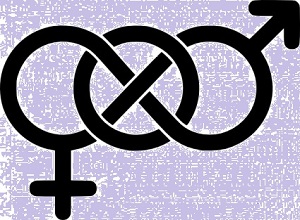 The only queer people are those who don’t love anybody. – Rita Mae Brown
Queer is a sexual identity that can be both a place of great pride and one of pain.
The term itself is a reclaimed one: Queer was once widely used—and is sometimes still used—as a slur against lesbian, gay, and bisexual people. Many people still view the term as derogatory and do not choose to use it. To many others, it is an inclusive term that grants the community power in its reclamation of the word.
Though “queer” was once intended to hurt those who now choose to use the term as an identifier, this word has become for many a word full of promise and hope. For some, it is the best way they can authentically describe their personal identity.
Queer is an umbrella term that describes sexual identity. The sexual orientation, sexual behavior, and sexual identity (OBI) model provides a way to talk about sexual identities with more accuracy (Cook & Pawlowski, 1991). In the OBI model, each of these concepts is different and separate from the others. Sexual orientation describes a person’s sexual or romantic attraction to another person. It’s not about behavior. It’s about the experience of attraction itself. Sexual behavior is used to describe the physical act of sexual activity. Sexual identity describes the way people identify themselves. Identity is personal; it’s something that each person can only decide for themselves. Gay, lesbian, bisexual, straight, and queer are all sexual identities (though there are many others). [fat_widget_right]
The OBI model provides a way to look at how these three pieces of ourselves interact. Typically it’s assumed that orientation, behavior, and identity are the same. For example, there’s an assumption that a man who identifies as gay is attracted only to men and participates in sexual behavior only with men. However, real life is much more complicated, and there is no “right” way for a person’s orientation, behavior, and identity to line up. For example, a woman might be attracted to both men and women, participate in sexual behavior with only men, and identity as bisexual.
The way we typically describe sexual identity is dependent on gender. For example, if a man says that he is straight, he is stating that he identifies as being attracted to women. Straight, gay, lesbian, and bisexual are categorical markers that designate a person’s gender and the gender they are attracted to. Typically, lesbian describes a woman who is attracted to other women, gay describes a man who is attracted to other men, straight describes a man attracted to women or a woman attracted to men, and bisexual describes a person attracted to members of their gender and of the “opposite” gender.
But what happens when someone who identifies as neither a man nor a woman? As both a man and a woman? As a feminine man or a masculine woman? What is the sexual orientation of someone who is attracted to people of any/all genders?
“I know I’m not a man…and I’ve come to the conclusion that I’m probably not a woman either. The trouble is, we’re living in a world that insists we be one or the other.” –Kate Bornstein
In the book Gender Outlaw: On Men, Women, and the Rest of Us, author Kate Bornstein lays out how a binary gender system, where being a man or being a woman are the only two choices, can be limiting. A person’s biological sex does not determine that person’s gender. Biological sex is the combination of hormones, chromosomes, and gonads a person is born with. Gender identity, however, describes a person’s internal sense of being a man, woman, neither, both, or other gender—it’s not based on the physical body but on how someone feels inside.
For many people, gender identity and biological sex seem interchangeable—A person’s sex as determined at birth is equivalent to their gender identity. But sex and gender are separate concepts and can line up in many different ways.
Transgender is one term that can be used to describe the experience of identifying with a gender that is different from the one that was assigned at birth. People who are transgender have discovered that their gender identity differs from their biological sex. Their true identity might be male, female, neither, or both. They might have a different gender expression entirely. Cross-cultural and historical views of gender suggest gender variance is a normal variation in human expression.
Gender identity and sexual identity are not the same thing, though we often treat them like they are. For example, a person can be a woman (gender identity) and be straight (sexual identity). Or she could be a woman (gender identity) and be a lesbian (sexual identity). Transgender describes gender, not sexual orientation. Trans people, no matter their gender, might identify as straight, gay, lesbian, bisexual, or queer (sexual identities).
To me, being queer isn’t who you’re sleeping with; it’s just an idea that sexuality isn’t gender-based, that it’s love-based.
—Ani DiFranco, Entertainment Weekly, May 2, 1997
Queer, as a sexual identity, is notably different than gay, lesbian, bisexual, and straight because it does not depend on gender. As an identity, the term queer has the flexibility to be inclusive of all people, not just those who identify as men and women. It describes someone whose identity is not heterosexual, but who may not fit into the other available gendered sexual identity categories.
If we look back at the OBI model, queer can be used to describe the interaction between orientation, behavior, and identity for many people who find their experiences much more complex than the terms gay, lesbian, straight, or bisexual allow for. While once a term of hatred, “queer” offers a range of possibilities today.
References:
- Bornstein, K. (1994). Gender outlaw: On men, women and the rest of us. New York: Routledge.
- Cook, A. T., & Pawlowski, W. (1991). Issue paper: Youth and homosexuality. The Respect All Youth Project, PFLAG.
“Gay and bisexual men experience numerous negative health conditions, including high rates of mental health problems,†said Beth N. Fischgrund of the Department of Psychiatry & Behavioral Sciences at Northwestern University, and lead author of a new study examining masculinity and mental health in gay and bisexual men. “Empirical studies show that a strong adherence to masculine norms is correlated with poor health outcomes, such as mental health problems and risky sexual behaviors.†National studies have shown that gay men are nearly twice as likely to suffer from depression and anxiety as heterosexual men, and that suicide rates for these men are nearly double those of other men.
The way gay and bisexual men perceive their masculinity has a significant impact on mental health. “Society’s messages about sexuality are not the only cultural attitudes that sexual minority men are confronted with; cultural attitudes also delineate what it means to be a man,†said Fischgrund. She added that some men may exhibit hyper-masculine behaviors when they feel their masculinity is being threatened. “Gay men who endorse hyper-masculine norms might then experience identity incongruence when they are presented with general society’s norms that differ and contradict their own. In these situations, the more integral the hyper-masculine norms are to a man’s identity, the more psychological distress he may experience.â€
For her study, Fischgrund recruited 311 gay and bisexual men, nearly a third of which reported an HIV positive status. “Among these gay and bisexual men, those who adhered to norms that incorporate an interpersonal aspect of masculinity (i.e., conceptions of masculinity as social behavior or as sexual  behavior) endorsed higher levels of mental health distress than did men who adhered to norms that focus on the intrapersonal aspects of masculinity (i.e., conceptions of masculinity as physical appearance),†said Fischgrund. “Additionally, men who did not know their HIV status endorsed higher levels of depression.†She emphasized the importance of her findings. “Speciï¬cally, designing programs that center on altering the social and sexual masculine norms within the gay male community are needed to decrease the mental health burden of gay and bisexual men, which has been shown to be associated with HIV risky behaviors.â€
Reference:
Fischgrund, B. N., Halkitis, P. N., & Carroll, R. A. (2011, October 24). Conceptions of Hypermasculinity and Mental Health States in Gay and Bisexual Men. Psychology of Men & Masculinity. Advance online publication. doi: 10.1037/a0024836
Lesbian, gay and bisexual (LGB) clients may form better alliances with therapists who have similar sexual orientations, according to a new study. This new study done by researchers at the Graduate School of Education at Fordham University examined gay and bisexual men in therapy who had therapists of the same sexual orientation. Trends found in the research may be applicable to the LGB community at large. Thomas I. Stracuzzi, lead author of the study, said that when LGB clients share the same sexual orientation with their therapists, they may achieve better treatment outcomes because the alliance developed between the client and therapist begins with identification and trust. Stracuzzi said, “From this perspective, LGB counselors may be more likely than their heterosexual colleagues to have the knowledge and attitudes associated with successful clinical work with LGB clients and the possibility that LGB clients may fare best with counselors who are LGB or are perceived to be LGB.†Additionally, some experts believe that cultural diversity, including universal-diverse orientation (UDO), self-reported or perceived, provides a common platform from which a LGB client and their therapist can develop a strong alliance. “For some LGB clients, it can be especially meaningful to work with a counselor who also is LGB,†said Stracuzzi. He added, “However, counselor disclosure may inhibit client exploration of issues related to sexual identity due to clients’ assumptions about how their counselor’s sexual orientation might influence the counselor’s understanding of and reactions to the client. For example, a gay male client may mistakenly assume that his gay male counselor understands aspects of his experience due to their shared sexual identity.â€
Stracuzzi and his colleagues interviewed 83 male LGB clients. Of the therapists who worked with the men, some told their clients their sexual orientation, while others did not. The researchers discovered that the clients whose therapists revealed their orientation experienced a smooth, strong, working alliance. But the clients who assumed the sexual orientation of their therapists did not form strong alliances. The team added, “However, findings do suggest that LGB-affirming counselors should be aware that clients do not always accurately perceive their counselor’s orientation and that perceived similarity—whether accurate or not—may negatively affect the therapeutic process.â€
Reference:
Stracuzzi, Thomas I., Jonathan J. Mohr, and Jairo N. Fuertes. “Gay and Bisexual Male Clients’ Perceptions of Counseling: The Role of Perceived Sexual Orientation Similarity and Counselor Universal-diverse Orientation.” Journal of Counseling Psychology 58.3 (2011): 299-309. Print.
Gay teenagers are faced with the same peer pressures as heterosexual teens. But a new study suggests their sexuality can lead them to be at a greater risk for engaging in unhealthy behaviors. According to a study by the Centers for Disease Control and Prevention (CDC), gay, lesbian and bisexual teens were more likely to take part in seven out of the 10 high risk activities, including drinking, smoking, drug use, attempted suicide, violence, weight management, and risky sexual practices. Director of CDC’s Division of Adolescent and School Health (DASH), Howell Wechsler, said, “This report should be a wake-up call for families, schools and communities that we need to do a much better job of supporting these young people. Any effort to promote adolescent health and safety must take into account the additional stressors these youth experience because of their sexual orientation, such as stigma, discrimination and victimization. We are very concerned that these students face such dramatic disparities for so many different health risks.â€
The study also took into account the truancy rates of these teens, bullying, nutritional practices and safe sexual activity, specifically condom use. The researchers believe that better school health and public health policies and interventions should be put in place to lower the level of risky behaviors prevalent in this segment of the teen population. They also believe that screenings for high school age students should include information regarding their sexual preference, in order to better monitor health outcomes. (more…)