 It is not unusual for people to come to therapy with feelings of confusion about what they want, think, and/or feel. I find that many grew up in families in which one or both parents involved themselves in their children’s lives in ways that interfered with the development of separate, individual thoughts and feelings. Most of these parents were well-intentioned. Their intrusion into their child’s life typically came from a need to protect the child from painful feelings or to assure that the child’s behavior and choices were the “right” ones. As a consequence, these children grew up relying on their parents to define not only what they should feel or how they should behave, but ultimately their identity: who they are as individuals. As adults, these children spend a lot of time in their heads worrying about the choices they make, how they are seen in the world, if they upset their parents by having separate ideas, if they did the right thing, etc. They become confused when the thoughts they have about themselves are different from what they know their parents believe. “What is true and real about me?” becomes the question that these patients bring to therapy.
“Sam” came to see me filled with anxiety. He didn’t know if he should continue in a relationship that was becoming serious. “I think I’m in love with Kara,” he said. “We have a really good time together, and she is very good to me. But then I get confused: Do I really want to spend my life with her? My father thinks she isn’t a good match for me. She’s Italian, and I’m German. I never really thought about things like that, but my father thinks that the cultural differences are too much. He also thinks that Kara’s family is very different than ours and that will be a problem when we have a family.” Sam continued to describe his uncertainty about how he felt and what he should do. I asked him if he thought he would be less unclear about Kara if his father approved. It was striking to me that this question seemed to startle Sam. It hadn’t occurred to him that his father’s opinion about what was good for him had such a profound influence.
Sam agreed to begin therapy, and we began to explore how he thought about himself and how he determined what he wanted and needed. It soon became apparent to both of us that Sam’s father had always played a big role in characterizing who Sam was. Sam recalled that he wanted to take guitar lessons when he was about 10. His parents bought him a guitar, and he liked strumming it and learning to play, but he had trouble with dexterity and was not developing into a very good player. After about six months, his father told him, “You’re not very musical. You should find a different hobby. You should try chess; you would be good at that.” Sam recalled: “Even though I enjoyed playing and fooling around on the guitar, I stopped the lessons. My father started to teach me chess. I did get pretty good at it and joined a chess club in middle school. My father always says with great pride how he knew I would love it because I’m such a rational and logical person, that chess is perfect for me.” Sam paused and thought a minute and said, “It’s funny, I never thought about this before. I think of myself as a logical guy, but then I never know what to make of all the feelings that seem to boil up in me. My parents don’t see me as emotional.” Sam paused again, seemed deep in thought, and then sadly said, “Wow, I guess I hide that part of myself from them. They don’t really like emotions.”
As Sam and I continued to talk, he became increasingly upset as he began to discover that much of what he thought about the kind of person he was mirrored his father’s view of him. He also began to realize that there was a judgmental attitude when his father told him what he thought. For example, his father still believed that Kara was not for him. His father had explained, “You’re not someone who can deal with opinionated people. She is too aggressive for you.” Instead of becoming confused and wondering if his father’s idea was true, Sam began to consider his own experience. He was learning to ask himself what was happening in his internal life and to study what went on externally. He thought about Kara and her opinions and realized that many of her ideas were different from those of his parents. But he also saw that she was flexible and, in fact, he often agreed with her. As he was more able to focus on himself and create some space apart from his father’s influence, he could consider how he felt. He didn’t feel conflict with an opinionated Kara. Rather, he was becoming aware that he disagreed with his father. This was not an awareness that he allowed himself to experience very often. It made him anxious, but now he second-guessed his experience less, and he was beginning to make space for his separate feelings and ideas to emerge.
Sam and I still have work to do. He is working on his relationship with Kara. As he develops the ability to know what he wants and feels, he is more able to express himself to Kara and that relationship is getting stronger. Sam continues to work on individuating from his father. After 30 years of relying on him to define and characterize who Sam is, it takes time to develop confidence in his own thoughts and feelings. There is still anxiety for Sam when he asserts his newly found voice with his father. Sam has recognized that his father’s judgmental tone has made it difficult for him to feel that his own perspectives are valid. His memory of his father telling him, “I’m your father and I know what you like and what is best for you” no longer feels just about his father’s love and concern. Sam is beginning to understand that his father is anxious, too, and that it is his anxiety that drives him to try to control Sam and to believe that he knows what’s right. Hopefully, as Sam’s sense of identity becomes more solid, he will be able to negotiate the relationship with his father so there will be room for multiple thoughts, feelings, and perspectives.
Well-intentioned parents who are critical and controlling may promote their child’s reliance on them to determine and define what is good and acceptable about the child. When a loving parent is so certain that he or she knows what is right for the child and does not consider that the child may have valid, different ideas about what he or she wants, needs, and feels, there is no space and no invitation for the child to develop the ability to express his or her own self with separate ideas, feelings, and needs. Over time, as the child grows to adulthood and is exposed to more ways of thinking about things, there is typically a good deal of confusion about identity, thoughts, and feelings. Unless there is an opportunity to develop a separate sense of self, there will likely be a lot of anxious thinking about what is real but little ability to think for oneself in a self-reflective way.
 After decades of intense and relentless criticism by advocacy groups, gender identity disorder will finally disappear from the fifth edition of the Diagnostic and Statistical Manual of Mental Disorders. Many transgender and gender nonconforming individuals have been diagnosed with gender identity disorder, but this diagnosis can contribute to the pathologization of gender nonconformity–which is not a mental health condition. Gender dysphoria, the diagnosis replacing GID, attempts to reduce stigma and prevent pathologization by focusing on the incongruence between an individual’s actual gender and the gender assigned at birth.
Gender Identity Disorder vs. Gender Dysphoria
The American Psychological Association has incorporated a number of significant changes into the latest revision of the DSM to differentiate gender dysphoria from the previous diagnosis of GID. Some of the diagnostic criteria remain the same, but while the diagnostic criteria for GID placed more emphasis on an individual’s behavior and outward manifestations of gender, gender dysphoria primarily takes into account the sense of incongruence between the gender assigned at birth and actual gender identity, and any associated feelings of distress, whether these feelings occur as a result of body dysphoria or social dysphoria.
Under diagnostic criteria for GID, a person assigned female at birth who engaged in stereotypically masculine behavior or dressed in stereotypically masculine clothes met some of the criteria for GID. However, the person in this scenario would not be diagnosed with gender dysphoria without also experiencing a sense of incongruence between the gender assigned at birth and the gender actually identified with. [fat_widget_right]
Reasons for the Changes
As people become increasingly aware of gender-related issues, there has been a strong push to avoid pathologizing those who are transgender or gender nonconforming. Many mental health professionals and transgender rights advocates have pushed to remove any form of gender nonconformity as a mental health diagnosis, but others argue there are benefits to leaving some form of diagnosis in the DSM.
Individuals who have a gender identity that differs from the gender assigned at birth may choose to pursue hormone treatment or gender confirmation surgery to align their physical characteristics with their gender. Doctors who prescribe hormones or perform gender confirmation surgery may not do so without an associated diagnosis from a mental health professional, and many insurance companies will not cover any part of the surgery if the individual seeking surgery or hormones has not been diagnosed. Thus, removing the diagnosis from the DSM entirely may effectively bar a number of people who wish to physically transition from doing so.
Gender Dysphoria as a Diagnosis
Many transgender rights activists have pointed out the potential harm in diagnosing people with a mental health condition based on gender identity. The inclusion of gender dysphoria as a diagnosis aims to reduce stigma and harm by removing some of the emphasis on gender nonconformity and providing a diagnostic term that instead places more focus on the ways gender incongruence can impact an individual. Transgender and gender nonconforming individuals diagnosed with gender dysphoria may experience feelings of distress or discomfort with certain of their physical characteristics, feel as if they are in the wrong body, or experience distress when others misgender them or call them by the wrong name.
The DSM-5 will give gender dysphoria its own chapter, in recognition of the fact that it is not a sexual dysfunction, a paraphilic disorder, or a mental disorder of any kind.
Some critics, however, believe the new diagnosis does not go far enough to reduce stigma or the view of gender nonconformity as a mental health condition. Diagnostic criteria still use phrasing such as “desire to be of the other gender/some alternative gender” and largely emphasizes “thinking” or “feeling” like “the other gender,” which may not accurately reflect the knowledge transgender individuals have of their true gender and may also reinforce the false concept of a gender binary. However, the DSM-5 does include some language supporting the broader, now widely upheld idea of a gender spectrum.
Though the new diagnosis of gender dysphoria may not completely eliminate stigma toward transgender individuals, this change is largely considered to be a significant improvement over the diagnosis of GID and a positive step forward in health care for those who are of a different gender than the one assigned at birth and who may experience distress as a result.
References:
- Beredjick, C. (n.d.). DSM-V to rename gender identity disorder gender dysphoria. Advocate. Retrieved from http://www.advocate.com/politics/transgender/2012/07/23/dsm-replaces-gender-identity-disorder-gender-dysphoria
- Decuypere, C., Knudson, G., & Bockting, W. (n.d.). Response of the World Professional Association for Transgender Health to the proposed DSM-5 criteria for gender incongruence [.PDF]. World Professional Association for Transgender Health.
- Lowder, J. B. (n.d.). Being transgender is no longer a disorder. Slate Magazine. Retrieved from http://www.slate.com/articles/health_and_science/medical_examiner/2012/12/dsm_revision_and_sexual_identity_gender_identity_disorder_replaced_by_gender.html
- Winters, K. (n.d.). The proposed gender dysphoria diagnosis in the DSM-5. GID Reform Weblog by Kelley Winters. Retrieved from http://gidreform.wordpress.com/2011/06/07/the-proposed-gender-dysphoria-diagnosis-in-the-dsm-5
 When parents view their child’s “problematic” behavior, attitudes, or troubles as a reflection of them, it can be a terrible blow to the ego. For parents with positive self-feelings, anger, hurt, and disappointment can occur when they don’t see themselves reflected in their children. (“My child should be just like me.”) For parents who do not feel very good about themselves, seeing a child as being “just like me” can feel devastating. Parents who lack self-esteem often feel like their child’s problems are their fault. Their inability to differentiate themselves from their children can also result in guilt and painful feelings of responsibility that are often overstated and inaccurate. Many parents who struggle with the idea that their child is a reflection of them (for better and worse) have not separated from their children. These parents tend to feel some responsibility for their child’s situation. Most often they believe that, either in their early behavior with their children or in their biological contribution (or both), they have profoundly affected their child’s life and character.
“Peter” came to his therapy session in a rage about “Adam,” his 25-year-old son. He had just come from his son’s apartment and was disgusted about the dirt and disarray he encountered: “What is the matter with that kid? He’s such a slob. There is stuff everywhere. It feels so chaotic! I have the same feeling when I think about how he gets drunk with his friends on the weekend. He’s a mess!”
When I asked Peter what made him so angry about this, he began to express remorse about being so enraged. Choking up, he said, “I guess I’m really hurt. I feel like Adam is being disrespectful to me. He knows I hate his messes and his drinking behavior. I feel like he’s on a terrible path of disorganization and disaster. I keep asking myself, ‘How did he turn out this way?’ ”
I asked Peter what he thought about why Adam was like this. “I don’t really know,” Peter said. “But I honestly believe it’s my fault. You know I was a terrible workaholic during Adam’s first 10 years. I neglected him when he was growing up. Then I think, if I was a workaholic, will he be an alcoholic? I know I made him this way. I’m a mess of a father.” Peter was tortured by his painful feelings and disappointment that his son hadn’t turned into the ideal adult that Peter wished he could be.
Over time, as we explored Peter’s feelings, it became apparent that he put all the responsibility for the person Adam was at age 25 on himself. He found it very difficult to see Adam as a separate individual with his own reasons for behaving the way he did. Slowly, Peter was able to consider that his influence hadn’t only been negative and that he wasn’t the only influence on Adam’s development. Adam’s mother was nurturing; Adam had many friends growing up. Peter could even recall some teachers who were influential in Adam’s life. He acknowledged, for example, that a high school teacher had encouraged Adam to stay with his music, and Peter admitted that Adam was a successful musician.
“I guess I haven’t focused enough on Adam’s successes, just on the ways I see him as a failure and blame myself,” Peter said. “Sometimes I still think that maybe Adam is punishing me when he messes up in ways he knows I hate. I guess I really have to admit that it isn’t all about me. Adam is a different person from me. It’s just hard to be OK with that. But I do want to get there. I know that would be best for our relationship.”
Peter is slowly beginning to separate from Adam and experience Adam’s successes and failures as more about Adam than him. He is also beginning to take Adam’s character and behavior less personally. Giving up the idea that “it was all my fault” makes space for Peter to see Adam as a separate individual.
“Rose,” another client, began to talk about her 10-year-old daughter, “Jessica,” in our therapy sessions. Rose was obsessed with worry that Jessica, who had learning disabilities, would never have a successful life. She said with some sadness: “Her brain is damaged. How will she ever be OK?”
“What do you mean, ‘Her brain is damaged’?” I asked.
“You know that we had her tested and she has so much trouble focusing and organizing her thoughts,” she responded.
“Yes, I know she has some learning disabilities, but seeing her as ‘a person with a damaged brain’ seems a rather extreme way of defining your daughter,” I said.
“I sort of know what you’re saying is true,” she said. “But you know I had learning disabilities as a kid. No one identified them; no one did anything about it. I still struggle at work and in my life in general with being focused and organized. I get so depressed and anxious when I forget things or don’t get stuff done like I promise my husband or my boss. I know my brain is messed up, and Jessica is just like me. Why would I think her fate is going to be any different?”
Rose had a very strong belief that biology was determining her future as well as her daughter’s. She was reluctant to consider that her daughter’s life could take a different path from hers. She had a difficult time thinking about Jessica as a separate person with her own unique characteristics. I reminded her that she and her husband had been addressing Jessica’s learning problems and getting help for her. I also pointed out that this was very different from her own experience growing up. I emphasized that there are many influences other than biology that influence a person’s development. I also asked Rose to tell me anything she could think of about Jessica’s accomplishments. We both listened to the list Rose came up with: “Great piano player, really good artist, hula-hoop champion, kind person, good swimmer, and I guess other stuff, too.” Rose reluctantly acknowledged, “Yes, I suppose her brain works OK in some ways.”
Rose and I spent a lot of time talking not only about Jessica, but also about Rose’s negative sense of self. It was harder for her to take seriously that she has her own accomplishments. It was even more difficult to consider that Jessica was like her in some ways and not others. (Rose is a terrible artist and swimmer!) Our work has centered on Rose’s struggle to experience herself in positive ways and on seeing Jessica as a separate, differentiated individual. We have also been talking about how painful it is to see your child have areas of deficit, and even worse when you feel you are the cause. Helping Rose to talk about her impaired sense of self and its development has allowed her to make distinctions between her own experience and Jessica’s. I have tried to help Rose consider that while there could be some biology at work in regard to Jessica’s learning disabilities, so much more than being “just like me” is involved in what makes Jessica who she is.
We are familiar with parents feeling great pride in how they played a role in their children’s successes. But when parents boast incessantly about their children’s accomplishments to the extent it doesn’t feel like typical parental pleasure, we typically consider them to be narcissistic. For Peter and Rose, their great dismay in what they perceived as their children’s deficits, problems, and failures was also narcissistic.
The term narcissism comes from the Greek myth of Narcissus, in which Narcissus falls in love with his own reflection in a pool. The notion of reflection is pertinent to the experiences of Peter and Rose. Rather than experiencing narcissistic pleasure, these distraught parents experienced a narcissistic wound. They couldn’t tolerate the pain of looking into the pool (i.e., at their child who also represents the parent) and seeing something that is not “beautiful” reflected back. When they looked at their children, they saw a reflection of themselves. It was intolerable that the reflection they saw was “a mess” or had a “damaged brain.” It was not “beautiful.”
These parents are responding narcissistically, and they have not differentiated themselves from their children. One has to wonder how parents, who view their children as reflections of themselves, may have influenced their child’s separation/individuation process. As parents become more aware that their beliefs that their children are or are supposed to be “just like them” are assumptions, they will be in a better position to examine those beliefs. As a result, parents will experience less pain, and their children will be helped to develop into separate, unique individuals.

Sports generally are viewed as harmless pursuits, a source of social interaction and bonding, exercise, and stress relief. But in recent years, highly publicized incidents of fan violence have raised concerns about the culture surrounding sports. The vicious 2011 beating attack on Bryan Stow at Dodger Stadium in Los Angeles is just one such example. Alcohol-fueled fights and skirmishes are increasingly common at all levels of competition, from playgrounds to professional leagues. Most people who have attended a sporting event have witnessed at least one example of an out-of-control fan.
What’s behind this surge in violence? The problem may not be the nature of sports themselves, but rather the way society treats sports in conjunction with personal factors. A closer look at some factors that may contribute to fan violence:
Overidentification
For many sports fans, their teams of choice become a proxy for their own identities. Overidentifying personally with a favorite team may be a contributing factor to sports violence. A person who watches a favorite team lose, or witnesses an unfavorable referee call, may behave as if he or she has personally suffered. The advent of Facebook and other social media, as well as message boards and other gathering places for fans, may make it difficult to disengage from favorite teams or let go of bad memories. These platforms also provide more access to inflammatory views from rival teams’ fans, fueling deep feelings of loyalty, protectiveness, and anger that boil to the surface amid the emotional current of a live game.
Alcohol
Alcohol plays a significant role in many fan altercations. At National Football League games in 2011, more than 7,000 fans were ejected for inappropriate or violent behavior. Some fans spend all morning and afternoon tailgating and drinking with friends before watching the event and then celebrating—or grieving—afterward. People often are intoxicated before even entering a venue. The feelings of deep loyalty and anger that many fans feel can be exacerbated by alcohol consumption.
Hypermasculine Culture
Despite years of progress toward gender equality, many men feel pressured to meet expectations of traditionally masculine behavior. Sports can be a significant platform for masculine identity, and people who identify with hypermasculine culture may be more likely to attend sports events. Combined with adrenaline, overidentification, and ready access to fans with opposing allegiances, some men may be inclined to be violent when exposed to triggers. Likewise, women in hypermasculine environments that promote disrespectful or violent behavior may also be more inclined to engage in it.
Sociological Factors
Certain people are at a greater risk of engaging in violent behavior. People who have experienced a recent stress such as job loss, the death of a loved one, or a perceived humiliation are already on edge and more likely to react emotionally. Many people attend sporting events to alleviate stress. However, when a favored team loses, a person is heckled, or a person loses a significant bet associated with a game’s outcome, stress may explode into rage.
Group Dynamics
Millions of people attend sporting events every year, and the vast majority never commit a violent act. When 100,000 people pack a stadium, though, the odds are high that a number of them are under the influence of alcohol. Combine this with an emotional, hypermasculine environment and exposure to opposing sentiment, and you’ve created a recipe for fan violence. Proactive measures such as reporting inappropriate behavior immediately, limiting alcohol intake, and actively encouraging sportsmanship among peer groups, can help address an increasingly challenging threat to our enjoyment of sporting events.
References:
- Aguirre, B. E. (2008). Sports fan violence in North America. Contemporary Sociology: A Journal of Reviews, 37(2), 157-158. doi: 10.1177/009430610803700235
- Associated Press. (2012, May 31). Witnesses describe violent scene. ESPN. Retrieved from http://espn.go.com/los-angeles/mlb/story/_/id/7991565/witnesses-depict-violent-scene-bryan-stow-beating
- Handwerk, B. (n.d.). Sports riots: The psychology of fan mayhem. National Geographic. Retrieved from http://news.nationalgeographic.com/news/2005/06/0620_050620_sportsriots.html

A client recently described how thrilling it was to take her daughter to see the Broadway musical Annie. She recalled that her mother took her to see it when she was a child, and it had been an indelibly wonderful experience. Now she had the pleasure of providing the same thrill for her daughter. I thought how special it was for my client to share this with her daughter and how lucky my client was that her daughter had the same feelings about the experience. It also reminded me that so many parents who want to provide what they believe to be all the right things for their children are not always met with such good feelings.
I recalled another client whose desire to recreate his delight for his son was dashed when he took him to the rodeo and was met with the response, “This is stupid.” In spite of their most nurturing and positive intentions, parents may find that their wishes and rules for their children are met with rejection. This can create painful feelings, including insult, hurt, anger, and disappointment. “Drew,” a 42-year-old client, was in a prolonged struggle with his 8-year-old daughter about piano lessons she adamantly refused to take. He told me, “When I was a kid, I refused to continue piano lessons after a few months. My parents never insisted I continue. I’m not going to let that happen to my daughter. She isn’t old enough to know what she wants or what the consequences of her actions will be.”
As Drew and I explored his feelings, it became clear that he not only felt disappointed, he felt rejected by his daughter. “It feels like she is telling me, ‘Get out of here, you don’t know what’s good for me,’ ” he said. I responded: “I can see how upset you are about this, but I wonder what it is that makes you feel so personally rejected. Is it possible that your daughter is different from you?” Drew’s first response was, “She’s my daughter and she is like me. I just know this is very important for her to do. When I was a child, I didn’t know I was making a terrible mistake. My parents should have known and pushed me to continue.”
It took a lot of talking for Drew to become aware of his many disappointments about the ways his parents had been involved in his life when he was a child. He began to consider that he might not need to protect his daughter from this disappointment. He recognized that his daughter might, like him, regret not learning the piano, but forcing her to take lessons could easily turn her away from the piano. He realized that her experience and development was and will be different from his and she is a different person with her own thoughts and feelings. After all, she has different parents than he did. The more Drew could understand his daughter’s need to differentiate from him, the easier it was not to feel so rejected and hurt.
When parents assert their desires for their children, it is not unusual for them to be met with expressions of different or opposing wants and needs. Pushing back against what parents want is a necessary part of a child’s development. For a healthy sense of self to grow, children need to differentiate from their parents and become unique, separate, individual selves. This doesn’t mean children are totally different from or always in opposition to their parents. It does mean children need to develop minds of their own. Having one’s own mind is about being able to think about your needs and wants without being overly influenced by others. Ideally, the wishes of others are considered, but ultimately one makes his or her own life choices. Obviously, the degree of autonomy for a 4-year-old differs from that of a 13-year-old and again for a 20-year-old. When children are not given the space to differentiate from their parents and don’t develop a self that is confident and strong, they will not have developed the autonomy to make life choices and get what they want as they enter full adulthood.
At age 53, “Anne” was struggling with her teenage son, “Noah.” She came to therapy expressing feelings of anger and insult from their encounters. She explained that he fought her at every turn about anything she asked of him: cleaning his room, doing household chores, getting his college applications completed. “I don’t believe how he treats me,” she said. “He says things like, ‘Leave me alone and mind your own business.’ Is that any way to speak to your mother? I feel so hurt and insulted. Doesn’t he know I only want what’s best for him?” In great distress, Anne added, “He has become a terrible person. He is so mean and inconsiderate. He seems like a completely different person than the son I felt loved me a year ago.”
As we talked, Anne described how when she was growing up she never went against her parents. When we explored her past and present relationships, Anne began to wonder if her early experiences being compliant are related to her difficulty asserting herself as an adult. She described how difficult it is for her to disagree with her husband and how she doesn’t always feel so good about herself. She realized that it wasn’t just with her son that she felt so badly treated. “I guess I don’t feel very powerful,” she said. “I have a lot of trouble believing that what I think and feel is OK. I always followed the rules with my parents. Maybe I didn’t develop what Noah needs to do—be someone who feels OK asserting himself when there is opposition.” Many parents with teenagers experience difficult feelings in their parent-teenager relationships. For Anne, the feelings of insult and rejection were intolerable. Even worse for her was the terrible shame she felt about her negative feelings toward her son: “I’m the terrible person. Mothers shouldn’t feel this way.”
How to handle this kind of situation with teenagers is controversial. Furthermore, how any parent hears what a child says is open to interpretation and may be related to how the parent differentiated from his or her own parents. While Anne felt insulted and hurt, another parent in these circumstances might shrug and think, “When will these awful teenage years pass?” On one end of the continuum of parental response, parents might believe that a child of any age should never be permitted to say anything that is hurtful, disrespectful, or angry to a parent. At the other end of the response continuum, parents might accept any expression their child makes without intervening. An extreme example might be if a teenager said, “You’re an awful parent, you have no business having children,” and a parent made no protest about being treated that way. On this far end of the continuum, the lack of a parental response to push against doesn’t provide the child with the feeling that there is a strong parental self to separate from. If there is no other out there to individuate from, it becomes difficult for a child to develop a sense of who he or she is and the ability to be autonomous. The child is left wondering, “Who am I?” Potentially more problematic, the child may be left with a feeling of powerlessness. He or she has not been given the experience of successfully asserting his or her developing self in the world.
There is a lot of room along this continuum for parents to develop responses that feel comfortable to them while allowing some room for their children to develop their unique selves. It helps if parents let their children know what behaviors are acceptable. For instance, telling a child, “You can’t talk to me that way” is not the same as saying, “You can’t be angry at me,” or “You are hurting my feelings.”
When children respond to parents in disappointing or unacceptable ways, it is important that parents stop and consider how they will meet that response. Each situation requires thought. Sometimes, interfering with the child’s wishes or experiences provides an opportunity for the child to push back against the parent and feel a sense of his or her developing self. At other times, supporting the child’s differentiation provides the child with a sense of confidence and recognition of his or her developing self. No matter the age of the child, parents who are curious and interested in why there is disparity or opposition are communicating their openness to more than one way of behaving and/or feeling. This openness to difference helps children develop into self-confident, autonomous adults. Moreover, parents are less likely to repeat the dynamics of their own childhoods if they consider their children’s behavior from a developmental perspective. They will be in a better position to not take things so personally and will feel less hurt, insulted, or disrespected by their children.
 How many times have you found yourself in the situation of being worried or anxious about sharing a part of yourself with others? Too often we’re forced to choose one part of ourselves that we want to share over another part that might be equally as important. This can be extreme or subtle.
For example, teenagers who are both gay and Christian might feel like they can’t be both at the same time. These conflicting identities create a bind for them. At church the young person might be given a very direct message that being gay is wrong. For these teens they know that if they want to celebrate their Christianity with their community, they need to pretend to be straight. Gay community can be equally as complicated. After years of oppression from churches many people who are gay, lesbian, bisexual, transgender, or queer have struggled with Christianity. In this situation these teens might not feel able to express their strong religious beliefs within the gay community. For them, there is no place where they feel totally accepted, totally themselves. This example of split identities is very clear; however, sometimes the ways in which we’re forced to hide parts of ourselves is much more subtle.
In my work, I frequently find men who are struggling with a conflict of identity around gender and gender role. What happens when a straight man has interests or beliefs that are labeled as feminine? For example, if he doesn’t want to fight or he prefers conversations with women over watching sports with men. In our culture there is an assumption that men are going to act masculine. Often men are forced to hide parts of their identity that are not seen as masculine enough. This identity bind is much more subtle but still painful.
We face situations like these every day. Our identities have many facets including our ethnicity, race, religion, and sexual orientation as well as other ways we define ourselves, such as pacifist, good listener, or caregiver. Each of us has parts of our identities that we feel comfortable sharing with strangers and other parts that we only want to share with friends. There are things we are proud of and things we are ashamed of. Our identities are multidimensional; they have many layers and many meanings. Sometimes these identities are hierarchical, and one identity may be more important than all of the others. Understanding what our own multidimensional identity looks like can help us in those moments when not sharing our full self makes us feel invisible.
How do you introduce yourself to someone new after you tell them your name? In the United States we often use our professions to describe who we are to other people, “I’m a teacher/lawyer/electrician/therapist/writer.” As a culture we put a lot of value on employment and jobs, so much that sometimes our jobs become our identities. If you could describe yourself to a stranger as something other than your occupation, what would it be? Maybe it would be a description of an important relationship, such as “I’m a dad/mom/sister/uncle/grandma.” These are only two ways in which we might identify ourselves.
Take a moment and list the first five of your identities that you can think of. What made the top five? Are you surprised at any of the ones that are there? Are there any identities missing that you wish were on that top five list? And are there any identities on your list that you have felt you need to hide?
Being proud of ourselves is often much harder than it sounds. We live in a world filled with expectations, some spoken and some unspoken. But just because a part of our identity can’t be seen does not mean that it’s not there. It does mean that you might have to work a little bit harder to give it it’s time in the sun—to find a safe space to share the parts of you that feel invisible. Finding these spaces is an important step towards integrating our identities and feeling whole.
Related articles:
Gender Rules: How Does That Make You Feel?
Learning How to Support Gay Students
The Tiger Hunter
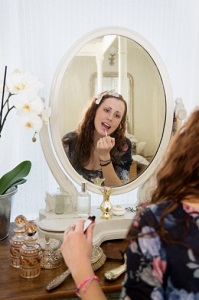 We all manage the impressions other people have of us. We think about what we might wear to an event or a job interview, we consider how free we can be with “expletive deleted” words in a given social situation, we may carefully choose what information we reveal about where or if we went to college or what kind of work we do. When it is appropriate, impression management helps us get what we want. However, when we manage other peoples’ impressions of us in most of our interactions, we run the risk of interfering with our identity by impeding the development of our sense of self.
Excessive impression management involves overly focusing on creating a particular view of who we are and controlling how people think and feel about us. When so much of our attention and energy is placed on controlling how we are perceived, there is little room for us to think about, be interested in, or develop our real selves. Typically, when we are overly invested in impression management, our sense of self has little substance. In trying to become the person we believe people want us to be, we become chameleons, changing our shape and form, altering our ideas. Sometimes, we may not even notice our own ideas (or be interested in developing them), because we are so intent on being seen as the impressive person we have assessed this particular situation requires.
Why would it be a problem if we are successful in creating the impressions we desire? Why does it matter if today we determine that it would be good to be viewed as creative and funky, and tomorrow we know we have to come across as smart and conservative?
My experience as a therapist has allowed me to witness the damage that can result from constant attention to impression management. People who have practiced impression management excessively for years (some quite successfully) often find that they begin to experience a vague sense of something being wrong with their lives. Many have had difficulties in relationships or in forming lasting relationships. When they come to therapy, they have difficulty finding words to explain an emptiness or tired dissatisfaction with life. It’s as if a false structure of self collapses and leaves little underneath to hold the person upright. What becomes apparent by talking in therapy are the underlying feelings that have been pushed aside in the process of creating false impressions. As these clients talk in therapy, they begin to uncover shame, a lack of self-confidence, anxiety about failure, self-hate, and many other feelings they’d defended against.
Lily, a 31 year-old client, is a successful executive in a publishing firm. She makes an excellent salary and has steadily risen in her profession. She is active socially and is often the life of the party at the many events to which she is invited. When she came for her first appointment, directly from work, Lily was conservatively dressed in an expensive suit and carried a designer handbag. In our first session, she reported feeling depressed and had a difficult time trying to explain a feeling of unease about herself and her life. She told me “I don’t know exactly what I am feeling or what the problem is. I should be happy. I have a great job. I am always going out and having fun. But I guess I’m not really having fun. I don’t know. Maybe I’m beginning to feel I should be thinking about some kind of relationship. I go out on a lot of dates, but I haven’t wanted to be in a relationship. I just don’t know what the problem is. I shouldn’t be feeling this way, even though I guess I really am not sure what I am feeling.”
Lily and I began to work together, and in the fourth month of our work, she came to her appointment on a day that she didn’t go into her office. She wore torn jeans, a short cropped top and had a pink streak in her hair that hung loose instead of her usual bun. She also had a small ring in her nose. It took a moment for me to realize who she was! It wasn’t just her change of wardrobe that I was responding to. Somehow it felt as if I were in the presence of a totally different person than the one I was beginning to know. As she sat down, I said, “Wow, you look really different today.” Then I asked if she could talk about her two very different looks. What Lily described to me illustrated excessive impression management.
Lily said she was going to meet some old friends she knew from college. She hadn’t seen them for five years, although she stayed in contact, mostly by email several times a year. She had already told me that she had been popular in college but hadn’t mentioned that she was a drama major and hung out with a group who were generally outsiders on the campus. She also hadn’t made it clear that while she was popular within her group, that wasn’t the case in general. She said, “I might not have been popular with everyone, but I did keep them intrigued by how I looked and by my in-your-face style. I had dyed pink, green, or striped hair; I smoked a lot of weed and was usually the one to buy for the rest. We were a very tight bunch. We kinda slept around inside the group. It was a great time in my life.”
I asked Lily whether her choice of dress was related to this meeting with her old friends or whether she usually dressed this way with friends when she wasn’t at work. “Oh no,” Lily said, “I would never dress this way with my friends today. I guess I have a whole variety of clothes that I wear, depending on who I’m with. For instance, I would never wear my designer stuff with the girls I go out for drinks with on most Wednesday nights. They don’t know I make so much money, and I would feel funny around them. I also have other clothes I wear with family. I can’t be too funky or too fancy with them. They would be really critical if I looked like that. They don’t really get what I do now, the same as they never knew much about me in college. I’m really selective with what kind of information I reveal to people. I’m really worried about how to dress today because I’m not sure where everyone is at. I didn’t think the corporate look or the way I dress with my Wednesday group would make the right impression, so I thought this would be a good compromise.” With what sounded like great pride, Lily continued, “I suppose I am a woman for all seasons. I can be whatever I think people want me to be.”
As Lily and I continued to work in therapy, she began to recognize that as a “woman for all seasons” she didn’t have a sense of what kind of a woman she really was. While we all have many different parts of ourselves, and it’s not so unusual to be different with different people, Lily had no sense of a core self. She began to understand that her unease and empty feelings were related to the absence of knowing who she was and what she wanted. This awareness motivated her to commit to work in therapy. Over time, she discovered how she got to be without a strong self, what parts of herself were there but not attended to, and what feelings she had trouble tolerating. Most of all, Lily developed an identity. She became aware of her own desires, feelings, and dreams.
 Dressing up can take extra effort, but it also feels good, especially if you receive extra compliments. A new study suggests what many women have experienced: dressing in nicer clothes makes you feel better.
According to a recent news release, one study has shown that women who are depressed or sad are more likely to wear baggy tops, jeans, and a sweatshirt or jumper. Women who are happy or positive are more likely to wear a favorite dress, jewelry, and jeans. These clothing choices seem to mean that women who are feeling down put less effort into what they’re wearing, and women who are in a good mood tend to try and look nicer to match their mood.
[fat_widget_right]
There were 100 women interviewed for the study, and their ages ranged from 21 to 64 years, according to the news release. The researchers also found that 73% of women in the study “shopped for clothes at least every few months.” The majority of women, or 96%, “believed that what they wear affects how confident they feel,” according to the news release.
Researchers determined from the results that there is a possibility that wearing certain clothes can affect emotional states. “The strong link between clothing and mood state suggests we should put on clothes that we associate with happiness, even when feeling low,” according to the news release. The author of the study, Karen Pine, who is the coauthor of Flex: Do Something Different and a professor in the School of Psychology at University of Hertfordshire, added in the news release that jeans are more associated with a depressed mood state and that women should consider abandoning them for a different clothing choice in order to feel better.
“Jeans don’t look great on everyone. They are often poorly cut and badly fitting,” Pine said in the news release. “Jeans can signal that the wearer hasn’t bothered with their appearance. People who are depressed often lose interest in how they look and don’t wish to stand out, so the correlation between depression and wearing jeans is understandable. Most importantly, this research suggests that we can dress for happiness, but that might mean ditching the jeans.”
In the study, 51% of women would wear jeans when they felt sad or depressed, and only 33% of women would wear jeans when they felt happy or positive, according to the news release. So if people still wear jeans when they are happy, just to a lesser degree, why are they such a bad choice? Why are baggy clothes associated with a sad or depressed emotional state and dresses and jewelry associated with a happy or positive emotional state? Pine addressed these issues in an email.
“All the findings apply, but because jeans are so ubiquitous (everyone seems to have a pair, women on average have eight pairs each) we chose to ‘lead’ on this finding. It is interesting that many women wear them a lot but there’s still a variation according to mood. I think the finding that women will only wear their favourite dress when happy or will likely wear a baggy top when depressed is just as compelling.”
She said that the research didn’t go into certain details, like the fact that some women are more into a “jeans and T-shirt” type of fashion, and other women wear skirts and dresses every day as part of their style. It’s also uncertain whether results would’ve changed if researchers took into consideration the emphasis some women put on fashion and beauty and if women who shopped less were interviewed. “Of course there will always be individual differences, but nonetheless recent research into enclothed cognition … confirms there is a strong association between what we wear and our psychological processes,” Pine said.
Results would also possibly look different if men were included in the study. “A lot of my research concerns women’s issues .. and I think the emotional link is probably stronger for women than for men, although there is research that shows men’s clothes affect how they behave (e.g. sports teams that wear all black act more aggressively),” Pine said.
Overall, Pine believes the research provides a look into how we can improve our moods. “It shows that clothes impact strongly on how we feel and may also influence how we think (as the above research also suggests), which we’ll be exploring further in our research,” Pine said. “It suggests we should give more thought to what we wear and even dress for happiness, irrespective of how we are feeling. If we knew more about which clothes could lift a person’s mood perhaps there’d be less need for anti-depressant medication.”
Shauna Mackenzie Heathman, a certified image consultant and owner of Mackenzie Image Consulting in South Carolina, said in an email that the results of the study are expected. “When we are feeling depressed or unhappy, looking our best is not on our minds,” Pine said. “In fact, it becomes a hassle and waste of time. Mental energy is turned inwards towards emotional thoughts. Dressing simply becomes function versus adornment or fun.”
She said that people shouldn’t necessarily make assumptions about the feelings and emotions of another person based on their clothing though. “We have the power to wear items that represent our personalities and feelings,” Heathman said. “With that being said, who knows how other people will interpret it. We make [judgments]/assumptions based on our own experiences. Bottom line: I would be careful to assume one’s feelings based on what they wear. To a certain extent, you can read whether someone is feeling insecure based on their clothing, but body language and nonverbal communication is much more representative of one’s feelings.”
She thinks there could also be a separate study on men that explores their clothing choices and emotional states. “I think it was okay for this study to be focused around women,” Heathman said. “A separate study on men should be considered. However, first you would need to discover the underlying differences between men and women and how they interpret clothes. Men are much more focused on functionality in their wardrobe than women, regardless of emotional state. So I do think there may be some general similarities, but overall women’s results would probably be more dramatic.”
One of the main parts of the study Pine focused on was jeans and their association with a depressed or sad mood state, and Heathman thinks this could be because jeans are an easy choice that doesn’t require a lot of thought. “I don’t think it’s the fact of wearing jeans that suggests sadness or depression as it is just wanting effortlessness and functionality,” Heathman said. “As I mentioned before, when we are depressed or sad, we’re not focused on how we look. We stop caring. We turn to what’s easy and comfortable. Prolonged long enough, you then fall in ‘the rut.’ Often, altering one’s mood by enhancing wardrobe can be done. However, it generally only has short-term results if working on one’s emotional and mental state is not at play as well.”
“The study mentions that happy clothes include well-cut, figure-enhancing items made from bright and beautiful fabrics,” Heathman said. “To this, I ponder, isn’t this obvious? If something makes our figure look poor, we generally don’t like this and thus are unhappy about it. When we don’t like what we wear, we focus on it throughout the day. It takes away the focus from the daily tasks that are important—work, relationships, family. A woman should walk out of the door and not have to think about what she’s wearing for the rest of the day. You’d be amazed at how much mental energy is exhausted pondering about how we look.”
Overall she thinks the study could have gone more in-depth to provide more useful information. “I think the study lacks depth. What is revealed seems fairly obvious,” Heathman said. “I would be curious to hear why women choose to wear a hat more often when they are happy. Is it because it’s fun? Is it because it draws attention towards them? Also, the psychology of color comes into play much more than the study presents. I think it’s informative more than it is useful.”
Donna Stellhorn, a Feng Shui expert and author of 2012 Year of the Water Dragon, interprets the study from a unique perspective involving her experience with Feng Shui. For those who are unfamiliar with Feng Shui, it is “the study of how the environment affects those who dwell in it,” according to the American Feng Shui Institute website. The “science” of Feng Shui suggests that there are “different energies” in our planet, and learning how to balance these energies can help improve various aspects of life.
“In Feng Shui we understand how you dress is associated with the five elements. Each element has an energy, and we’ll gravitate to the energy that’s in harmony with how we feel at the moment,” Stellhorn said. “The study says when we’re feeling down we’re more likely to reach for jeans and loose-fitting tops. These boxy shapes relate to the Earth element, a desire for stillness and stability. There are five elements (Earth, Wood, Fire, Water, and Metal), each with an energy, feeling, and a related style. Besides the shape of clothes, also the color and material indicates the element. For instance, animal prints are associated with the Fire element and a desire to be noticed and feel alive.”
She said for men, color would probably be more of an indicator of emotional states. “Because men tend to stick to a limited wardrobe, emotional states can be read in the choices of colors and the slight changes in what they normally wear,” Stellhorn said. “Men who usually sport a T-Shirt and suddenly start wearing a button-down shirt in greens or browns has moved from the Earth element to Wood, showing a desire to grow, to add to their life financially and socially, they’ve become curious about the world.”
She agrees that jeans are less effort when people are already preoccupied with other areas of life. “It’s not that jeans specifically suggest sadness, but that the desire to throw on a pair of jeans can indicate that life’s been too chaotic, there are too many choices and we want some quiet stillness to contemplate what’s ahead,” Stellhorn said. “When we reach for jeans we want something familiar because things around us are stressful.”
Accessories can also affect mood, like the study suggests. “Women’s hats bring attention (from others and our own) to our heads and indicate a person with power,” Stellhorn said. “A man in a ball cap might be covering thinning hair, but by wearing the hat he feels more powerful and better able to interact in the world. Jewelry and handbags also bring an energy, and therefore an emotion, to the person.”
Linda Froiland, an image consultant and personal shopper, said in an email that jeans don’t need to always be associated with depression, although sometimes it can be difficult to find the perfect fit. “Jeans are not just for tennis shoes. If you have a great fitting pair in a dark wash they can be quite sexy with an elevated heel, high heel, or wedge shoes,” Froiland said. “I wear mine out dancing, dinners at friends or restaurants, shopping, everywhere really, but they fit like a glove and have attitude. I can honestly say I am not depressed when wearing jeans, nor are my clients once they know how they should fit, what they should look like, and what to pair them with.”
Rosa Mae Neel, a stylist for professionals and the founder of Prune, agrees with Froiland that jeans don’t necessarily mean depression. “In a place like New York, where women commonly spend up to $300 for a pair of jeans and wear them with heels and a sexy top to go out at night, jeans do not necessarily equal depressive state,” Neel said. “Perhaps in other parts of the country or for older generations, jeans that are not designer jeans and that are more comfortable than flattering are a go-to for depressive states. Again, blousy tops can be trendy and hip if expensive or worn with gusto, or they can be a medium through which to hide extra pounds or negative feelings.”
Froiland said that clothing can be important in not only affecting mood but also in making impressions on other people. “Whenever I talk to a group, large or small, I always start out my presentation with telling everyone that ‘It’s in less than 3 minutes someone has already decided who and what you are. First by your appearance (87%), second your body language (8%), and then your verbal communication (5%). It takes another 20 times meeting that person to change that original perception,’” Froiland said. “So the value in our clothing is profound.”
Caroline Adams Miller, a professional coach, author of “Creating Your Best Life” and a graduate of University of Pennsylvania’s Master’s in Applied Positive Psychology program, said in an email that baggy clothes in general can indicate more of a lackluster mood. “Baggy jeans that could be perceived as asexual probably don’t correlate with happiness unless paired with more individualistic shirts or accessories,” Miller said. “The baggy tops reference doesn’t surprise me because they would ‘hide’ someone, and unhappy people don’t want to interact with people—they want to ruminate and be alone, and these clothing choices are perfect indicators of not feeling worthy of being ‘seen.’”
She believes that men could be affected by clothing choices as well, although they might put more effort into choosing a car to express their personality and mood. “I do believe that many men use clothing to express and change their moods, though, so I think a future study would find similar results,” Miller said.
Overall she believes the study makes sense and that there is a real connection between clothing and mood. “The science of happiness has found that we have ‘positive interventions’ that can change our mood, and when we deliberately intervene on our happiness by wearing things that evoke positive feelings, positive reactions from others, or that remind you of positive experiences, you will be happier,” Miller said.
Related articles:
Are You Your Own Worst Enemy?
Seven Mistakes People Often Make When They Get Depressed
Depression as Trickster and Communicator
 The only queer people are those who don’t love anybody. – Rita Mae Brown
Queer is a sexual identity that can be both a place of great pride and one of pain.
The term itself is a reclaimed one: Queer was once widely used—and is sometimes still used—as a slur against lesbian, gay, and bisexual people. Many people still view the term as derogatory and do not choose to use it. To many others, it is an inclusive term that grants the community power in its reclamation of the word.
Though “queer” was once intended to hurt those who now choose to use the term as an identifier, this word has become for many a word full of promise and hope. For some, it is the best way they can authentically describe their personal identity.
Queer is an umbrella term that describes sexual identity. The sexual orientation, sexual behavior, and sexual identity (OBI) model provides a way to talk about sexual identities with more accuracy (Cook & Pawlowski, 1991). In the OBI model, each of these concepts is different and separate from the others. Sexual orientation describes a person’s sexual or romantic attraction to another person. It’s not about behavior. It’s about the experience of attraction itself. Sexual behavior is used to describe the physical act of sexual activity. Sexual identity describes the way people identify themselves. Identity is personal; it’s something that each person can only decide for themselves. Gay, lesbian, bisexual, straight, and queer are all sexual identities (though there are many others). [fat_widget_right]
The OBI model provides a way to look at how these three pieces of ourselves interact. Typically it’s assumed that orientation, behavior, and identity are the same. For example, there’s an assumption that a man who identifies as gay is attracted only to men and participates in sexual behavior only with men. However, real life is much more complicated, and there is no “right” way for a person’s orientation, behavior, and identity to line up. For example, a woman might be attracted to both men and women, participate in sexual behavior with only men, and identity as bisexual.
The way we typically describe sexual identity is dependent on gender. For example, if a man says that he is straight, he is stating that he identifies as being attracted to women. Straight, gay, lesbian, and bisexual are categorical markers that designate a person’s gender and the gender they are attracted to. Typically, lesbian describes a woman who is attracted to other women, gay describes a man who is attracted to other men, straight describes a man attracted to women or a woman attracted to men, and bisexual describes a person attracted to members of their gender and of the “opposite” gender.
But what happens when someone who identifies as neither a man nor a woman? As both a man and a woman? As a feminine man or a masculine woman? What is the sexual orientation of someone who is attracted to people of any/all genders?
“I know I’m not a man…and I’ve come to the conclusion that I’m probably not a woman either. The trouble is, we’re living in a world that insists we be one or the other.” –Kate Bornstein
In the book Gender Outlaw: On Men, Women, and the Rest of Us, author Kate Bornstein lays out how a binary gender system, where being a man or being a woman are the only two choices, can be limiting. A person’s biological sex does not determine that person’s gender. Biological sex is the combination of hormones, chromosomes, and gonads a person is born with. Gender identity, however, describes a person’s internal sense of being a man, woman, neither, both, or other gender—it’s not based on the physical body but on how someone feels inside.
For many people, gender identity and biological sex seem interchangeable—A person’s sex as determined at birth is equivalent to their gender identity. But sex and gender are separate concepts and can line up in many different ways.
Transgender is one term that can be used to describe the experience of identifying with a gender that is different from the one that was assigned at birth. People who are transgender have discovered that their gender identity differs from their biological sex. Their true identity might be male, female, neither, or both. They might have a different gender expression entirely. Cross-cultural and historical views of gender suggest gender variance is a normal variation in human expression.
Gender identity and sexual identity are not the same thing, though we often treat them like they are. For example, a person can be a woman (gender identity) and be straight (sexual identity). Or she could be a woman (gender identity) and be a lesbian (sexual identity). Transgender describes gender, not sexual orientation. Trans people, no matter their gender, might identify as straight, gay, lesbian, bisexual, or queer (sexual identities).
To me, being queer isn’t who you’re sleeping with; it’s just an idea that sexuality isn’t gender-based, that it’s love-based.
—Ani DiFranco, Entertainment Weekly, May 2, 1997
Queer, as a sexual identity, is notably different than gay, lesbian, bisexual, and straight because it does not depend on gender. As an identity, the term queer has the flexibility to be inclusive of all people, not just those who identify as men and women. It describes someone whose identity is not heterosexual, but who may not fit into the other available gendered sexual identity categories.
If we look back at the OBI model, queer can be used to describe the interaction between orientation, behavior, and identity for many people who find their experiences much more complex than the terms gay, lesbian, straight, or bisexual allow for. While once a term of hatred, “queer” offers a range of possibilities today.
References:
- Bornstein, K. (1994). Gender outlaw: On men, women and the rest of us. New York: Routledge.
- Cook, A. T., & Pawlowski, W. (1991). Issue paper: Youth and homosexuality. The Respect All Youth Project, PFLAG.
Value affirmations, also known as self-affirmations, are positive assessments of one’s abilities, traits, and personality qualities. Value affirmations can increase self-esteem, self-worth, and fulfillment of one’s needs. When an individual recognizes their own worth and has a strong sense of identity and autonomy, they are more willing to help others meet their needs. This relationship between self-worth and prosocial behaviors has been examined in the past, but until now, few studies have looked at the effect of value affirmations on prosocial attitudes in adolescents. Sander Thomaes of the Department of Psychology at Utrecht University in the Netherlands recently conducted a study that sought to determine if subtle value affirmations could have a short-term and long-term positive effect on adolescents’ prosocial behaviors and attitudes during the crucial years of identity formation.
The participants were required to write down things that they felt were positive attributes about themselves. They were instructed to identify traits or skills they had and briefly write about them. Six weeks later, the teens were again required to acknowledge their positive traits during a booster exercise. Three months after the first writing exercise, the researchers noticed that the participants who practiced the subtle value affirmations were more inclined to exhibit prosocial behaviors than the participants in the control group. The effect was most noticeable among teens who had exhibited antisocial behaviors prior to the exercise. Thomaes believes that the results occurred for several reasons. First, teens with a strong sense of identity are not subject to the stress and pressure of trying to assimilate to others. Also, the students participated in the exercise as they transitioned into secondary school. This critical time in relationship formation was positively, rather than negatively, influenced by the feelings of love and fulfillment gained from the writing exercise. Thomaes added, “In summary, the practical value of the present research is that it identified value affirmations as a promising intervention technique, and illustrated the possibility of helping students to adopt a more prosocial orientation by allowing them to reflect on their personal values—by providing them a stronger sense of who they are.”
Reference:
Thomaes, S., Bushman, B. J., De Castro, B. O., Reijntjes, A. Arousing “Gentle Passions” in Young Adolescents: Sustained Experimental Effects of Value Affirmations on Prosocial Feelings and Behaviors. Developmental Psychology 48.1 (2012): 103-10. Print.
 What did you first think of when you saw that an article titled “Bodies and Identity” was posted on a mental health care blog? Likely, words such as “anorexia,” “bulimia,” and “compulsive eating” ran through your head. An article about bodies and body image is often assumed to be about negative body image. We’re so used to talking about bodies as problems that need to be overcome, addressed, or “worked on” that a direct relationship between bodies and negative body image is almost a reflex. But what does “body image” really mean? In what way does how we see our bodies impact how we see ourselves? And how does our identity impact how we see our bodies?
Watching a baby interact with his or her body is a great way to remember all of the different ways people can relate to their bodies. With rapt attention, a baby will stare at a hand, looking at how it moves, sucking on it to see what it feels like. Babies spend a lot of time figuring out where their bodies end and where their parents’ bodies begin. It strikes me that in our cultural obsession with our bodies in relationship to others and the media as adults, we’re still trying to determine where the boundary between ourselves and others lies.
In her book, Bodies, psychotherapist Susie Orbach (2009) remarks on how the relationship between body and self in Western culture has changed over time. Before industrialization, our bodies were used to make things. Working class bodies allowed farmers to plant, tend, and harvest their crops; craftsmen used their bodies to manipulate wood, metal, stone, and fabric to create the objects needed to survive. The body image that is upheld as ideal today—thin, tan and muscular—was the result of the daily physical labor of the working class and the poor. Today this visual aesthetic plasters the covers of magazines, television, and the internet, but it carries a different meaning. A body that is lean, tan, and muscular shows that a person has the resources, time, and privilege to work on their body. Bodies are no longer used to make things; instead we are encouraged to make our bodies, as “Our bodies are and have become a form of work. The body is turning from being the means of production to the production itself” (Orbach, 2009 p. 8).
These days our bodies often act as a vehicle to share things about our identities with other people. The color of our skin, the shape of our features, our hair and eye color, the way we dress, how we carry ourselves, and even the jewelry we wear often act as a way to tell others about our race, ethnicity, cultural background, age, socioeconomic status, gender, sexual orientation, relationship status, and our personal values. Some of these aspects we have control over, and others we don’t. Because it’s so entrenched in our lives we often forget that the visual body that we share with others is carefully crafted through the choices we make.
This brief discussion of the connections between identities and bodies only begins to touch on some of the deeper issues that people experience while navigating this intersection. For example, the way that women’s bodies have been sexualized or desexualized depending on race, class, and culture marks women as objects and impacts how women see themselves and the world around them. This objectification is perpetuated by sexism, and continues to control the lives of both men and women by creating unrealistic expectations and a hierarchical power dynamic kept in check by popular media.
More and more objectification is also beginning to be applied to men’s bodies. The meaning of “body image” is shifted from a personal understanding and relationship with our bodies, to a terrible dilemma filled with shame and guilt. But what if our relationship with our bodies focused on being in them instead of how we look in them? What if we were able to be more aware of how our bodies felt and less aware of how others perceived them?
Our bodies shape our identity, and our identity is intricately linked with the body that we were born into. Exploring these connections can open up new areas of understanding and integration as we struggle to navigate intersecting identities in a polarized world.
References:
Orbach, S. (2009). Bodies. New York: Picador.
 Manifesto: a public declaration of intentions, opinions, objectives, or motives.
As a long-time yogi, I have been setting an intention before my daily practice for more than 10 years. Perhaps it was this habit that prompted me to write my first manifesto in 2004. Gathering healing thoughts and wishes into one short document was enlightening, centering, and deeply positive. Since others have found this process helpful, I wanted to share the method and some suggestions for possible inclusion in your own manifesto.
Guidelines for Writing Your Manifesto
Let it flow. In my opinion, the best thing you can do when you start to write anything is let it flow. As you allow thoughts, feelings, and ideas to take shape on the page, give yourself the gift of writing without interruption. That means both carving out a little time for yourself and not stopping to edit your words. You can revise and rewrite later on.
Brainstorm. Write the word “manifesto” in the middle of a blank page and let your mind wander. When an idea pops into your head write it in a circle around that central word. Then, focus on each word and write what comes to mind in a line branching out from it. That may be enough for one day. If you feel like continuing, focus on any word or concept that speaks to you, and think of your wish for your own growth, development, or peace as it relates to that idea.
[fat_widget_right]Daydream. Recent studies show that encouraging your mind to wander in what appears to be an aimless manner actually generates creative solutions to problems and is just as valid as any other kind of “work.” If you regularly keep a journal, or a dream journal, you may find rereading entries gives you plenty of fodder for your manifesto.
Let go. If you have a health issue, you might explore ways to be more comfortable with your body. Think of phrases that help you let go of preconceived notions about your health, and accept things as they are because you can be sure they will change. In situations you can’t control, it is often best to find power in letting go, and allowing what is to be exactly as it is.
Build resilience. During a particularly difficult transitioning period, you may want to focus your intentions on building resilience. Certain life events—such as becoming a parent, taking a job, or moving—naturally inspire new thoughts and wishes. Let your mind wander, and imagine ways you would like to be in this stage of your life. If you are working with a therapist, there may be recurring themes you want to address.
Whether you try some of these suggestions, read the examples below, or just start writing, it is best to remember your manifesto is an ever-changing, fluid document meant to support you on your journey to your truest self. It is not a rigid set of rules or “shoulds” to encourage negative self-talk or critical self-evaluations. Let your imagination run wild. Think of how you would like to live your life, and write what comes from that deep, all-knowing place.
Here are some ideas to stoke your creative process:
- I embrace my humanity and fallibility.
- I appreciate every goodness and kindness in my life by practicing gratitude.
- I allow my body, mind, and spirit the time and space to heal.
- Every day, I make time for self-reflection.
- I am exactly where I am supposed to be in this moment.
- I get outside and let nature work its magic.
- All I seek is already within me.
- I tenderly acknowledge the small, vulnerable child in myself and others.
- I surround myself with beauty.
- I give my body the movement or stillness it seeks.
- When I feel hopeless, I let myself take another breath until despair departs.
- I regularly tune in to nourish any areas I have neglected, whether social, creative, physical, spiritual, or intellectual.
- I acknowledge my losses and grieve, letting go when the time is right.
- I cultivate patience during the fallow times, for they nourish and prepare me for a bountiful harvest I may not be able to see in those dormant, but fertile, moments.
- Every day, my heart opens a little more with compassion for myself and others.
- I allow myself to feel and express all emotions.
- I carefully and authentically share my truth.
- When I say or do something insensitive or thoughtless, I apologize.
- I take all the time I need to be with grief, hurt, and anger, knowing they will pass.
- Appreciating my unique gifts comes easily and naturally to me.
- I rise to the joys and challenges of each day, knowing I have made it through every one, so far.
- I allow life to unfold and surprise me.
- I welcome the rhythms of my body, mind, and spirit as they continually evolve.