 Hypnosis has long been fodder for television shows and stand-up acts, and most people are familiar with hypnotists who claim to be able to make anyone do anything while under hypnosis. But hypnosis is no longer just a sideshow performance, and an increasing number of people are turning to hypnosis to quit smoking, get over depression and anxiety, lose weight, and forget about phobias.
Hypnosis is still controversial within mental health, partially because it’s often part of a comedy act and not real treatment and partially because some hypnotherapists have induced false memories under regression-based hypnotherapy.
What Is It?
Hypnosis isn’t a magic trick. It’s an altered state of consciousness that hypnotists induce via the power of suggestion. Hypnotists may use relaxation techniques, key words, guided imagery, or some combination of these to help clients slowly relax. Then, while under hypnosis, hypnotists make suggestions about changes in behavior.
The idea behind hypnosis is that, even when the conscious mind wants to do something, the unconscious mind might not fully accept this change. Hypnotists claim that, under the right conditions, they can subtly alter the effects the unconscious mind has on the conscious mind and help bring about behavioral changes. Some hypnotists use hypnosis to help gradually alter a client’s perceptions. A person struggling with pain, for example, might undergo hypnosis to help him or her see the pain as pressure. An increasing number of women are even using hypnosis to help cope with the pain of childbirth.
Does It Work?
You can’t be hypnotized to do something that is outside of your moral compass or that you don’t really want to do. People who try to quit gambling or spending through hypnosis will likely not see results if they’re quitting only because of family pressure. Hypnosis can’t change the way you think; it simply makes it easier to follow through with behavioral changes. Hypnosis can also bring about a state of relaxation, and some hypnotherapists teach their clients how to self-hypnotize under stressful conditions. For people with anxiety issues, severe stress, or depression, this can help ease the symptoms.
But hypnosis is not a panacea, and is most effective when it’s used in conjunction with therapy and lifestyle changes. Particularly for long-term, chronic problems, it may take several hypnosis sessions to see results. Some people don’t see any results at all; because hypnosis thrives on suggestibility, if you’re not particularly suggestible it probably won’t work.
Choosing a Hypnotist
If you’re thinking about trying hypnotherapy, get a recommendation from your therapist. The American Society of Clinical Hypnosis also maintains a directory of qualified hypnotists with a clinical background. Make sure you know how long your hypnotist has been practicing and what methods he or she uses. The messages you hear under hypnosis should not come as a surprise, and your hypnotist should discuss the specific tools he or she is going to use before hypnotizing you.
Regression-based hypnosis, which is used to recover repressed memories, can be dangerous. Because people are more suggestible under hypnosis, the hypnotist can inadvertently fabricate memories that didn’t actually occur. Particularly if these memories are traumatic, this can lead to additional mental health issues. People with a history of psychosis should not undergo hypnosis without first taking to their doctors, because hypnosis increases their risk of a psychotic episode.
References:
- About the society. (n.d.). American Society of Clinical Hypnosis. Retrieved from http://www.asch.net/
- Beattie-Moss, M. (n.d.). Does hypnosis work? Research Penn State. Retrieved from http://www.rps.psu.edu/probing/hypnosis.html
- Mental health and hypnosis. (n.d.). WebMD. Retrieved from http://www.webmd.com/anxiety-panic/guide/mental-health-hypnotherapy
- Portenoy, R. (2008, August 18). How does hypnosis work, can anyone be hypnotized, and when is it used? ABC News. Retrieved from http://abcnews.go.com/Health/TreatingPain/story?id=4047906
 I’ll never forget the first time my friend took me to Elysian Fields, a “nudist colony” in Topanga Canyon in the Santa Monica Mountains near Los Angeles. I was twenty-something and petrified; I’m not sure why. I guess I was convinced that everyone would be staring at me and evaluating my body. What a surprise to discover that when we’re naked we all look pretty much alike!
When it comes to human intimacy (or lack thereof), there are different types of nakedness. During one-night stands, getting naked means exposing a lot of skin—usually rapidly.
A client once told me that she figured she could strip and shower in the locker room with no problems, so why not strip and hook up with a partner she found attractive? She did this several times until she began to tire of the shallowness and yearn for a partnership with more depth—as she put it, “someone who I can be emotionally naked with.” Years later she found that person, and discovered that true nakedness was both challenging and rewarding.
Often, people assume that their sessions with me are going to be focused on what/when/where with their genitals. They’re often surprised when I suggest we discuss “the importance of getting naked.” A great deal of honesty and trust can be generated when you are nude with one another, something that rarely develops if the sole purpose of getting naked is to have intercourse.
If you and your sweetheart are new together, or trying to resurrect the newness and the thrill of physical intimacy, here are some thoughts and ideas for getting naked together:
- If you feel your relationship is ready, you might consider undressing one another, or playing strip poker or engaging in lighthearted wrestling. One partner can blindfold the other before undressing him or her; it can be quite thrilling!
- When I suggested to an older, heterosexual couple that they undress each other while dancing, the gentleman’s eyes began to twinkle. “We might suddenly find ourselves doing the polka!” he said. I explained somberly that I meant a different kind of dance, and we all laughed uproariously. Sex doesn’t have to be so serious.
- For couples who are feeling especially awkward, writer Jay Wiseman suggests getting naked in complete darkness: “Each partner then takes turns examining the body of the other with a small flashlight—one of those little penlight things that excites just enough photons to light up an area the size of your thumbnail.” I know two couples who tried this, eliciting a lot of laughter and “fascinating fantasies,” as one young woman put it. It definitely helped decrease the nervousness of being seen naked all at once, like the scene in The Graduate when Dustin Hoffman looks up and Mrs. Robinson is standing in front of him, stark naked!
- Guys often worry, as one put it … “Wood good, or wood bad?” He went on to wonder whether he should or should not have an erection, and when said erection should appear. The answer: It doesn’t matter. What does matter here is learning to associate nudity with something other than genital sex.
- Occasionally, I’ll suggest to a couple who are fine about nakedness for sex that they get naked simply to talk or hold one another. I find it fascinating that often these couples will find this idea distinctly unappealing—perhaps because this kind of nudity feels too intimate?
Being comfortable in your own skin is an important part of being comfortable and intimate with your partner. If the idea of just being naked together is scary, you may want to consult a therapist. If it’s exciting, go ahead and try it!
 Most people have experienced brief periods of anxiety while riding in an elevator, stuck in the midst of a large and tight crowd, or even while playing hide-and-seek. But for people with claustrophobia, the fear of being trapped in a small space can be so debilitating that it interferes with regular life activities.
In fact, the distinction between “normal” anxiety about enclosed spaces and phobic-level fear is the fact claustrophobia tends to interfere with life activities such as climbing a stairwell or riding in an elevator for work, playing with one’s children, or going to certain locations.
What Is It?
Claustrophobia is categorized by a chronic and unreasonable fear of being trapped in a small or enclosed space with no hope of escape, and it is classified as an anxiety disorder. People with claustrophobia also frequently experience a related fear of suffocation. Being in a small space can cause people with the issue to fear that they won’t be able to breathe, and for this reason, people with claustrophobia sometimes experience fear in settings that don’t seem enclosed or frightening. For example, a person with claustrophobia sitting in a dentist’s chair might be so afraid of confinement that the person becomes convinced that he or she will suffocate if he/she remains in the chair. People with the issue may experience extreme anxiety, panic attacks, difficulty breathing, profuse sweating, and difficulty concentrating when they are in a small space.
People with claustrophobia tend to experience anxious reactions in a variety of settings rather than just one particularly frightening setting. For this reason, claustrophobia tends to become generalized and may worsen over time. A person who was once afraid of elevators might generalize his or her fears to closets, apartments, doctor’s offices, and small stores. In extreme cases, people with claustrophobia may be so afraid of confinement that they refuse to leave their homes or travel to unfamiliar locations.
What Causes It?
Claustrophobia is one of the most common phobias, with about 5% of the population experiencing it to one degree or another. Some scientists believe that this indicates an evolved, genetic fear of closed spaces. The reasoning for this explanation is that being trapped in a small space can be dangerous, so the brain has evolved a special fear of these situations to prevent people from taking potentially life-threatening risks. However, there is also evidence that claustrophobia is learned. People who have been trapped in a small space—such as people who were trapped in an elevator or who were locked in their bedrooms as children—are more likely to become claustrophobic, and children of people with claustrophobia are more likely to become claustrophobic. This is probably due to a combination of genetics and parental modeling.
How Is It Treated?
Although phobias can be debilitating, they are generally fairly easy to treat. Counter-conditioning and exposure therapy work by gradually exposing people with claustrophobia to triggering circumstances to help them build a tolerance and learn coping mechanisms for their fears. People with mild claustrophobia sometimes benefit from deep-breathing techniques and distracting thoughts, and people with severe claustrophobia may take anti-anxiety medications to help them function until therapy can help them address the underlying causes of the phobia. Some people with claustrophobia also benefit from cognitive behavioral therapy, which helps them identify the negative thoughts that lead to fear-based reactions and to slowly adjust these thoughts to more positive, less fear-inducing ones.
References:
- Claustrophobia. (n.d.). Epigee. Retrieved from http://www.epigee.org/mental_health/claustrophobia.html
- Kahn, A. P., & Doctor, R. M. (2000). Facing fears: The sourcebook for phobias, fears, and anxieties. New York, NY: Checkmark Books.
 Food Network chef Paula Deen is known for her bubbly personality, so many fans were shocked when she explained in her biography that she had agoraphobia for 20 years. Deen is hardly the only celebrity to experience this potentially debilitating condition, however. Kim Basinger and Woody Allen also reportedly have experienced it, and the father of modern psychiatry himself—Sigmund Freud—may have struggled with the issue as a young man.
In an increasingly busy, crowded, and connected world, anxiety can be overwhelming even for famous people, and agoraphobia will affect about 1.4 percent of the U.S. population at some point, with 40% of cases reported being “severe,” according to the National Institute of Mental Health.
What Is It?
Agoraphobia means “fear of the marketplace,” and is commonly associated with a shut-in lifestyle and social avoidance. However, agoraphobia is distinct from social phobia and characterized by a chronic fear of feeling anxiety or panic in a place where one is unable to escape or get help. For this reason, many people with agoraphobia are hesitant to leave their homes, unwilling to go out alone, or visit only familiar locations. Some people with the condition experience panic, generalized anxiety, and other issues classified as anxiety disorders.
Although everyone experiences anxiety in unfamiliar or social settings from time to time, people with agoraphobia experience overwhelming anxiety and panic on a regular basis. They might feel dizzy, restless, short of breath, or confused in unfamiliar settings. Agoraphobics are often fearful of feeling out of control, and the physical symptoms of anxiety can exacerbate this fear.
What Causes It?
Agoraphobia is typically a side effect of panic disorder. People who have had panic attacks in public settings may fear that they’ll have another panic attack and grow increasingly fearful of going out in public. Sometimes agoraphobia is caused by other circumstances, such as a traumatic event in a public place, social anxiety, or other mental health conditions that cause anxiety and panic. The disorder may be caused by a combination of genetic and environmental factors. Children of parents with panic disorder are more likely to develop agoraphobia; this could be due to either genetics or parental modeling.
How Is It Treated?
Because people with agoraphobia are often terrified of having panic attacks, one of the most important steps in treatment is giving the person a sense of control over his or her tendency to panic. Relaxation techniques can help many people regain a sense of control. Medication is also highly effective. Anti-anxiety medications and antidepressants can also help people with agoraphobia.
Sometimes agoraphobia causes so much fear that people refuse to leave their homes. People with severe agoraphobia sometimes need several months of progressive desensitization to fearful settings. For example, a person might start by walking outside, graduate to getting in the car, progress to driving to a parking lot, and ultimately master going to the grocery store. Most people with agoraphobia undergo some form of psychotherapy. Cognitive behavioral therapy can be especially helpful, and some people with the issue benefit from group therapy. Group members often share coping strategies and can help an agoraphobic feel less isolated; the group setting itself can also serve as a form of desensitization to unfamiliar people and settings.
References:
- A.D.A.M. Editor Board. (2011, November 18). Panic disorder with agoraphobia. PubMed Health. Retrieved from http://www.ncbi.nlm.nih.gov/pubmedhealth/PMH0001921/
- Agoraphobia among adults. (n.d.). NIMH RSS. Retrieved from http://www.nimh.nih.gov/statistics/1AGOR_ADULT.shtml
- Agoraphobic celebrities. (n.d.). The Daily Beast. Retrieved from http://www.thedailybeast.com/galleries/2011/12/13/photos-paula-deen-kim-basinger-and-other-famous-people-with-agoraphobia.html
- Mayo Clinic Staff. (2011, April 21). Agoraphobia. Mayo Clinic. Retrieved from http://www.mayoclinic.com/health/agoraphobia/DS00894
- Moskin, J. (2007, February 28). From phobia to fame: A southern cook’s memoir. The New York Times. Retrieved from http://www.nytimes.com/2007/02/28/dining/28deen.html?pagewanted=all
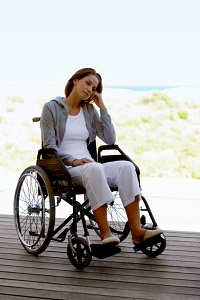 The uninvited house guest often stays on well beyond the point of “wearing out his or her welcome.” Likewise, for many people, chronic illness/disability is not a short-term inconvenience but rather a long-term, often permanent way of life. In the early stages of adaptation, the changes that happen in our lives and families may seem tolerable—at least while we still think there is a chance that the diagnosis is wrong or the cure is in the magic pipeline offered by big pharma.
Eventually, denial and bargaining give way to anger and depression. The uninvited guest is still ever-present, and no amount of cajoling or suggestions result in change. Bouts of anger may become a way of life for a while.
Anger
Many people flow in and out of anger and depression, rather than progressing neatly through one stage and into the next. It is often said that depression is anger turned inward, which makes expression of anger in a safe and effective way very important. Getting adequate support from formal and informal support networks is critical.
It is not unusual for tempers to flare and fuses to shorten during this period of adjustment. People who are typically long-suffering seem to be constantly on edge; those with fewer coping skills may be in a chronic state of agitation and irritability, if not outright rage. It often seems as if they are pushing away those who are closest to them at the time when they need them most.
Loved ones may unconsciously spend less time with the person who seems to find fault in their best efforts. Children are often left confused and afraid. Doctors and other providers frequently find themselves being blamed for their inability to help. This is all part of the process of adaptation.
While most people understand cognitively that their loved one is struggling and coping as well as can be expected, their own feelings of inadequacy and powerlessness may lead them to retreat on some level—if not physically, then emotionally. This often feels like abandonment to the person who is already overwhelmed by disability or illness. It is very important for caregivers and loved ones to be aware of their own feelings and find support.
Coping skills: Separate the person from the behavior. Try to remain aware of the real target for your anger—the illness or disability, not the person in your midst. Remember that we often treat those we love the most with the least respect; make amends as soon as possible if you do so. Give each other a break and extend the benefit of the doubt when possible. If your loved one treats you badly, remember that everyone is under extreme stress and doing the best they can at that moment. It is also good to remember that your caregivers and medical providers are probably not inadequate, but the resources they have to work with may be.
Caregivers and loved ones should speak up if they are being treated badly. Being sick is not an excuse to mistreat people, particularly if there is a pattern of abusive behavior developing. These behaviors need to be identified and discussed in a calm, loving way (not in the heat of the moment). This may require professional help, or perhaps the assistance of a minister or family friend who is not emotionally involved.
Most of the time, the person who lashes out or treats people badly feels guilty and needs the opportunity to make amends. For those who are unaware of how their behavior comes across, specific examples of the unacceptable behavior or hurtful/abusive language helps them develop a better awareness of their inappropriate behavior. In some cases, this is a manifestation of the illness or disability. In others, it may be the result of coping skills that are maxed out. Either way, left unattended, it usually gets worse. This is not the time to let conflicts and hurt feelings stack up. If you need help addressing these issues, ask your medical provider for a referral. Providers often have therapists or chaplains they work with who may be able to help.
Depression
Depression often occurs during the adaptation process, and may happen at other times or continue. Clinical depression can be very difficult to manage. It is more than sadness or disappointment; depression is a collection of symptoms that exist most days for two weeks or longer and create some level of impairment in daily functioning. The symptoms may include many of the following:
- sadness/tearfulness
- low energy or agitation/irritability
- loss of interest in things previously enjoyed
- problems with concentration/foggy thinking or trouble making decisions
- changes in sleep or eating patterns
- feelings of guilt or worthlessness
- thoughts of death or suicide/not wanting to live
- rumination/negative thinking
- others (physical pain, changes in motor skills, etc.)
If you or someone you know have four or more of these symptoms that are present for more days than not over a two-week period, talk to your medical provider about getting help.
There is also a type of depression called situational depression that is a normal reaction to a loss or change. Almost all people with chronic illness or disabilities and their loved ones experience this. The same symptoms are involved, but the symptoms may not be present most of the time, or may not be severe enough to impair your ability to function (relationships, work, taking care of your kids, etc.).
Situational depression can linger or become more serious after a while, becoming clinical depression. If the symptoms begin to impair functioning or last longer than a few weeks, it is wise to speak with a medical provider or therapist. People with situational depression are often able to experience periods of happiness when receiving good news, or other momentary reprieves from the darkness of depression. Those with clinical depression may be unable to experience even brief moments of relief when the situation calls for it.
The best treatment for depression is believed to be a combination of talk therapy, exercise (I know—it is very hard to exercise when you are depressed), a good diet, and medication, if deemed medically necessary. The right intervention for depression depends on which type of depression you are experiencing. For those with a few symptoms that are not present all the time, self-help may be sufficient. People with four or more symptoms that are present most of the time probably need to see a therapist and possibly a psychiatrist.
Anyone who is suicidal should seek professional help immediately. This national hotline is for people struggling with depression. The crisis line is staffed 24 hours a day by trained volunteers: 1-800-273-TALK.
Coping skills: I recommend that people talk with a therapist when dealing with situational depression and try to get as much activity in as possible. This may mean simply walking outside to get the mail, sitting on the porch for 20 minutes to have a cup of coffee or juice, watering the plants, or walking the dog. Sunshine is another natural remedy that increases vitamin D, which is often deficient in people who are depressed and those who do not go outside often. Eating properly is also critical, and there are natural supplements available at your local health store that may help with situational depression. Talk to your medical provider or therapist about these options.
Support groups and self-help groups can be very helpful. Groups provide a great resource for people living with chronic illness and disabilities and their loved ones. You can find online and local resources, and most are free. Many are affiliated with local hospitals or nonprofit agencies that serve people with chronic illness or disabilities.
If depression is serious enough to impair functioning, or you/your loved one has thoughts of suicide or not wanting to live, it is important to get professional help immediately. Start with your medical provider or therapist unless the person with depression has a plan to cause self-injury or death.
In situations where someone’s safety is at risk, call 911 or the local emergency number for your area, or take the suicidal person to the closest emergency room. Your role in the situation is not to intervene, but to get professionals involved as soon as possible. If the suicidal person is unwilling to go to the ER (or medical provider’s office during business hours) or you believe it may be unsafe to transport them, simply call for the emergency medical providers to come to you.
Don’t worry about the person who is suicidal being upset by your actions—when people are in crisis, they are usually not thinking clearly, so it becomes crucial for you to make good decisions on their behalf. The medical professionals who are trained to help in these situations will make the decisions once they arrive. This will likely mean that the person who is suicidal will be transported to the hospital for an evaluation, and may need to stay there for a few days until stabilized.
Again, it is not up to you to make that decision, only to make sure the person is safe until medical professionals can take over. It is a lot of responsibility and instills fear in most of us, but in the end, when your loved one is thinking rationally again, he or she will likely be grateful. If not, you will know that you have done what you needed to during the crisis.
Ongoing thoughts of suicide or not wanting to live need to be addressed with mental health and/or medical professionals regularly. Some states (Washington, Oregon, and Montana) permit medical professionals to participate in a well-thought-out, documented plan to end life (known as rational suicide), but most do not. Discussion of a patient’s end-of-life wishes should also be considered carefully and documented in a legal document for your specific state. Legal resources such as a living will specifically identify a person’s end-of-life wishes.
It is a good idea to talk about signing a consent form that allows you to discuss your loved one’s mental health (and physical) treatment with medical providers and therapists. This will enable you to enlist their help if depression becomes unmanageable or a crisis occurs. The consent can be relinquished at any time if the patient is considered to be of sound mind, and could be a great resource. Fortunately, resources are available to assist you in being prepared for a suicidal crisis should you need them.
There are many issues to be discussed regarding suicide, including family members’ thoughts and feelings about it. It is important to remember that euthanasia is against the law in all U.S. states, and assisted suicide with the help of a physician who prescribes a lethal cocktail after careful planning and documentation is legal only in Oregon, Washington and Montana. Legal professionals should be consulted if “rational suicide” is something you or a loved one is considering.
Adaptation
Using the analogy of the uninvited house guest, this is the period when people have settled into their routines and learned to live together with whatever adjustments are necessary. The initial period of adjustment after a disability or illness almost always requires going through each of the stages in the process outlined here. It can take a long time for some to arrive at adaptation, and not everyone in a family gets there at the same time. With some luck, a lot of support, good communication, and teamwork, the process will likely resolve in time for most people.
Unfortunately, surviving the initial period of adjustment does not ensure there will not be others. As mentioned earlier, people tend to get emotionally triggered when there are relapses or new symptoms/stages of the illness or disability occur. Triggering means that some reminder of the initial trauma (usually diagnosis or the actual accident or illness) sets off the same cascade of emotions experienced at the time of the original event.
Living in fear of a relapse or a change in physical status creates a certain amount of anxiety for everyone. The unpredictability of living with a chronic illness or disability will be the focus of our next article.
In the meantime, please share below how you have effectively coped with anger and depression.
 To me, “vulnerable” is wonderful word. It means openness, freedom, and the opportunity to love and be loved. But for others, it is what they are trying to get away from: They feel that they are too vulnerable. In actuality, the opposite is true. They feel unsafe because they are too defended, too guarded. True vulnerability comes only with acceptance of self. And with that, fear drops away.
By becoming vulnerable to life, we discover its meaning. Not the meaning of life in an objective sense, but rather its meaning and purpose for each one of us, as individual souls. Whether that is the truth of a given moment, or an expanded sense of purpose and destiny in our professional or personal lives, we can discover it only if we learn to listen to our own hearts in an unguarded and open way.
[fat_widget_right]
Our Own Vulnerability
To be happy and content in life, we must give in and learn to listen to ourselves deeply. We must accept our vulnerabilities, open ourselves to them, and embrace them! Why? Because only then do we feel the safety net that is always there; that mysterious presence that is beauty, love, kindness, and truth. When we don’t move into the mystery of vulnerability, it is like we are clinging to a tightrope after having fallen off, peering into the dark, afraid that there is no net. We find the net by letting go, by falling into the unknown.
This surrender does not have to be, as many think, a large display of emotion, because it is at its heart something internal, something private. Our closest, longest, and most intimate relationship is the one we have with ourselves. So while we might first experience vulnerability with someone else, it is at its heart something we must do with ourselves, by ourselves. It is not enough to be accepted by someone else: We must accept ourselves.
Allowing Others to Be Vulnerable
By becoming vulnerable to yourself, you move toward being vulnerable in your relationships and, just as importantly, being able to accept the vulnerability of those you love. This can be some of the hardest work we do: allowing the people we depend on to have their own vulnerabilities, their own weaknesses, their own struggles.
When vulnerability is not allowed in a relationship, it separates people, no matter how much they love each other. A person may love someone, but he or she may also want that person to be something he or she is not, or to just plain stop having the pain or struggle that he or she does. This dynamic can create a vicious cycle of resentment and frustration in one person, and a sense of confinement, judgment, and claustrophobia in the other.
Practice
Maybe this sounds simple to you, or perhaps complicated and confusing. It all begins with whatever moment you are in. And it takes baby steps. If you are interested in exploring more, note the time and do this five-step practice for the next five minutes:
- Take three deep breaths. In through the nose, out through the mouth. Soften your shoulders, your forehead, your eyes.
- Become vulnerable to everything happening in this moment. All the feelings, all the thoughts. Accept and allow everything. Soften toward every part of yourself. Breathe.
- Soften all resistance to what is here. Feel the energy of your body, emotions, and mind. Feel whatever pain you may be having. Don’t label or think about it, just sense it fully. Don’t push anything away. Breathe.
- Allow the waterfall that is the experience of each passing moment to wash over you. Just for this moment, accept fully and forgive yourself for all the failings and faults, all the regrets and mistakes that are marching through your mind. Let go of the fight and allow yourself to be just as you are right now. Breathe.
- Now return to the top and continue the practice. Close your eyes as you are able, repeating the steps and continuing to soften and breathe.
 “Owning up to the ‘good-bye’ that is built into our finite human existing makes possible the saying of an authentic ‘Hello!’ ” —Robert D. Stolorow
For most people, death is something that will happen to us someday. Not today. Not tomorrow. But sometime in the future, distant enough that we need not concern ourselves at the moment. In other words, we ignore it and forget about it. Yet in doing so, we forget who we are. Death is not just something that happens at the end of life. It is a part of us throughout, whether we confront it or not. In facing death, traumatic as it may be, we cannot help but change, grow, and clarify what it is that we love and care about most. The preciousness of time comes to the fore.
It’s true that people understand death in different ways. Does the soul continue on or does it die with the body? Is there life after death, or does it end with this one? Whatever one’s beliefs about the hereafter, death is the end of life as we know it. When a loved one dies, he or she departs from us in a way that is undeniable. We are forced to notice their importance to us, as well as everything we value. In romantic relationships, as often depicted in romantic comedies, each partner’s love becomes inestimable often only after it has been tested with the threat of loss.
Confronting death as an ever-present reality means mourning the loss of all we hold dear. It is no mystery that death is not a favored topic for cocktail conversation. It’s often depressing and lacks a joy and levity that is so much a part of life. When a loved one dies, we often say that he or she “passed on,” avoiding the harsh word of death, attempting to soften the painful reality for the sake of our loved ones. Few people choose to spend their lives isolating themselves with thoughts of death. It is isolating because it forces us to depart from ordinary social values.
David Fincher’s film Fight Club (1999) is a dark and violent satire that exposes the superficialities of commercial life and hints at the meaninglessness of life altogether. And yet the film holds great potential to discover meaning. The antihero Tyler Durden recruits a large number of young men into his “fight club,” and insists they shun the values associated with ordinary social life, particularly advertising. “You’re not your job,” he preaches. “You’re not how much money you have in the bank. You’re not the car you drive. You’re not the contents of your wallet.” Durden pulls these young men away from their ordinary day-to-day living into a profound confrontation with themselves. He prescribes to his followers that they let “what truly doesn’t matter slide.” Fincher’s film hints at the sort of existential confrontation I’m trying to describe. Durden insists to his pupils, “You have to know, not fear, that someday you are going to die.”
It would be a mistake, however, to conflate the commentary on death in Fincher’s fight club with my own. Fincher’s Durden develops a following, a cult of sorts. He removes people from the social conformity of ordinary life only to foster a new conformity to the cult of fight club. Confrontation with death, whether through the loss of a loved one, escaping the threat of physical harm, or simply philosophical contemplation, is always traumatic. It leaves one disoriented, forcing us to abandon the thoughts and beliefs that root us in everyday life. Fincher’s fight club finds its way toward destruction and a certain kind of meaninglessness, where there’s little, if any, light at the end of a dark tunnel. The commentary on death in Fight Club treats life recklessly, not carefully. In coming to terms with death, life needs to be respected in order to preserve the opportunity for growth. It is then that from darkness may come great illumination.
 Since the beginning of recorded history, people have been forecasting the end of the world. In biblical times, many people believed that Jesus would return in a few short years, and religions throughout the world have cautioned people to repent and prepare for the end of days for as long as there have been religions.
In modern times, with science gaining popular acceptance and doomsday scenarios falling outside the mainstream, such beliefs can seem highly unorthodox. But the Daily Mail reports that 22% of Americans believe the world will end in their lifetime, and the belief that a religious figure will return to “save” a chosen few is still commonplace. The National Geographic Channel has dedicated a popular television series to people who believe the world may soon end: Doomsday Preppers follows individuals—sometimes referred to as survivalists—and their families as they plan and prepare for the end of civilization.
Psychology can offer some insight into this phenomenon.
Risk and Preparedness
We live in an increasingly complex and often frightening world. Massive tsunamis can kill thousands, and electrical outages can cripple a city, state, or country. The threat of nuclear war is omnipresent, and protests around the world can make government and order seem increasingly unstable. Many people actively fear the prospect of terrorist attacks, pandemics, fuel shortages, and societal or economic collapse.
Most people prepare to some degree for “what-if” scenarios. People buy flood insurance, swarm the grocery store before a storm, and buy generators to ensure their businesses can keep running if there’s a power outage. The difference between those who take it to the extreme—such as doomsday preppers—and those who simply plan for a rainy day may simply be a matter of degree.
Trauma and Experience
People who believe in conspiracies and doomsday scenarios likely would caution that, if they’re right, they don’t look so strange after all. And when a person’s experiences are taken into account, their worries may even seem justified. A person who has experienced war might be more frightened that war could end the world, while trauma victims and people with posttraumatic stress may have more difficulty assessing risk.
Belief Systems
People tend to accept evidence that supports their belief systems and ignore evidence that doesn’t—a phenomenon called confirmation bias. In some cases, people may believe conspiracy theories because these theories support their most fundamental or earliest-established beliefs. A person whose mother claims to have been kidnapped by aliens might, for example, fervently cling to a belief in aliens because believing in aliens allows him to believe his mother. A highly religious person who believes she experienced a prophecy that the world will soon end is unlikely to abandon such a belief because doing so undermines her religious experience.
Once a doomsday scenario or conspiracy theory becomes part of a person’s belief system, he or she is unlikely to abandon it even in the face of conflicting evidence. This isn’t unique to doomsday preppers. We all have things we believe without evidence, sometimes even in the face of contradictory evidence.
Mental Health Conditions
Some people who believe in conspiracy theories and end-of-days scenarios may be experiencing a mental health issue. Conditions that can contribute to such beliefs include:
- Schizophrenia, which can result in delusions and hallucinations that could convince a person the end of the world is near or that an entity is out to get him or her.
- Paranoid personality disorder, which manifests as constant suspicion, often in the form of fear of the government.
- Persecutory delusion, which may cause a person to believe that another person or entity is out to get him or her and will not stop until harm is done.
References:
- Cruz, N. (2012, April 3). National Geographic’s troubling, addictive show about survivalists. Slate. Retrieved from http://www.slate.com/blogs/browbeat/2012/04/03/doomsday_preppers_on_national_geographic_is_the_survivalist_reality_show_exploitative_.html
- Guyatt, N. (2007). Have a nice doomsday: Why millions of Americans are looking forward to the end of the world. New York, NY: Harper Perennial.
- Hanlon, C. (2012, May 2). 22% of Americans believe world will end in their lifetime (and 10% think the apocalypse is coming this year). Mail Online. Retrieved from http://www.dailymail.co.uk/news/article-2138449/The-end-nigh–Americans-think-world-end-year.html
Family therapy can help families and couples overcome challenges with interpersonal relationships. Many issues that families and couples face become volatile and hostile without the help of learning how to constructively communicate and problem-solve. Relationship issues do not discriminate, and people of all cultures and races are vulnerable to family conflicts. This does not mean that people of every ethnicity embrace family therapy equally. In fact, African-Americans are far less likely than white people to seek out therapy for family problems. The reasons for this are many, and could include limited access to care, financial restrictions, mistrust of mental health professionals, and fear of stigma associated with counseling.
Cadmona A. Hall of the Marriage and Family Counseling Center at the Adler School of Professional Psychology in Illinois wanted to examine the specific barriers preventing African-Americans from seeking treatment. In a recent study, Hall interviewed nine participants and found that stigma presented the biggest obstacle to treatment. Resilience was the most common personality trait that helped the participants overcome the stigma. Hall believes that African-Americans are more likely to be resilient, having had to surmount the atrocities of slavery and the injustices of discrimination. This ability to overcome could have been an underlying force that led the participants to seek out help despite the barriers.
Hall also noted that eight of the nine individuals in her study were affiliated with the college where the counseling clinic was located. Having knowledge of and access to the services could have increased the willingness in this sample of participants. Another appealing aspect of the university clinic was the sliding fee scale, which was cited as a very beneficial aspect. Mistrust, which was listed as a barrier to treatment seeking, was addressed when the participants realized that their sessions were confidential and they felt comfortable enough to build rapport with their therapists. This was critical in setting them at ease and ensuring they would return to complete therapy. Although the sample size used here was small and lacking diversity, it was able to provide insight into the factors that prevent African-Americans from seeking out therapy. “As clinicians increase sensitivity and understanding of the unique features of African-Americans, they will have an increased ability to engage that population in therapy and increase quality of care,” Hall said.
Reference:
Hall, Cadmona A., and Jonathan G. Sandberg. “We shall overcome”: A qualitative exploratory study of the experiences of African-Americans who overcame barriers to engage in family therapy. American Journal of Family Therapy 40.5 (2012): 445-58. Print.
Corrective learning is a process that occurs when existing conceptions and beliefs are replaced by more adaptive ones. For individuals with anxiety, panic, and phobias, exposure therapy is a common form of treatment that aims to produce corrective learning.
During exposure therapy, individuals are exposed to things they fear or that threaten them. Because these situations or things are usually avoided as a result of anxiety, the theory behind exposure therapy posits that being confronted with the feared item or event in a controlled environment will allow the individual to realize that his or her fears surrounding that item or event will not be realized. It is also believed that the level of fear or anxiety that is experienced during the exposure directly predicts the level of reduction in anxiety at treatment outcome. In other words, the more fearful or anxious someone is during a session, the more he or she will be able to overcome that fear in the long run.
This theory has been tested at length. However, Alicia E. Meuret of the Department of Psychology at Southern Methodist University in Texas wanted to examine this further. In a recent study, Meuret assessed the physiological and emotional responses of 34 participants with agoraphobia and panic as they underwent either a cognitive behavioral or breathing-based exposure therapy. She found that the participants all experienced increases in panic and anxiety during the sessions, as evidenced by physiological markers and emotional responses, but that these increases did not lead to better outcomes. In fact, the more panicked and fearful the individuals were, the worse their treatment outcomes. Additionally, in contrast to existing research, Meuret found that symptom reduction during treatment did not predict treatment outcome. In other words, even if the individuals experienced spikes in treatment severity during exposure and then were able to reduce their anxiety as the session continued, this drop did not lead to better overall outcome.
It has been suggested that allowing a client to experience symptom reduction during exposure provides a sense of self-control and mastery for the client and accomplishment for the therapist. And although this may indeed be true, the reduction of symptoms after exposure does not seem necessary for treatment success. In fact, the treatment outcomes were similar for those who left sessions with symptoms that were elevated as well as with symptoms that were diminished. Meuret believes that these results contradict the theory that fear reactivity is an indicator of treatment outcome, although her study was limited by sample size and the fact most of the participants were well-educated white females. “More research is needed to examine the underlying mechanism of corrective learning during exposure across therapy types,” she said.
Reference:
- Meuret, Alicia E., Anke Seidel, Benjamin Rosenfield, Stefan G. Hofmann, and David Rosenfield. Does fear reactivity during exposure predict panic symptom reduction? Journal of Consulting and Clinical Psychology 80.5 (2012): 773-85. Print.
One of the reasons many children do not tell anyone about being sexually abused is because they fear that their loved ones will not believe them. Often, their abuser is a friend or family member, and although children may know that what occurred is wrong, they may be confused and worried that their caregivers will think they have misconstrued the behavior. Children who feel neglected or maltreated by caregivers may feel reluctant to disclose abuse, and many abusers threaten children, creating more reasons for nondisclosure. However, when children do reveal abuse, getting them to explain the abuse in a way sufficient to lead to prosecution can be challenging.
Various methods of interrogation are used on child-abuse victims, including open-ended questions, yes/no questions, “What happened?” questions, and “How did that make you feel?” questions. For the most part, open-ended questions and “what” questions tend to provide the least amount of detail. Children often are unable to articulate the details of their abuse. And while “how” questions that prompt children to reveal their physical reactions and feelings allow them to detail their personal experience in great detail, this is the most rarely used form of interrogation. To explore which method would provide the most accurate recollection of abuse and elicit emotional responses that could demonstrate credibility to jurors, judges, and therapists, Thomas D. Lyon of the Department of Psychology at the University of Southern California recently examined transcripts from more than 100 child-abuse cases.
Lyon discovered that when children were asked closed-ended questions such as yes/no, their responses were narrow and they exhibited little emotion. Similarly, when they were asked “What happened?” they were hesitant to reveal details and appeared emotionally undisturbed. But when children were asked how the abuse made them feel and what their physical reactions were, the responses were extremely vivid and consistent. They demonstrated emotional responses and used words such as angry, sad, afraid, confused, “sick to my stomach,” and dirty. They manifested facial and physical reactions that allowed those interviewing them to see the damage of the abuse in ways that the children could not articulate when prompted with direct questioning. “Children can be surprisingly articulate about their reactions to sexual abuse, despite their apparent lack of affect in describing the abuse itself,” Lyon said. He hopes that these findings will motivate interviewers, prosecutors, and mental health professionals to evaluate physical and emotional reactions of abuse as a means to gather details from child sexual abuse victims.
Reference:
Lyon, Thomas D., Nicholas Scurich, Karen Choi, Sally Handmaker, and Rebecca Blank. ‘How did you feel?’: Increasing child sexual abuse witnesses’ production of evaluative information. Law and Human Behavior 36.5 (2012): 448-57. Print.

Most people experience some form of irrational fear or anxiety, and many are concerned about germs and disease in particular. Amid a flurry of films and media reports about antibiotic-resistant infections and life-threatening flu strains, it’s easy to understand why some people actively worry about what they touch and breathe.
While concern about germs can motivate people to make health-conscious decisions such as frequently washing their hands, a serious germ phobia can drastically alter how a person functions and engages with society. Even actor and television host Howie Mandel concedes he has been unable to shake the grip of mysophobia—the technical term for fear of germs. Phobias are differentiated from general fears by degree. A person who is concerned about germs might wash his or her hands or get a flu shot, but a germ phobia can interfere with every area of life. Phobias are treatable, and people experiencing them should seek medical or psychological assistance.
[fat_widget_right]
Symptoms
The primary symptom of mysophobia is an irrational fear of germs. This can manifest differently in different people. One person, for example, might be fixated on a specific germ or disease, while another person might be afraid of germs and dirt in general. Common behaviors associated with mysophobia include:
- Compulsive hand washing
- Excessive use of disinfectants and antibacterial soap
- Fear of physical contact with others
- Extreme fear of getting sick
- Reacting with extreme fear to media reports of new diseases
- Fear of certain locations, such as doctor’s offices and airplanes, where germs or sick people might be present or confined
Effects
Mysophobia doesn’t simply inspire fear and avoidance. The phobia can be all-encompassing and life-altering. While people with mysophobia often recognize that their reactions are irrational, they can’t control them. They may avoid going out in public, developing intimate relationships, or eating food they did not cook. Because mysophobia affects so much of a person’s life, it can lead to other mental health issues such as depression, social isolation, and anxiety. Complete avoidance of germs can actually contribute to the development of health problems. Overuse of antibacterial and disinfectant products has been implicated in the spread of new, resistant infections, and children who are not exposed to germs are more likely to develop allergies.
Causes
No one knows exactly why people develop phobias, but mental health experts have developed a few theories. Some believe that people are more likely to develop phobias that protect from danger. These phobias include germ phobias, fear of large animals, and fear of heights. People who develop phobias may take these natural fears too far and react with extreme anxiety, placing them in danger they are believed to be trying to avoid.
Early experiences also can make a person more likely to develop a phobia. Childhood illness, the death of a parent, or painful medical procedures can condition a person to be extremely fearful of germs and to take extreme measures to avoid them. Phobias also tend to run in families; they may be genetic or simply learned from parents.
Treatment
Phobias are highly treatable and often require only a few sessions with a qualified mental health professional. Cognitive behavioral therapy, which helps people to reframe intrusive and phobic thoughts, can be extremely beneficial. Desensitization, a process whereby a person is slowly exposed to a frightening stimulus, also is highly effective. Some doctors may prescribe anti-anxiety medications to help people with mysophobia cope with their fears during treatment or to enable them to function in public. Some clients also experience success with hypnotherapy, often in only two or three sessions.
References:
- Audesirk, T., Audesirk, G., Byers, B. E. (2008). Biology: Life on earth with physiology. Upper Saddle River, NJ: Pearson Prentice Hall.
- Overcoming your Fear of Germs. (n.d.). Fear of Germs. Retrieved from http://www.fearofgerms.com/
- Kring, A. M., Johnson, S. L., Davison, G. C., Neale, J. M. (2010). Abnormal psychology. Hoboken, NJ: John Wiley & Sons.
- Phobias. (n.d.). U.S. National Library of Medicine. Retrieved from http://www.nlm.nih.gov/medlineplus/phobias.html