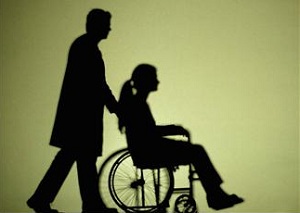
There are many parallels between living with a disability and dealing with an uninvited house guest. If you have ever had an uninvited house guest, I am sure you remember moments when things may have been uncertain and, at times, tense or uncomfortable. At the very least, having an uninvited guest requires some adjustments, much like living with a disability.
An uninvited guest may arrive unannounced, leaving no time to plan or prepare. Likewise, in many cases people living with disability have little or no time to plan for the many changes to come. While there may have been no way to prevent the disability and requisite life changes, having time to prepare—psychologically and literally—can make a huge difference in a person’s ability to adapt and cope.
A period of psychological adjustment is required for a person who has a disability, his or her spouse/partner, parents, and other family members. The adjustment process people frequently talk about resembles the grief process in many ways. Like the grief process, people often experience feelings in what seem to be stages. Similar to the grief process, this adaptation process usually begins with a period of denial.
Denial
In my work with couples and families living with multiple sclerosis, I often hear concerns that one person seems to be “stuck in denial.” To people who have moved through the initial denial stage, it may seem as if their loved one is not progressing as quickly as others. The truth is, different people work through this period of adjustment differently, and it takes as long as it takes. The denial stage usually happens at the time of diagnosis or disability, and may come up again at other times. For example, in a progressive illness, if one begins to lose mobility or other limitations arise, the initial stage of the adjustment process may be triggered again.
It may seem clear to a caregiver/partner or family member who has been helping someone walk even short distances that a mobility device is needed (cane, walker, scooter). For the person who is having mobility difficulty, admitting that it is time to talk to a doctor about a mobility device may affect his or her identity, hope for recovery, or future progress. If so, working through the denial and bargaining, and then later stages of adaptation, may be necessary. It is not unusual to see all members of the family triggered by new developments that start the process over.
Denial is believed to be a protective measure that prevents us from becoming emotionally overwhelmed. Denial slows down the process of coping with traumatic events, giving us more time to psychologically prepare ourselves for the onslaught of feelings. The process of denial, known as a defense mechanism, should not be rushed or sabotaged by well-meaning loved ones who are at a different place in the adaptation process. Doing so can cause the person who needs more time to become emotionally overwhelmed without the necessary skills to cope effectively.
Coping skills: A person with disability and his or her family members should try to be empathetic and understand things from the perspective of others. Be honest, but gentle, about your perceptions. Choose the time to discuss these issues carefully—not when either of you are tired, frustrated, or angry. Always talk to your loved one(s) before bringing up concerns with doctors or other professionals. Caregivers and family members should keep in mind that their needs are important, too. Take care of yourself and make sure you have plenty of support. When children are involved, be very careful what and how you share information with them. Children need to hear things based on what is appropriate for their age and stage of development. Ask for guidance from a professional if you are unsure how much to tell children or how to talk to them about disability.
Bargaining
The stage that usually follows denial is bargaining. During this time, people often are looking for second opinions, alternative therapies, and other remedies. It can also be a time when we promise the gods that we will turn our lives around if given a second chance without the disability or diagnosis.
It is true that finding the best medical providers, keeping a positive outlook, and staying informed of new research and possibilities is important. However, this can also be a time when people are vulnerable to scams and false promises. Unfortunately, there are a lot of companies and people who offer products and services that guarantee outcomes without doing the necessary research required to back up those assurances.
It is a good idea to check out any new or experimental treatments carefully before trying them—particularly if there is a large commitment of money, resources, or time involved. Check with local and national nonprofit organizations that provide services to people with your specific issue or health challenge. Agencies such as the National MS Society, American Cancer Society, and others often have information about ancillary and alternative therapies. They may be able to send you information or answer your questions.
Coping skills: Make decisions together based on facts. Find local and national organizations that you trust to support you and provide well-researched information. Be sure that any second opinions or ancillary providers have access to all the information you have from other providers. In some cases, taking medications or treatment without being fully aware of how they interact with your other treatment can be life-threatening. Make a commitment to fully investigate any new or experimental treatments before deciding to try it. Ask for and check references when appropriate. Verify the credentials of all providers before visiting them. At some point, you may have to accept a new reality that you had not planned for and do not welcome. If you have prolonged difficulty coping with the diagnosis or prognosis, find support from a professional or support group to help you with the transition.
Over the next few months, I will explore additional aspects of disability, how it affects the lives and relationships of the people involved, and ways of coping with these situations. If you have ideas to share about how you have effectively coped with any of the situations presented, please join the discussion by leaving comments below. Likewise, if you have questions, feel free to ask for input from others who read the blog.

Sports generally are viewed as harmless pursuits, a source of social interaction and bonding, exercise, and stress relief. But in recent years, highly publicized incidents of fan violence have raised concerns about the culture surrounding sports. The vicious 2011 beating attack on Bryan Stow at Dodger Stadium in Los Angeles is just one such example. Alcohol-fueled fights and skirmishes are increasingly common at all levels of competition, from playgrounds to professional leagues. Most people who have attended a sporting event have witnessed at least one example of an out-of-control fan.
What’s behind this surge in violence? The problem may not be the nature of sports themselves, but rather the way society treats sports in conjunction with personal factors. A closer look at some factors that may contribute to fan violence:
Overidentification
For many sports fans, their teams of choice become a proxy for their own identities. Overidentifying personally with a favorite team may be a contributing factor to sports violence. A person who watches a favorite team lose, or witnesses an unfavorable referee call, may behave as if he or she has personally suffered. The advent of Facebook and other social media, as well as message boards and other gathering places for fans, may make it difficult to disengage from favorite teams or let go of bad memories. These platforms also provide more access to inflammatory views from rival teams’ fans, fueling deep feelings of loyalty, protectiveness, and anger that boil to the surface amid the emotional current of a live game.
Alcohol
Alcohol plays a significant role in many fan altercations. At National Football League games in 2011, more than 7,000 fans were ejected for inappropriate or violent behavior. Some fans spend all morning and afternoon tailgating and drinking with friends before watching the event and then celebrating—or grieving—afterward. People often are intoxicated before even entering a venue. The feelings of deep loyalty and anger that many fans feel can be exacerbated by alcohol consumption.
Hypermasculine Culture
Despite years of progress toward gender equality, many men feel pressured to meet expectations of traditionally masculine behavior. Sports can be a significant platform for masculine identity, and people who identify with hypermasculine culture may be more likely to attend sports events. Combined with adrenaline, overidentification, and ready access to fans with opposing allegiances, some men may be inclined to be violent when exposed to triggers. Likewise, women in hypermasculine environments that promote disrespectful or violent behavior may also be more inclined to engage in it.
Sociological Factors
Certain people are at a greater risk of engaging in violent behavior. People who have experienced a recent stress such as job loss, the death of a loved one, or a perceived humiliation are already on edge and more likely to react emotionally. Many people attend sporting events to alleviate stress. However, when a favored team loses, a person is heckled, or a person loses a significant bet associated with a game’s outcome, stress may explode into rage.
Group Dynamics
Millions of people attend sporting events every year, and the vast majority never commit a violent act. When 100,000 people pack a stadium, though, the odds are high that a number of them are under the influence of alcohol. Combine this with an emotional, hypermasculine environment and exposure to opposing sentiment, and you’ve created a recipe for fan violence. Proactive measures such as reporting inappropriate behavior immediately, limiting alcohol intake, and actively encouraging sportsmanship among peer groups, can help address an increasingly challenging threat to our enjoyment of sporting events.
References:
- Aguirre, B. E. (2008). Sports fan violence in North America. Contemporary Sociology: A Journal of Reviews, 37(2), 157-158. doi: 10.1177/009430610803700235
- Associated Press. (2012, May 31). Witnesses describe violent scene. ESPN. Retrieved from http://espn.go.com/los-angeles/mlb/story/_/id/7991565/witnesses-depict-violent-scene-bryan-stow-beating
- Handwerk, B. (n.d.). Sports riots: The psychology of fan mayhem. National Geographic. Retrieved from http://news.nationalgeographic.com/news/2005/06/0620_050620_sportsriots.html
Cyber bullying has become more common with advances in technology. Messages can be posted on social networking websites, and pictures can be downloaded, altered, and made available to the world in seconds. Although there has been abundant research into the consequences of cyber bullying and traditional bullying, little has been done to determine which type may cause more psychological damage. It is well established that bullying itself—the act of terrorizing, intimidating, and ridiculing another through verbal or physical acts—can have numerous deleterious effects.
Those who endure bullying are at increased risk for internalizing problems such as anxiety, depression, and suicide ideation. Understanding how each type of bullying impacts young people is of critical importance in order to target those most vulnerable and help them deal with the ramifications. To get a better idea of the effects of cyber bullying in comparison to traditional bullying, Sheri Bauman of the University of Arizona’s College of Education recently conducted a study asking college students to rate their levels of distress based on hypothetical cyber and traditional bullying scenarios. The scenarios were similar in nature and differed only in delivery.
Bauman discovered that three main bullying themes emerged, including generalized bullying, name calling, and sexual victimization through explicit sexual images. Although the female participants reported higher levels of distress for all three types of bullying, the method of delivery did not impact emotional response. Specifically, although their responses varied by bullying scenario, all participants reported similar distress levels whether the bullying event was traditional in nature or cyber bullying.
However, Bauman found that one type of bullying was the most distressing. “We … found that bullying with sexual material, whether conventionally or by technological methods, is the most upsetting kind of incident to targets,” she said. This was especially true for female participants. Those with a history of victimization had higher distress than those without. In sum, Bauman believes that these findings demonstrate that it may not be the delivery method of bullying behavior that is most detrimental to young people, but rather the content of the message conveyed.
Reference:
Bauman, S., Newman, M. L. (2012). Testing assumptions about cyber bullying: Perceived distress associated with acts of conventional and cyber bullying. Psychology of Violence. Advance online publication. doi: 10.1037/a0029867
Some of the symptoms of schizophrenia include delusions, mood fluctuations, and impaired social functioning. One of the reasons social interactions are challenging for people with schizophrenia is the way in which facial expressions are processed. Specifically, it is theorized that schizophrenia deteriorates the recognition processes of individuals and makes it more difficult for them to distinguish between familiar and unfamiliar faces. This can cause significant social struggles because accurately perceiving the facial expressions of others is how people determine their reactions to them. It is also how people decide which faces are threatening and which are safe.
Fabrice Guillaume of the Laboratory of Cognitive Psychology at Aix-Marseille University in France recently led a study that explored facial recognition in individuals with schizophrenia in order to get a better idea of impairments that occurred and why. Guillaume assessed 20 individuals with schizophrenia and 20 without as they evaluated the familiarity of facial expressions. The electrophysiological (ERP) responses of the participants were monitored as a set of faces was presented with expression changes, without expression changes, and then, finally, new faces were presented. Guillaume discovered that when the expressions changed, the participants with schizophrenia did not recognize them as familiar, even though they had seen the faces before.
The participants with schizophrenia also had a hard time distinguishing between familiar faces with new expressions and unfamiliar faces. “This result suggests that patients with schizophrenia are more sensitive to the expression change and appears to be inconsistent with studies showing spared familiarity in schizophrenia,” Guillaume said. The findings could be interpreted to indicate a broader, more global perception of faces occurs in schizophrenia, and that individuals with schizophrenia have an impaired ability to retrieve the global perception when perceptual nuances, such as expressions, occur. In sum, the results of this study reveal that people with schizophrenia can experience facial recognition deficits, which can have a dramatic impact on social interactions, even when they try to identify faces familiar to them.
Reference:
Guillaume, Fabrice, Francois Guillem, Guy Tiberghien, and Emmanuel Stip. Mismatched expressions decrease face recognition and corresponding ERP old/new effects in schizophrenia. Neuropsychology 26.5 (2012): 568-77. Print.
One of the most common methods for assessing the behavioral and emotional state of a child is a parental report. This type of evaluation usually comprises a parent’s observation and evaluation of the child’s feelings, mood states, and behaviors over a period of time. But just how accurately do parents gauge the emotional temperature of their children? That was the question at the center of a recent study conducted by C. Emily Durbin of the Department of Psychology at Michigan State University. Because parental reports can vary quite dramatically from reports obtained by other observers, such as teachers, counselors, and classmates, Durbin wanted to determine what factors, if any, skewed parents’ perceptions.
Durbin chose to focus on the effects of maternal depression on parental reports. She based her decision on the fact that other conditions, such as alcoholism, parental anxiety, and family distress, have been shown to influence maternal reports. Durbin extended the existing research and compared mothers’ reports with those of unbiased observers on a sample of 190 children ranging from 3 to 6 years old. Participants were instructed to rate levels of sadness, fear, happiness, surprise, and anger in the children after they completed 10 emotion-inducing tasks. Durbin found that the mothers with a history of depression or anxiety tended to rate their children as less happy than mothers with no such history. Additionally, these same mothers viewed their children as overly fearful, and rated girls as sadder than boys. This could be a result of maternal sensitivity to emotions such as fear and sadness. However, the outcome showed a significant disparity between observers’ ratings and those of the mothers with a psychological history. “These mothers may have greater difficulty setting aside their perceptions of the child’s typical emotional adjustment to focus solely on rating the behavior the child is currently exhibiting,” Durbin said. Although the sample size was limited to young children and did not contain a large number of mothers currently exhibiting depressive symptoms, the results warrant further investigation. Durbin believes it is essential to expand this research to include older children, comparison to other assessment tools, and evaluation of other aspects of childhood development.
Reference:
Durbin, C. Emily, and Sylvia Wilson. Convergent validity of and bias in maternal reports of child emotion. Psychological Assessment 24.3 (2012): 647-60. Print.
Fear can be a strong motivator. People who are afraid of living in poverty may be motivated to pursue any career option in order to avoid financial destitution. In a similar way, individuals who are afraid that they may develop specific health-related problems may work tirelessly to maintain optimal physical condition. Fear often has been linked to motivation, both positively and negatively. Until recently, however, few studies examined how fear of failure affects activity-related performance.
Jocelyn J. Bélanger of the University of Maryland sought to determine how negative feedback on specific tasks affected motivation in individuals fearful of failure (obsessive) and those who were passionate about their activity but less worried about setbacks (harmonious). In a series of experiments, Bélanger found that individuals who are passionate about achieving their goal perform differently based on their style of commitment. In particular, those with obsessive passion responded with positive motivation to negative/failure cues while those with harmonious passion saw no change in performance. In fact, the harmonious passion participants maintained the same level of performance throughout the experiments, regardless of whether they received success or failure feedback.
“Obsessive passion, associated with defensiveness, predicts performance aimed at avoiding failure, whereas harmonious passion, associated with a secure self-concept, predicts stable performance,” Bélanger said. These findings suggest that fear works as a motivator for individuals with obsessive passion. Bélanger believes that people who feel their sense of self is threatened by failure of goal attainment may unconsciously respond to that threat by increasing their performance. However, those who have harmonious passion traits are less threatened and view the feedback, positive or negative, merely as information needed to continue the process of attaining their goals. The results of this study offer valuable information that could be used for the development of goal-attainment strategies in the professional, academic, and sports arenas, and could help clinicians better understand an individual’s reaction to goal-achievement outcomes.
Reference:
Bélanger, J. J., Lafrenière, M.-A. K., Vallerand, R. J., Kruglanski, A. W. (2012). Driven by fear: The effect of success and failure information on passionate individuals’ performance. Journal of Personality and Social Psychology. Advance online publication. doi: 10.1037/a0029585
As people age, they face challenges that they may never have experienced before. Loss of friends due to death, loss of independence as a result of diminished income, and loss of physical health can all create significant stress in a person’s life. The way that people choose to cope with that stress is directly related to the skills they learned throughout their lives. Attachment styles developed in early childhood can dictate the response people have to a variety of stressors, including ones encountered in later years. Additionally, an individual’s ethnic origin influences how he or she will respond to stress at various stages. To better understand how attachment style affects coping and overall well-being in older adults and what role ethnicity plays, Eva-Maria Merz of the Netherlands Interdisciplinary Demographic Institute at The Hague in the Netherlands recently conducted a study of 1,116 older adults from varying cultural backgrounds.
The participants, which included European Americans, African Americans, Eastern European immigrants, and Caribbean immigrants, were examined to determine how attachment style affected their well-being. Specifically, Merz looked at secure or dismissive attachment styles in comparison to avoidant and fearful attachment styles. “As expected, secure attachment and dismissive attachment were associated with greater well-being, whereas ambivalent/fearful attachment was related to reduced well-being in this older cohort,” said Merz. The link between secure attachment and positive well-being was most evident among the Caribbean and African American participants and weakest among the other two groups. When she looked at avoidant/fearful attachment styles, Merz discovered that it negatively impacted well-being in all the ethnic groups with the exception of the Caribbeans.
The results of this study support previous research highlighting the importance of healthy attachment styles on well-being. This new evidence extends the existing data by demonstrating that attachment styles are especially important in later life when unique challenges arise. Further, attachment styles are influenced by ethnicity. Taken together, this information provides new insight into the underlying factors that contribute to the general physical and mental health of older adults and should be considered when implementing interventions to help older adults cope with life’s stressors.
Reference:
Merz, E.-M., Consedine, N. S. (2012). Ethnic group moderates the association between attachment and well-being in later life. Cultural Diversity and Ethnic Minority Psychology. Advance online publication. doi: 10.1037/a0029595
Related articles:
Patterns of Attachment in Adults
Individuation Issues with Elderly and Ailing Parents
The Importance of Attachment in Early Caregiving
 “Why are you out of bed?”
“I’m scared.”
“What are you afraid of?”
“There’s a monster under my bed!”
“There are no monsters. Go back to bed.”
“Nooooooo, I’m scared.”
Sound familiar? Almost every parent has done this. Holding a little hand, down on your hands and knees with a flashlight to prove there is nothing under the bed—unless you count the stray sock, a missing toy, and a few dust bunnies.
Your little one thinks you are a superhero. You faced the monster and saved the day, or in this case, the night. With imagination tamed, feeling safe and secure, your child falls asleep.
Imagination is an amazing thing. Children hone it to a fine art. With a towel on their shoulders and a leap from the couch, they fly!! They feed you imaginary sandwiches and wipe imaginary crumbs from your chin. They introduce you to friends only they can see. They scare themselves at bedtime. Years pass, towels are used for bathing, imaginary sandwiches and friends are forgotten. Monsters no longer hide under the bed. Reality replaces imagination.
Or does it? Many adults continue to exercise their imagination. They don’t have towels on their shoulders or imaginary friends, but they do believe in monsters created entirely with their imagination. Your child, no longer afraid of monsters, is a teenager now. You worry she doesn’t take school seriously, or her current boyfriend is a bad influence, or her college fund isn’t going to be enough. Get the picture?
Adults may not imagine monsters under the bed, but they do imagine a multitude of scenarios that would scare Freddy Krueger, and it’s socially acceptable. A vivid imagination is never questioned if the name is changed from imagination to worry. It is commonly accepted that everyone worries; it’s part of being a responsible adult. How else can you be prepared when the unthinkable happens? If you have played out the worst-case scenarios in your mind, you are ready to deal with them.
Worry is as useful for you as monsters under the bed were for your child. You make things up in your head, believe them, and scare yourself. Who will take you by the hand, shine the flashlight on your imaginary fears, and make them disappear?
Worry is using your thinking to predict the future or to continue to relive the past. Predictions rarely come true, and if they do, worry did not change the outcome. It only made you miserable before the outcome happened. How much have you changed the past by worrying about it? Unless you conquered time travel, it doesn’t work. The past is past. It doesn’t change and it doesn’t cause you pain unless you bring it into your present by thinking about it. So the monsters (worries) of the future and the past are simply you using your imagination to scare yourself. Seems a bit silly, doesn’t it?
Worry (scaring yourself with your imagination) raises your level of tension and lowers your mood. From that low state of mind you expect to find solutions to your problems. It won’t happen. High tension and low mood doesn’t make for good problem solving—ever. Recognizing that you are scaring yourself helps the worries go away. You shine the flashlight on your fears and recognize they are imaginary. From a calmer state of mind, you deal with problems as they occur rather than in the future or the past.
Related articles:
Don’t Worry – Be Happy!
Self-Soothe in Your Own Compassionate Hammock
Mindfulness Practice: Learning to Live in the Moment
 The world of psychiatry is full of unusual phobias. There’s symmetrophobia, the fear of symmetry, xerophobia, the fear of dryness, and ideophobia, the fear of ideas. But these phobias are exceedingly rare, and in the psychiatric interest on strange phobias, more mundane—and more dangerous—phobias are easily forgotten. Needle phobia is one such fear. There is significant evidence that fear of needles sparks physical changes in the body that can result in cardiac episodes and other health problems when a patient is exposed to needles. But needles are a part of life and are often necessary for medical treatment. Needle phobia, then, can cause a person to avoid life-saving care and, if a needle is forced upon a phobic patient, the results could be disastrous.
Needle Phobia and Cardiac Episodes
Most people dislike needles, but a true needle phobia feels overwhelming and uncontrollable to patients. People who have needle phobia may experience an extremely elevated heart rate and blood pressure immediately before a needle puncture. When the puncture occurs, the heart rate may drop precipitously. This exposes them to significant danger of heart arrhythmias and other cardiac episodes. Dr. James Hamilton, a pioneer in the treatment and study of needle phobia, reports that at least 23 deaths have been caused by a needle puncture that led to a cardiac episode.
Medical Issues
Doctors, nurses, and other people tasked with administering vaccinations and drawing blood are not typically properly educated about needle phobia. They’re accustomed to patients who dislike needles and may reassure them with promises that the puncture won’t hurt or will only take a minute. But with a true needle phobic, these reassurances don’t work. The person isn’t afraid of pain or injury: he or she is afraid of the needle itself. This poses serious obstacles to medical treatment. As many as 10% of people have some degree of needle phobia, and a significant portion of these individuals report that they would rather die than receive a needle puncture. These people tend to avoid medical care because of their fear, allowing their illnesses much more time to worsen than illnesses of nonphobic people.
Causes
Although traumatic experiences with needles such as painful blood draws or blood transfusions can cause needle phobia, people can’t typically trace the origin of the phobia. Needle phobia seems to run in families, but this does not mean the fear is genetic. Children may learn it from watching their parents show fear of needles. Restraining children during vaccinations and blood draws is strongly correlated with the later development of needle phobia. Consequently, parents should strive to ensure that their children’s early experiences with needles are positive and that children are not restrained unless the needle puncture is needed immediately to save the child’s life.
Treatment
Some people have good luck with hypnotherapy, but the most common treatment for needle phobia is counterconditioning. This process can take several years because the mere sight of a needle is sufficient to send many patients into a full-blown panic attack. Treatment providers typically start by asking the person to envision a needle, progress to showing the person a needle, and ultimately move toward getting the person to accept a needle puncture. For people who require needles for medical treatment, it may be necessary to administer general anesthesia to prevent life-threatening reactions. In less severe cases, anti-anxiety medications can lessen the symptoms of needle phobia.
Sources:
- Hamilton, J. G. (n.d.). Needle phobia: A neglected diagnosis. Needle Phobia. Retrieved from http://needlephobia.info/pages/Hamilton-Needlephobia.pdf.
- Emanuelson, J. (n.d.). The Needle Phobia Page – fear of needles and needle procedures. The Needle Phobia Page – Fear of Needles and Needle Procedures. Retrieved from http://www.needlephobia.com/
- The phobia list. (n.d.). The Phobia List. Retrieved from http://phobialist.com/
Related articles:
The Other Side of Normal: An Interview With Jordan Smoller
Three Steps for Dealing with Panic Attacks
Breathing Lessons
One of the primary goals of successful therapy is the formation of a meaningful and strong therapeutic alliance. This bond between the therapist and client is essential for creating an environment of openness, acceptance, and trust. Therapists are largely responsible for developing this foundation, but clients contribute significantly to the bond as well, even if they are unaware they are doing so. Many clients bring past experiences into therapy. Negative and judgmental encounters with previous therapists can cause clients to be distrusting and fearful in treatment, creating barriers to constructive working alliances. Understanding how clients’ past experiences influence the therapeutic bond, and how therapists can overcome these challenges, was the focus of a recent study conducted by Christian Moltu of the Division of Psychiatry at the District General Hospital of Forde in Norway.
Moltu interviewed a dozen therapists and asked them to describe how they overcame hurdles they experienced with hesitant and resistant clients. The therapists were trained in a range of approaches and yet each described similar methods for interacting with difficult clients. Each therapist stated that he or she achieved a productive working alliance, despite their clients’ reservations, by doing one of three things. The therapists said that successful alliances occurred when clients asked the therapists to help them with the relational challenges they faced. Additionally, therapists noted that bonds were built when they acknowledged the clients’ willingness and courage to overcome existing challenges. Lastly, when clients were unable to move past victimization and suffering, therapists found a way to build a bond with them by recognizing this deficit in their clients and explaining that the goal of therapy was to move from challenging situations to positive outcomes. Moltu added, “We found that participants experienced the client as contributing relationally and that this influences how the therapists respond and are present in the interaction.” By being attentive to the past experiences a client brings to therapy, a therapist can work with the client to overcome these limitations and ultimately develop a strong and cooperative therapeutic relationship.
Reference:
Moltu, C., Binder, P.-E., Stige, B. (2012). Collaborating with the client: Skilled psychotherapists’ experiences of the client’s agency as a premise for their own contribution in difficult therapies ending well. Journal of Psychotherapy Integration. Advance online publication. doi: 10.1037/a0028010
 I am frequently asked what the best complementary or alternative therapies for kids are. This is a broad and potentially complex question, with appropriate courses of treatment depending on both on the child’s struggles and the balance of safety and efficacy of the therapy being considered. Eventually, many parents eventually find a complementary or alternative medicine (CAM) therapy that feels right for their child.
The most recent data from the National Center for Complementary and Alternative Medicine (NCCAM) found that 12% of the 9,000 children surveyed in 2007 had used some form of CAM during the previous year. CAM use typically ranges from providing remedies in lieu of medical treatments—such as using a homeopathic flu remedy instead of a prescription—to using CAM in conjunction with conventional remedies. The latter can be as simple as giving a child a zinc lozenge or tea with honey in addition to the antibiotics a doctor prescribes when a child has a sore throat or throat infection. Another example is when a child has been diagnosed with attention deficit hyperactivity disorder (ADHD), and his or her parents employ dietary changes even if the child is also receiving medication or psychotherapy. CAM therapies are often used to help children manage symptoms of chronic pain conditions or notable anxiety, ideally in combination with psychotherapy (and appropriate medical care, if this is indicated).
Remembering Developmental Differences
A point NCCAM emphasizes is that children are not merely smaller versions of adults. Similarly, more studies have been conducted regarding the effects of many CAM therapies on adults, although there is a growing body of research on CAM with children. Thus, what may be considered an appropriate CAM therapy or dose of therapy for an adult is not necessarily what we can recommend for a child.
That being said, there are a number of treatments that are considered generally safe for children, particularly when provided or informed by appropriately trained professionals. My favorites are listed here. I chose to emphasize non-oral intake therapies, although at times these may also be appropriate.
- Guided imagery or self-hypnosis can be helpful for managing mood symptoms, pain and itching, sleep difficulties, and nausea.
- Mindfulness or other types of meditation can aid in improving mood, pain, itching, sleep, nausea, and concentration.
- Aromatherapy can help reduce anxiety and enhance feelings of calm, especially when paired with other therapies, including cognitive behavioral therapy, meditation, imagery/hypnosis, or massage.
- Movement therapies, such as yoga, dance therapy, or tai chi can increase a child’s feelings of mastery, discharge excess physical tension, provide focus, and improve mood.
- Massage decreases muscle tension or soreness and increases relaxation.
- Energy therapies, such as Reiki or therapeutic touch, may help increase calmness and decrease stress. These may also help with some physical discomforts.
- Art therapy can help children cope with change, shed light on emotions and concerns that they may have trouble verbalizing, and reinforce healing images created during guided imagery and hypnosis.
- Homeopathy is gently calming and is reported to help with fears, anxiety, and tantrums. There is less data on this therapy, but it is generally considered to be safe.
- Diluted ginger tea can help with upset stomach/nausea.
- Dietary changes, which may include eliminating processed foods, caffeine, or sugar and emphasizing whole grains, fruits, vegetables, legumes, and healthy sources of protein, are health-supportive overall, and some parents report improved mood, sleep, and concentration when processed foods are limited or eliminated.
One common theme that runs through most of the therapies listed above is that they help children to feel calmer. Some of the approaches provide children with tools to help them directly impact how they feel via what they do (movement therapies, imagery/hypnosis, meditation, art), which enhances children’s feelings of mastery and control. All of these approaches require at least initial participation and monitoring from parents—a key ingredient in helping children to feel safe, loved, and supported.
As always, it is essential to keep healthcare providers in the loop when using CAM therapies with children, particularly with those who have a medical or psychological illness.
Modeling Emotional Intelligence
Finally, if I were to add a number 11 to the list, it would be to emphasize that children pick up on and are undoubtedly affected by their parents’ moods. It is essential for parents dealing with anxiety, depression, or other psychological challenges to obtain appropriate treatment. Doing so helps parents feel better, enhances their ability to cope with the many demands of parenting, and teaches children about the value of self-care. Furthermore, emotionally healthy parents tend to parent more effectively, which also reduces children’s feelings of anxiety and depression.
Resources:
- National Center for Complementary and Alternative Medicine: CAM Use and Children
- Columbia University’s Integrative Therapies Program for Children with Cancer: A leading program that emphasizes both research and clinical practice. Their website contains a wealth of information about a variety of therapies, as well as helpful links.
- This article details an integrative (CAM) treatment of pediatric pain and itch (pruritus) with a seven year-old girl:
- Stein, T. R., Sonty, N., and Saroyan, J. M. (2012). “Scratching” beneath the surface: An integrative psychosocial approach to pediatric pruritus and pain. Child Clinical Psychology and Psychiatry, 17(1), 33-47.
Most classes of antidepressant medications, including the selective serotonin reuptake inhibitors (SSRIs), are thought to require 2 or more weeks of use before therapeutic effects become noticeable. The consumer guidelines for a drug like Celexa (citalopram) clearly advise patients not to expect immediate benefits but to continue taking their medication as prescribed. However, a recent study has cast doubt on the notion that SSRIs really take weeks to build up to therapeutic levels. If the results are confirmed with subsequent experiments, then our understanding of these medications will be greatly enhanced. Observing the neurochemical mechanism behind specific SSRIs will naturally lead to more beneficial prescribing patterns and better patient outcomes.
In a study of the SSRI Celexa, 26 participants were given either a single dose of the drug or a dose of placebo, a harmless sugar pill. None of the participants had depression, a fact which allowed researchers to study specific physiologic responses without interference. Three hours later, participants were shown images of frightened faces while brain activity in their amygdala was measured via magnetic resonance imaging. Psychiatrists have theorized that hyperactivity in the amygdala is a measurable effect of depression that places the individual in a constant state of heightened anxiety. In the single-dose Celexa study, participants given medication showed a muted response in their amygdala when viewing frightened or anxious faces. Researchers observed a spike in amygdala activity in those who received placebo. These findings demonstrate that potentially therapeutic effects begin as quickly as a few hours after the first dose of Celexa, and by extension any SSRI. Interestingly, none of the participants reported either a change in mood or unusual side effects. The study authors theorize that the action on the amygdala has both immediate benefits on an unconscious level and longer term effects on anxiety.
Depression is often described as a constellation of symptoms and effects. Because of its many manifestations, the disease is a long way from being fully understood. There is currently no fool-proof, one-size-fits-all treatment for depression. Research on antidepressant medications like Celexa helps us identify what’s happening in the depressed brain. Armed with that knowledge, we can tailor more effective medications in the future. The study under discussion, for example, highlights the possibility that Celexa’s beneficial effects begin with the amygdala, the brain’s primitive fear center. More importantly, these effects begin almost immediately, contrary to previous assumptions.
References
Murphy, S., Norbury, R., O’Sullivan, U., Cowen, P., Harmer, C. (2009). Effect of a single dose of citalopram on amygdala response to emotional faces. British Journal of Psychiatry, 194(6), 535-540.