 May is Mental Health Awareness Month, a time to recognize a range of issues—depression, bipolar, and schizophrenia among them—and the effects they have not only on the people personally experiencing and struggling with them, but on society at large. But what does it mean to be aware of mental health, exactly, and how does that awareness manifest?
Events in the news regularly challenge our perceptions of mental health, or what we may perceive as a deficit thereof. From the marathon bombings in Boston to the Newtown tragedy to the discovery of three women held in captivity in Cleveland for nearly a decade, some of the most compelling stories in recent times have been widely associated with mental health concerns. In some cases these concerns relate to victims, in others to perpetrators of violent acts. In almost all cases, though, an initial wave of outrage gives way to apathy and disconnect as the story fades from public consciousness.
While dedicating a month to mental health awareness is nice, it’s clearly not enough. We wanted to know what our Topic Experts had to say about the matter, so we asked them the following questions: What does mental health awareness mean to you as a mental health practitioner? Is awareness, in your estimation, on the rise or decreasing in recent years? Why? What obstacles do therapists and nontherapists alike face in their efforts to increase awareness of mental health issues? What can be done to combat stigma?
Their responses follow:
- Sarah Swenson (autism spectrum): “I work as a psychotherapist with gifted children and adults. This is one of the most underserved populations in the entire area of mental health. Gifted children are routinely misdiagnosed with ADHD, OCD, impulse control disorder, and even disorders of the personality. Often, these children are medicated. This creates a chain of events with effects that extend well into the future. … It is not only to the general public that the topic of mental health awareness is significant. It is also of importance to our health care providers and the medical schools that train new practitioners. Only through the addition of coursework in the identification and clinical presentations of intellectual giftedness will the tide turn. If physicians know what they are looking at, their diagnoses and referrals will change, and children who need no medication in the first place will benefit because they will no longer be medicated into altered states that create negative environments for their giftedness to blossom and grow.â€
- Tom Wooldridge (systems theory / therapy and family-of-origin issues): “What is mental health awareness? For me, it has two components. First, we pay attention to our own mental health. What is the legacy of mental illness in my own family-of-origin and how does it affect my day-to-day life? How am I dealing with the experiences—both positive and negative—that I had growing up? What is my attitude toward my own emotional difficulties? Am I able to relate to them nonjudgmentally and with compassion? Second, we recognize the impact of mental illness and emotional suffering on those around us—friends, family, and the larger community—and begin to struggle with the question of how this awareness can inform our day-to-day lives. What are our attitudes toward those we encounter who are struggling with severe mental illness? Over time, we hope to find ways to support them in their struggles and to recognize our ultimate interconnectedness.â€
- Stephen L. Salter (values clarification / eating and food issues): “The efforts of the mental health awareness project, while coming from a caring place, can do more to obscure awareness than promote it. Sure, it might be useful to understand ‘bipolar’ and ‘depression,’ but the effort becomes counterproductive if it is not contextualized within the much larger question, ‘What does it mean to be human?’ Perhaps we’d be better served to offer a month contemplating that question. We assign some really strange names to people—like ‘schizophrenic.’ More often than not, it further exiles the ‘mentally ill’ into a class of otherness. To truly understand mental health, the first diagnosis must always be human.â€
- Deb Hirschhorn (relationships and marriage): “The stigma must come out of ‘mental health’ in people’s minds. The recent mass murderers needed help long before they became adults—and the help came too little, too late if it came at all. Here is what should happen instead: School counselors should be vigilant and then call parents in to discuss their children when something seems not right about a child. However—and this is a big however—it should be handled in a way that does not make the parents feel ‘one-down,’ but rather with great humility and kindness on the counselor’s part. The message should be sympathetic to whatever the parents and child may be experiencing. After all, if the child is being bullied at school or excluded from cliques, the child may need help with social skills and the parents may themselves not be strong in this area. This is nothing to be ashamed of: We all have our strengths and our weaknesses, and that point should be made to them. I, for example, can’t sing on key to save my life, and these parents may be great musicians. Not everyone is great in the social area, parents included, and even ones who have those skills may not have the skill of passing it on to their children. School counselors should be referring such children as soon as the problem becomes evident, even as early as kindergarten, and the referral should be geared toward handling difficult social and academic situations, dealing with abuse at home, and self-esteem building. It should not automatically include a prescription for medication. Therapists of all stripes must recognize the inherent value in talk therapy so that we can promote that message to the public.â€
- Deborah Klinger (eating and food issues): “I believe that mental health awareness is increasing. High school counselors whom I’ve come in contact with are knowledgeable and concerned about students’ mental health issues, and the universities in my area have excellent campus counseling services that liaise with psychotherapists in the community. None of this was the case when I was in high school or college. The National Association of Mental Illness (NAMI) holds local family-to-family support groups for family members of mentally ill persons. And I hear mention and discussion of depression, bipolar, eating disorders, etc., everywhere—in national news media, online, and in day-to-day conversation. Not only has awareness of mental health issues increased, but so has understanding and acceptance.â€
- Lynn Somerstein (object relations): “Thanks for asking about mental health awareness. I am sad people remain largely uninformed about mental health issues and are often reluctant to seek help because of the stigma that still comes with the territory. Treatment should be made more available, too, to those who want help but can’t afford it. Many therapists make private, sliding-scale arrangements for those without health insurance, but what we really need is better government health care and education about the many different avenues available—from talk therapies to medication.â€
- Olga Gonithellis (creative blocks): “Reflect, talk, act! This month is an excellent opportunity for every one of us to reflect upon the importance of mental health, to start talking, and to take action. One of the common misconceptions is that talking about it creates it. There is an irrational fear that by sharing knowledge and information about mental illness, one will reinforce its existence. However, opening up communication and sharing facts and experiences are helpful tools in dealing with all sorts of psychiatric conditions, from depression to panic and from body dysmorphia to schizophrenia. Using my area of interest as an example, there is growing scientific research regarding the prevalence of psychiatric issues in performers and creative individuals. By encouraging a genuine curiosity about this topic, we are able to dispel myths and to discover realities. Artists have been able to receive help and guidance on concerns such as performance anxiety, low self-esteem associated with stress in the entertainment industry, the connection between mood and creativity, and more. Similarly, there are many other topics related to what impacts mental health that need to be addressed in our homes, our schools, and our communities. However, without awareness and a nonjudgmental approach, we will not get very far. Let us use this month as a chance to reflect, talk, and act!â€
- Andre S. Judice (posttraumatic stress / trauma and energy psychology): “Mental health awareness is the recognition that our psychological well-being is an important part of our own health, productivity, and happiness, as well as the well-being of our communities. In my opinion, mental health awareness is on the rise in our country. Certainly, recent events across our nation have called this issue to the forefront as we are forced to consider the motivations of people who set out to harm others. Unfortunately, it seems that to this day in our culture too few people understand the factors that contribute to or hamper good mental health. On the other hand, our efforts to increase people’s awareness of these factors, as well as the various ways that we can each be more psychologically well, seem to be taking hold. … I believe that one obstacle to increasing mental health awareness is in the various belief systems (be they entrenched family beliefs, religious beliefs, or other beliefs held by a given group) that lead people to adhere to ineffective and antiquated value systems in which others are told that they don’t need outside assistance but merely willpower to be better and help from within the group itself. In these situations, people needing more effective ways to improve their mental well-being miss important assistance and opportunities. Certainly, stigma associated with reaching out for help is another obstacle which seems best resolved with increasing numbers of people being open about their own utilization of mental help support systems.â€
- Shannon McQuade (addictions and compulsions): “It would be helpful to simply acknowledge that we all have a nervous system that, like anything else in the body, can break down. We are all at risk for mental health issues. Like cancer, some are more vulnerable than others. Many people have been rushed to the emergency room believing they were having a heart attack, only to discover that they were actually having a panic attack. A mental assessment should be part of a regular doctor visit, with referrals made to specialists as needed. If everyone was being screened as though it were no big deal, we would see attitudes change. Additionally, an increasing number of mental health professionals are ‘coming out of the closet’ and risking exposure to put a face on mental health issues, letting people know that we (myself included) who struggle with these issues can lead full, happy, productive lives if we have the right resources. Dr. Marsha Linehan, developer of dialectical behavior therapy, announced in 2011 that she had struggled with borderline personality issues, a diagnosis that carries a very heavy stigma and is difficult to treat. Though she had been apprehensive in sharing this (with good reason) early in her career, she decided that sharing her experience and recovery would bring hope to others. I think this a great example of self-disclosure that is helpful to our clients and to the public in general.â€
- Marian Stansbury (imago relationship therapy): “It appears the awareness of mental health has been increasing over the years, especially influenced by people like Oprah. Being aware of not only what we’re feeling in our bodies, but also in our emotions and in our thoughts, is critical for good mental health. An obstacle to this is when we judge ourselves as having something wrong with us and then have too much embarrassment or shame to ask for the support we need. Or, we worry about what others would think if they found out. Just as we go to medical doctors when we have pains in our bodies, it’s important to seek out mental health professionals when we’re having disturbing emotions and/or relationships. A quick quiz to assess our mental health: (1) Do we scan our bodies for tension and ask what might be causing us to tighten up? (2) Do we use the principles of rational thinking that will lead to more positive emotions? (3) Do we check our emotional levels each day? (4) Do we ask ourselves how we’re treating others? How we’re treating ourselves? These aspects all comprise good mental health. Meditation and exercise are two important ways to be more mentally aware and to assess these different aspects.â€
- J. D. Murphy (drug and alcohol addiction): “Tragedies such as that seen in the recent Newtown school shooting that continue to make the headlines over recent months and years leads this therapist to conclude that the progress needed in the treatment of mental illness is far from where it needs to be! This despite the growing availability of effective treatment, mental health professionals, and treatment facilities. One would have to question if this escalation is due, at least in part, to the stigma that many place upon the thought of being considered to have a mental illness, or, for that matter, to even have a family member or close friend who is challenged by such. Undoubtedly, recent cutbacks in the funding of programs designed to provide treatment for those struggling with a mental or addictive disorder has and continues to have an adverse impact on these populations. Schools, communities, organizations, churches, and, yes, even governmental entities must begin to work together in more effective efforts to raise awareness, normalize, destigmatize, provide funding for and treat such individuals.â€
- Angela Lee Skurtu (relational psychotherapy and sexuality / sex therapy): “Mental health awareness includes both awareness of the number of people affected by mental health issues and the need for affordable interventions. For example, major depression affects approximately 14.8 million American adults every year. The National Institute of Mental Heath (NIMH) reports that it is the leading cause of disability in the U.S. for adults and teens. However, many insurance plans will not provide a minimum number of therapy sessions for mental health. … Other obstacles include public perceptions of therapy and a tendency for bad therapy to have wide ripple effects. When clients experience bad therapy, they share that information with others. This further reinforces the stigma already attached to mental health. Compound this with images of therapy in the media, and we have further misunderstandings. … To combat stigma, we need to improve our field. We need to increase funding for research and consistently publish new research in magazines aimed toward the public. We need to put that research into practice in our daily treatment. When we get better at treating mental health issues, people will see the value of what we do and mental health diagnoses will be seen as what they are: health issues that benefit from treatment.â€
- Kelley Garry Marschall (worry): “Part of therapy is meeting people ‘where they are at.’ And these days, people are incredibly busy. Folks worry they’re not doing enough at home, work, and in their communities. Mental health clinicians hanging on to the gold standard of workday office appointments as the only way to help people is no longer meeting people where they are. It just creates more stress. We can email, Skype, and talk on the phone with our physicians about our physical health; why not talk to our clinician about our mental health? If practitioners can be less ‘couch bound’ and more open, with a client’s permission, to using multiple modes of communication to help people, the more accessible, open, and everyday mental health becomes. Tossing the couch may help the stigma fade away in the bright sunshine of everyday accessibility.â€
- Tonya Lapido (relational psychotherapy and multicultural concerns): “In 2004, none of my clients referred their friends or family to me. People said the same thing over and over: ‘You’re a great therapist but I’m not telling anyone that I’m in therapy.’ Previously, our society equated mental health with ‘being crazy.’ While some maintain that perspective, it is also countered with the understanding of mental health as part of health. The discussion of wellness and work/life balance brings mental health to the forefront as an aspect of life that needs attention. … I recently attended a large business luncheon. I was the only therapist, and as I described my services the conversation quickly turned to the stigma associated with therapy. Three people stood up and said that they had previously been in therapy and found it useful. They weren’t shunned but applauded. Everyone literally applauded them for being open about their experience with mental health. … Though some stigma remains around mental health and its treatment, our society is moving in the right direction. In 2013, I have seen a rise in word-of-mouth referrals in my practice. People are telling others not only about the benefits of therapy but also that they themselves are in therapy!â€
- Irene Hansen Savarese (communication problems): “Awareness of self is essential for change. May is Mental Health Awareness Month. As a marriage counselor and a relationship specialist, awareness of self in my work with couples and families stands out. … When clients ask a therapist for help, they are very much aware that something in their relationship isn’t right. Often partners are focused on what the other is doing wrong or not doing right. They’ll tell me that they don’t feel understood and that they don’t feel respected by their partner. Most partners feel that they have tried everything to fix their partner in the hope of fixing their relationship. … In my initial sessions with partners, I talk about the importance of each partner developing an awareness of himself or herself rather than focusing on what the other should be doing differently. I also look at how they react to each other in conflict situations and whether they manage to keep connected and engaged. These are important first steps to ensure an attitude conducive to partners being able to reach out to each other and work as a team.â€
- Sarah Noel (person-centered / Rogerian therapy): “As I see it, mental health awareness is about educating the public on mental health issues, treatment options, and success stories. The more information people have about mental health issues, the better able they will be to recognize signs and symptoms, in both themselves and others. Further, the more information people have about treatment options and success stories, the more hope they will have. Hope is a powerful thing and often leads people to therapy. … Like many issues, I think the stigma associated with mental health issues has declined as awareness has increased. I think one way to continue the decline of stigma is to look at ‘mental illness’ in context. For example, a child who is raised by neglectful, unloving parents may become fiercely independent, requiring little from anyone. This is incredibly adaptive behavior that will allow this child to survive; however, taken into adulthood this behavior can create myriad personal and professional relationship issues. Failure to succeed personally and/or professionally might lead to depression. Understanding ‘mental illness’ as something that was once adaptive but simply no longer works is empowering, not stigmatizing—if you were able to adapt in the past, you can do so again.â€
What do you think about what our Topic Experts shared? What does mental health awareness mean to you? Let us know your thoughts in the comments section below.
 While not everyone’s experience is the same, when people have a major depressive episode, generally the world looks, feels, and is understood completely differently than before and after the episode. During a major depressive episode, the world can literally seem like a dark place. What was beautiful may look ugly, flat, or even sinister. The depressed person may believe loved ones, even their own children, are better off without them. Nothing seems comforting, pleasurable, or worth living for. There’s no apparent hope for things ever feeling better, and history is rewritten and experienced as confirmation that everything has always been miserable, and always will be.
[fat_widget_right]
When this reality shift happens, it’s difficult to remember or believe what seemed normal before the episode. What the person believes during the episode seems absolutely real, and anything that conflicts with it is as unbelievable as a memory or message telling him or her that the sky is purple. For example, if the person is unable to feel love for a spouse, and someone reminds the person that he or she used to feel that love, the person may firmly believe he or she had been pretending to himself/herself and others—though at the time he or she really felt it. The person can’t remember feeling the love, and can’t feel it during the episode, and thus concludes he or she never felt it. The same process happens with happiness and pleasure. Attempts to tell the person that he or she used to be happy, and will feel happy again, can cause the person to feel more misunderstood and isolated because he or she is convinced it’s not true.
Even if nothing was wrong before the episode, everything seems wrong when it descends. Suddenly, no one seems loving or lovable. Everything is irritating. Work is boring and unbearable. Any activity takes many times more effort, as if every movement requires displacing quicksand to make it. What was challenging feels overwhelming; what was sad feels unbearable; what felt joyful feels pleasureless—or, at best, a fleeting drop of pleasure in an ocean of pain.
Major depression feels like intense pain that can’t be identified in any particular part of the body. The most (normally) pleasant and comforting touch can feel painful to the point of tears. People seem far away—on the other side of a glass bubble. No one seems to understand or care, and people seem insincere. Depression is utterly isolating.
There is terrible shame about the actions depression dictates, such as not accomplishing anything or snapping at people. Everything seems meaningless, including previous accomplishments and what had given life meaning. Anything that had given the person a sense of value or self-esteem vanishes. These assets or accomplishments no longer matter, no longer seem genuine, or are overshadowed by negative self-images. Anything that ever caused the person to feel shame, guilt, or regret grows to take up most of his or her psychic space. That and being in this state causes the person to feel irredeemably unlovable, and sure everyone has abandoned or will abandon him or her.
It’s difficult to describe all of this in a way that someone who’s never experienced it can make sense of it. I can’t emphasize enough that when this happens, what I am describing is absolutely the depressed person’s reality. When people try to get the person to look on the bright side, be grateful, change his or her thoughts, or meditate, or they minimize or try to disprove the person’s reality, they are very unlikely to succeed. Instead, they and the depressed person are likely to feel frustrated and alienated from one another. I do believe cognitive therapy has an important place, but generally not in the throes of a major depressive episode.
Support for People with Depression
So what does a person whose reality has shifted in this way need? Please keep in mind that I am talking about a major depressive episode—severe depression that has lasted more than two weeks. I would take a different approach for someone with milder depression, or one that is a response to a terrible loss.
For some people in a major depression, psychotropic medication works and is the only thing that works. The same could be said for electroshock treatment, though it’s not for everyone. Many people will emerge from major depression in time, though episodes seem to make more episodes more likely, so if medication works to end the episode, it’s usually prudent to take it. Nutrition, acupuncture, and other body-based treatments as well as therapy can help without the side effects of medication.
What Loved Ones Can Do
Loved ones can gently hold and show love and commitment to the depressed person, try not to take on the person’s reality, but also not argue with him or her about it. They can also gently remind the person that depression causes his or her perspective on everything to change, and he or she is unable to think outside of depression mode at the moment. It is a time for the person to avoid making decisions, or avoid doing anything significant that requires a nondepressed perspective. If this is a repeated experience for this person, it can be helpful to discuss all of this between episodes so he or she is more prepared when caught in the quicksand.
As someone who loves a person with depression, it can be emotionally difficult or stressful at times to support that person. It can be beneficial to focus on your own needs and self-care, and to reach out for help if you need it such as seeking the support of a counselor or therapist.

We all know the feeling, but few of us want to talk about it. Shame often runs our lives and undermines our relationships, but we often keep it hidden. We’re ashamed of being ashamed. I felt it today when my wife reminded me of something I had said to her that was unkind. I pride myself on being a sensitive, caring man, and when she pointed out this shortcoming, I could feel the shame rise up in me. I felt myself getting warm. My first thought was, “I didn’t do it.” My first words were, “I never said it.” I felt confused and off balance. I wanted to run away and hide. I wanted to disappear.
I was awash in my shame, but I tried to cover my discomfort. Shame is such a wretched feeling, most of us try and deny we are feeling it, hoping that if we don’t look at it, shame will magically disappear. But shame is stubborn. The more we deny it, the more it sticks to us like glue.
Recent research shows that shame is conceptualized as a multidimensional construct, manifesting in various physical and emotional ways. Shame manifests physically in a wide variety of forms. “The person may hide their eyes; lower their gaze; blush; bite their lips or tongue; present a forced smile; or fidget,” psychotherapist Marc Miller said. Other responses may include irritability, annoyance, defensiveness, exaggeration, or denial. Research indicates that the strongest correlates of shame across studies include individual differences in nonacceptance of negative emotions and expressive suppression. Because the effect of shame often interferes with our ability to think clearly, we may experience confusion, being at a loss for words, or a blank mind.
“Man is the only animal that blushes,” Mark Twain once said. “Or needs to.” He reminds us how central shame is to the human experience.
Find a Therapist

When couples come to me for counseling, they rarely mention shame as a cause for their difficulty. Yet I’ve found that shame is a major factor of relationship problems. Research shows that shame can have a severe negative impact on intimate relationships, leading to negative shame loops between partners. We know that couples often fight about money and sex. He gets angry when she spends money on things he thinks are not important. Underneath his anger we often find feelings of inadequacy. Beneath her spending patterns may be feelings of loneliness and unworthiness.
Key Insight: Nathanael Schlect, Licensed Associate Counselor “Shame often operates alongside other vulnerabilities such as fear, grief, or insecurity rather than existing in isolation.”
One partner wants more sex, and the other feels tired or withdrawn. One gets angry. The other feels hurt. Shame is rarely discussed, but is always present. One may feel like a lousy lover. The other may feel unattractive.
Recent umbrella reviews show that a relative majority of studies conceptualize shame as a multidimensional construct, representing what Helen B. Lewis, a pioneer in recognizing the importance of shame to psychotherapy, argued was an entire family of emotions. This family includes humiliation, embarrassment, feelings of low self-esteem, belittlement, and stigmatization. Shame is often experienced as a critical inner voice that judges us as “damaged goods,” inadequate, inferior, or worthless.
Shame in Men and Women

I’ve found the things that trigger shame differ in men and women. Research confirms that gender stereotypes maintain that women experience more guilt and shame than men, with meta-analyses showing small but significant gender differences (d = -0.29 for shame). Women often feel shame when they are unable to do all the things they think they should do. They must be a good mother, a sexy wife, a successful breadwinner, a caring friend, a good sister, and more. Studies show that women avoid the shame they may have if others observe that they overestimated themselves, while men do not seem to be similarly shame averse, possibly due to different societal expectations where men are expected to be overconfident.
The list is smaller for men. Shame usually manifests when we don’t feel strong. Dr. Brené Brown, an expert on shame, says, “While women are faced with a web of many layered, competing, and conflicting expectations, there seems to be one major expectation for men—do NOT appear weak.”
I’ve also found that men and women often react to shame differently. Research indicates larger gender gaps in shame with trait versus state scales, and gender differences in shame about domains such as the body, sex, and food tend to be larger than other domains. While individual responses to shame vary widely and are not strictly gender-bound, often women often blame themselves when they feel ashamed. They look embarrassed. They turn inward. Men often blame others when they feel ashamed. They often look angry. They may explode outward.
Key Insight: Nathanael Schlect, Licensed Associate Counselor “While patterns can differ across socialization, people of any gender may turn shame inward or outward depending on personality, history, and context.”
In fact, male violence is often an attempt to ward off shame. Recent research shows masculinity threats lead to emotions including shame, guilt, and a reduction in empathy, and these masculinity threats predict harmful behaviors such as men’s aggression, sexual violence, anxiety, shame, self-harm, and homophobic attitudes. Dr. James Gilligan has spent more than 30 years researching anger and violence in men. His research traces the role that shame plays in the etiology of murder and shows how feelings of shame cause violent and vengeful behavior. He says, “I have yet to see a serious act of violence that was not provoked by the experience of feeling shamed and humiliated, disrespected and ridiculed, and that did not represent the attempt to prevent or undo this ‘loss of face.’ ” Respect is important to all of us, but for men it is essential. Recent research on masculinity and violence shows that when men were targets of partner violence, many described feelings of weakness and shame, reflecting assumptions that men should be dominant and not victimized. Feeling disrespected or “dissed” can cause a man to strike out in rage.

Self-Disclosure and Empathy
The most difficult thing in the world to do when we are feeling down on ourselves is to admit how we feel. Yet self-disclosure is what we need to do to stop the cycle of shame and blame that so many of us get caught up with. Recent research on intimacy shows that self-disclosure, a fundamental component of intimacy, occurs only when vulnerability is met with acceptance rather than rejection. However, shame disrupts this process by inhibiting vulnerability and promoting defensive strategies. It’s harder than hell to say to my wife, “You’re right, what I said was unkind. I’m sorry.” But that’s the key to washing the shame away.
Attachment research shows that shame loops within couple relationships may not only be triggered by negative cues, such as criticism from a partner, but can also innocently be triggered by a partner seeking connection or even offering comfort. It feels counterintuitive. We’re afraid that if we admit our faults, we’ll feel even more ashamed. But the opposite is true. The more we’re able to say, “Yes, I messed up,” or, “Yes, I made a mistake,” or, “Yes, I’m sorry for what I said,” the better we feel about ourselves.
We all know the good feeling we get when we can own our mistakes and be forgiven. But that takes empathy on the part of our partner. Our partner has to be able to feel with us, not blame us or put us down. Recent clinical trials of Emotionally Focused Couple Therapy show significant improvements in intimacy and reductions in shame when couples learn to address these dynamics. For men, it often means admitting our weakness. And for women, it means accepting that we can still be strong, adequate men, even when we are weak.
Men need also to practice empathy with the women in our lives. We have to understand the things we do that shame them, the subtle ways we may put them down. And we all need to be more empathic with ourselves. We don’t have to be successful at everything, all the time. We don’t have to be strong all the time and hide our weakness. We can learn to love and accept the wonderful, flawed, human beings we all are.
References:
- Mirzazade, Z., Molazade, J., & Hadianfard, H. (2025). The effect of emotionally focused couple therapy (EFCT) on shame and intimacy in couples: a randomized controlled trial (RCT). BMC Psychology, 13, 1111. https://doi.org/10.1186/s40359-025-03415-3
- Frediani, M. J., et al. (2024). Seeking connection can trigger shame loops in couples: An attachment-based understanding. Family Process, 63(1), 34-47. https://doi.org/10.1111/famp.12888
- Vescio, T. K., et al. (2025). Masculinity threats sequentially arouse public discomfort, anger, and positive attitudes toward sexual violence. Personality and Social Psychology Bulletin, 51(1), 3-20. https://doi.org/10.1177/01461672231179431
- Stanaland, A., Gaither, S., & Gassman-Pines, A. (2023). When is masculinity “fragile”? An expectancy-discrepancy-threat model of masculine identity. Personality and Social Psychology Review, 27(4), 285-315. https://doi.org/10.1177/10888683221141176
- Swerdlow, B. A., Sandel, D. B., & Johnson, S. L. (2023). Shame on me for needing you. Emotion, 23(3), 737-752. https://doi.org/10.1037/emo0001109
- O’Donnell, S., et al. (2024). Masculinity and violence interconnectedness: Defining and reconciling the gender paradox among men with cumulative lifetime violence histories. SAGE Open, 14(3), 21582440241266998. https://doi.org/10.1177/21582440241266998
- Else-Quest, N. M., Higgins, A., Allison, C., & Morton, L. C. (2012). Gender differences in self-conscious emotional experience: A meta-analysis. Psychological Bulletin, 138(5), 947-981. https://doi.org/10.1037/a0027930
- DeSantis, A. J., Eshelman, L. R., & Messman, T. L. (2025). Emotional dysregulation, anger, and masculinity in men who have experienced lifetime sexual violence. Journal of Interpersonal Violence, 40(21-22), 5199-5222. https://doi.org/10.1177/08862605241301790
- Deshmukh, A., Mehta, R., & Acar, Z. (2024). Perceived criticism and intimacy avoidance in couples: The mediating role of shame. Research and Practice in Couple Therapy, 2(1), 1-10. https://doi.org/10.61838/rpct.2.1.1
- Bardi, L., et al. (2024). Conceptualization and assessment of shame experience and regulation: An umbrella review of synthesis studies. Clinical Psychology Review, 113, 102436. https://doi.org/10.1016/j.cpr.2024.102436
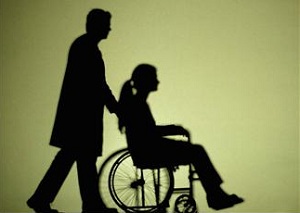
There are many parallels between living with a disability and dealing with an uninvited house guest. If you have ever had an uninvited house guest, I am sure you remember moments when things may have been uncertain and, at times, tense or uncomfortable. At the very least, having an uninvited guest requires some adjustments, much like living with a disability.
An uninvited guest may arrive unannounced, leaving no time to plan or prepare. Likewise, in many cases people living with disability have little or no time to plan for the many changes to come. While there may have been no way to prevent the disability and requisite life changes, having time to prepare—psychologically and literally—can make a huge difference in a person’s ability to adapt and cope.
A period of psychological adjustment is required for a person who has a disability, his or her spouse/partner, parents, and other family members. The adjustment process people frequently talk about resembles the grief process in many ways. Like the grief process, people often experience feelings in what seem to be stages. Similar to the grief process, this adaptation process usually begins with a period of denial.
Denial
In my work with couples and families living with multiple sclerosis, I often hear concerns that one person seems to be “stuck in denial.†To people who have moved through the initial denial stage, it may seem as if their loved one is not progressing as quickly as others. The truth is, different people work through this period of adjustment differently, and it takes as long as it takes. The denial stage usually happens at the time of diagnosis or disability, and may come up again at other times. For example, in a progressive illness, if one begins to lose mobility or other limitations arise, the initial stage of the adjustment process may be triggered again.
It may seem clear to a caregiver/partner or family member who has been helping someone walk even short distances that a mobility device is needed (cane, walker, scooter). For the person who is having mobility difficulty, admitting that it is time to talk to a doctor about a mobility device may affect his or her identity, hope for recovery, or future progress. If so, working through the denial and bargaining, and then later stages of adaptation, may be necessary. It is not unusual to see all members of the family triggered by new developments that start the process over.
Denial is believed to be a protective measure that prevents us from becoming emotionally overwhelmed. Denial slows down the process of coping with traumatic events, giving us more time to psychologically prepare ourselves for the onslaught of feelings. The process of denial, known as a defense mechanism, should not be rushed or sabotaged by well-meaning loved ones who are at a different place in the adaptation process. Doing so can cause the person who needs more time to become emotionally overwhelmed without the necessary skills to cope effectively.
Coping skills: A person with disability and his or her family members should try to be empathetic and understand things from the perspective of others. Be honest, but gentle, about your perceptions. Choose the time to discuss these issues carefully—not when either of you are tired, frustrated, or angry. Always talk to your loved one(s) before bringing up concerns with doctors or other professionals. Caregivers and family members should keep in mind that their needs are important, too. Take care of yourself and make sure you have plenty of support. When children are involved, be very careful what and how you share information with them. Children need to hear things based on what is appropriate for their age and stage of development. Ask for guidance from a professional if you are unsure how much to tell children or how to talk to them about disability.
Bargaining
The stage that usually follows denial is bargaining. During this time, people often are looking for second opinions, alternative therapies, and other remedies. It can also be a time when we promise the gods that we will turn our lives around if given a second chance without the disability or diagnosis.
It is true that finding the best medical providers, keeping a positive outlook, and staying informed of new research and possibilities is important. However, this can also be a time when people are vulnerable to scams and false promises. Unfortunately, there are a lot of companies and people who offer products and services that guarantee outcomes without doing the necessary research required to back up those assurances.
It is a good idea to check out any new or experimental treatments carefully before trying them—particularly if there is a large commitment of money, resources, or time involved. Check with local and national nonprofit organizations that provide services to people with your specific issue or health challenge. Agencies such as the National MS Society, American Cancer Society, and others often have information about ancillary and alternative therapies. They may be able to send you information or answer your questions.
Coping skills: Make decisions together based on facts. Find local and national organizations that you trust to support you and provide well-researched information. Be sure that any second opinions or ancillary providers have access to all the information you have from other providers. In some cases, taking medications or treatment without being fully aware of how they interact with your other treatment can be life-threatening. Make a commitment to fully investigate any new or experimental treatments before deciding to try it. Ask for and check references when appropriate. Verify the credentials of all providers before visiting them. At some point, you may have to accept a new reality that you had not planned for and do not welcome. If you have prolonged difficulty coping with the diagnosis or prognosis, find support from a professional or support group to help you with the transition.
Over the next few months, I will explore additional aspects of disability, how it affects the lives and relationships of the people involved, and ways of coping with these situations. If you have ideas to share about how you have effectively coped with any of the situations presented, please join the discussion by leaving comments below. Likewise, if you have questions, feel free to ask for input from others who read the blog.
 Even when it is unintended, some people find it intolerable to hurt someone they love. To experience hurting the other can create shame, guilt and strong “I am a bad person†feelings. As a result, we may avoid saying what is on our mind and put aside our own feelings and needs. This inhibiting of the self can be harmful to our relationships and can create the conditions for developing anxiety and depression.
Marlene, a 27 year old married woman, came into my therapy office feeling anxious and depressed. She described how unhappy she was in her marriage to Ben. She told me she loved her husband but was feeling like she was in a straight jacket. If she expressed a need that conflicted with his wishes, his feelings would get hurt. She couldn’t tell him that she didn’t want to play tennis with him every weekend or that she was tired of going out every Friday night with his friends from work. She explained to me that when she told him these things, he told her that she made him feel unimportant, criticized and pushed away. She felt ashamed that she was the cause of his feeling so terrible. She would apologize to him and try to keep her feelings to herself, but then she would attack herself and feel like a bad person. She was shutting herself down and feeling depressed. She also reported that when she was aware of a need that she felt she shouldn’t express to Ben, she would get anxious for fear that she couldn’t contain herself.
What Marlene described to me suggested that she had issues she needed to work on as an individual and that as we did this she would be more able to address the difficulties in her relationship with Ben.
While Ben might be particularly subject to feeling hurt or slighted, Marlene’s inability to tolerate hurting Ben and talk with him about these issues, made the relationship difficult. It also became apparent as I spoke with Marlene that she suffered in all of her relationships by worrying how she was impacting on everyone. She had never considered that we all hurt people, even those we love, unintentionally. She didn’t understand that it is impossible to be in a relationship without hurting those we love. When I suggested this to her, it didn’t make sense. How could she possibly bear watching Ben be so hurt? She would have to give him what he wanted.
As Marlene and I talked, I wondered what made it so painful for Marlene to consider that something she said or did had the unintended consequences of hurting someone she cared about. I asked Marlene how she thought she got the idea that it was totally unacceptable to hurt someone she loved. We also explored Marlene’s idea that when someone feels hurt they are horribly harmed. Marlene thought my questions were strange. How could it not be painful to see someone you love hurting because of you? How could you not feel like a very bad person? Of course hurt causes terrible damage. I replied that it was appropriate to feel sorry or sad that you had been the cause of someone’s hurt, but that it didn’t have to make you feel like such a bad person. I said that you can’t always be sure how the hurt is affecting someone unless you are told or ask. Each hurt is different. I said that these experiences could be talked about and the other person might be able to listen and understand the intent. I added that this was something she could work on with Ben.
Marlene considered my ideas with some skepticism. She remembered how her mother would get so hurt when she was little. She had one memory where her mother started to cry and tell her how hurt she was when Marlene didn’t like the dress she was given for her sixth birthday. She recalled how her mother told her how much Marlene hurt her feelings and how could Marlene not appreciate all the time and money her mother had spent to pick out such a perfect dress. Marlene remembered how scared she was when her mother was so distraught and how much shame she felt to have done such harm to make her mother feel that way.
Over the many months that Marlene and I continued to talk in therapy, she began to make connections between how her mother, on many occasions would be hurt if Marlene didn’t have the “right†response. She became clearer that she would do anything to ensure that she was not the cause of her mother’s distress. In fact, Marlene had given herself the job of making her mother happy. As Marlene became aware of this, she also began to realize that with her strong need to keep her mother happy and not cause her any hurt or distress, she had learned to overlook her own needs and desires, especially when they conflicted with what she knew her mother needed.
When Marlene talked about how she had learned to disregard her own wishes and squelch her own voice, she started to make connections to her behavior with Ben. Her fear of increasing Ben’s hurt when their needs conflicted, gave way to the idea that maybe she could talk with Ben about this. She recognized that Ben’s reaction when he was hurt was nothing like her mother’s intensely distraught response. Perhaps, there was a way for them to talk and negotiate and consider both of their needs.
In fact, Ben was surprised to learn that Marlene was scared to assert her needs for fear of hurting him. He told her that even though he felt hurt, he didn’t feel she had done any harm to him. He told Marlene that he didn’t think he was so fragile. He thought he could try to consider that when she expresses her needs, it didn’t have to mean that she was dismissing him. He told her he wanted to keep talking about this. He knew he could get hurt easily, but he didn’t want it to affect Marlene by causing her to inhibit her thoughts and feelings.
Marlene continues to come to therapy to work on becoming more comfortable expressing her own thoughts and feelings and dealing with her impact on those around her. She has gotten much better at dealing with conflict and asking for what she wants in the world. She is worrying less about being a bad person. Marlene has become more tolerant of herself and more respectful of her right to say what she wants. She is increasingly able to say no to what someone she cares about wants and risk the possibility that they will feel hurt. As she is able to allow fuller expression to her true voice, she is feeling less anxious and depressed. She and Ben are doing better at talking with each other and they are much more able to address the conflicts between their needs in a constructive and loving way.
When we become overly interested and vigilant about the impact we have on others and design our behaviors to make sure they don’t have feelings we can’t tolerate, we are putting our authentic selves on hold. This denial of who we are causes us to build up feelings consciously and unconsciously. Preventing ourselves from expressing what we think and feel, and shutting up our true selves, puts us at risk for anxiety and depression. If we can learn to become more comfortable with how we impact others, and address what we think our impact is, instead of trying to control the other’s feelings, we will be promoting the development of our true selves.
 I want to start off by saying that pornography in and of itself is not a ‘bad’ thing. We have preconceived notions about porn being something bad. Men feel guilty about it. Women feel threatened by it. I want to talk a little bit about why porn is good, and why porn is bad. At the core, I believe that everything in moderation is the best format to follow. And a little bit of porn should be fine, as long as it’s not interfering with your sex life, social life, finances, job, relationship, family, responsibilities and so on. (Read: Most mental health professionals will in fact determine whether or not something is considered an addiction, or if someone is addicted based on the aforementioned variables of responsibilities. If something is being affected, such as any or all of job, relationship, family, money, chances are the individual has a problem or addiction, and will likely be treated as such by the mental health professional.)
[fat_widget_right]
So, with that said, we are long overdue to begin to wonder how the internet’s biggest industry Porn, which continues to infiltrate our relationships, our sex lives, our bedrooms, not to mention the lives of teenagers who have the highest porn viewing statistics, and so much more continues to thrive, when it seems to have so many negative connotations? How can 63 million viewers be so wrong*? As a sex educator, I feel that a lot of it has to do with our attitudes about sex. Naturally, when we don’t feel comfortable talking about something, that we already feel we know so little about, and ill-equipped to talk about, read: yes, I am talking about Sex, its presence, in a highly graphic manner is going to intrigue us. Hence we are enticed to watch such movies and videos. But on the flipside, the messages we were sent growing up about masturbation, sex and nudity, and the silence we were fed when it came to anal sex, girl-on-girl or man-on-man sex, group sex or orgies, and sodomy may also lead to anxiety about what we see, which can lead to the on the better end, aforementioned feelings of guilt, and full blown addictions on the worst-case-scenario end. (more…)
“For years it lay in an iron box buried so deep inside me that I was never sure just what it was. I knew it carried slippery, combustible things more secret than sex and more dangerous than any shadow or ghost. … I saw things I knew no little girl should see. Blood and shattered glass. Piles of skeletons and blackened barbed wire with bits of flesh stuck to it…The iron box contained a special room for my mother and father, warm and moist as a greenhouse. They lived there inside me, rare and separate from other beings. … I knew my parents had crossed over a chasm … The box became a vault, collecting in darkness, always collecting; pictures, words, my parent’s glances, becoming loaded with weight. It sank deeper as I grew older, so packed with undigested things that finally it became impossible to ignore.”
-Helen Epstein, Children of the Holocaust
 In my practice, people trace depression back to trauma most of the time. Emotional trauma is an overwhelming shock to a person’s equilibrium. Trauma might be linked to an emotional, physical, or sexual attack or witnessing such an attack. War, rape, murder, accidents, and even well-intentioned medical procedures might all lead to trauma. So can single or repeated incidents of shaming and other emotional and verbal attacks. Trauma can also happen when heartbreaking losses of any kind occur.
When people are traumatized, it often shapes their beliefs about themselves or life. These trauma-induced beliefs—such as “I’m never safe,†“I’m unlovable,†“I’m a monster,†“love is dangerous,†“I’m a failure,†“I’m helpless”—affect how people feel and often contribute to depression. Sometimes an individual’s belief is based on something that was true at the moment of the trauma: “I’m helpless†is true when a person is in surgery under anesthesia (where unconsciously-remembered thoughts can still affect us).
But beliefs that formed during a traumatic event are stored without information about what that means over time. So “I’m helpless at this moment†can become “I’m always helpless.†This underlying belief may contribute to depression and helpless behavior indefinitely. If this person doesn’t get a chance to talk about their helpless feelings and express their emotions, they could carry that belief into the rest of their life. It is trauma that turns time-limited events into a part of people’s belief system and identity. It makes sense that people would be depressed when they believe they have no personal power to create the life they want.
“I’m a Coward”
Trauma-related beliefs can be a formative part of a person’s personality, particularly if trauma occurs in childhood. The trauma-related beliefs can be so painful that the traumatized person has to develop ways to coping with the belief—and then the methods for coping become a new part of who the person is.
For example, say a child watches his mother get mugged and freezes in fear until it’s over. Perhaps in his child mind, he concludes, “I’m a coward.†Living with the belief that he is a coward is so painful that he deals with it by trying to prove he’s brave: picking fights and engaging in high-risk behavior. These behaviors give him a euphoric feeling of self-confidence and he gets some relief from the pain of the “I’m a coward†belief. The combination of euphoria and the desire to avoid the shame of believing he’s a coward keeps him trying risky things.
He is new to taking risks, so he and others begin to think of him with a new identity. Risky behaviors get him in trouble in school, which means other kids in trouble gravitate toward him while cautious kids avoid him. This makes it hard for him to do well in school and he develops an identity as a tough street kid with crime rather than college in his future. This trauma-belief comes to shape every decision he makes and pretty much everything about him: who he dates, what he does for money, where he lives, who his friends are.
In situations where he might feel vulnerable or scared, he doesn’t dare show it for fear of revealing himself as a “coward.†So when he experiences other trauma, he can’t express his vulnerable feelings, which keeps him from processing the trauma, causing each new trauma to incapacitate him further. When he does start to feel vulnerable, afraid, or sad, he uses drugs or alcohol to suppress the feelings and give him the high of confidence again.
At some point, this man may realize he is depressed, perhaps when a friend dies of an overdose, a woman he loves leaves him, or he ends up in jail or a hospital. At this point, unraveling his story to find what is causing the depression will be complicated. The depression he feels is caused by this most recent loss, but it’s also caused by drugs and alcohol, living a life that keeps him from reaching his potential, and the self-hate that has developed over the years through taking risks despite serious consequences. But ultimately, the depression began when he watched his mother get mugged. When that is resolved, and he realizes he never was a coward, that freezing was normal and even wise at that moment, he will feel much better. He will probably begin to feel free to redefine himself and make different choices for his life. But because his whole life has been based on the way he reacted to trauma and the way he continued to react to his reaction, he will also have to unravel and replace all the aspects of his life and self-image that were created by that initial belief and shame that he was a coward.
“I’m Worthless”
Another example: imagine a child who is sexually assaulted by an adult. That child may respond to the trauma by believing “I’m only worth something if I’m being used for someone’s sexual satisfaction.†It’s not hard to imagine that this child might become an adult who deals with this belief by being sexually available to many people, who she may not even find attractive, as a way of getting some temporary relief from feeling worthless.
Being sexual with many people becomes part of her personality and identity, both of which would have been very different if she hadn’t been assaulted as a child. When this method of coping with trauma stops working—maybe because she can’t find lovers anymore, or she gets caught compulsively having sex outside her marriage and loses her husband—she may become depressed. She will be depressed about the recent changes in her life, but again, ultimately, the depression comes from the original trauma, and from the problems caused by trying to cope with the original trauma.
As complicated as these scenarios may seem, the origins of a given person’s depression can be even more complicated. Sometimes trauma isn’t involved in the origins of depression, but most of the time, with enough exploration, I find the roots of depression in trauma.
 Unemployment is a downright monster. Most often, we see a lot of support for the unemployed person who is building his or her resume, interviewing, networking, staying busy, and being positive. I certainly hope and pray that our economy improves soon and each unemployed person finds work that is fulfilling in both meaning and income.
But how about support for the partners of unemployed people?
Ms. Y (not her real name) came in the other day and said, “My husband has been unemployed for over two years. Over two years. Over—two—years! I say it, dumbfounded, because at some point every day, I realize that I can’t believe how long it’s been. First it was an industry crisis. Then came his depression. Then there was his second wind, his revival. Then the revival turned into stagnation again. There were a number of short-term freelance gigs. There were rejections, interviews, and even jobs-in-hand that folded at the last minute thanks to the tanking economy.
“During every rise and fall of this god-forsaken unemployment phase, I have been there to support my partner every step of the way. I’m exhausted. I’m tired of being the sole breadwinner. I’m especially tired of all those people who tell me what they think about my husband’s lack-of-work situation. During these years, I can’t tell you how many times I’ve been at some function where after a few drinks someone said to me, ‘I feel so bad for your partner. Your partner really needs support. Be patient, be supportive.’
“I think to myself, ‘Me, be patient? Me, be supportive? When haven’t I been?!’ I want to jump out of my skin and slap that person silly. Instead, I stuff my pride, and in my most polite tone, I tell the preacher-man to stick it. I want to hear what they have to say after they’ve supported their unemployed partner for over two years. I doubt it’ll be the same thing, I swear. Jerk.â€
My heart goes out to Ms. Y and people like her. It is tough to be unemployed, but it is equally tough to be the partner watching and supporting the unemployed person. It is a terribly helpless position. Some have become involuntary breadwinners, straining to care for everyone and everything with one lone paycheck. All are forced to be passengers on the emotional roller coaster ride of a loved one’s bout with unemployment.
Some are the only people their unemployed partners will talk to about their suffering. Often, their emotional needs involuntarily get thrown aside because of the attitude that “unemployment isn’t happening to you, it’s happening to the unemployed.†Both the unemployed and partners of unemployed vacillate on the spectrum between the hope for the day of the “Great News” (“I start a new, real job on Monday and can help pay the bills now!â€) and fear that their savings will be sucked dry and they’ll be forced to live in a shelter—or worse, their parents’ house.
I say unto you, dear partners: It is time.
Partners, it is indeed time to take care of you. You deserve it. You have done an amazing job of standing by your unemployed person’s side despite the mental, physical, and spiritual turmoil that unemployment puts everyone through. So first of all, do yourself a favor and give yourself—your mind, body, and soul—a break.
How can you possibly give yourself a break at a time like this? Well, if you don’t, you’re going to keel over, for one. The truth of the matter is that unemployment is not what defines you or your partner completely. In other words, each of you is a complex, multifaceted human being who remains healthy as long as your mental, physical, spiritual, and relationship states are receiving attention. At this moment, unemployment is taking a toll on these four realms; however, the trick to lessening unemployment’s severe control is self-care.
Self-care means honoring the other facets of your personality and life, thereby diminishing the attention given to the unemployment monster. Take a look at the following short lists of self-care ideas that honor these other parts of who you are. You’ll find that many ideas can cross multiple realms:
Mental: Attend individual and/or group therapy. Meditate, listen to music, take a vacation alone or with a friend or partner, spend time with loved ones, take a class, or escape through watching movies or reading.
Spiritual: Pray alone or with others. Choose to be silent, join a group on a spiritual practice that you enjoy, light a candle and reflect, journal your thoughts and feelings, or attend spiritual events and retreats.
Physical: Get a massage, exercise, go for a walk, take a hot bath, get regular sleep, dance, play sports, do yoga, paint, draw, sing, arrange flowers, color mandalas, play music, use relaxation techniques, or cook.
Relationship: Attend couples counseling. Create creative dates, like cooking from scratch together; do an activity together on a regular basis, like volunteering; take a week-long vacation from talking and thinking about unemployment; have sex.
Try any or all of these ideas, and keep adding to these lists. Find what works for you. You’ll see that given enough respite, you will have more energy to carry on your daily tasks until the “Great News†arrives. No one will be able to do this for you. You have to take care of yourself just as much as you take care of everyone and everything else. So, dear partners, be good to yourself and feed your mind, body, and soul. It is long overdue.