Cyber bullying has become more common with advances in technology. Messages can be posted on social networking websites, and pictures can be downloaded, altered, and made available to the world in seconds. Although there has been abundant research into the consequences of cyber bullying and traditional bullying, little has been done to determine which type may cause more psychological damage. It is well established that bullying itself—the act of terrorizing, intimidating, and ridiculing another through verbal or physical acts—can have numerous deleterious effects.
Those who endure bullying are at increased risk for internalizing problems such as anxiety, depression, and suicide ideation. Understanding how each type of bullying impacts young people is of critical importance in order to target those most vulnerable and help them deal with the ramifications. To get a better idea of the effects of cyber bullying in comparison to traditional bullying, Sheri Bauman of the University of Arizona’s College of Education recently conducted a study asking college students to rate their levels of distress based on hypothetical cyber and traditional bullying scenarios. The scenarios were similar in nature and differed only in delivery.
Bauman discovered that three main bullying themes emerged, including generalized bullying, name calling, and sexual victimization through explicit sexual images. Although the female participants reported higher levels of distress for all three types of bullying, the method of delivery did not impact emotional response. Specifically, although their responses varied by bullying scenario, all participants reported similar distress levels whether the bullying event was traditional in nature or cyber bullying.
However, Bauman found that one type of bullying was the most distressing. “We … found that bullying with sexual material, whether conventionally or by technological methods, is the most upsetting kind of incident to targets,” she said. This was especially true for female participants. Those with a history of victimization had higher distress than those without. In sum, Bauman believes that these findings demonstrate that it may not be the delivery method of bullying behavior that is most detrimental to young people, but rather the content of the message conveyed.
Reference:
Bauman, S., Newman, M. L. (2012). Testing assumptions about cyber bullying: Perceived distress associated with acts of conventional and cyber bullying. Psychology of Violence. Advance online publication. doi: 10.1037/a0029867

Dialectical behavior therapy (DBT) is a comprehensive, evidence-based treatment approach used to treat individuals with a wide variety of issues, including relationship conflict, anxiety, depression, bipolar, self-injury, eating issues, and substance abuse. Developed in the 1980s by psychologist Marsha M. Linehan for the treatment of borderline personality disorder and chronic suicidality, this method has since been adapted and utilized to help clients with much less severe issues. The therapy can help clients who exhibit extreme emotional reactions, helping them develop self-acceptance while also learning coping skills to better regulate their emotions and handle distress. DBT uses both individual therapy sessions and group skills training, as well as telephone coaching between sessions.
The DBT model combines a behavioral therapy approach with eastern mindfulness practices. In one sense, the term dialectical refers to the goal of synthesizing the extreme opposites inherent in the rigid “black and white” thinking of many clients who have trouble regulating their emotions. “Dialectical” also applies to the core DBT principle of practicing acceptance strategies while implementing change strategies, in the process of reducing and modifying self-destructive behaviors.
This type of therapy is very support-oriented; it helps clients identify their strengths, build new skills, and increase their self-esteem. DBT focuses on cognitive issues by indentifying destructive thought patterns and replacing them with more neutral and accepting internal dialogues. It is designed to be a nonjudgmental collaboration, with the therapist and client working together to increase emotional awareness and understanding, minimize negative thought patterns and behaviors, and develop new coping and problem-solving skills.
The four modules of dialectical behavior therapy:
- Core mindfulness: The first of the four primary modules of DBT, this concept involves learning to observe one’s emotions, describe those emotions, and fully participate in present experiences. This skill forms the foundation for the other three modules, and is derived largely from eastern practices of living in the moment.
- Interpersonal effectiveness: The second core component of DBT teaches clients assertiveness skills and strategies to ask for what they need, set boundaries and say no when appropriate, and deal more effectively with interpersonal conflict.
- Distress tolerance: The third module entails clients developing nonjudgmental acceptance of themselves as well as their current situation. The focus is on learning to accept the present reality and to tolerate crises, and making use of strategies such as distraction, self-soothing, and improving the moment. Practicing these skills will increase the client’s ability to tolerate challenging events and environments.
- Emotion regulation: The final module of DBT consists of three main goals: to understand one’s emotions, reduce emotional vulnerability, and decrease emotional suffering. With this in mind, some of the specific skills taught in DBT include identifying and labeling emotions as well as evaluating: events that prompt the emotion, interpretations that trigger the emotion, how the emotion is experienced, how the emotion is expressed behaviorally, and the aftereffects of the emotion.
In the case of adolescent treatment, Dr. Alec Miller has adapted Dr. Linehan’s model to incorporate parents attending skills training groups with their teens. There is an additional module, “walking the middle path,” which focuses on helping parents and their children understand each other’s viewpoints and reduce conflict and invalidation.
The five functions:
Dialectical behavioral therapy was designed to fulfill five primary functions:
- Enhance behavioral capabilities: DBT helps clients develop important life skills that help them regulate emotions, experience the present moment, improve interpersonal interactions, and better tolerate distressing situations.
- Improve motivation to changes: DBT supports clients’ motivation to change by tracking and reducing detrimental behaviors, thereby increasing quality of life.
- Generalize capabilities to other environments: In order for the client to make progress, the skills learned in therapy must transfer to a wide variety of situations. This is accomplished through homework assignments and practicing skills. Telephone consultations also can be valuable in helping clients utilize these skills in their daily lives.
- Support client and therapist capabilities: DBT aims to maintain and build the capabilities of therapists through continued training and consultation-team meetings.
- Enhance therapist motivation: The DBT model encourages the use of support, validation, feedback, and encouragement between therapists to avoid burnout and improve their effectiveness.
Stages of treatment:
The course of DBT generally flows through three stages:
- Stage 1: This stage is primarily focused on eliminating or reducing serious behaviors, including self-injury, suicidal thinking, and aggression. Behaviors that interfere with therapy also are addressed, such as missing appointments and not returning phone calls.
- Stage 2: The client strives to increase quality of life and experience emotions in a less intense manner. The client continues to eliminate or decrease destructive behaviors, and address other issues or situations that are interfering with daily life, such as past trauma.
- Stage 3: The client is experiencing increased feelings of completeness, self-respect, and love.
Who can benefit:
Though DBT originally was developed to treat more severe issues, such as borderline personality disorder, suicidal behaviors, and self-harm, the treatment has become a widely respected method for treating clients who exhibit the following, much milder traits and issues:
- Difficulty with emotional regulation
- A high level of reactivity, with a slow return to baseline
- Impulsiveness with a tendency toward self-destructive behaviors
- An inclination toward extreme thinking, unable to perceive a middle ground
- A lack of sense of self, tending to feel incomplete or empty
- A history of instability in relationships, and difficulty with interpersonal interactions
- Extreme sensitivity, accompanied by rapid mood swings, anxiety, and depression
- Fears of abandonment and trouble with intimate relationships
Dialectical behavior therapy has proven to be a very effective tool to help people manage intense emotions, change negative thought patterns, and decrease self-destructive behaviors. Individual therapy sessions focus on current detrimental behaviors in the client’s life, while group sessions involve learning skills from the four modules: mindfulness, interpersonal effectiveness, distress tolerance, and emotion regulation.
Fear can be a strong motivator. People who are afraid of living in poverty may be motivated to pursue any career option in order to avoid financial destitution. In a similar way, individuals who are afraid that they may develop specific health-related problems may work tirelessly to maintain optimal physical condition. Fear often has been linked to motivation, both positively and negatively. Until recently, however, few studies examined how fear of failure affects activity-related performance.
Jocelyn J. Bélanger of the University of Maryland sought to determine how negative feedback on specific tasks affected motivation in individuals fearful of failure (obsessive) and those who were passionate about their activity but less worried about setbacks (harmonious). In a series of experiments, Bélanger found that individuals who are passionate about achieving their goal perform differently based on their style of commitment. In particular, those with obsessive passion responded with positive motivation to negative/failure cues while those with harmonious passion saw no change in performance. In fact, the harmonious passion participants maintained the same level of performance throughout the experiments, regardless of whether they received success or failure feedback.
“Obsessive passion, associated with defensiveness, predicts performance aimed at avoiding failure, whereas harmonious passion, associated with a secure self-concept, predicts stable performance,” Bélanger said. These findings suggest that fear works as a motivator for individuals with obsessive passion. Bélanger believes that people who feel their sense of self is threatened by failure of goal attainment may unconsciously respond to that threat by increasing their performance. However, those who have harmonious passion traits are less threatened and view the feedback, positive or negative, merely as information needed to continue the process of attaining their goals. The results of this study offer valuable information that could be used for the development of goal-attainment strategies in the professional, academic, and sports arenas, and could help clinicians better understand an individual’s reaction to goal-achievement outcomes.
Reference:
Bélanger, J. J., Lafrenière, M.-A. K., Vallerand, R. J., Kruglanski, A. W. (2012). Driven by fear: The effect of success and failure information on passionate individuals’ performance. Journal of Personality and Social Psychology. Advance online publication. doi: 10.1037/a0029585
 Next Friday, August 31, 2012, GoodTherapy.org is thrilled to welcome Dr. Laurie Moore, who will present Healing Betrayal Caused by Infidelity, a FREE CE teleconference for GoodTherapy.org members available with 1.5 CE Credits. We encourage you to join us for this exciting event, so if you have not already, register today!
Working with clients who are suffering from betrayal caused by infidelity is complex, including grieving stages, posttraumatic stress (PTSD), and additional factors. This article refers to infidelity as a breach in agreed emotional and sexual monogamy. Some couples agree to open relationships or polyamory, which is a different situation. Infidelity as defined in Wikipedia is “a breach of an expectation of sexual and or emotional exclusivity.” This involves a lie and broken promise, causing feelings of intense betrayal for many people.
Infidelity has become a common problem. Some infidelity statistics state that over 50% of both men and women engage in infidelity (Journal of Marital and Family Therapy, 2012) and others say 30% to 60% (Wikipedia, 2012).
Those suffering from infidelity betrayal commonly go through Kubler Ross’s well-known stages of grief:
- Denial: This didn’t really happen or it’s not really as upsetting as I feel it is.
- Anger: How could you?
- Bargaining : If only I had communicated differently, this would not have happened.
- Depression : I feel helpless. Nothing I can do changes this discomfort.
- Acceptance : I have been hurt and disillusioned but I am at peace with myself.
The experience of grief due to infidelity includes additional factors that are absent from grief occurring from a death. Grief due to death is felt in a finite situation that contains an end. It is understood that the one who is gone is gone from the body permanently. Grief due to a breach in trust has no finite or predictable container. The one suffering finds him- or herself in unpredictable circumstances, which often feel very dismantling and excruciatingly unsettling.
Feelings that challenge self-confidence and worth are more common to infidelity betrayal than loss alone. Death is socially expected. Infidelity is shunned. The one who is betrayed is prone to feel guilt, shame, and embarrassment because the situation remains privately hidden or is condemned by a variety of reactions when exposed.
When death is the cause of grief, a solo journey is required. When betrayal is the cause of grief, two people are involved, so the situation is more complicated. Once one is lied to, the relationship is uncertain. This person can’t tell whether he or she is being lied to or told the truth. The one experiencing this challenge is often upset again in the aftermath of the partner relationship. This is different than the one abandoned by a death whose loss cannot re-emerge in a repeating scenario.
Clients with heartache caused by infidelity and betrayal can also go through fight-or-flight syndrome:
Fight: Arguing with, controlling, or managing the person who betrayed me will solve this.
Flight: Leaving will solve this.
Once fight or flight proves useless, a person will seek comfort in other ways. By assisting this person to fully meet the helplessness, sorrow, anger, anguish, disillusionment, and heartache that has come, peace can be found.
I have found that client-centered talk therapy, hypnotherapy, eye movement desensitization and reprocessing (EMDR), and the 12-step program are all deeply valuable for clients healing from infidelity. I also use my own Success Love Now (SLN) process effectively in these situations. Here is how and why each of these methods is valuable.
Someone who is suffering from loss and feeling isolated due to the taboo nature of this loss needs to be witnessed compassionately and caringly. This in itself helps to relieve the tremendous burden one carries from feeling alone. When being accepted within the context and emotions one is truly feeling, without being corrected or judged, peace can start to return. Acknowledging your understanding and compassion for a clients’ diverse set of feelings can be a profound help to a suffering client.
Because the shock of betrayal can be extreme, disrupting normal life in many ways, EMDR assists the hurting person to digest the deep emotions that are arising. Just getting through the day becomes a challenge for people who are betrayed. EMDR makes the healing time for this upheaval much faster in many cases.
Hypnotherapy allows the person who was hurt to re-find stability, meet parts of him- or herself that were hurting before the situation occurred, heal parts of him- or herself that are hurting now, and find a new basis for equanimity that is deeper than the circumstances. Taking a client into a deep, relaxed state in which the client can bring in peaceful parts of him- or herself to help the hurting parts enables a client to rebuild self-esteem and strength.
S-Anon Twelve Steps allow people to find the value in surrender, the gift in their challenge, and the support of others enduring similar pain. Twelve Steps also help the one who was betrayed to find out if addiction was involved in the betrayal, as commonly is the case. Letting your client know that S-anon is an option can be a valuable part of her or his healing process.
SLN provides a new framework for the person to feel empowered and at ease within the undesired circumstances. Encouraging the client to focus on what his/her purpose and aim are for him- or herself and gratitude for the good that is occurring within the context of the undesired happenings is beneficial. This will bring a client out of a victim mode and into a creative mode.
Of course, if the person who was betrayed plans to stay in the relationship, couples counseling and counseling for the one who was betrayed are necessary.
When working with clients who have been betrayed due to infidelity, it is important to understand the complexity of loss, mixed with PTSD, combined with humiliation–this situation causes a long period of overwhelm and readjustment. When the client is treated with compassion, the healing can go well.
Sources:
- Infidelity statistics. (n.d.). Retrieved August 20, 2012, from http://www.statisticbrain.com/infidelity-statistics
- Infidelity. (n.d.) Retrieved August 20, 2012, from http://en.wikipedia.org/wiki/Infidelity
Related articles:
Cheating
Can a Couple Recover From Infidelity?
In-Depth Map for Three of the Eight SUCCESS LOVE NOW Steps
Adolescent girls are among the most vulnerable for issues that relate to body image. They are assaulted with unrealistic images and unachievable ideals from virtually every media outlet. Teen girls struggle to find their identity at a time when appearance often determines their social circle and affects their self-esteem. In fact, research shows that teen girls worry more about their bodies than they do about academics, family life, or any other stressors. Young women who develop unhealthy eating behaviors can find themselves in a lifelong battle of physical and mental distress. Eating and food issues can lead to other negative psychological problems such as depression, anxiety, or even suicidal ideation.
Kathryn E. Rayner of the Centre for Emotional Health of the Department of Psychology at Macquarie University in Australia recently led a study to explore how peer relationships affect eating and body image issues in young women. Social acceptance is critical to teens, so Rayner theorized that perhaps young women select their friends based on eating and body image similarities, or perhaps they shape their own perceptions and behaviors based on the friends in their social circle. Rayner examined selection versus socialization in a sample of 1,197 teen girls from nine separate high schools in Australia. The adolescents were assessed for bulimic and dieting patterns, body satisfaction, and peer relations over a period of three years.
The results of the study revealed some interesting trends. First, the participants tended to choose friends with similar body satisfaction/dissatisfaction levels and bulimic behaviors. However, they did not choose girls with similar dieting and eating patterns. The girls also chose to engage in friendships that were bidirectional and avoided one-sided friendships. Rayner discovered that the girls who dieted the least had more people who wanted to befriend them, while those with more depressed mood and overt dieting behaviors had fewer peers soliciting their friendship. Additionally, the girls in the study, although they selected girls with dissimilar behaviors from their own, did not change their own actions to model those of their friends. Rayner believes the results of her study shed new light on some of the factors that influence eating, dieting, and body image in girls at risk. She added, “These findings represent important building blocks in facilitating the formation of more effective prevention and intervention strategies.”
Reference:
Rayner, K. E., Schniering, C. A., Rapee, R. M., Taylor, A., Hutchinson, D. M. (2012). Adolescent girls’ friendship networks, body dissatisfaction, and disordered eating: Examining selection and socialization processes. Journal of Abnormal Psychology. Advance online publication. doi: 10.1037/a0029304
 How many relationships do you see around you that you would actually want to be in? For most of us, we can count the number on one hand. An even better question might be, “Am I in the kind of relationship I would want my own child to be in someday?” If you want to top that and move into the area of upping your chances to have an exceptional relationship, you will ask yourself, “Am I being the kind of partner I would want my child to have someday?”
As a therapist who has worked with couples for more than a decade now, I see a disturbing trend on the rise. We are settling for mediocrity in ourselves as partners while expecting our partners to be exceptional, asking more of them than we do from ourselves. If you are thinking to yourself, “Could this be me? Am I being an exceptional or mediocre partner?,” please keep reading. because there are three simple traits that genuinely happy and fulfilled couples seem to have in common. If you are looking to take your relationship to the next level, consider raising your personal standards in any of the following ways, remembering that if you want a better relationship, it begins with looking at one’s own self first and foremost.
1. Exceptional partners have a good idea about what makes it difficult to have themselves for a partner, and they feel a sense of appreciation and respect for the challenges their own personality presents for their partner. They work hard to keep these attributes in check and not let them get out of control. Mediocre partners are rather hazy about their own shortcomings as a partner but can easily enough rattle off a long list of their partner’s flaws.
It is easy enough for most people to list off a handful of traits that make it difficult to have their significant other for a partner, but when the question is turned back on oneself—”What makes it difficult to have MYSELF for a partner?”—the exceptional partner demonstrates a rare willingness to identify his or her own shortcomings and backs this up with a steady commitment to managing and keeping his or her own difficult traits and imperfections in check so that they don’t impact the partner in unfair ways.
Whenever I work with a new couple, I always eventually get to that question because it helps me understand how to best help them. The old saying, “We can see everyone but ourselves when we enter a room,” applies to relationships, too. It’s normal to not know the answer to this question, but the willingness to be open and want to know the answer is everything. As the research from the world-renowned Gottman Institute has found in Seattle, Washington, female partners in particular need to know that their opinions and feedback truly matter to their partners. This is actively demonstrated by listening with the sincere intent to understand the other’s feelings and positions and find common ground and areas for compromise and by validating your partner’s stance without necessarily agreeing with it.
2. Exceptional partners understand that while they are not responsible for their partner’s happiness, contributing to their partner’s happiness is nonetheless a top priority. Mediocre partners, in contrast, are primarily focused on their own gratification first, and while they too can be thoughtful, thoughtfulness is not a daily habit.
Years ago, I placed a beautiful canopy bed up for sale. A couple arrived to purchase it. As they dismantled the bed piece by piece, there was an attitude of playfulness and a sense of mutual joy they took in one another that was striking in its rarity. “What’s your secret?” I asked them. They shared that the secret of their successful marriage was that every morning they ask themselves, “What might I do today to let my partner feel loved?” Exceptional partners make it a habit to be exceptionally thoughtful. They seem to recognize that life is short and seek out ways on a regular basis to express their love. For these couples, love is indeed not just a feeling but an active verb.
3. Exceptional partners ask a lot of themselves and not more nor less of their partners. Mediocre partners, on the other hand, have the balance tipped in the opposite direction. They either are asking more of their partner than they are of themselves or sacrificing their needs regularly in order to serve everyone else, leading to chronic feelings of depletion and often bitterness and not feeling appreciated.
It is often said that we should ask more from ourselves than others because this is the one thing that is in our control. However, this advice has its limits when it comes to the person we spend our lifetime beside day in and day out. Exceptional partners consider themselves a work in progress and make a habit of expressing their needs and desires in a direct yet respectful way. They insist on both treating their partner well while also being treated well in return. In other words, they invest heavily in the success of the relationship and expect their partner to bring this same level of consideration and commitment.
Mediocrity in our relationships may be our conditioned norm, but we can move into the exceptional this very moment by expanding our commitment to ask more of ourselves, appreciating our partner in ever deepening ways, and becoming voluntary stewards of one another’s joy.
Related articles:
Creating the Foundation for a Healthy Relationship
9 Secrets for a Lifetime of Like, Love, and Lust
If Only My Partner Would Change, Then Everything Would Be OK
 How many times have you found yourself in the situation of being worried or anxious about sharing a part of yourself with others? Too often we’re forced to choose one part of ourselves that we want to share over another part that might be equally as important. This can be extreme or subtle.
For example, teenagers who are both gay and Christian might feel like they can’t be both at the same time. These conflicting identities create a bind for them. At church the young person might be given a very direct message that being gay is wrong. For these teens they know that if they want to celebrate their Christianity with their community, they need to pretend to be straight. Gay community can be equally as complicated. After years of oppression from churches many people who are gay, lesbian, bisexual, transgender, or queer have struggled with Christianity. In this situation these teens might not feel able to express their strong religious beliefs within the gay community. For them, there is no place where they feel totally accepted, totally themselves. This example of split identities is very clear; however, sometimes the ways in which we’re forced to hide parts of ourselves is much more subtle.
In my work, I frequently find men who are struggling with a conflict of identity around gender and gender role. What happens when a straight man has interests or beliefs that are labeled as feminine? For example, if he doesn’t want to fight or he prefers conversations with women over watching sports with men. In our culture there is an assumption that men are going to act masculine. Often men are forced to hide parts of their identity that are not seen as masculine enough. This identity bind is much more subtle but still painful.
We face situations like these every day. Our identities have many facets including our ethnicity, race, religion, and sexual orientation as well as other ways we define ourselves, such as pacifist, good listener, or caregiver. Each of us has parts of our identities that we feel comfortable sharing with strangers and other parts that we only want to share with friends. There are things we are proud of and things we are ashamed of. Our identities are multidimensional; they have many layers and many meanings. Sometimes these identities are hierarchical, and one identity may be more important than all of the others. Understanding what our own multidimensional identity looks like can help us in those moments when not sharing our full self makes us feel invisible.
How do you introduce yourself to someone new after you tell them your name? In the United States we often use our professions to describe who we are to other people, “I’m a teacher/lawyer/electrician/therapist/writer.” As a culture we put a lot of value on employment and jobs, so much that sometimes our jobs become our identities. If you could describe yourself to a stranger as something other than your occupation, what would it be? Maybe it would be a description of an important relationship, such as “I’m a dad/mom/sister/uncle/grandma.” These are only two ways in which we might identify ourselves.
Take a moment and list the first five of your identities that you can think of. What made the top five? Are you surprised at any of the ones that are there? Are there any identities missing that you wish were on that top five list? And are there any identities on your list that you have felt you need to hide?
Being proud of ourselves is often much harder than it sounds. We live in a world filled with expectations, some spoken and some unspoken. But just because a part of our identity can’t be seen does not mean that it’s not there. It does mean that you might have to work a little bit harder to give it it’s time in the sun—to find a safe space to share the parts of you that feel invisible. Finding these spaces is an important step towards integrating our identities and feeling whole.
Related articles:
Gender Rules: How Does That Make You Feel?
Learning How to Support Gay Students
The Tiger Hunter
Depression and self-esteem are intertwined and contribute to negative affect. Research has shown how self-esteem influences depression, and some studies have suggested that depression works negatively to decrease self-esteem. Understanding how each of these conditions affects the other is essential in order to effectively treat depression and other conditions that co-occur such as anxiety. In an attempt to determine the nature of the relationship between depressive symptoms and self-esteem, Julia Friederike Sowislo of the Department of Psychology at the University of Basel in Switzerland conducted a review of existing research on these conditions.
Sowislo analyzed 18 studies on anxiety and self-esteem and an additional 77 studies on depression and self-esteem. She looked at the vulnerability factors of each symptom and assessed the impact they had on each other. The data she reviewed were collected from individuals ranging in age from early childhood to late adulthood. The studies Sowislo chose were conducted using a variety of measurements and time periods, allowing for a broad review of data.
[fat_widget_right]
The final analyses revealed a strong relationship between self-esteem and depression but a weak one for depression and self-esteem. Specifically, Sowislo found that decreases in self-esteem were predictive of increases in depression. But she found only minimal evidence for depression decreasing self-esteem. However, when she looked at self-esteem and anxiety, Sowislo found that the relationship was more reciprocal, with both self-esteem and anxiety negatively affecting each other in similar ways. These findings provide additional and clear evidence of the importance of self-esteem in depression. “The robustness of the effect also strengthens the potential importance of self-esteem interventions,” said Sowislo. She believes that treatments aimed at reducing depression by way of improving self-esteem could provide not only short-term gains for clients but also long-term protection from depression for those most at risk. Sowislo added that regardless of age or gender, individuals should be taught how to improve their sense of self-worth in order to effectively manage and overcome their depression.
Reference:
Sowislo, J. F., Orth, U. (2012). Does low self-esteem predict depression and anxiety? A meta-analysis of longitudinal studies. Psychological Bulletin. Advance online publication. doi: 10.1037/a0028931
 “Shy is the most terrible feeling that you can get.”
“Shyness is a habit that began when someone was afraid to talk and didn’t know what to do. Sometimes shyness can make us seem boring.”
“If I say the wrong thing, I shy to say something again.”
“I am shy because I’m afraid that people will laugh at me. If someone laughs at me, I will feel afraid, shy and I think I did something wrong.” (Other fears are “teasing and whispering.)
“I hope I can get rid of shy, but it’s really hard.”
“I want to be less shy because I don’t want always to be a shy girl, and I want to be a good, smart, and brave girl.”
These words come from the students in my sixth grade English-as-a-second-language classroom in Central Kalimantan, Indonesia. We were talking about “shy” because all of them worry about being laughed at or being wrong or not good enough. One student covers his mouth when he can’t think of what to say or is too shy to say it. Another student speaks so softly that I we have to read her lips to understand. Over the semester the things that seem to help the most are: “Would you like us to come back to you?” “Would you like a little help?” “Maybe you could write it for me,” saying in a playful, singsong voice, “Just a little bit louder and a little bit slower.” Sometimes I say, “Did you understand?” If the others shake their heads, I ask, “Would you like to?” When they nod yes, I say, “So could you say it again, please?”
Still, after some months their shyness was still interfering with speaking and learning. I knew that what they were thinking and feeling was so much greater than what they could say aloud. As the above sentences show, their writing was more revealing than their words. However, one of our major class goals is to increase confidence and fluency in speaking English.
One day, the other sixth grade teacher unexpectedly had to leave, so class expanded to 12 students. We began with the “yes, and” game in which one person begins a story and then turns to the student next to him who says, “yes, and” and then continues the story. When a student was shy and couldn’t think what to say, the other students laughed. It seemed like “release of anxiety laugh” rather than a mean laugh, but it was laughter—just what these students are most afraid of. We finished the first round of the story.
“So, some of you felt shy.” (Heads nod.) “In class Six A, we have talked about when you are shy you are most afraid of being laughed at, right?” (Heads nod again.) “So how many of you felt shy?” (Most hands go up.) “How many of you are afraid of being laughed at?” (Most hands.) “How many of you laughed?” (Most hands.) “What kind of laughter was it?” “Just teasing, not mean,” answered one student as the others nodded. “So, let’s try an experiment. In the next story, let’s make an agreement that no one will laugh. Okay?” To my amazement, during the next round of a new story, some of the students were slow, but all spoke, we heard all of them, and no one laughed. (Two students did begin to laugh out of habit but caught themselves and stopped.) “So, what did you notice?” “We didn’t laugh.” “Right.” “What else did you notice?” “We hear everyone.” “Yes. So, it seems that when you are not afraid of being laughed at, you don’t feel and act so shy.” They nod.
In our next class, we talked some more. “What are you imagining that the others are thinking when they are laughing at you?” “You’re not good enough. You’re a fool. You’re bad.” “No wonder you don’t want to talk,” I said. “How scary. So, when you’re laughing, what are you thinking?” “Not mean things, Bu.” One brave student said, “I’m laughing because I’m glad it’s not me.” Another said, “I’m laughing to be friendly because the silence feels bad.” Another brave student: “Sometimes I am thinking they are not smart, but even if I’m thinking that, I don’t have to laugh.”
“So, let’s make a picture of this. Action 1: You are feeling shy and are having a hard time speaking. Step 2: Others laugh. Step 3: You think they are thinking one of these things:
(Here we listed all their thoughts and then rated them in this order. ‘I’m not good enough.’ (All the students named this one.) ‘I’m bad. I’m a fool. They hate me. I’m wrong.’ Step 4: You feel even more shy. Step 5: Others laugh . . . . So, it just goes on and on, maybe even getting worse. Does that seem right?” (Heads nod.)
Interestingly, in Indonesian, the word shy (malu) is also a word for shame. And, indeed, shy and shame feel like cousins to me. Cousins with a big difference. Shy is a normal feeling and results in behavior that can be changed. Shame is an intense and irreparable feeling of core inadequacy, badness, or unworthiness; one is forever doomed. The impact of shame is secrecy, disconnection, and an inability to assess reality. Shame: I AM not good enough. I AM unlikeable. I AM a fool. I AM a mistake. Shy: I don’t feel good enough. I feel disliked. I feel like a fool. I made a mistake.
I explained this difference to the students and we talked about how most of the time they are making up what the others are thinking and it is not at all true. “Oh, I understand. Yes, I’m making it up.” We translated the shame ideas to shy ideas. I AM not a good enough person became I’m feeling not good enough right now. I AM bad became I’m feeling bad right now. I AM a fool became I’m feeling foolish. They hate me became sometimes I don’t feel like people like me. I AM wrong became I made a mistake. They tried out feeling what the difference was between the sentences on each side of the big sheet of paper. Then I whispered in each student’s ear: “You’re good enough even when you feel shy.” Each one shyly smiled.
Back to writing. “Please write about shy again.”
“I’m not shy when I really know about the other person.”
“If I get shy or say the wrong thing, I want my friends are not laughing at me, but they can help me.”
“Stop caring too much about what the other people thinks about you.”
“The best way to not be shy is to be brave and try to do that thing even if you are shy.”
“I’m not shy when someone make me confident.”
“When I’m not shy, I feel like a hero because I’m brave.”
This was a heroic topic for this group of students to explore. During the next week, we tried a few things that I found on the internet to help with shyness. For example, appreciating yourself, breathing from your belly, moving your body, imagining yourself as confident and happy, getting more comfortable with making mistakes, remembering that everyone feels shy sometimes, noticing and writing down your successes.
Now, at the end of the semester, all the students except one, by their own assessment, feel more fluent and confident speaking in English. All of them still are slow to speak in English sometimes. They’re still afraid of not doing well enough sometimes. But they know the difference between, “I don’t feel good enough right now and I’M NOT GOOD ENOUGH and the difference between, “I made a mistake, and I AM A MISTAKE.”
Shame, the cousin of shyness, is a right use of power issue because the feeling is so intense and feels so irreparable that it disconnects people from relationships, disempowers them, and removes their ability to assess reality. When activated by shame, people are out of relationship with others. When out of relationship with others, and unable to assess reality, people misuse their personal and positional power in ways that harm themselves or those around them or in their care. Understanding the dynamic of shame and helping yourself and others disengage from it are high priorities for using power wisely and well.
Related articles:
Shame as an Ethics Issue – Part III
Don’t Underestimate Me: Ethical Use of Power for and With Children
Excessive Impression Management and Interference With Identity
Women have been stereotypically defined as being more emotional than men. In popular culture, women are depicted as being more emotionally volatile, often erupting into fits of sadness, anger, despair or jealousy much more frequently than their male counterparts. But is this portrayal scientifically accurate? Research has shown that there are differences in how men and women emotionally respond to situations. However, little research has addressed the core self-conscious emotions (SCE) of men and women and how they differ. Nicole M. Else-Quest of the Department of Psychology at the University of Maryland in Baltimore sought to debunk the myth that women have less emotional regulation than men. She recently conducted a study that compared male and female levels of embarrassment, shame, guilt, and pride in data gathered from over 300 studies.
[fat_widget_right]
Existing research has shown that women and men differ in their risks for some mental health issues such as depression, food and eating issues, anxiety, and self-worth. How men and women experience SCEs has a direct influence on their likelihood of developing these and other psychological problems. Else-Quest analyzed over 200,000 self-reports and found that for the most part, women and men had similar levels of SCEs. The results revealed slightly higher levels of guilt and shame in the women, but minimal differences in pride and embarrassment. Else-Quest also looked at age as a factor because men and women tend to exhibit the first signs of depression, anxiety, and low self-esteem at different ages. She found that although there were relatively few differences in SCEs in early childhood, women reported higher levels of SCEs, primarily shame and guilt, during adolescence.
Overall, Else-Quest discovered that women experienced the highest levels of guilt and shame when they were asked about sex, food and eating, body image, or the environment. Although the rates of SCEs in these areas were only slightly higher for women than men, these results support existing research regarding women’s emotional perceptions about sex, body image, and eating problems. Else-Quest concluded by saying that even though women had minimally elevated levels of guilt and shame, the men and women reported levels of pride and embarrassment that were virtually identical. She added, “These findings contribute to the literature demonstrating that blanket stereotypes about women’s greater emotionality are inaccurate.”
Reference:
Else-Quest, N. M., Higgins, A., Allison, C., Morton, L. C. (2012). Gender differences in self-conscious emotional experience: A meta-analysis. Psychological Bulletin. Advance online publication. doi: 10.1037/a0027930
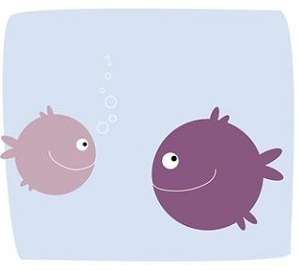 Have you seen the movie? There are a lot of parenting situations in it that we can relate to. The main one that I see is with Marlin and Nemo. Nemo has a short fin and his dad is very protective of him, which is natural. Nemo wants to show his dad what he can do in spite of his short fin, but this is a scary situation for Marlin (the dad), because he does not know how to protect Nemo.
Nemo is reacting in an age-appropriate way: He wants to show his dad what he can do; Dad won’t let him, and then Nemo does it anyway. Sound familiar? This pattern happens a lot and at different ages and stages with parents and kids. As the kids get older, we may become more comfortable with letting go, but it will still be hard.
The question is this: How do we allow our children to do more things on their own when our own fears get in the way?
At a young age, kids begin to pull away and search for independence, and as parents, we encourage that, support them, and cheer them on. When they stumble, we help pick them up and tell them to try again. When they succeed, we feel great! When they “fail,” we get discouraged and/or keep cheering them on. The latter is a healthier response: to keep cheering for and encouraging them and to allow kids to keep striving.
The challenge is when they are hurt or held back by a physical or mental challenge that as parents we want to protect them from. We may also want to protect them because of our own fears or beliefs that someone is going to hurt them even more. When a child is showing the desire to try again or to show you that he can do something, that is when it can be okay to allow it.
With Nemo, he wanted to show his father he could swim far (out to the boat) and come back. Yes, he was being oppositional and was not listening or following directions, but that is not really the point.
Marlin was afraid that Nemo would not be able to swim to the boat, and from my perspective, Marlin was afraid that he would have to go get Nemo, and Marlin was more afraid of that than anything else. So here is something to think about: we need to be aware of where our fears come from as parents. Do our fears arise from our own insecurities or doubts that we will not be able to swim to the boat? Or maybe the fear is that when our child does well, he will need us less.
Wherever Marlin’s fears were coming from, Nemo did what he believed he could do. Yes, he got caught, and his dad searched and found him; and then Nemo was able to show Dad that in spite of his short fin, he was still able to do great things. Maybe if Marlin had allowed Nemo to show him earlier, then the situation would not have had to go that far, but then the movie would not have been made.
It took Dori to point out to Marlin that maybe it was time for him to let go. Yes, they were in the whale, but Marlin got the message: Allow Nemo to show what he can do, even if Marlin has some fears.
But let’s look again at the question posed earlier: When is it okay to allow your child to have more freedom? How can parents manage their fears when a child is insisting on what he can do?
- Identify your fears. Be aware of them. When we look at our fears, we can do something about them. Are the fears more about your child or that you may not be able to protect him from getting hurt? You are not always going to be able to protect your child; he may get hurt, but he probably will also be okay.
- Focus on what your child is able to do. Look at where improvements have been made, and see how you can help encourage him. Look at how you can support him to try something new or a little more challenging.
- Is your child asking to try something new? Is he wanting to try more? If he is, then believe in him, and try to understand that he believes he is able to try it. You can share with him your thoughts and concerns. He may disagree and still want to try, and if so, then trust him. Yes, he may not fully succeed, and that’s okay. He will learn more about himself and become more confident in himself. When he does succeed, it will feel wonderful and he will be very proud to show you.
- If you have conveyed your thoughts/fears to your child and he’s still insistent that he can do whatever it is, then support him. Encourage him and be there for him.
- If he “fails”, do NOT say, “I TOLD YOU SO” because that would be your fears talking. Encourage him to try again; failure means not trying at all.
Back to Marlin and Nemo: Marlin learned that Nemo was able to do a lot of things, even with a short fin. He succeeded, and Marlin also succeeded: He learned that letting go is not only scary at times but also very rewarding. Nemo told him that he loved him and was thankful, and the letting go helped their relationship become more fun. Marlin also became better at telling jokes!
One last thought: When Marlin allowed Nemo to show what he could do, I think Marlin found his own “Nemo,” which I guess opens the door for another article on this topic: Finding “Nemo” Part II.
Related articles:
Increasing Children’s Self-Esteem
Importance of Coping Skills, Part 2: Building Resilience
When Not to Say “No” to Your Child
When parents use children as pawns in their divorce, the psychological consequences can be devastating. Parental alienation (PA) is the act of deliberately alienating a child from a targeted parent (TP) by an alienating parent (AP) and can cause a psychological condition referred to as parental alienation syndrome (PAS). Although this term is relatively new, the damage this type of behavior inflicts is not. When one parent denies a child access to the TP, the child struggles with feelings of hatred and fear towards the TP. These children often live in an environment riddled with malicious and derogatory remarks about the TP, and as they age, maintain guilt over harboring these feelings toward their parent.
Research on children of divorce has shown that this pattern of behavior can cause children to have social impairments that negatively impact their quality of life as adults. But until now, no study has looked specifically at PAS and its effect on key factors of development. To address this issue, Naomi Ben-Ami of Yeshiva University in New York evaluated 118 adult children of divorce and compared the children who experienced PAS to those who did not. She assessed several areas of social and psychological well-being, including depression, trust, self-hatred/esteem, anger, guilt, marital status, and achievement and identity problems.
[fat_widget_right]
Ben-Ami found that the PA participants had substantially lower levels of achievement than the non-PA group, which was demonstrated by fewer college degrees, less overall employment, lower college enrollment, and more economic hardship. They also exhibited attachment issues, impaired relationships, and decreased self-esteem, possibly as a result of the lack of attention they received from their APs. The controlling behavior of an AP was also shown to increase feelings of anger and guilt in the PA participants. These emotions, coupled with diminished self-sufficiency, elevated the risk for depression in the children who were exposed to PAS. Ben-Ami believes these findings support previous research that shows the destructive and long-term consequences that a child must bear when he or she becomes entangled in a parent’s highly fueled emotions arising from a divorce or separation. This type of evidence, if made available to parents and involved psychological and legal experts, could help prevent this type of activity and maintain the integrity of relationships, present and future. Ben-Ami added, “Ideally, the trajectory can be interrupted successfully to allow children to maintain healthy relationships with both parents, to be loved by them and loving with them.”
Reference:
Ben-Ami, N., Baker, A. J. L. The long-term correlates of childhood exposure to parental alienation on adult self-sufficiency and well-being. American Journal of Family Therapy 40.2 (2012): 169-83.