Negative self-views and self-appraisals are commonly associated with depressive symptoms. Individuals with major depression, as well as those with depression related to bipolar, often experience low self-esteem, feelings of worthlessness, and overall negative self-concept while in their depressive states. In contrast to these feelings, high levels of self-esteem, goal attainment, and motivation are often evident preceding or during manic episodes.
But according to the results of a new study led by Hana Pavlickova of the School of Psychology at the University of Wales Bangor, negative self-beliefs can also predict manic episodes in people with bipolar. Pavlickova theorized that the comorbidity of both positive and negative affect might exist during periods of no symptoms and also during periods when symptoms were present. Understanding how this overlap affects each mood state could help determine when manic or depressive episodes might occur and also could provide opportunities for intervention prior to those episodes.
For her study, Pavlickova evaluated 253 participants with bipolar several times over the course of 18 months. She looked at depressive and manic symptoms and how self-esteem, self-appraisals, internalization, externalization, and other behaviors influenced the symptoms.
The results revealed that self-esteem was most strongly associated with both mood states. In particular, low self-esteem was linked to depression and high self-esteem to mania. However, negative self-esteem, although highly predictive of depressive symptoms, also indirectly predicted manic episodes. Pavlickova discovered that although cross-sectional data indicated a direct association between negative self-esteem and depression, longitudinally, negative self-esteem was weakly but clearly associated with mania.
She explains this finding by suggesting that individuals with bipolar may overcompensate for feelings of negative self-worth by actively avoiding any depressive emotions and engaging in high levels of externalizing, which could provoke manic behaviors and symptoms. These results are novel in that they demonstrate the overlapping relationship of negative self-evaluations in bipolar. Pavlickova added, “In terms of clinical implications, the findings accentuate the importance of the therapeutic management of negative self-concept shared by both depression and mania in bipolar disorder.â€
Reference:
Pavlickova, H., et al. (2013). Symptom-specific self-referential cognitive processes in bipolar disorder: A longitudinal analysis. Psychological Medicine 43.9 (2013): 1895-907. ProQuest. Web.
Schizophrenia is often diagnosed after someone has a psychotic episode. When someone who has had a psychotic episode initially seeks treatment, however, he or she may have had a prolonged duration of untreated psychosis (DUP). This period of time has been theorized to significantly impact later symptom severity and even progression, prognosis, and outcome.
Surprisingly, even though this theory has been introduced and explored, few studies have looked at the relationship between DUP and symptoms via a long-term follow-up. Therefore, Dr. Wing Chung Chang of the Department of Psychiatry at the University of Hong Kong in China recently led a study examining the long-term effects of DUP on executive function in a sample of 93 adults with schizophrenia.
The participants ranged in age between 18 and 55, and were evaluated extensively when they first presented for treatment for psychosis. They were followed up with several other assessments over the course of the next three years. Chang measured executive functions and looked at various aspects of cognitive function and memory.
The results revealed that when compared to nonpsychotic control participants, the participants with psychosis had large deficits in areas of memory. Chang found that visual memory was especially impaired in the participants with psychosis and that verbal memory continued to experience deficits over the three-year period. Additionally, the length of DUP was directly predictive of symptom severity and outcome at three years.
Chang believes this study supports other research that demonstrates a link between DUP and illness outcome. The longer an individual experiences psychosis, the more likely they are to have a worse illness trajectory, more severe symptoms, and more impairment to cognitive capacities. Chang said, “Our findings provided further supportive evidence that delayed treatment to first-episode psychosis is associated with poorer cognitive and clinical outcomes.â€
In sum, this study extends existing research into this topic by demonstrating the long-term negative effects of psychosis on cognitive function, especially verbal memory. Future work could fortify this area of research by extending the study duration even further and by examining particular shifts in cognitive deficits and how they relate to DUP.
Reference:
Chang, W. C., et al. (2013). Impacts of duration of untreated psychosis on cognition and negative symptoms in first-episode schizophrenia: A 3-year prospective follow-up study. Psychological Medicine 43.9 (2013): 1883-93. ProQuest. Web.
The number of incarcerated individuals with mental health issues is disproportionately high. Not all people who commit an offense have psychological problems, but those that do often go without care prior to being introduced to the criminal justice system. Having a better understanding of the relationship between offending and mental health issues could help in the development of interventions and identification measures aimed at those most at risk for mental health issues and criminal offense behaviors.
To capture a more accurate picture of the prevalence of psychological problems among offenders, Vera A. Morgan of the School of Psychiatry and Clinical Neurosciences at the University of Western Australia recently led a study that analyzed data from a birth cohort spanning 15 years.
Morgan found that of those who were born during that time, over 116,000 had been arrested and over 40,000 had been registered as receiving psychiatric care. Of those who received psychiatric care, 32.1% were in the criminal justice system. The most common psychological issues in this group were substance abuse and schizophrenia. A combination of these two significantly increased the likelihood of being arrested.
When Morgan looked solely at arrest records, she found that over 11% had a psychological issue, 6.5% had substance abuse issues, and almost 2% had a diagnosis of schizophrenia. When she looked at other mental health issues, Morgan found that personality issues accounted for 35.9% of arrests, and 29.2% of all arrests were among people with psychological conditions other than substance misuse, schizophrenia, or personality issues. For many, being arrested led to their first contact with mental health services.
“Given a growing proportion of schizophrenia offenders being arrested prior to their first contact with psychiatric services, there are important implications for mental health and criminal justice policy and practice,†said Morgan. The development of programs designed to identify mental health issues prior to entering or at the threshold of the doorway into the criminal justice system should be explored in future work. Doing so has the potential to reach individuals most in need of mental health care and also to decrease the risk of offending by those with mental health issues, and in particular, substance abuse and schizophrenia.
Reference:
Morgan, V. A., et al. (2013). A whole-of-population study of the prevalence and patterns of criminal offending in people with schizophrenia and other mental illness. Psychological Medicine 43.9 (2013): 1869-80. ProQuest. Web.
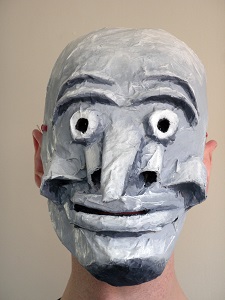 A baby first focuses on the faces of those around them. Hard-wired to recognize our caregivers, at a primal level, we all understand the human face communicates information. Understanding the messages others are sending us can even be essential to survival. Cover a face and the transformation can be mildly unnerving, terrifying, or even extremely funny. A face that is covered denies us access to the signals we are used to seeing and sends out new signals or messages for us to interpret.
A mask-making session can afford fertile ground in an expressive therapy setting for both client and therapist. Making a mask invites the creator to explore various aspects of his or her own persona. The activity can be revealing because it takes the mask maker out of the realm of words and employs imagination and nonverbal action.
Exploiting the Mind-Body Connection
One mask-making technique involves molding clay into facial features and then applying materials such as paper mache, celluclay, or various molding cloths over the top of the sculpted mask face. The tactile process of modeling clay with hands, fingers, and palms can provide a powerful connection to deep-rooted feelings through the tactile, nonverbal (somatic) experience of working physically with the clay. The body can hold all kinds of memories from the past, and by engaging in this nonverbal activity the imagination of the mask maker may find new ways to communicate hidden thoughts, feelings, and memories through the creation of meaningful symbols that are shaped into the clay as the mask evolves.
During the process, through verbal or nonverbal communication, the therapist may help the client to experience and consciously come to terms with these previously locked up and hidden memories. This can happen as the feelings or memories emerge during the mask-making session or sometimes in later sessions when the mask, made by the client, is used in other ways.
Finding Joy Through Creativity
Many memories and the feelings associated with them are difficult and painful, but it’s also true that the result may well be the reclamation of joyful creativity. When we are children, we play with abandon; it’s part of the learning process. The ability to playfully explore the world within as well as the environment that surrounds is often lost as we age into adulthood. It becomes prey to many cultural pressures and sometimes to misinterpreted parental reprimands.
A parent may react strongly to a child playfully exploring a shiny object such as a sharp knife. The child may then interpret the reprimand as being connected to their natural interest and creative exploration process and assume that this is a “wrong behavior.†A little bit of their creative energy then gets locked up with some repressed feelings and lost joyfulness. We all want to be loved and protected by our parents; when we are children, our survival depends on it.
Mask making and working with masks in a therapeutic situation can help unlock that playfulness and sense of creative adventure through the process of remembering moments, such as the one just described, and revisiting the feelings that accompany such memories.
Out of the Nowhere and into the Here
Besides being a therapeutic tool, mask making can be a simple pleasure on its own. Adults engaged in busy and demanding lives don’t often have or take time to engage in a hands-on creative process. By simply indulging in the mask-making process, the participant can reopen doors and creative pathways long ago forgotten. There’s an age-old nursery rhyme that goes:
Where did you come from, baby dear?
Out of the nowhere, and into the here.
Our creations are like our babies. The simple act of bringing an object, in this case a mask, “out of the nowhere and into the here†can be a liberating process in and of itself.
The Rich Tradition of Mask Making
For more than 12,000 years, human beings have been making and using masks. We find the earliest evidence of this on the walls of caves around the world. At the Trois-Frères (“three brothersâ€) site in France, a figure considered to be a male shaman is depicted on the wall of the cave, wearing a large, antlered stag’s head. The headpiece mask has the face of an owl superimposed over the facial area with wolf-like ears and a long goat’s beard.
Masks can capture a state of mind. They evoke, memorialize, reveal, and conceal all at the same time. Even the most simply constructed masks can powerfully transform the face. The inanimate mask comes to life when worn. It becomes charged with a life force from within the wearer. Shamans and healers around the globe today, as well as the shamans of the ancient world depicted on caves so long ago, all understand the magic of making and using masks.
We can heal and be healed through integration by using our innate gift of imagination and our ability to create. Masks are a powerful tool in the process of healing and the journey toward wholeness.
References:
- Science Magazine (July 6, 2001): Vol. 293 no. 5527 pp. 51-52. DOI: 10.1126/science.1062331. Artistic Creativity and the Brain: Zeki, Semir.
- Sivin, Carole, (1986). Maskmaking. Worcester, Massachusetts: Davis Publications, Inc.
- Quest Magazine (January – February 2004): Spirit and Art: and the Puzzles of Paradox. James, Van. Retrieved July 20, 2013 from: http://www.theosophical.org/publications/1238.
Thanks for writing in, and for the excellent question. I’d first like to congratulate you for having what appears to be an unusually expansive empathy, in that you are trying to do right by your fiancé in terms of your mutual sex life, his issues and sensitivity around trauma, and, of course, your own feelings about all this. Obviously, this is a complex question, which accounts for the long-ish answer you’re about to get.
The first thing that comes to mind here is: There’s something not sexy about this for you; sex is a little like humor in the sense that it tickles us or it doesn’t. Your fiancé’s request to carry out what sounds like a role-play scenario doesn’t seem to hit the eros chord for you, and nothing’s more of a turn-off than forcing yourself to do something too edgy or discomforting.
Part of the uneasy factor is that the requested scenario seems to parallel your fiancé’s sexual abuse, which is still fresh for you (just having heard about it). Let me say here that what defines “healthy sexuality” could—and has—filled volumes upon volumes. It is a never-ending debate in my field. My own guidelines for “healthy” sex would mean, first and foremost, that the sex is consensual and safe for all parties. Other than that, the spectrum is infinitely broad. I know heterosexual men who like wearing stockings, and gay men who act brutish and tough in the bedroom. Working with sexuality means you’re dealing with the unconscious, and 10 different therapists would give you 10 different interpretations of what your partner’s sexual preferences are “really about.” As indicated, however, I get the impression from your letter that something about this feels uncomfortable, perhaps a bit unsafe, and I think that is at the core of what needs to be dealt with between you.
My clinical experience has shown me that a dynamic sexuality often includes a sense of experimentation, emotional expression, and spontaneity. There’s nothing at all wrong with role playing, though when the “play†part becomes rigidified, with an endlessly repeated “script,†to the point where mutual expression seems muzzled, where the sex has to be a certain way or someone will be unhappy, then it’s time to take a step back and see how things can be loosened up. Playfulness and humor, too, can be a way of masking or deflecting emotion, but if sex becomes too serious or heavy, it becomes stifling. Just as important here is the fact that what happens in the bedroom so often mirrors what is happening, emotionally and relationally, in the relationship itself. Sexuality is another spoke in the wheel of relating, not a separate wheel unto itself, though we often think of it that way. This leads me to wonder if you ever feel kept at a distance or put in a position of power in your emotional lives together.
I’m not exactly sure how dark or heavy a “flavor” we’re talking about here, though it sounds like (I’m assuming) you would be in the “perpetrator” role; if I assume that these scenarios have a sadomasochistic tinge, perhaps your fiancé is asking you to take the “S†role in a way you’d rather not. I’m imagining it might be painful to play a role in which you are hurting your beloved in a way parallel to earlier, horrifying experiences.
Whether these scenarios are healthy for a person to enact really depends on context and their psychological history (and is a source of intense debate among therapists). I believe that, for some people, allowing scenarios derived from trauma to emerge in a sexual context might actually give a person control and power over a previously painful narrative; they are able to “make use” of the trauma in a way they can control and derive pleasure from, a way of telling their story their own way, which now offers pleasure and not just pain. Ironically, allowing trauma memories to mingle with consciousness, even under the cloak of sexual fantasy, is a step forward for some who have completely dissociated or disconnected from such awful memories. For other people, such enactments can take on a compulsive flavor, where satisfaction can be found only by acting out one’s feelings and experiences this way, which inevitably makes their actual sexual partners feel distant and/or controlled. Where one draws the line between playful expression of one’s sensibilities and a darker, more destructive and harmful behavior is up for debate and highly dependent on specifics.
I think the only way to resolve this, since it so directly involves so many facets of your relationship, is to handle it relationally—that is, with your fiancé. This isn’t something you can figure out on your own. Dialogue is essential. I’d first decide what you are and aren’t willing to try in bed. Would you be up for trying a “light” version of his scenario, or exploring it, to see if there are aspects of it that can be treated as a kind of game, where play and spontaneity are included? Could it be seen as a kind of foreplay, where (again, not knowing the specifics) you could employ a little spanking or tying up or a scenario that is sexy to both of you and not too edgy or overwhelming? Or is it all just a big turn-off and not your “thing†at all?
I’d then sit down and relate as honestly as you can. You obviously care about him a great deal, want to please him but have concerns about his request. I’d try to stick to your own feelings. Saying, “I’m not sure this is a good way to resolve your issues” sounds a little therapisty; you might try saying, “The idea of this makes me (uneasy, uncomfortable, etc.).” Can a compromise be reached? Can the two of you let your sexual imaginations come up with something you both find desirable?
Try not to think too hard about what will help your fiancé resolve his trauma. Frankly, just having an open conversation wherein you are honest about your feelings, while empathic toward his, will likely be a healing experience for both of you. I honestly do not think any partner’s job is to help the other resolve any issues; that’s what therapists are for. Honest relating and working through things respectfully and lovingly is itself healing. You can support him in his therapy work, of course, but you, too, are on a journey, and one person’s trauma does not “cancel out” the other’s desires or wishes to feel heard, respected, and safe—sexually and otherwise.
Thanks again for writing. Hope that helped.
Darren
 Freshman year of college was a difficult time for me. Many things had changed, I was away from home for the first time, I was not among close friends, and my course load was semi-difficult for me to adjust to. With all that going on, there was a noticeable change to my appearance that I couldn’t identify with. There was a round reddish raised sore on my left cheek. I tried to recall in my mind if I had done something to myself to cause this, but nothing came to mind.
Combing my hair in the mirror also became unnerving, because it had begun to fall out more than that average 100 strands a day. My scalp was visible. I figured out where the hair was disappearing from; I was balding on a section of my scalp.
I knew I had been stressing from school and being homesick, but I couldn’t figure out why my skin and scalp were being affected by my stress. That’s when I really began to panic. My mother suggested I come home so my grandmother, who was a registered nurse, could take a look and see what was happening. I was on the next thing smoking going home.
As my grandmother examined my face and scalp, she was clueless about my condition. She concluded that I needed to see a dermatologist. A couple of days later, I was in the doctor’s office being poked and prodded as if I were a science project.
The diagnosis: discoid lupus. It was determined that I didn’t have systemic lupus—there were traits, but I definitely had discoid. I didn’t understand what discoid lupus was, so my reaction was nothing more than a head nod and wondering, “Now what?â€
My dermatologist did not have a sound of urgency or true concern in his voice, so I made myself believe that this wasn’t very serious and I would be just fine. The information that I gained from that appointment was:
- There is no certain cause for this disease.
- This disease is more prevalent in African-American women than Caucasians.
- It can affect my face and scalp.
I was handed some cream for my face and told my hair would grow back. That was the end of the appointment. I never saw that dermatologist again, and I put the thought of lupus out of my mind.
Almost twenty years passed; my life was moving along. Planning a wedding brought on demanding pressures that I had not anticipated. Day by day, my face began to show signs of redness, and hair was falling out. I believed that I was having an acne breakout and needed to wash my hair because it was falling out.
I had not thought about symptoms of discoid lupus, so in my mind that was not a possibility. Dismissing all the signs, I went on with my wedding and honeymoon, which happened without a hitch. Coming back to reality, I decided it was time to see a dermatologist.
What I feared became true: my discoid lupus had awakened from its 20-year nap. This time it came with a vengeance. Instead of one lesion, I had several on my face and ears, and my scalp was bald in more than one area. Depression began to set in because I couldn’t understand why it came back ten times worse than before.
If I could identify two things I overlooked during both of my episodes, they would be my high stress level and the symptoms I was experiencing at the time. Looking back, I was under some unbelievable stress both times, and I dismissed the rashes and hair falling out as just a natural aspect of my life.
I have discoid lupus, which, whether active or dormant, is for life. I must pay attention to those little things—stress, fatigue, rashes, hair falling out, etc—in order to gain control of this outbreak, which will limit the hair loss and skin abrasions.
As an African-American female diagnosed with a form of lupus, I have pointed out some important factors that I feel everyone should remember:
- Know your family history. If someone in your family has a form a lupus, being tested may be wise for you.
- Get informed. Asking a professional the 5 W’s is a great way to start to learn as much as you can about lupus:
Who can get lupus?
What is lupus?
When does lupus flare up?
Where on/in your body does lupus affect?
Why is there not a cure for lupus?
The more you know, the better prepared you are for your flare ups. - Pay attention to symptoms you may have and the various changes that may take place with your body.
- Be sure to take your medication and visit your physician(s) regularly. Don’t be afraid to ask as many questions as you can.
- If you have to be out in the sun, make sure you wear sunscreen or a hat, or use an umbrella to keep yourself protected.
- Make sure your family is educated, as well. You should not have to live with lupus by yourself.
- Try to make your life as stress-free as possible.
Today, I am happy to report that my discoid lupus is under control. It hasn’t taken a nap, but it’s not wide awake, either. I see my rheumatologist and dermatologist regularly and I am sure to take my medication and stay out of the sun. Although my face has cleared, and my hair is growing back slowly and finely, I still live with caution.
But I feel blessed that I have my life. As an educator, I have taken on the topic of lupus as if it were a thesis paper for me. Research is the main focus to gain a greater understanding. A great place to obtain information about lupus and its various forms is the Lupus Foundation of America.
Genesa Page is a high school business education teacher at Mirabeau B. Lamar High School, an International Baccalaureate World School in Houston, TX. She has been teaching since 2005.
 No one is immune to trauma, and it is not something that we can always prevent. Life is traumatic. We cannot really plan for disasters, car accidents, loss, and other traumatic events that tend to take place in our lives. One study found that among the population in the Netherlands, 80.7% of participants had experienced a traumatic event (de Vries and Olff, 2009). The study goes on to state that this rate is comparable to the rate of traumatic events experienced in the in the United States. Human beings, no matter how strong, become vulnerable when they experience high levels of stress. Experiencing a traumatic event does not necessarily mean a person will develop posttraumatic stress, but it makes a person more likely to.
People experience trauma to varying degrees. Regardless of the degree of trauma experienced, the journey through trauma recovery can be an emotionally intense process which can, at times, seem daunting. I have noticed four similarities among people who are working through trauma that I felt would be beneficial to write about, as I see these traits so consistently.
- Feeling alone and vulnerable: I have had people tell me that experiencing a traumatic event leaves them feeling alone and vulnerable. This is very normal. As I mentioned above, no one is immune to trauma, and even people with a strong sense of self and high self-confidence can find themselves feeling as though they are wandering through the dark alone, with no idea where they are going. I cannot stress enough the importance of having a good support network as one works through trauma. It can make all the difference in the world, especially if one is willing to talk about what they are going through and accept support from others. Wandering around in the dark is terrifying, and we all need other people sometimes to help us get through the dark so we can reach the light.
- [fat_widget_trauma_ptsd_right]Experiencing intense emotion: A common experience of someone who has experienced a traumatic event is intense emotion, sometimes at unexpected times and without any known trigger. I have had many people mention that sometimes they will cry for “no reason†or suddenly become angry or afraid, which confuses and sometimes scares them. It is understandable that this would be confusing and scary, but it is normal and just part of the process of working through trauma. Intense emotions and trauma go hand-in-hand, and part of healing is allowing oneself to experience the emotions that come up. I believe that our brains and bodies are perfectly able to work through trauma, but it takes some pain to get to the healing. Trauma is like having an injury—such as a broken bone. In order to heal properly, that bone may have to be reset, which can be very painful. Through the healing process, the bone might continue to cause the person pain, but as the healing progresses, the bone should hurt less as long as it has the proper support and care. Emotions are usually where the pain is for people with trauma. Being willing to experience emotion, and learning skills to appropriately cope, can make those emotions much more bearable and easier to work through. Like a physical injury, when trauma is receiving the proper treatment and support, it will begin to hurt less.
- Having disturbing thoughts and/or flashbacks of the trauma: I don’t think I have seen one traumatized person who did not have disturbing thoughts, flashbacks, or both about the traumatic event. This is what trauma does: it tends to stick in one’s brain and pop up, uninvited, whenever it wants. This is nothing to be ashamed of, and this is where support can be helpful in the form of trusted loved ones, support groups, and trauma professionals. There are skills available which tend to be quite effective in addressing these thoughts and flashbacks.
- Feeling as though it will never get better: Hopelessness is one of the (unfortunately) common side effects of trauma. The good news is that there are excellent therapeutic interventions that are proven effective in treating trauma. I have treated people who experienced years of severe trauma who have found relief and have been able to have a normal, healthy life. There are several options for treatment, and finding a good therapist who is skilled in treating trauma can make all the difference. It does not matter how long ago the trauma happened or how severe it is. There is always hope for recovery!
Of course, this list is not exclusive.
It is so important that people dealing with trauma know that they are not alone in what they are experiencing and to know there is hope for recovery.
Reference:
De Vries, G.J., and Olff, M. (2009). The lifetime prevelance of traumatic events and posttraumatic stress disorder in the Netherlands. J Trauma Stress, 22 (4), pp. 259-267.
It sounds like you have tried to get help in so many ways, yet nothing has worked for you. That must be incredibly frustrating. There is no question that being left by a parent is painful. You are entitled to feel anger and hurt, though I hear you say that you don’t want to feel that way anymore, that you want to let it go. If you want to let it go, you will need to find a way to forgive your mother. When we forgive, we actually release ourselves, not the other person. Your mother is still responsible for the choices she made. Forgiveness does not mean that you are OK with her choices or that you condone them. You can’t change the facts of her choices, but you do have an opportunity to change what those choices mean to you.
There is no quick fix for these kinds of feelings, and the strategies that work will vary from person to person. Some people respond well to mindfulness work, whereas some people find cognitive behavioral approaches (REBT in particular) most impactful. I can offer you a couple of strategies to try, though in my experience, working through these strategies with the help of a professional is most effective.
The strategies I can suggest involve reframing how you tell your stories. Right now, you tell your story about how your mom left you when you were 16. My hunch is that each time you tell it, you may re-experience some of the emotions of loss, anger, confusion, or grief that you felt at the time. This can reinforce those feelings of hurt and keep them activated. The first step to making a shift is to start telling the story from the third person rather than first. Become a neutral observer watching the events. Instead of saying, “My mom left me …†you narrate the story, saying, “The mother left her daughter and the family …†By approaching your story this way, you start to get some emotional distance from the events and they aren’t quite as triggering. You may notice details that you didn’t pay attention to before. This is the first step.
When you are ready, you can try telling the story from the points of view of others—other people in your family, and eventually your mother. Consider what they were thinking and feeling, how they made the choices they made, how they saw events. By taking on the perspective of others, it can sometimes shift how we feel about a set of events. Again, I’d recommend that you do this with the support of a therapist who can help guide you through this process.
Another approach I’d like to mention is re-parenting work. Again, I strongly recommend doing this with therapeutic support. The main goal of re-parenting is to go back to the time when you felt abandoned, hurt, and let down, and to allow yourself to feel deeply while also becoming the loving parent to yourself you wish you’d had. Allowing yourself to fully experience and feel the pain of your abandonment is the key to healing here. You learn to offer yourself the unconditional love and support you wanted from your mom. You learn to nurture yourself and heal those deep, painful wounds which can ultimately allow you to release the anger you’ve been holding on to. This approach can be intense, and it is important to find a professional you trust to help guide you through the process.
Best of luck,
Erika
 is inextricably linked to cultural norms, and the latest version of the Diagnostic and Statistical Manual of Mental Disorders—psychiatry’s diagnostic bible—makes this readily apparent. Although sexual kinks are still a source of cultural controversy, their taboo status is steadily lifting, and the DSM-V treats unusual sexual behavior differently than previous versions of the manual.
Changing Sexual Norms
A little over a century ago, Sigmund Freud, modern psychiatry’s godfather, argued that clitoral orgasms were a sign of immature sexuality. For Freud, healthy adult sexuality meant nothing less than a vaginal orgasm. Contemporary sex researchers now emphasize the fact few women can reach orgasm with vaginal stimulation alone, and sex therapists frequently advise people having trouble with orgasm to focus on the clitoris. There have been other advances in thinking, of course, when it comes to sexuality. Until 1973, homosexuality was listed as a disorder in the DSM. Contemporary psychologists and psychiatrists now condemn conversion therapy, a treatment designed to “cure†homosexuality.
Contemporary sexual fetishes run the gamut. Many people have engaged in or acted on some form of sexual fetish at one time or another, and groups dedicated to advocating for the rights of those with unusual sexual interests have sprung up all over the Internet. More and more sex researchers recognize these behaviors as part of a sexual continuum and not necessarily indicative of a mental health issue.
The DSM-V’s Stance
Like their predecessors, contemporary mental health professionals frequently wrestle with the intersection of cultural norms and mental health, and the new DSM reflects this ongoing dialogue. Previous editions of the manual listed atypical sexual behaviors as diagnoses. For example, the DSM-IV listed the behavior of sexual masochism as a disorder. The new version, however, is largely silent on behavior, and defines fetishes as problematic only when they cause significant distress. Thus, masochistic behavior is now termed sexual masochism disorder only when the behavior causes problems for the individual.
When Is a Kink a Problem?
So when does a sexual kink cross the line into a disorder diagnosis? Some sexual behavior is inherently disordered, according to the new manual. For example, pedophilia remains a diagnosis because it’s impossible to act on a sexual attraction to children without breaking the law or causing harm to others. But for those who are blissfully dedicated to feet, bondage, or garter belts, the manual no longer defines the behavior itself as a problem. Instead, the so-called disorder is partially in the eye of the beholder. If your sexual fetish causes serious problems in your romantic relationships or significant personal distress, it may be time to consult a professional. Otherwise, the creators of the DSM-V are content to allow people to engage in whatever sexual behavior they want to without finding issue.
Ongoing Controversy
Not everyone is happy with the changes to the manual. Sex-positive writers and researchers point to the fact the new book still provides a list of sexual fetishes, which serves to label some sexual behaviors as inherently deviant even when they don’t cause problems. And the fact the DSM has changed its approach to diagnosis doesn’t mean every mental health professional has followed suit. The American Association of Sexuality Educators, Counselors, and Therapists publishes a list of therapists who adopt a nonjudgmental stance toward kinks. People who engage in non-normative sexual practices such as swinging, polyamory, and sexual fetishism report that they often struggle to find professionals who don’t view their behavior as deviant.
References:
- Paraphilic disorders [PDF]. (n.d.). Arlington: American Psychiatric Publishing.
- Parry, W. (2013, May 30). Normal or not? A sexual attraction to objects. LiveScience.com. Retrieved from http://www.livescience.com/36982-is-fetish-normal-dsm5.html
- Savage, D. (n.d.). Finding a sex-positive therapist isn’t always easy. Creative Loafing Charlotte. Retrieved from http://clclt.com/charlotte/finding-a-sex-positive-therapist-isnt-always-easy/Content?oid=3043389
Research on borderline personality (BPD) has explored various avenues in search of risk factors. But according to a recent study, some of the biggest risk factors for BPD may develop in the womb. Cornelia E. Schwarze of the Department of Psychiatry and Psychotherapy at the University Medical Center Mainz in Germany led the study that looked at the prenatal conditions of 100 individuals with BPD and compared them to 100 participants with no history of BPD.
Schwarze interviewed the mothers of the participants and reviewed prenatal and medical records. She looked at factors such as prenatal smoking, stress, family conflict, and medical problems. Schwarze also assessed environmental risk factors for the participants by evaluating levels of childhood adversity including maltreatment, neglect, physical and sexual abuse, emotional abuse, or other traumatic events.
The results revealed that the mothers of the BPD participants were more likely to have smoked during pregnancy when compared to the mothers of the 100 non-BPD control subjects. Additionally, the mothers of the participants with BPD also had higher rates of prenatal medical problems, stress, and conflict. Other risk factors that increased the likelihood of BPD were childhood sexual abuse and other childhood trauma. However, prenatal smoking and prenatal medical problems and stress had the strongest associations with BPD.
Exposure to prenatal smoke has been linked to impulsivity, identity issues, affective problems, and some borderline personality symptoms. The results of this study support existing research in this area. Schwarze also noted that medical problems that occur during pregnancy can have a significant impact on neurological development and specifically, on regions of the brain that affect emotional regulation. Although this should be explored further in future research, the strong link between prenatal medical problems and later BPD in children supports this as well.
Finally, prenatal stress, resulting from maternal stress during pregnancy, can be caused by a number of factors, including relationship problems, psychological issues, occupational conditions, or socioeconomic conditions, just to name a few. Each of these may also have a unique impact on the development of BPD or increased risk for BPD in unborn children. Schwarze added, “Future prospective longitudinal studies are essential to verify the impact of the observed potential prenatal risk factors.â€
Reference:
Schwarze, C. E., et al. (2013). Prenatal adversity: a risk factor in borderline personality disorder? Psychological Medicine 43.6 (2013): 1279-91. ProQuest. Web.
When choosing friends in childhood, many young people seem to gravitate toward peers with a history of delinquency or delinquent behavior. Delinquent peer affiliation (DPA) occurs most often during adolescence. Theories on DPA suggest that some teens may choose to associate with delinquent peers because they share similar beliefs and behaviors. Similarly, these children may be rejected by peers who do not engage in delinquent behavior, and therefore may be forced to choose other sources of social support. Along these same lines, some researchers believe that DPA is a result of genetics, causing some people to be predisposed to delinquent behaviors and thus, delinquent peer affiliation.
However, S. Alexandra Burt of the Department of Psychology at Michigan State University wanted to see how environment affected DPA. Using a sample of 726 twin children from a state registry, Burt conducted a study looking at environment, genetic predisposition, and other factors and how each affected DPA.
Burt found that although genetics were somewhat influential of DPA, environment played a much bigger role in the selection of delinquent peer friendships. In fact, the environmental conditions that influenced delinquency in the twins was a significant risk factor for negative behavior in those with strong and robust DPAs compared to participants with few DPAs. This finding suggests that a child’s environment, their family life, and social support within their world may serve as motivators for delinquency and delinquent affiliations. Burt also believes that perhaps these children find reinforcement and positive affirmation for their delinquent behavior from their DPAs, further strengthening the bonds they develop.
Burt also noted that when children have high DPAs, these friendships can increase the environmental risks and elevate their levels of delinquency. In some cases, children who befriend other delinquent children may then experience higher levels of parental disapproval. This can lead to higher stress levels within the home, more conflict and potentially increased delinquency.
In conclusion, this study shows that although genetics may plant the seed for delinquent behavior, environmental influences provide the food and water that allow it to grow. Burt added that this study provides new evidence into the effect of environment, but more research needs to be conducted. She said, “Future research should build on the present findings by examining these associations as they develop from childhood through early adolescence.â€
Reference:
Burt, S. A., and K. L. Klump. (2013). Delinquent peer affiliation as an etiological moderator of childhood delinquency. Psychological Medicine 43.6 (2013): 1269-78. ProQuest. Web.
Occupation can be a risk factor for suicide. In addition to psychological issues, poor physical health, and general life stress, the occupation that someone holds can present an additional suicide risk via access to lethal means. According to a recent study conducted by S.E. Roberts of the College of Medicine at Swansea University in the United Kingdom, doctors, nurses, and veterinarians had some of the highest suicide rates by occupation in the past 30 years. The results of this study reveal some positive trends and raise awareness about other occupations that can pose a heightened risk for suicide.
Roberts looked at occupation, access to deadly means, socioeconomic status, gender, and national economic condition over a 30-year period to determine which factors most influenced occupational suicide rates. The results revealed that in the early 1980s, veterinarians, dentists, doctors, pharmacists, and farmers had some of the highest suicide rates. This could be influenced by easy access to pharmaceuticals and weapons.
Then, in the early 2000s, these occupations saw decreases in suicides. At the same time, manual labor occupations had increases in suicides. These occupations included construction, merchant marines, coal mining, trash collectors, and drivers, among others. Roberts believes that the reorganization within these industries could be partly responsible for increased rates of unemployment and subsequent increases in suicides.
When Roberts looked at socioeconomic status as a risk factor, it was revealed that suicide rates doubled in the 30-year period for those most economically disadvantaged. Unlike early statistics, it appears that socioeconomic condition has emerged as a more salient risk factor than access to lethal means in this British sample. Further, men were more likely than women to commit suicide across all occupations and socioeconomic statuses.
Another risk factor that was identified was isolation, as artists, actors and entertainers had higher rates of suicide than some other occupational groups. Despite increases in some areas, Roberts pointed out that interventions aimed at reducing suicide in high risk occupations, such as one tailored for farmers, have proven to be effective at reducing suicides over time. Roberts added, “This indicates that carefully targeted suicide prevention initiatives for other occupations could be important.
Reference:
Roberts, S. E., B. Jaremin, and K. Lloyd. (2013). High-risk occupations for suicide. Psychological Medicine 43.6 (2013): 1231-40.ProQuest. Web.