Most issues that bring couples to therapy are familiar laments: “We don’t have sex anymore.” “I can’t take the dirty socks everywhere.” “All my partner does is work.” Some are earth-shattering, like experiencing a betrayal or coming face to face with a dealbreaker. But they all reveal the same underlying distress: People don’t feel connected to one another; they’re missing the essence of the relationship. Feeling disconnected is a significant loss, and couples come to therapy hurt, angry, and depleted, saying they have nothing left to give to foster the closeness they long for. They wonder how they can ever get that feeling back. It is possible. The key to feeling connected is first feeling safe. I collaborate with couples to find their “dance,” a new way to be with one another, which creates the foundation for a connected relationship — their secure base.
Of course, it starts with communication. Exploring unexpressed feelings, wants, and desires and addressing the details of interactions creates safety and connectedness. While we explore the hurts, we help shape new speaking and listening skills that cultivate care, empathy, and curiosity. As communication shifts from debates about winning to conversations that seek understanding, healing ensues, and trust grows.
The Power to Change the Dance

The most powerful way to create safety and ignite connection is with body language, facial expressions, gestures, eye contact, tone of voice, and even how we move through space. It’s known as non-verbal communication. It’s the cornerstone of attachment. Neuroscientists contend that a person’s sense of safety mainly comes from non-verbal cues. Most of us are unaware we send powerful signals with our posture, gestures, and voices. Between 50 and 93 percent of what we take in from others is expressed without words. Non-verbal communication is what regulates relationships. It can work against us, or we can become aware of it and use it to change our lives.
How can this “Superpower” create a connection? We can intentionally shift posture, movements, eye contact, and tone as quickly as we shape verbal language. I begin collaborating with couples on their “new dance” by asking “choreography questions.” While exploring their words, we simultaneously consider the non-verbal components: Where were you in the room during this impasse? Describe your tone. Were you looking at one another or on your phone? Then, we expand this inquiry to learn the specific steps of their “dance .”Where do they sit at the dinner table? What does the greeting look like when someone returns home? How do you want to be received after a long day?
Of all the non-verbal expressions, touch is among the most effective. It is essential to learn how physical touch works in the couple’s relationship, what it means to them, and how it makes them feel. If the couple is responsive to touch, we may use an intervention like “noticing when your partner gets it right,” with a hand on the shoulder, eye contact, and a smile. It will raise the impact of the praise and catapult our couple’s connection. We practice this in the therapeutic space and encourage its continuation into their lives. If touch isn’t the couple’s preferred language, we explore the best way to signal positive messages.
Parenting Moves

Children are especially attuned to body language. Couples looking for parenting support are empowered by understanding the impact of their non-verbal messages. Children test boundaries and exert control by separating parents, leading to marital conflict– which then causes children to feel unsafe and act out more. We help parents present a united front with consistent limits to interrupt these dynamics. Having a united front sends a message of safety to children, gains their cooperation, and reduces acting out. But when parents stand next to one other while setting limits, they create a parenting coalition that conveys a sense of security far more powerfully than words. And they don’t have to agree about every aspect of child-rearing to have one another’s back stand next to one another.
I encourage parents to greet one another at the front door with a hug, sit next to one another at the dinner table, and call the other parent in front of the children to say, “I care about you.” I ask parents: “What else can you do? “How could you present yourself to your children to convey the message: “We are in this parenting thing together?” One client, whose partner was out of town, came up with the idea of going to their bedroom and making a quick phone call to their partner. It took five minutes, and it sent children the message that no amount of distance separates their parents. There was no begging for extra TV time that night. The client changed the “dance.” Strategies to send non-verbal messages can also support single parents and divorced parents engaged in co-parenting.
Targeting Trauma
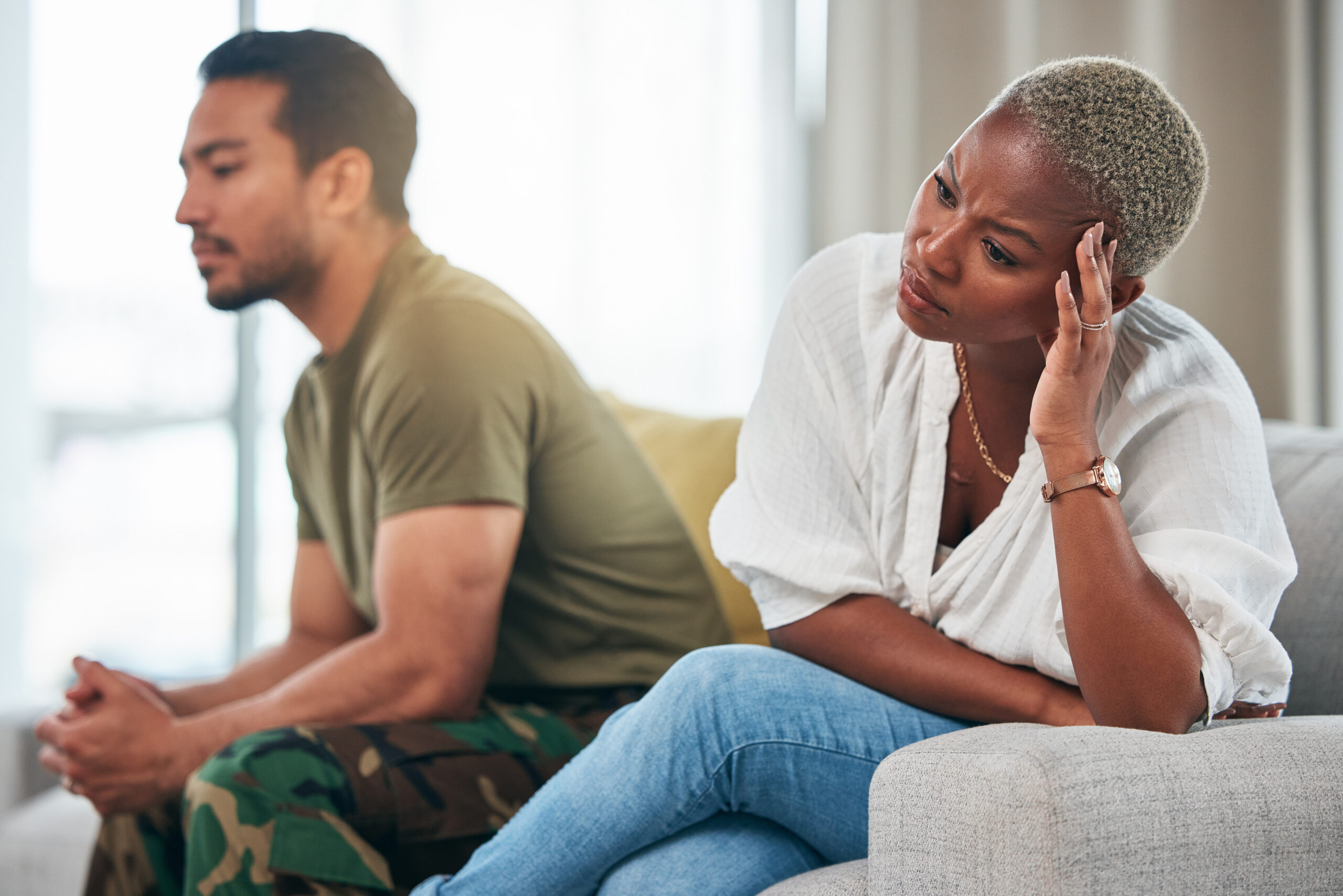
Couples with one or more members who have experienced developmental trauma or are experiencing current relational trauma like an affair are susceptible to non-verbal cues. Memories of traumatic events are stored differently than narrative memory. Overwhelming experiences are “remembered” in our bodies. This capability impacts our ability to read cues in the social landscape as safe or non-safe. Often, couples see danger and rejection when none is present or intended. For instance, a client who experienced abandoning parents may feel rejected and unworthy if their partner comes home from work and suddenly checks their email. This typical misstep may trigger a well of pain from the past that doesn’t fit with the present. The injured person may automatically “shut down” in a self-protection mode, responding with robotic answers and avoiding touch. The other couple members then feel confused rejected, and distances themselves, creating a self-fulfilling prophecy. These unspoken misunderstandings cause significant relational injury, which raises the stakes and the need for interventions that target the couple’s “dance.” Attending to the couples’ non-verbal, automatic responses is the key to creating the security required to foster connection and healing. What we say matters, but how we say it means more.
Practicing Ethical Non-Monogamy and Polyamory

Supporting couples in creating the relationship they want is an exciting aspect of treatment. All connections are invited, and anything is possible when the mission collaborates to create a secure base of connectedness. Connecting entails exploring non-verbal, automatic reactions and engaging reflective responses to find the couple’s unique “dance.”

By Dr. Jocelyn Markowicz, PhD, Psychologist
Attachment Hope for Couples: How to Improve Your Security Odds
You walk into the room and lock eyes with the most gorgeous human being you have ever seen. This individual locks eyes with you as well. You begin talking and realize that the chemistry between you is intense. You plan a date. You have several great dates. You fall in love and begin to talk about spending the rest of your lives together. You have the wedding. You go on the honeymoon. You begin to live your day-to-day lives together. (Perhaps not quite in that order.) But then, as you settle into shared lives, you notice that something is changing. The arguments are more frequent. The emotions are not all positive. Why does your partner leave when there is conflict? Why does your partner walk away when you need soothing? Why are they sometimes exhaustingly clingy and other times too independent? John Bowlby and Mary Ainsworth offered an answer rooted in attachment styles to these questions. Several researchers after them offered solutions. I’d like to share them with you.
The Evolution of a Relationship
It is important to acknowledge that it takes time for interpersonal patterns to emerge within a romantic relationship. A perception bias occurs when you first fall in love that naturally heightens your connection to your partner’s strengths and limits your awareness of their weaknesses. Thus, it is in day-to-day living that you develop more accurate perceptions of patterns that are problematic.
Why You Relate the Way You Do
In the 1960s, John Bowlby asserted that we learn positive and negative ways of relating based on our parent-child experiences. Our ways of relating are designed to strengthen our bond with our attachment figures (parents/caregivers) growing up. They help us survive. An attachment behavioral system gradually emerges wherein we attempt to regulate our emotions and behaviors toward an attachment figure. To do this, Bowlby (1980) asserted that the attachment system essentially asks the following fundamental question: Is the attachment figure nearby, accessible, and attentive? According to Bowlby (1980), an individual who has experienced a secure attachment is likely to view attachment figures as available, responsive, and helpful. An insecurely attached individual would view attachment figures as inaccessible, untrustworthy, and unreliable.
Different Attachment Styles
Ainsworth expanded on Bowlby’s attachment behavioral system and introduced specific attachment styles that explain our attachment behaviors. She outlined three specific attachment styles: (1) secure attachment and two insecure attachment styles: (1) anxious-resistant, and (2) avoidant (Ainsworth, 1979). In adult romantic relationships, the insecurely attached adult who is anxious-resistant would be dependent on their partner and yet reject their soothing attempts. The insecurely attached adult who is avoidant would not seek emotional or physical comfort from their partner when experiencing emotional distress.
Bowlby and Ainsworth helped us to understand that our way of relating to others is guided by our early attachment experiences, but do we indeed exhibit the same attachment behaviors in our adult romantic relationships?
Further Research into Attachment Styles
Hazen and Shaver (1987) evaluated Bowlby’s theoretical premise that early attachment behaviors extend to adulthood and are relatively stable. They conducted research and found that adults also reported the three attachment categories that Ainsworth determined (secure, anxious-resistant, and avoidant). Their research identified that romantic relationships are attachment bonds and share similar attachment behaviors that characterize parent-child interactions. In essence, Bowlby and Ainsworth were right to suggest that we can look at our adult relationships and evaluate our partner’s attachment behaviors based on their childhood attachment experiences.
Are People Stuck Forever in Patterns from Childhood?
What happens if you partner with someone with an insecure attachment style? Can their attachment style become secure?
Researchers had the same questions about whether or not early attachment behaviors could be changed in adulthood. Findings across several studies did indicate that while early attachment style is relatively stable (Kim, Baek, & Park, 2021), attachment behaviors can change (Tmej, AMA et al., 2020; Sims, 2000; Rimane, Steil, Renneberg, & Rosner’s, 2020; Overall, Simpson, & Struthers, 2013; Gazder & Stranton, 2010; Park, Johnson, MacDonald, & Impett, 2019). Therein lies the hope for the couple. So, back to the question, what happens if you partner with an insecurely attached individual? How can you increase your secure attachment odds in your relationship?
Distress in romantic relationships is the leading cause for adults to seek psychological services (Bradbury, 1998). There are specific interventions that increase attachment security or reduce the negative impact of insecure attachment behaviors in romantic relationships. The following interventions are supported by empirical examination.
Transference-Focused Therapy
Transference-focused therapy (TFT) is a therapeutic intervention that aims to reduce impulsivity, stabilize mood, and improve interpersonal and occupational functioning. The intervention is specifically designed for individuals who struggle with borderline personality disorder. Trauma can impact the internalized representations of personality. It is not uncommon for individuals to develop maladaptive personality traits in response to trauma. Trauma impacts attachment bonds. TFT is a great choice for an individual partner in a couple dyad who may also struggle with borderline personality. A recent study found that individuals who participated in TFT moved towards securely attached with some preoccupied behaviors away from insecurely attached with preoccupied behaviors (Tmej, AMA et al., 2020)
Emotionally Focused Therapy
Emotionally focused therapy (EFT) for couples focuses on reshaping distressed couples’ structured, repetitive interactions and the emotional responses that evoke partners and foster the development of a secure emotional bond (Jonson, 1996; Jonson, 1999). The EFT model assumes that the negative emotions and interactional cycles typical of distressed couples represent a struggle for secure attachment (Bowlby, 1969). Sims (2000) randomized 26 couples in which at least one partner had been rated as insecurely attached to EFT or a waitlist control group. Couples in the EFT treatment condition increased their attachment security (and decreased attachment-related avoidance) more than the control couples.
Trauma-Focused Cognitive Processing Therapy
Trauma-focused cognitive processing therapy (CPT) focuses on changing the dysfunctional beliefs associated with trauma. Trauma during our early attachment years impacts our attachment functioning, thereby shaping how we related to others in romantic relationships. CPT offers hope for couples in that an insecurely attached partner, who has been the victim of trauma, can participate in this mode of treatment to improve functioning. In Rimane, Steil, Renneberg, and Rosner’s (2020) study, individuals who participated in CPT experienced reduced avoidance attachment (insecure) behaviors when assessed post-treatment.
Dyadic Regulation Processes
Dyadic regulation processing occurs in couples therapy and is designed to improve attachment-relevant dyadic interactions between them. Applying the Dyadic Regulation Processing Model, researchers evaluated how partners can buffer the impact of their partner’s anxious resistant or avoidant behaviors due to their insecure attachments. Overall, Simpson and Struthers (2013) videotaped romantic couples discussing relationship problems identified by one partner who wanted changes in the other partner. Results indicated that insecurely attached partners whose partners displayed more softening exhibited less anger and withdrawal, and their discussions were more successful. These partners buffered their insecurely attached partner’s responses by learning to be sensitive to their autonomy needs, validating their viewpoint, and acknowledging their constructive efforts and good qualities.
Partner Relationship Mindfulness
General mindfulness is defined as the awareness of what is happening in the moment. In their study, Gazder and Stranton (2010) defined relationship mindfulness (RM) as open or receptive attention to and awareness of what is taking place internally and externally in a current relationship. They found that an individual’s own daily relationship mindfulness did not buffer the effects of their own insecure attachment on same-day relationship behaviors, but their partner’s daily relationship mindfulness did. In essence, you can buffer the impact of your partner’s insecure attachment behaviors by increasing your own relationship mindfulness. Therapy is a great place to learn how to practice relationship mindfulness techniques.
Partner with Someone with a Secure Attachment Style
As outlined, various treatment interventions can move an individual and couple towards more secure attachment relating. At this point, you may be thinking that hope is only achieved within a therapeutic setting. I have good news for you. If you are a securely attached individual, you play an important role in your relationship with an insecurely attached partner. Experiencing secure behaviors within romantic relationships can reduce representations of insecure attachment style (Park, Johnson, MacDonald, & Impett, 2019). How romantic! Your secure attachment behaviors can provide a secure base for your insecurely attached partner to grow. In the context of your relationship, you and your partner will experience many life events together. In their most recent study, Fraley, Gillath, and Deboek (2020) found that life events could change attachment style presentations in adulthood, with some changes yielding an enduring pattern.
What Lies within Our Power?
We cannot go back to our childhood and choose caregivers that would prevent us from developing an insecure attachment style. We, therefore, cannot prevent the impact of any dysfunctional early childhood attachment experiences on who we are, interpersonally, as adults. However, there is hope. We can increase our secure attachment odds by choosing partners who are securely attached. We can participate in couples therapy interventions. We can also offer a secure attachment base for our insecurely attached partner. Attachment styles do not equate to fixed potential in your relationship – there is always room for growth.
If you’re ready to explore how therapy can help you and your relationship, click through to find a couples therapist near you.
References
Ainsworth, M. D. S. (1979). Attachment as related to mother-infant interaction. In Advances in the study of behavior (Vol. 9, pp. 1-51). Academic Press.
Bowlby, J. (1969). Attachment and loss: Vol. 1. Attachment. New York: Basic Books.
Bowlby, J. (1980). Loss: Sadness & depression. Attachment and Loss (vol. 3); (International psycho-analytical library no.109). London: Hogarth Press.
Bradbury, T. N. (1998). The developmental course of marital dysfunction. New York: Cambridge University Press.
Gazder, T. & Stanton, S. C.E (2020). Partners’ Relationship Mindfulness Promotes Better Daily Relationship Behaviors for Insecurely Attached Individuals. Int J Environ Res Public Health. 5;17(19):7267.
Hazen, C., & Shaver, P.R. (1987). Romantic love conceptualized as an attachment process. Journal of Personality and Social Psychology, 52, 511-524.
Johnson, S. (1996). The practice of emotionally focused marital therapy: Creating connection. New York. Brunner/Mazel.
Johnson, S. (1999). Emotionally focused couples therapy: Straight to the heart.
In J. Donovan (Ed.), Short term couple therapy (pp. 14-42). New York Guilford Press.
Fraley, R.C., Gillath, O. & Deboeck,P.R.(2020, August13).Do Life Events Lead to Changes in Adult Attachment Styles? A Naturalistic Longitudinal Investigation. Journal of Personality and Social Psychology.
Kim, S.‐H., Baek, M., & Park, S. (2021). Association of parent–child experiences with insecure attachment in adulthood: A systematic review and meta‐analysis. Journal of Family Theory & Review.
Overall, N.C., & Simpson J. A.( 2013) Regulation processes in close relationships. In: Simpson JA, Campbell L, editors. The Oxford handbook of close relationships. New York: Oxford University Press; 2013. pp. 427–451.
Park, Y., Johnson, M. D., MacDonald, G., & Impett, E. A. (2019). Perceiving gratitude from a romantic partner predicts decreases in attachment anxiety. Developmental Psychology, 55(12), 2692–2700.
Rimane, E., Steil, R., Renneberg, B. & Rosner, R. (2020). Get secure soon: attachment in abused adolescents and young adults before and after trauma-focused cognitive processing therapy. European Child and Adolescent Psychiatry.
Sims A. Unpublished doctoral dissertation. University of Ottawa; Canada: 2000. Working models of attachment: The impact of emotionally focused marital therapy.
Tmej, A., Fischer-Kern, M., Doering, S., Hörz-Sagstetter, S., Rentrop, M., & Buchheim, A. (2021). Borderline patients before and after one year of transference-focused psychotherapy (TFP): A detailed analysis of change of attachment representations. Psychoanalytic Psychology, 38(1), 12–21.
 Are you feeling hopeless about your relationship? Has your marriage devolved into a manipulative game of tit for tat? Or perhaps you’ve both withdrawn and haven’t had a meaningful exchange in years. In any case, if you’re reading this, you probably wish you could get back that lovin’ feeling.
You’re tired of marital frustration. You’ve suffered long enough. You could probably benefit from couples counseling.
Divorces sometimes happen when a couple hits a rough patch. Some are healthy, good, appropriate divorces. But many are unnecessary responses to temporary, treatable problems. Marriages go through different phases. If a couple splits too quickly or easily, they miss the growth opportunity that is built into conflict.
[fat_widget_right]
Marital distress can be excruciatingly painful. So can cranking up your old eHarmony subscription. And living separately from your children. And starting over with someone new only to find old patterns showing up.
An honest conversation is key to rebuilding your relationship. A qualified couples counselor can help you to have that conversation. You can maximize the benefits of therapy by being a wise consumer. Here are some suggestions:
- Search inside yourself first. Are you willing to do this work? Look at your motives. Do you want to make things better or do you want to check off the box that says, “We tried therapy and it didn’t work”? Make a conscious decision to be rigorously honest as you do the challenging work of relationship rebuilding.
- Tell your spouse that you want to work on your marriage. Show your own hand first. Share your vulnerability. Disclose your wish for your intimate connection to be stronger. Then ask your partner how they feel about the issue and if they are willing to participate in the therapy.
- Work collaboratively with your spouse regarding the selection of a therapist. I suggest you agree beforehand on a process of selecting a therapist. Do some research. Ask questions. One of you will make the phone calls, but it is important that you both agree that the person you work with is the right person. One “no” vote wins and you keep looking.
- Choose a well-trained couples therapy specialist with whom you both feel comfortable. Interview at least two or three. A competent couples therapist (1) is trained in specific interventions that will interrupt destructive patterns; (2) is directive, a strong leader who will intervene rather than watch you argue; and (3) won’t sugarcoat the truth, but will guide you to a new way of being relational.
- Be aware of the pitfalls of individual therapy for couples issues. When calling around, ask if the therapist is “marriage friendly” or if they are neutral about the institution. An individual therapist only hears one side; they need to understand the bigger picture of your relationship. Make sure your counselor’s biases line up with your own.
- Set limits with friends. In some situations, it is appropriate and necessary to work on boundaries with friends and family members. Ask them to support you in ways that are truly supportive. Tell them that you want to fight for your marriage. Teach them how they can help you at this difficult time. Tell them it’s not helpful to predict that your life will be better without your spouse. If you’ve badmouthed your spouse to friends and family, apologize to them for the inappropriate disclosures.
- Be honest. If you are certain you will end the relationship, tell your therapist. You will redefine successful therapy as ending the relationship well. Understand that if you are 99% sure that you wish to divorce, it is still valid to go to couples therapy. It is worth trying. Enter therapy with your heart soft and mind open.
There will be plenty of time to end things if divorce becomes inevitable. But as long as there is a tiny spark, you may be able to make your marriage healthy again.
Why should you fight for your marriage? Research shows happily married people are emotionally and physically healthier than their single counterparts. Married people are wealthier, less anxiety-prone, and less depressed. They have fewer suicides. Furthermore, people in a connected and cherishing partnership tend to have a stronger immune system, live longer, and have more sex. The mental and physical health benefits of being lovingly attached are well documented.
There will be plenty of time to end things if divorce becomes inevitable. But as long as there is a tiny spark, you may be able to make your marriage healthy again. If that’s difficult to imagine, give it a try. Find a therapist who can help you develop and hold a vision of how things could be. Remain open to the experience for at least 12 to 16 weeks.
[amazon_affiliate]
Think of it like this: Marriage is a little like climbing Mount Everest. You have to work hard for it. You have to prepare extensively for the experience of ascending the mountain. You’ll have trials throughout the endeavor. There will be legitimate reasons for some to end the climb before it’s over. But if you want to be among the finishers, you must find a way to stay with it even when it isn’t fun. If you want to stand triumphantly at the top, keep putting one foot in front of the other. Couples counseling might give you the courage to keep climbing.
Reference:
Waite, L., & Gallagher, M. (2000). The case for marriage: Why married people are happier, healthier, and better off financially. New York, NY: Broadway Books.
 From my many years as a couples therapist, I have learned one of the most difficult phases of the work is when a couple has committed to repairing your marriage, but before the repair has begun.
It’s an important time: you and your partner have decided to go to couples therapy, so you’ve researched local counselors and booked an appointment. But your first session hasn’t happened yet and you’re still feeling distressed, disconnected, or dissatisfied.
Some models of relationship counseling have specific tasks for this stage, such as the online relationship assessment for the Prepare/Enrich program. Therapists may also have their own preferred assessment measures, such as the classic Dyadic Adjustment Scale or the newer Gottman Relationship Checkup.
[fat_widget_right]
But these assessments are meant to inform your therapist about where to start treatment, about the issues and dynamics contributing to conflict or distress. They don’t help you and your partner get through the days or weeks until your first appointment with any more peace or patience.
So what should you be doing? Thinking about? Paying attention to? Here are three things I ask of couples seeing me for the first time, before therapy begins:
1. Prevent Further Damage
To prevent further damage, do your best to stop unhealthy patterns of interaction that are causing distress in the relationship. There has been enough conflict already. In other words, it’s important to bring your best self to every exchange so you don’t heap problems on top of problems. You’ve committed to therapy to make positive changes, and they can start right now.
For example, if you’re used to yelling at each other, preventing further damage means keeping your volume low and your tone pleasant. If you’ve been sleeping in separate rooms, preventing further damage means respecting the boundaries each of you have set to avoid distress.
If you find yourself back in a familiar dance of hurt feelings, miscommunication, or bad habits, remember to prevent further damage. Notice what is happening, halt the unhealthy spiral, and choose a different response.
2. Prioritize Self-Care
To prioritize self-care is to choose behaviors that nourish your body and spirit. The road to relationship health through therapy may be long and difficult, so it’s important to prepare yourself mentally and physically. Prioritizing self-care means taking good care of yourself.
If you find yourself back in a familiar dance of hurt feelings, miscommunication, or bad habits, remember to prevent further damage.
Here are seven ways to be intentional about self-care:
- Eat fresh, healthy foods.
- Drink plenty of water.
- Rest when you are tired.
- Prioritize sufficient, uninterrupted sleep.
- Exercise and stretch your body.
- Seek joy through the arts (music, comedy, theater/movies, art).
- Soak up love from supportive relationships (children, friends, family).
You may realize it’s been a while since you were intentional about caring for yourself. Don’t worry—self-care can start right now.
3. Practice Introspection
No matter which theory of couples therapy your therapist is trained in—Emotionally Focused Therapy, Imago, and the Gottman Method may be the most well-known for their evidence-based practice—one of the primary ways your therapist will intervene in your distress is to help you and your partner think and feel differently about what is happening. These skills of perspective taking don’t come naturally to all of us, but there are ways to practice before therapy begins.
One way to practice introspection is to think about your experience from a new perspective. I’ve written previously about the power of therapy to shift your point of view, and the metaphor can help before therapy even begins. Ask yourself: What are the ways I understand or explain what is happening in my relationship? Are there alternative ways to understand it, even if I don’t agree with them? How does my partner explain what is happening? Are we looking at things from the balcony or the dance floor? What might I see if I look from the other perspective?
Another way to practice introspection is to become familiar with the idea of mindfulness. Yoga, guided imagery, apps like Headspace or Calm, or spending intentional time in nature are readily available ways to bring mindfulness into your life.
Ready to begin couples therapy? Contact a licensed counselor in your area.
 Codependency is a difficult challenge for relationships. Popular definitions are often vague, so it can be difficult to know what a codependent relationship is, much less how to fix it. In this article, we will consider advice of four marriage and relationship experts: Deb Hirschhorn, PhD; Lori Hollander, LCSW-C, BCD; Deanna Richards, LMHC; and Kathy Hardie-Williams, MEd, MFT. They will reveal telltale signs of codependency and provide practical solutions for couples.
What Are Codependent Relationships?
[fat_widget_right]
What does a codependent relationship look like? According to Lori Hollander:
When a couple enters therapy and it’s clear that one partner’s needs are being subjugated to the other’s needs, the relationship is codependent … One partner is on the “selfish” side, while the other is on the “selfless” side.
The selfish person … feels entitled to do what they want … They do not understand why their self-centered actions bother their partner. They manipulate their communication to blame their partner instead of owning their part of the problem.
The selfless person has either withdrawn … [or tried and failed to] stand up for their needs … Though they may complain about how they are treated … they tolerate and enable their partner’s selfish behavior at the expense of their own emotional and physical health.
I worked with a man who felt he deserved to have extramarital affairs because he had been faithful to his wife for the first 30 years. She tried to ignore his dalliances until she could no longer take it. In a session she asked him to stop seeing other women, and he said no. Yet she couldn’t bring herself to leave him.
On the surface, codependency seems like a straightforward issue. If someone is being selfish, they should stop and consider their partner’s feelings. But how does someone figure out when they are being too selfless? Kathy Hardie-Williams recommends that we look out for these common signs of codependent relationships:
- Our sense of identity is defined by taking care of others.
- We have building resentment about what we do for others but don’t believe we can say no.
- We are afraid to set boundaries with others because it might hurt their feelings, and we end up being dishonest about our own boundaries.
- We cross the boundaries of others by assuming they ‘need us’ to take care of them.
- We are uncomfortable allowing others to deal with their own pain, therefore we take their pain on for them.
Powerful emotions permeate codependent relationships. There are strong ties but also deep emotional wounds. So why do the selfless partners stay? Deanna Richards explains:
Typically, one person in the couple … defers to their partner for decision making and often will rely on the partner’s opinion rather than sharing their own. They may also … put aside their own needs and wants in order to please the other person … While they might feel unhappy and unfulfilled in the relationship, they may feel like they cannot live without the other person or that no one else would want to be with them.
How to Successfully Resolve Codependent Relationships
Although codependency can be deeply entrenched in a relationship, it is possible to overcome. If a couple does not have a therapist, there are a few interventions people can try for themselves.
Deborah Hirschhorn highlights the importance of resisting negativity. She says, “Part of the way a person gets stuck in the codependent relationship is the partner puts the person down so often that the person then believes the put-down … Those negative messages are not only coming from within oneself but also in real time from the partner.”
To challenge that negativity, she recommends people keep a log. They should write down times they perform well, such as negotiating a deal at work. When the partner claims, “You can’t handle things without me,” the person will have evidence to the contrary.
Qualified therapists can help a couple recognize the damage codependency has on their relationship. Therapy can provide a neutral space for a couple to discuss their needs and set boundaries. Therapists can also work with partners individually to overcome their emotional challenges.
Lori Hollander focuses on resolving communication issues. She suggests:
To improve this situation on their own, partners can communicate about their needs and create joint boundaries. The partner who is more selfish must recognize that their behavior is hurtful and own their part of the problem. They must learn to listen to [others’] feelings and develop more empathy. The partner who is selfless must learn to develop their voice, ask for what they need, and express what is acceptable and what it not.
If partners work together, they can create a more balanced relationship. They can write down goals, practice new behaviors, and hold each other accountable. With time and effort, a couple can change the future of their relationship.
Kathy Hardie-Williams goes into more detail about how partners can improve their communication:
Partners can work on being ‘differentiated,’ which means they maintain their sense of self while staying emotionally connected. They can … empathize with each other without absorbing each other’s feelings. [Each party] must ask for … what they need and want from the other … [They must] learn not to take things personally.
Despite sincere efforts to improve the relationship, some partners may be unable to assist themselves. Lori Hollander says, “Sometimes couples are so entrenched in this dynamic they can’t change it on their own.” If self-help techniques prove to be unsuccessful, partners in codependent relationships may seek assistance from a therapist.
Qualified therapists can help a couple recognize the damage codependency has on their relationship. Therapy can provide a neutral space for a couple to discuss their needs and set boundaries. Therapists can also work with partners individually to overcome their emotional challenges.
“When I work with couples, I spend 1 to 2 sessions with each individual,” reveals Deanna Richards, “which allows each partner to speak freely and to form a connection with me. When the couple is brought back together, setting a few guidelines with the help of the couple beforehand can help create … a safe space for the couple to speak, listen, and learn to respond with empathy.”
But therapists aren’t simply mediators. They also educate codependent couples on the underlying causes of their condition. Kathy Hardie-Williams explains:
When partners are codependent, therapists can be fairly sure that they came from family systems where codependency was present. Therefore, it is useful for therapists to help the partners explore their families of origin … The dynamics in family systems are passed down from generation to generation. Therapists can [help parents] avoid passing down codependency patterns to their children.
Whether a couple goes to therapy or not, there is one step that is essential to fixing a codependent relationship. According to Deanna Richards, that step is, “for people to acknowledge that something about the partnership doesn’t feel good or right. Only by first acknowledging that something is wrong can people begin to address the issue.”