 Therapist: “Sounds like you’ve been busy.
Sonya: “I have. I feel like I’m always busy… too busy. I never have time to just enjoy life. I can’t remember the last time my husband and I had any quality time together. I worry about our relationship sometimes, but we rarely find time to talk about anything other than our kids.
Therapist: “You’re worried about your relationship, but you’re both more focused on your kids than each other.
Sonya: “Yeah. It scares me that we can’t find any time to focus on each other. We just can’t seem to make our relationship a priority.
Therapist: “You’re scared that your relationship isn’t a priority.
Sonya: “I am. I don’t know what I would do if our relationship fell apart. I can’t even imagine life without him.
If you read the above vignette and felt like Sonya’s therapist was just paraphrasing and repeating everything she said, you’d be right, sort of. Sonya’s therapist isn’t repeating her statements because she’s disinterested or bored, however. The above conversation is a perfect example of the Rogerian technique called restatement. Restatement is a basic counseling intervention and one of the hallmarks of Rogerian psychotherapy. This technique involves capturing the essence of a client’s statement and then restating it. The most rudimentary function of this approach is to provide an opportunity for clarification. If a client hears something in the therapist’s restatement that differs from what he or she meant to convey, the client can clarify and make sure he/she and the therapist are on the same page before continuing. On a deeper level, the technique can also serve as an effective way to probe clients’ statements– when clients hear their words repeated back to them, they know their therapist understands them. This understanding often encourages clients to delve deeper into the issue at hand.
Although often effective, restatement interventions can sometimes leave clients asking the question, why does my therapist sound like a parrot? Why am I paying someone to repeat everything I say back to me? How can this possibly be helpful? And even if it is helpful, why can’t I just ask a friend to repeat what I say? To better understand how powerful a therapist’s restatement interventions can be, let’s take a closer look at one of the most basic tenants of Rogerian psychotherapy: the client is at the center of the therapeutic experience.
Rogers’ theory and approach to psychotherapy places such value on the client that Rogerian therapy and Client-Centered, or Person-Centered, therapy are terms that are used interchangeably. At its core, this means that clients are viewed as the experts on themselves. The therapist’s role is not to interpret clients’ experiences or make suggestions by giving them direct advice, but rather to serve as a mirror to the client, allowing them to see themselves, as they are, and to use this self-awareness to inspire changes.
Take the example given above. If Sonya were talking to a friend, the friend’s response to the first statement would probably have been one of commiseration. Her friend might have reviewed the events of her equally grueling day, complaining about her difficult boss, her overscheduled kids, and her forgetful husband. Alternatively, the friend might have shared some of the strategies that she uses to manage her time. In either case, the friend would have jumped into the spotlight and the focus would have shifted to the experience of two people, rather than remaining centered on Sonya. This is absolutely fine, and even valuable, within the context of a friendship, but it does not allow Sonya the opportunity to look more deeply into why her harried days are so distressing. A therapeutic relationship, rooted in Rogers’ theory, on the other hand, creates an environment and the dynamics necessary to explore issues at the deepest levels.
While at first glance, the Client-Centered restatement approach seems easy, even lazy, and it takes a great deal of training and practice to do it effectively. It requires considerable discipline to sit and listen– not to interject your own agenda, not to offer advice, not to tell your own story–but to hold up a mirror so clients can see themselves and determine whether the image they see aligns with who they wish to be. It also requires therapists to trust that clients have the answers within themselves. When clients are given the time and space allowed for by Rogerian therapy, they develop the insight necessary to move toward real, life-changing action.
 Families are amazingly resilient relationship groups. While many of us have enduring trouble with some aspect of our families, past or present, all of us are part of some form of family all our lives. Most of us organize our lives around the needs, priorities, goals, and problems of our chosen family. Whatever differences and conflicts we may have with other nations and peoples around the world, the human family is the way all of us organize.
Family therapy is a form of psychotherapy that seeks to understand, theorize, and imagine ways to help families function better with more flexibility, healthier communication, and more functional roles, responsibilities, and shared connections. When family relationships are strained beyond the members’ capacity to respond, having a trusted, compassionate, and trained relationship coach or mentor can really make life happier, easier, and healthier for all involved. Licensed marriage and family therapists (LMFT) have specialized education, training, and supervision in helping families increase their ability to function in a positive, enjoyable way—at least, that’s the goal.
As helpful and healing as family therapy can be, there are certain life problems that are so detrimental to individual functioning that they should be addressed in individually therapy before family therapy can begin. These include:
- Addiction. Major, active addiction is so distracting and distressing to personal functioning, that the condition must be in treatment and under stable recovery before family therapy can be helpful. Most LMFTs will expect that drug, alcohol, and gambling addictions, and eating disorders get identified and treated before the whole family is under care. Sexual addictions, in my experience, are often only identified when a couple or family is well into therapy, and so may be initially hidden. However, they too are best treated individually if the addiction has been identified in the beginning.
- [fat_widget_right]Severe mental health conditions. Major mental health issues such as bipolar, severe depression, anxiety, schizophrenia or other disabling conditions should be under treatment before family treatment is begun.
- Family violence. Chronic anger, violence, and abusive behaviors are so threatening to family life that attempting family therapy can actually cause more hurt unless the violence is first prevented, controlled, and stopped.
- Affairs. Secret or not, ongoing emotional and sexual affairs unbalance a family so that therapy is not possible unless they are completely stopped. Most family therapists will ask about affairs in their initial phone conversations or meetings with couples and the adults of family groups and will defer family therapy in cases of ongoing affairs.
Even if your family may be in the midst of one of these problems, a family therapist may be a great local resource for finding the help you need. If you are worried about your family, have run out of your own ideas, and energy for making a change is running low, please consider seeking out the professional help you need to get your closest relationships back on track.
 Scents, Memories, and Emotions
The use of pleasant aromas to enhance well-being dates back thousands of years. Fragrant oils were ceremonially used in the Far East, as well as in ancient Egypt and Greece. Essential oils were extracted from herbs and flowers to create medicines and perfumes, to scent one’s home, and to anoint the ill and deceased.
Smell is considered to be the most poorly understood of our senses, yet most have experienced the powerful ability of familiar scents to trigger emotions and memories of times past, such as people in our lives, places we miss, or particular events, such as the holidays.
Who among us has not passed a restaurant or bakery and been immediately transported to another time when a similar dish or baked good was enjoyed, with all of its emotional accompaniments? Have we not all smelled a particular laundry detergent or perfume and thought of a loved family member or former flame? For some, even less-than-pleasant odors can call to mind a cherished memory. I have heard people say that walking into a faintly damp or musty house reminded them of the fun and friendships of summer camp, even 30 or more years later.
Today, the term aromatherapy refers to the deliberate use of plant-derived oils to enhance physical and emotional health. Although aromatherapy is still considered to lie outside the realm of medically accepted therapies and mainstream psychotherapy, interest in this area has grown substantially over the past few decades. Most of those who use aromas for healing tend to do so as part of a whole-person approach to healthcare, rather than as a stand-alone treatment. When applied thoughtfully, aromas may be incorporated into more “mainstream” healthcare practices with good results.
The Impact of Scents on Stress and Performance: What’s the Evidence?
Research related to the impact of scents, particularly essential oils, on mood has increased since the 1970s. Specifically, there have been several studies on the use of essential oils, such as lavender and rose, as well as other pleasant aromas to reduce stress. Lavender in particular has been shown to reduce self-reports of stress. In some preliminary research, lavender was also linked to increased peripheral blood flow (an effect associated with relaxation) and a decrease in blood pressure, as well as positive changes in heart rate variability. In another trial, peppermint and lavender essential oils were associated with increased accuracy while proofreading.
The calming benefits of pleasant aromas many not be limited to essential oils, however. In at least two studies, the scent of coconut has been associated with decreased startle response, whereas an unpleasant scent (Limburger cheese) was associated with an increased startle response. A more recent study suggested that exposure to pleasant scent (also coconut) may blunt the body’s response to performing a stressful task and also enhance recovery after the stressor has stopped. It is important to note that most of these studies have had methodological challenges, including small numbers of people participating in the trials. Nonetheless, the results are thought-provoking and may make intuitive sense to those who have experienced subjective benefits from aromatherapy.
Aroma in Psychotherapy
How might this be relevant to the practice of psychotherapy? Pleasant aromas can be paired with relaxation training, such as diaphragmatic breathing, mindfulness practice, hypnotherapy, and biofeedback. Doing so may link the experience of relaxation with the scent sufficiently so that in the future, exposure to the scent alone may be enough to elicit the relaxation response.
In cognitive behavioral therapy, this pairing is referred to as “associative learning” or “higher-order conditioning,” and the goal is for the conditioned stimulus (the scent) to trigger the same response as the biofeedback, breathing, or meditation does.
I have frequently used scent as a therapeutic adjunct during all of the above types of treatments for both children and adults. Many have reported enjoying the use of this tool in session and on their own, eventually noticing that they can more quickly and effectively access a state of calm. Even something like at-home mindfulness practice involves “taking in” and being present with the scent of what one is consuming or doing. This includes experiencing fully the aromas associated with eating, drinking, or walking in nature. Thus, being mindfully present can be “aromatherapeutic” or at least “aroma-aware”—even without deliberately introducing a specific scent.
The at-home use of pleasant aroma can be as simple as adding a few drops of an essential oil to a hand or body lotion or hair conditioner, buying natural laundry or cleaning products that feature relaxing or invigorating essential oils, chewing a stick of peppermint gum while proofreading a term paper, or mindfully sipping a cup of fragrant tea.
Common Sense with Scents
When using scent in psychotherapy, it is important to take into account people’s individual preferences for and aversions to various aromas and be aware of the fact that some dislike using any scent at all. Similarly, it is important to inquire about emotional associations to scents that may be popular but could elicit unpleasant memories (“Ugh! My old boss always wore rose oil!”).
Finally, it goes without saying that one should:
- Ask about allergies to any scents
- Place undiluted oils on tissue or another object, rather than directly on the person, as many are harmful when applied to the skin at full strength
- Educate oneself about the properties associated with different oils before introducing them into the work.
Additional Aromatherapy Resources
- For general information about aromatherapy, you can visit: www.aromaweb.com
- For information about training in clinical aromatherapy and the use of aromatherapy by health professionals, you can visit Dr. Jane Buckle’s website: http://www.rjbuckle.com/home.html or read her text, Clinical Aromatherapy: Essential Oils in Practice
- For a recent scientific article describing some of the studies mentioned here, see the text (available to journal subscribers and at many medical or nursing school libraries): Mezzacappa, E.S., Arumugam, U., Yue, S.I., Stein, T.R., Buckle, J., & Oz, M.C. (2010). Coconut fragrance and cardiovascular response to laboratory stress: Results of pilot testing. Holistic Nursing Practice, 24(5).
 Learning about the stages of healing can be distressing, motivating, upsetting, or uplifting. No matter how you feel, your reaction is not wrong. Acknowledging your emotional response to the stages of healing can allow you to harness your emotions’ energy and reach out to a trained therapist.
When looking for a therapist, it is vital to keep in mind that, regardless of what type of psychotherapy you pursue, your therapist should empower you and welcome you as a collaborator in your therapy, not attempt to impose control over you. Studies have found that individuals who are active participants in their therapy are more satisfied with the therapy. In addition, it is crucial that you feel safe in your therapeutic relationship.
There is no magical treatment that will heal you overnight, nor is there one form of psychotherapy that is right for everyone, but you should be able to find a therapist, as well as a therapeutic approach, that works for you. Healing is like a marathon. It requires preparation, repeated practice, courage, determination, and the support of others—including that of a professional coach or therapist.
While there are numerous therapy approaches, the purpose of all trauma-focused therapy is to integrate the traumatic event into your life, not subtract it. This article discusses the most common forms of trauma therapy. Each approach is described in its most pure form, but keep in mind that many therapists combine different types of therapies.
Pharmacotherapy
Pharmacotherapy is the use of medications to manage disruptive trauma reactions. Medications have been shown to be helpful with the following classes of reactions/symptoms:
- Intrusive symptoms [fat_widget_right]
- Hyperarousal
- Emotional reactivity
- Heightened arousal
- Irritability
- Depression
Taking medication does not make one’s trauma reactions and pain evaporate. Medications can only help make the symptoms less intense and more manageable.
If you decide to use medications, consult a psychiatrist and continue working with that psychiatrist for as long as you take the medications. Inform the psychiatrist of how the medications are impacting you. Some medications have side effects that may or may not be tolerable to you, and some people do not respond favorably to medications. Medications are most effective when individuals pursue therapy concurrently.
Behavior Therapy
The most common form of behavior therapy is exposure. In exposure therapy, one gradually faces one’s fears–for example, the memories of a traumatic event–without the feared consequence occurring. Often, this exposure results in the individual learning that the fear or negative emotion is unwarranted, which in turn allows the fear to decrease.
Exposure therapy has been found to reduce anxiety and depression, improve social adjustment, and organize the trauma memory. There are various forms of exposure therapy:
- Imaginal exposure: An individual imagines the feared event as vividly as possible.
- In vivo exposure: The exposure occurs in the therapy.
- Systematic desensitization: The individual is exposed to successively more fear-inducing situations. This exposure is paired with relaxation.
Exposure therapy is a highly effective treatment for posttraumatic stress (PTSD).
Another form of behavior therapy is Stress Inoculation Training (SIT), also known as relaxation training. Stress Inoculation Training teaches individuals to manage stress and anxiety.
Cognitive Behavioral Therapy
Cognitive behavioral therapy (CBT) is grounded in the idea that an individual must correct and change incorrect thoughts and increase knowledge and skills. Common elements of cognitive behavioral therapy trauma therapy include:
- Teaching individuals how to breathe in order to manage anxiety and stress
- Educating individuals on normal reactions to trauma
- Exposure therapy
- Identifying and evaluating negative, incorrect, and irrational thoughts and replacing them with more accurate and less negative thoughts
Eye Movement Desensitization and Reprocessing (EMDR)
Therapists who perform EMDR first receive specialized training from an association such as the EMDR Institute or the EMDR International Association. An EMDR session follows a preset sequence of 8 steps, or phases. Treatment involves the person in therapy mentally focusing on the traumatic experience or negative thought while visually tracking a moving light or the therapist’s moving finger. Auditory tones may also be used in some cases. Debate regarding whether eye movements are truly necessary exists within the field of psychology, but the treatment has been shown to be highly effective for the alleviation and elimination of symptoms of trauma and other distress.
Hypnotherapy
There is no one guiding principal for hypnotherapy. In general, a hypnotherapist guides the individual in therapy into a hypnotic state, then engages the person in conversation or speaks to the person about certain key issue. Most hypnotherapists believe that the emotions and thoughts that an individual comes into contact with while under hypnosis are crucial to healing.
Psychodynamic Therapy
The goal of psychodynamic trauma therapy is to identify which phase of the traumatic response the individual is stuck in. Once this is discerned, the therapist can determine which aspects of the traumatic event interfere with the processing and integration of the trauma. Common elements of psychodynamic therapy include:
- Taking the individual’s developmental history and childhood into account
- Placing emphasis understanding the meaning of the trauma
- Looking at how the trauma has impacted the individual’s sense of self and relationships, as well as what has been lost due to the traumatic event
Group Therapy
There are a variety of different groups for trauma survivors. Some groups are led by therapists, others by peers. Some are educational, some focus on giving support, and other groups are therapeutic in nature. Groups are most effective when they occur in addition to individual therapy. It is important for a trauma survivor to choose a group that is in line with where one is in the healing journey:
- Safety/victim phase: Choose a group focused on self-care and coping skills.
- Remembering and mourning/survivor phase: Pick a group focused on telling the trauma story.
- Reconnection/thriver phase: Join a group that aims to create connection with people.
- Educational groups are appropriate during all phases.
Any therapist, regardless of which type of therapy she or he works from, desires to help you grow and heal through your traumatic experience.
Together, you and your therapist will strive to acknowledge and identify:
- Where you are at in your healing journey
- Who you would like to be and what you would like to be doing when you enter into the thriver stage
- How you can get to that place from where you are now
- How to guide you through this healing work
As always, reach out for help and know that you do not need to go it alone.
Reference:
- What is the actual EMDR Therapy session like? (n.d.). Retrieved from http://www.emdrresearchfoundation.org/for-the-public/what-is-the-actual-emdr-therapy-session-like
 Without playing with fantasy, no creative work has ever yet come to birth. The debt we owe to the play of imagination if incalculable.
-C.G. Jung
Jung wrote about the need for finding and living our myth, our story, as he grew older, he wrote his most important works and found his own unique ways to play. We need new stories that weave playfulness, gratitude, and compassion for self and others. Re-writing your myth or story can help you understand more fully your core values. Your story reflects your uniqueness and the many gifts you have to offer others. If you fully expressed your values, how would others see you? Would it change your life in some way?
A life story re-told:
Playful Kingdom
A little girl sat reading alone and wistfully looking out the window of her bedroom –dreaming, flying to places far beyond the confines of her sanctuary. She spent as much of her time as possible outside playing—skipping, riding her bike, walking and exploring, traveling by bus around the local area, dancing and choreographing shows on the spot for the neighborhood, creating puppets, puppet shows, and theatre, observing animals and recording their behavior, making lists of local plants, and gently tending and feeding them.
When it was time to come inside, the little girl would walk up the stairs to her room and settle in for a long read or daydream or she would travel by foot to a community building in her neighborhood where she could read and even borrow books whenever she liked.
She flew out her window whenever her Spirit wanted to soar beyond the earthly bound. Her visits to various realms allowed her to remain playful in her own kingdom where life was not always easy; a large part of her kingdom was at war with itself. The little girl’s imagination, dreams, and playfulness provided her with the needed support and fearlessness to move forward.
She listened to her dreams, acted, and found she wanted more of life. Her dreams brought her news that led her down many paths both harrowing and heart-y. Because she never left her playfulness behind, the little girl’s dreams provided a landscape to travel in and return to as she wandered earth. Many fellow travelers dismissed dreams and their own unique natures in favor of others’ visions for them.
The little girl grew in power and authority. She began to blend her own unique vision with what she had learned from her teachers about dreams and their importance in creating a playful life filled with meaning.
She married and became Queen to her King. Her children and grandchildren thrived and played. Each morning dreams were told and listened to, reflected on, acted upon for the benefit of all.
Dreams foretold of changes big and small for the Kingdom. Masterful communication secured peace. Instead of fighting or retreating as in past conflicts the Queen, her King, and past foes stood shoulder-to-shoulder and met for the first time. Foe became friend. A playful path of risk-taking and foolishness replaced a deep ravine.
Now that you have read one woman’s personal mythology, I invite you to write your story in any way that feels right to you.
Some ways to get started:
- Re-write a favorite children’s book story or nursery rhyme and write yourself in as the lead character.
- If you keep a dream journal, open one of your journals and see what dream finds you again. Re-write the plot, scenes, characters, location, and conflict in the dreamscape and see what happens.
- Change the lyrics to a favorite song and add lyrics that tell the story of your life’s journey. See what happens as you play with the words, rhymes, and melody.
Questions for you to consider as your write your story/myth:
- What is your story or myth?
- What have been your struggles?
- Have you celebrated your transformations?
- Are you shedding your skin or thickening your woolen coat?
- Who are your supporters?
- What do you fear?
- What do you easily move toward?
 Full permission has been given by the client to tell this story on GoodTherapy.org. All identifying information has been changed.
Images hold keys that unlock our inner experiences. Images can penetrate mental defenses that have been dispelling or diminishing the importance of feelings and experiences in our lives. During a traumatic event(s), images, sounds, textures, smells, and tastes can become hardwired in the brain to the event. At the time of a trauma, the body internalizes feelings that might otherwise overwhelm normal ego function. Later those traumatic experiences can be accessed voluntarily, or triggered involuntarily, through the senses or movement.
People usually come into therapy for help to alleviate problems, such as depression, anxiety, anger, or rage. A person may come into therapy seeking help to change the dynamic of a relationship, or to make better choices in their daily lives. Oftentimes, therapy involves working on current issues, while at the same time drawing parallels to earlier life experiences. In art therapy, a person may create a piece of artwork during a session by drawing with markers, ink, pencils, or watercolor. The person may do this while talking about events that are causing distress. The artwork can become a record of the session thereby providing a visual link to what was discussed.
Sometimes a person will bring in content from a recent dream. He/she may bring in a piece of artwork that he/she has created off site, and use that to delve more deeply into the experience. In art psychotherapy we pay close attention to the meaning images hold for the individual. The meaning of an image may be obvious or logical to the person. Sometimes the meaning of an image can evolve or change. Oftentimes an image is felt through a connection, but the meaning becomes known, later, through interacting with it.
[fat_widget_left]A man I see in therapy is making a video as part of his treatment. He came into therapy suffering from depression, anxiety, anger, and rage. He often brings his laptop or a thumb drive into session. Sometimes he addresses issues that are current in his life, and at other times he shows his work-in-progress and processes memories and experiences unearthed by his video project. Therapy is a process of trust-building, not only between the client and the therapist, but between the client and him- or herself. For this man, identifying the project that he wanted to work on and following through with it, helped him to build self-trust. Trusting that the project was going to be useful, trusting that he could execute it, trusting that he would complete it, and that he would learn something of himself helped shift his self perception of someone who never completes anything, to someone who has something to offer others through his video narrative.
This person had been traumatized throughout his childhood by relatives who inflicted physical and psychological pain upon him. A few years ago he acquired Super 8 film footage that included a clip of him when he was approximately 6 years old. In the short film clip that he transferred to video he is seen actively running around with other children. Since he was not the focus of the camera’s eye, the clip of him is very brief. He does not have other images of himself as a child, because his mother was mentally ill and incapable of operating a camera, and his father is unknown. The video clip captures his innocence, in a sense, because he wasn’t performing for the camera, he was simply being himself.
This man has looked at the short clip many times in session, while editing it into his larger video piece. He was able to incorporate other footage to create associations that refer more specifically to his experiences. He slowed down footage and sped it up. He made clips fill the screen and then vanish from sight, over a few seconds. He added a sound track of his voice, as well as music, that had personal relevance to him. He used transitions that helped him piece together events that spanned most of his life.
The few frames of Super 8 footage taken at an age when his memories were being formed, allowed him to connect to his experience and integrate them into his life. He processed his emotions and understood that his behavior was his way of numbing the pain. He was able to acknowledge his skill, having created a coping methods that, as a child, was necessary for survival. He learned that many of those early coping methods created other problems, such as drug addiction, incarceration, anger, rage and isolation. Through years of recovery and therapy he is now thriving and giving back to others, He volunteers and shares his story with those who have experienced similar traumas.
Images connect to the deeper recesses of who we are through the meaning we attach to them, both consciously and unconsciously. In therapy meaning is unique to the individual. An image can invite a conversation about meaning without a battery of forms or diagnoses that are necessary and useful for treatment, but in themselves often neglect the humanity and life experience of the person in front of us.
 Hearing “I don’t like you!” from your child can hurt, but don’t believe that they really don’t like you. Kids, as young as 2, learn to say “No;” they have their feelings hurt and want to do things their own way. They do not have the cognizance to say, “Mom or Dad, I’m mad because I can’t get my own way at this time, but I understand why you said I can’t do that particular thing.” If only they could!
On You Tube, I saw a video of a 3-year-old that told his mom that he only liked her when she gave him cookies. She listened and acknowledged what he said. She told him it was okay and that she loved him. He said he loved her too but doesn’t always like her. It was cute. If he was a little older, he probably would have said, “I don’t like what you said.”
If your child shouts, “I don’t like you!” in response to not getting his/her way, acknowledge his/ her feelings, remind him/her that it’s okay to not like the decision and remind your child that you love him/her. Though this may not always go smoothly, the more calm and consistent you are, the better.
When children say, “I don’t like you,” you have an opportunity to help them identify feelings and find more words so they can learn to express themselves verbally.
You might say:
- “It sounds like you are upset with Mommy or Daddy, and that’s okay. Let’s do something else together.” Here, you identify and acknowledge your child’s feelings, allowing these feelings to be felt. You are also saying that there are other things that the two of you could do together. Redirection is a great tool after the acknowledgment of the feelings. It may not always go as smoothly in this scenario, but it does help.
- “I know you may not like what Mommy or Daddy said. What are you mad about?” With this, you acknowledge the feelings and include a question that can help the child formulate thoughts and express how he/she sees it. If your child says, “I don’t want to take a nap. I want to play with my toys,” again, acknowledge his/her feelings and thoughts. You can even say that you agree with him/her that toys are more fun than a nap, but if it’s nap time, explain that the toys will be there when he/she gets up. Proceed to preparation for nap.
Some kids will accept this as sufficient and others won’t. When a child gets more upset or doesn’t like the answer, remain calm and consistent. He/she will be okay. If tantrums become more extreme, continue to remain calm and consistent. It’s difficult, but it is necessary to not give in. You can still acknowledge the feelings briefly, without fully engaging in conversation with your child. Reasoning with a child when he/she has a tantrum is not helpful in decreasing or eliminating the tantrums, in fact, it reinforces them.
You can remind your child that when the nap is done, both of you can play with the toys, go to the park, or do something else.
Remember, kids don’t mean it when they say, “I don’t like you.” It can hurt, but your job as a parent is to raise your child to be able to express the thoughts and feelings he/she has in appropriate ways, be helpful and respectful, and have a strong sense of self-worth.
When you remain calm and consistent as best you can, this will help you both to work through the particular situation and get to having a more fun time easier and faster.
One book that is very helpful is Making Children Mind Without Losing Yours by Dr. Kevin Lehman. Check it out!
 Mindfulness-based therapy is an approach in which the principles of mindfulness are applied for therapeutic purposes. What does this mean? My previous article discussed basic elements of mindfulness:
- Pause.
- Bring awareness to body, sensations, feelings, and thoughts.
- Connect with the breath.
- Be in the present moment.
- Adopt a nonjudgmental approach: apply compassion.
While working with clients, I developed recognition of two main components that emerge from these elements of mindfulness: I call them the two pillars of mindfulness-based therapy. These two pillars—observation, and the cultivation of compassion, acceptance, and virtues—bring about change in peoples’ perspective, and consequently in
their lives.
[fat_widget_right]
Observation
Observation emerges from the first four elements of mindfulness. It calls us to place attention to the process, to bring awareness to the way that thoughts come and go, appear, develop, and disappear. One is asked to acknowledge patterns of thinking, as well as the expression of emotions in the body, the subtle changes in body sensation, and the movement of the breath in and out of the body.
Even though the content of thoughts is there and recognized, the intention is not to engage with it, cling to it, or feed it. This is similar to the way that, in therapy, the past, traumas, and personal stories are important to acknowledge, but they don’t become the center and focus of the therapy. The focus, rather, is on what is happening now, how feelings express themselves in the body, and what triggers reactivity.
This approach allows release of attachment to “my story,” “my depression,” or “my anxiety.” Observation empowers the client to choose between letting thoughts, emotions, and even real-life events control his or her life, actions, and reactions, or, alternatively, to be more active and present in his or her outer and inner life and choose how to respond to challenges that present themselves at any moment.
Observation calls to bring awareness not just to destructive patterns, but also to positive and pleasurable thoughts, emotions, and events. Here observation allows for the positive to be part of the experience of life. While observing, the emphasis is still on the process and not the content: how does a positive experience feel in the body, how does the feeling change when awareness is brought to it, how do positive thoughts appear and disappear?
The Cultivation of Compassion, Acceptance, and Virtues
The cultivation of compassion, acceptance, and virtues emerges from the last element of mindfulness. This second pillar does call for attention to content. In this case, there is an attempt to focus on and produce positive thoughts. Clients are encouraged to wish themselves well while practicing Loving-Kindness meditation and reciting phrases with positive wishes. They are invited to look at and further develop their virtues, and to focus on the good in their lives even when it is small or hidden.
The more I work with people, the more I realize how much this pillar is crucial for positive change and growth. In this practice, it is not just about observing inner activity, but rather cultivating and expanding that which is already present. Even when one is not aware of having any compassion for their self or of having any virtues, we work together to discover positive elements that do exist and develop ways to integrate compassion, acceptance, and virtues in everyday life. I have a few clients who cannot feel any compassion for themselves, but through their ability to feel compassion for others, like kids and pets, we can work on slowly shifting the flow of kindness from the heart and direct it toward themselves.
Working with these two pillars in mind, I use two opposite powers to help a client reach balance. Observation helps to reduce negativity and unhealthy patterns of reactivity and behaviors, and cultivation of compassion, acceptance, and virtues supplies the positive energy necessary to help one grow. It helps increase positive attitude, self-esteem, trust in self, and healthy activities.
Sometimes small things make the biggest difference. One place this applies is in the doctor’s office. New research published in the Canadian Medical Association Journal (CMAJ) finds that a few simple gestures of empathy in the doctor’s office greatly impact the outcome of treatment. It’s not that empathy directly impacts physical health. Rather, patients who are treated with empathy are more motivated to follow through with their treatment plan and feel more satisfied with the care they’ve received. Though medical doctors specialize in treating the body, how they approach the patient as a whole has a pronounced impact.
If empathy makes such a difference in physical medicine, imagine its importance in the context of therapy and counseling. A qualified psychotherapist will have the necessary educational and licensing credentials, but effective, sincere and client-centered therapy involves more than knowledge and experience. It involves sincere empathy and compassion on a very human level. We know that compassion is one of the earliest social traits that pre-humans evolved to possess. Compassion and empathy are closely related, and both play large roles in our cultural development, family bonds, and relationships. (more…)
We are in the midst of January. One way to combat the cabin fever of winter and the shorter daylight hours for those across the northern hemisphere is to turn to creative processes.
In 2010, during one of the worst blizzards in New York history, many people bundled up and went outdoors with their cell phones or digital cameras to capture the beauty of the pristine snow against the textured backdrop of the urban environment. Some captured the absurdity of humans struggling against Mother Nature in their fight to dig out and return to ‘normal’ as soon as possible.
Contrast often gets our attention. It can be very dramatic. Drama can cause a variety of experiences such as: awe, giddiness, fear, and sometimes shock.
Coping with an experience generally falls into three categories:
- engaging in the experience
- avoiding it
- overcompensating for it
After the blizzard, some people gave into the experience and engaged with the snow. Some people avoided it by staying away from the region or staying indoors. Others got caught up in the ‘expectation’ that the Department of Sanitation would handle what Mother Nature was delivering. When those in charge fell short, the situation heated up, not enough to melt the snow but in finding someone to blame.
The ‘unexpected’ can cause a range of feelings in humans, from joy to fear. The ways in which people cope are specific to them, to their early life experiences, their stage in life, and their future concerns. Most people had an experience flowing somewhere in-between. In some people the unexpected contrast of the heavy snow sparked their creativity. Others felt shutdown. In extreme cases their basic survival was threatened because support vehicles could not get down snow-packed side streets. Mother Nature is not fair in how she delivers her impact. She just does. Just as a bobcat in the wild does not discern which animal to take down for its next meal, Mother Nature spares some and hits others hard without reason.
In art, the contrast between the dark pigment of charcoal against light or absence of pigment on paper can create drama that is compelling to the eye. The self-portraits of Kathe Kollwitz and Egon Schiele are good examples of this. In Kathe Kollwitz’s work, drama is created by the contrast of not only the pigment but of the pressure applied to the paper, and the use of contrasting line to define and imply action or the lack of it. In Schiele’s numerous self-portraits, intensity is created by the placement of thick, dark, lines which define and the almost absence of pigment in other areas. Schiele’s self-portraits express his willingness to expose himself literally and figuratively on paper and canvas. If you Google an ‘image’ search for Kollwitz or Schiele and self-portraits, you will find very expressive examples of contrast in: texture, line, form shape and subject matter. You may find the experience exhilarating. You may find some of the artwork off-putting. The art may trigger feelings like the snow did for many New Yorkers.
In art, as in life, all drama or complete void cannot be tolerated for too long. The experience would be overwhelming. Many people have had an experience of contrast that shakes their lives and shapes them forever, for example: the profound loss of someone or something, a traumatic experience, relationship issues, a sense that something is holding them back from living fully, or an expectation that life has let them down. Uncontrollable anxiety that flares up and takes over, or depression that has an emotional base so deep that it limits the simple pleasures in life are indicators that life is being coped with rather than lived. Most of life is lived in the flow somewhere in-between contrasting poles of drama and void, in the blended parts of life where life is fluid, where creativity and hope are accessible.
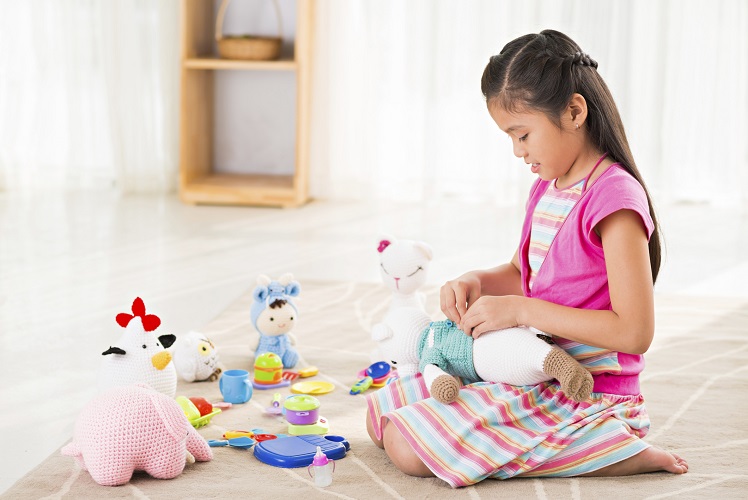
During therapeutic play with children, therapists watch, listen, and interact during moments when a child may be giving voice to images, emotion, and story.
“Image” implies an object or person of attachment from the child’s past, “emotion” implies feelings from past relationships or that the child may be feeling in current relationships or in the moment, and “story” implies the coming together of a narrative that all children accumulate piece-by-piece over time.
As children work to make sense of their world, they often try on different ways to communicate meanings, experiences, and identity. Usually this work occurs in the context of ongoing parent-child relationships, through the form of brief questions and conversation, and meaningful experiences over years and years.
Sometimes a child’s context, when tumultuous, unpredictable, and even harmful, can deter such work and leave a child with only collected fragments of identity. Those fragments may be confusing and contradictory and may leave a child without the confidence that comes through securely attached relationships with caregivers.
Sandplay therapy and other forms of therapeutic play, both directive and nondirective, are tools in a process of nurturing more secure attachment bonds with caregivers and beginning a journey of co-construction of identity.
[fat_widget_child_counselor_right]Take, for instance, a child who, after experiencing chronic abuse or neglect, begins to settle into a supportive family who can provide consistency and nurturance. Oftentimes families are surprised when a child responds to all their outpourings of love and support through varying modes of ambivalence or avoidance. In these cases, it is not only the child, but also the adults who have a tremendous amount to gain from experiencing the child’s underlying anxiety in a therapeutic context, deriving new, more positive and safe experiences, and working together to develop a new approach and a new narrative to coincide with it.
As therapeutic play facilitates relationship-bonding and identity co-construction with caregivers, volatile survival-oriented behaviors often decrease. The words of Susan Johnson, a leading proponent of emotionally focused therapies, ring in my ears: “Emotion must replace emotion.”
A caring, creative, and collaborative approach assists such children and their families—and in the cases of adoption, their new families—in launching a journey of defragmentation, meaning-making, and identity formation that may have for years been delayed by a focus on more primal needs.
Over time, caregivers have opportunities to become more involved and less involved in the child’s play as it feels comfortable to them and to the child.
As children participate in sandplay therapy, I make a point to remain only peripherally engaged in their play, allowing them to take control of their play worlds with minimal interference. I often mirror the degree of participation of caregivers in the room. Over time, caregivers have opportunities to become more involved and less involved in the child’s play as it feels comfortable to them and to the child.
These new fragments of experience and exploration, in the safe presence and amidst dialogue from caregiver(s) and counselor, are building blocks in this co-construction of identity. Images, emotion, and story can emerge in unexpected ways and at unexpected times.
Much of the work of this co-construction is already occurring by this time in the context of a new, safe, and more predictable family home environment. The families supporting these children should be encouraged by signs that emotional and social development is roaring down the tracks once again, much due to the fuel of their care and affections.
Recommended Reading
Gil, E. and Sobol, B. (2000). “Engaging families in therapeutic play.” In C.E. Bailey (Ed.), Children in Therapy: Using the Family as a Resource. NY: W.W. Norton & Company.
A new study published in Psychological Science links anger to increased motivation for reward, a feature that some might associate with more positive emotions. Interestingly, this study doesn’t just link anger in general with motivation in general: instead, people actually showed the strongest desire for specific items they associated with anger. The study’s authors relate this tendency to evolution: if food supply is limited, for example, those who feel food-related anger will fight harder to win that food. This backs up one of the chief understandings behind anger management therapy: that anger is a healthy part of adult life, which helps us protect ourselves and meet our needs. But like any strong emotion, there are both healthy and unhealthy ways of channeling it.