 The appropriate level of eating disorder care depends on a patient’s ability to consume and retain proper nutrition. A qualifying criterion to enter a residential treatment center is that they are unable to maintain the necessary nutrition intake required for their physical and psychological health. A second criterion is that they have difficulty maintaining reasonable nutrition consumption for themselves while living at home, even while receiving care in a partial hospital program or intensive outpatient program. Â
Residential treatment provides necessary, 24-hour support for the patient with a multidisciplinary team who will help interrupt the personal battles patients experience to balance their nutrition intake. Over time, the patient can regain personal intake management, develop their independence and confidence in eating, and transition to a lower level of care. Â
Nutrition rehabilitation interventions hold a vitally important role in the residential level of care during eating disorder treatment. As each patient works towards recovery, they achieve the best results with hands-on food experiences that engage all their senses, including seeing, smelling, touching, and tasting. Living vibrantly with food encompasses being able to hold conversations about food and cooking as well. Â
With these thoughts in mind, Hidden River developed a unique and customizable nutrition and culinary skills training program for their patients. Â
Research supports this approach: A narrative review from 2018 found that culinary skills programs ultimately boost young people’s healthy eating behaviors (1). Let’s take a closer look at the main tenets program.Â
Nutrition Evaluation Â
To start, each patient participates in an in-depth nutrition evaluation by a Registered Dietitian. The assessment reveals the patient’s current and historical relationship with food. The assessment reviews the patients’ beliefs about the various categories of foods, food habits, food-related social activities, and their process of eating in a variety of social settings. Â
Many patients have misconceptions about foods and food products that contribute to their disordered eating. When the Registered Dietitian and patient review the assessment results, they identify key issues to address and reasonable goals to achieve over the course of treatment to receive the most benefit. The highest goals may include nutrition education, enhancing their food selection, broadening their palate, and establishing a realistic home-based meal plan menu. Â
Culinary Knowledge EvaluationÂ
At admission, the patient participates in an interview about their culinary knowledge, food preparation experience, and cooking skills. The patient will be given several unique quizzes to obtain their baseline of culinary knowledge. The assessment and interview approach reveals their level of culinary comfort on the Likert Scale. The unique quizzes assess the patient’s current knowledge surrounding grocery shopping, meal planning, food preparation, safe food storage, and the use of basic kitchen appliances and utensils. The food preparation skills assessed include spicing, baking, boiling, basting, frying, roasting, and the use of sharps. Additionally, they consider a patient’s understanding of kitchen safety, techniques, cleaning tips, and more.Â
When the RD and patient review the assessment results, they identify where the patient will benefit most from the culinary skills training program. All patients will be guided through the standard features of the program that include establishing a realistic home-based meal plan menu, grocery shopping, developing kitchen safety knowledge and skills, and possibly even preparing a meal or snack on their home-based meal plan. Additional education and skills training will be added to the patient’s treatment experience based upon their unique needs in preparation of establishing their aftercare plan.   Â
The culinary evaluation also determines the steps needed to accomplish the established goals. Some patients lack adequate culinary skills and benefit from receiving basic education and training. Other patients are well-versed with culinary skills and benefit from taking on the challenges related to fearful foods, uncomfortable textures, tastes, or smells. The Registered Dietitian supports the patient to begin the culinary skills training program from a safe emotional and psychological position. Â
Individualized Meal PlansÂ
Based on the results of the nutrition assessment, the patient and Registered Dietitian collaborate to create a customized daily meal plan that focuses on resolving fear, increasing confidence, and supporting their medical nutrition needs. The daily meals and snacks are prepared by in-house chefs with fresh ingredients. The patient will fill out a weekly menu for each meal that offers a main course and an alternative. The foods consumed are monitored to ensure the patient ingests the adequate energy intake their body requires.Â
Nutrition EducationÂ
Each patient participates in daily supported meals and snacks and weekly nutrition education lectures. Throughout the treatment, patients tackle personalized food challenges to resolve distorted thought patterns, irrational fear, and self-destructive behavioral patterns. Nutrition education provides science-based information on nutrition, micro-nutrients, digestive processes, and how the body uses the nutrition it receives. Education is designed to address food and body misconceptions through accurate information of food and body science.Â
Nutrition ProgrammingÂ
Each week the patient’s schedule includes many food exposure episodes as the key feature of the program. In addition, they will participate in one individual nutrition counseling session per week, one nutrition education group, and a culinary skills training event.Â
Exposure Response Prevention TherapyÂ
Exposure Response Prevention (ERP) therapy focuses on helping individuals improve their distress tolerance skills as they face their fears. Eating disorder recovery is particularly challenging because patients are frequently confronted by triggers — in the kitchen, at the dining table, in the grocery store, and so on. During their time in residential treatment, it’s imperative that the patient’s practice skills enable them to handle these diverse events by enhancing their situational awareness, arresting impulsive actions, implementing effective responses, and boosting their confidence. Â
The ERP program works by identifying their resilience strengths as well as personal vulnerabilities promoting a range of emotional distress that activates eating disorder behavior. The Registered Dietitian and patient identify the patient’s mild, moderate to severe emotional distress reactions from a multitude of nutrition and culinary experiences reviewed. The ERP program is categorically arranged to strengthen the patient’s ability to successfully manage events that create a moderate distressful emotional response with the goal of reducing the emotional response to the mild range. Â
Once this goal is achieved, a subject higher on the moderate to severe scale of distress may become the area of focus. The Registered Dietitian and patient keep in mind that practicing distress tolerance skills during the ERP sessions is the primary skill to realizing a successful outcome. Ultimately, the patient is guided to address forthrightly many distressful facets of their life that hinder their ability to consume their daily nutrition requirements. When the patient returns home to resume an improved quality of living, it is important that they have the knowledge with the forethought of applying effective distress tolerance skills to enact healthy eating behavior.Â
Hidden River’s program is in part developed from current research which suggests that culinary skills training programs are especially effective when combined with ERP therapy. Specifically, one study revealed that, based on the shared symptoms of anxiety and anorexia nervosa, ERP is an appropriate treatment approach to avoid relapse of eating disorders (2). Â
The most common hope is that the nutrition and culinary skills program assists patients in healing their relationships with food. Â
Each individual experiences an emotional connection to food, tying specific memories to the meals. Family relationships and vibrant social events often include meals. In that sense, food is so much more than nutrition. Food is part and partial to the celebration of relationships with family and friends. Cultural traditions as well are ripe with the inclusion of food to highlight one’s heritage, express appreciation, and show love. Ultimately, when a patient begins to rediscover food as part of a joyful life, they can rest assured that the path to healing is possible.Â
ReferencesÂ
 Neurotransmitters are chemical messengers that carry electrical signals between neurons in the brain. Dopamine and serotonin are two important neurotransmitters for mental health. They affect your mood, memory, sleep, libido, appetite, and more. Imbalances can contribute to addictions, mood conditions, memory issues, and attention difficulties.
Over the past several decades, the world has seen an increase in medications for serotonin and dopamine imbalances. These prescriptions can treat symptoms of many mental health conditions. Yet they have a long list of potential side effects, from dizziness to insomnia. Also, their effectiveness varies from person to person.
[fat_widget_right]
Some people want to try some non-drug treatments before committing to medication. Others take medication but want to supplement it with other strategies. Below are 10 ways to increase dopamine and serotonin that don’t require a pill:
1. Exercise
Regular exercise for at least 30 minutes each day improves one’s overall mood. Research has revealed that long-term cardiovascular exercise boosts serotonin levels in the brain. Serotonin can lower hostility and symptoms of depression. It also encourages agreeableness.
(More: Move for Your Mood: The Power of Exercise to Help Lift Depression)
2. Spend Time in Nature
In previous generations, humans spent most of their time outdoors. These days, many people work indoors, sitting at a desk under artificial lighting. Researchers have found as little as five minutes outdoors in a natural setting can improve mood, increase motivation, and boost self-esteem. The amount of time spent in sunlight correlates with serotonin and dopamine synthesis. Even a brief walk in the park can improve your well-being.
(More: 5 Ways Nature Can Help You Feel Better)
3. Nutrition
Diet can also influence one’s mental health. Coffee increases your serotonin and dopamine levels … for as long as you take it. Once you stop drinking coffee, you will go into withdrawal. Your brain, used to the high levels of neurotransmitters, will act as if there is a deficiency. It can take up to 12 days of caffeine-free diet for the brain to return to its normal state.
Omega-3 fatty acids boost serotonin levels without the withdrawal. They help serotonin trigger nerve cell receptors, making transport easier. Many studies have shown that omega-3s help reduce depressive symptoms. You can find omega-3s in cold-water fish like salmon.
Contrary to internet rumors, eating turkey does not raise your brain’s serotonin levels. Many people think foods rich in tryptophan can boost mood, since the brain uses tryptophan to produce serotonin. However, tryptophan competes with several other amino acids for transportation to the brain. Since it is low on the body’s priority list, it usually loses.
That said, having some tryptophan in your diet is important. If you don’t have enough, your serotonin levels will drop. If you need more tryptophan, you can get it by eating starchy foods like whole wheat bread, potatoes, and corn.
(More:Â Good Mood Foods to Help Fight Depression, Stress, and More)
4. Meditation
Meditation is the practice of relaxed and focused contemplation. It is often accompanied by breathing exercises. Evidence has shown that meditation increases the release of dopamine. It can relieve stress and create feelings of inner peace.
(More: Stress Reduction: Mindfulness Meditation for Beginners)
5. Gratitude
Scientific research has shown gratitude affects the brain’s reward system. It correlates with the release of dopamine and serotonin. Gratitude has been directly linked to increased happiness.
There have been many studies on a practice called the “three blessings exercise.” Every night for a week, you write down three things you are thankful for. People who complete this exercise tend to report more happiness and less depressive symptoms. Their improved mood can last up to six months.
(More:Â How a Simple Mason Jar Can Bring More Gratitude to Your Life)
6. Essential Oils
All essential oils come from plants. These oils often have medicinal properties. One study found that bergamot, lavender, and lemon essential oils are particularly therapeutic. Using your sense of smell, they prompt your brain to release serotonin and dopamine.
Note: Always follow the instructions on the bottle’s label. Although essential oils are “natural,†some can be dangerous when misused. Do not let young children play with essential oils.
(More:Â How Aromatherapy Can Boost Psychological and Physical Health)
7. Goal Achievement
When we achieve one of our goals, our brain releases dopamine. The brain finds this dopamine rush very rewarding. It seeks out more dopamine by working toward another goal.
Larger goals typically come with increased dopamine. However, it’s best to start with small goals to improve your chances of success. Short-term goals can add up to achieve a long-term goal (and a bigger reward). This pattern keeps a steady release of dopamine in your brain.
(More:Â How Positive Affirmations Can Help You Achieve Your Goals)
8. Happy Memories
Researchers have examined the interaction between mood and memory. They focused on the anterior cingulate cortex, the region of the brain associated with attention. People reliving sad memories produced less serotonin in that region. People dwelling on happy memories produced more serotonin.
(More: Can We Purposefully Make Memories Last Forever?)
9. Novelty
The brain reacts to novel experiences by releasing dopamine. You can naturally increase your dopamine by seeking out new experiences. Any kind of experience will work. You can do something simple like a new hobby or recipe. Or you can try something grand like skydiving. The less familiar you are with the activity, the more likely your brain will reward you with dopamine.
(More: 5 Things on My New Year’s Bucket List for My Kids)
10. Therapy
Research indicates if you change your mood, you can affect serotonin synthesis in your brain. This implies mood and serotonin synthesis have a mutual influence on each other. Psychotherapy often helps people improve their mood. It is possible therapy can help raise one’s serotonin levels as well.
(More: Benefits of Therapy)
While these 10 methods can boost your neurotransmitters, they are not a substitute for medical care. If you have mental health concerns, you should always seek a doctor’s or therapist’s advice. A mental health professional can tell you which approaches are best for your unique situation. There is no shame in taking medication or attending counseling. They are common treatment options among many.
References:
- Coffee and hormones: Here’s how coffee really affects your health. (n.d.) Precision Nutrition. Retrieved from https://www.precisionnutrition.com/coffee-and-hormones
- Do you need a nature prescription? (2013, June 19). Retrieved from http://www.webmd.com/balance/features/nature-therapy-ecotherapy
- Essential oils: Poisonous when misused. (2014). National Capital Poison Center. Retrieved from https://www.poison.org/articles/2014-jun/essential-oils
- How Do I Increase Serotonin and Dopamine Levels? (2017, August 14). LIVESTRONG Foundation. Retrieved from http://www.livestrong.com/article/301434-how-do-i-increase-serotonin-dopamine-levels/
- Jenkins, T.A., Nguyen, J.C.D., Polglaze, K.E., & Bertrand, P.P. (2016, January 20). Nutrients, 8(1), 56. Retrieved from http://www.mdpi.com/2072-6643/8/1/56/htm
- Lv, X.N., Liu, Z.J., Zhang H.J., & Tzeng C.M. (2014). Aromatherapy and the central nerve system (CNS): Therapeutic mechanism and its associated genes. Current Drug Targets, 8(14), 872-879. Retrieved from http://www.ncbi.nlm.nih.gov/pubmed/23531112#
- Novelty and the brain: Why new things make us feel so good. (2013, May 21). Retrieved from https://lifehacker.com/novelty-and-the-brain-why-new-things-make-us-feel-so-g-508983802
- Omega-3 Fatty Acids and Mood Disorders. (2012). Today’s Dietitian, 14(1), 22. Retrieved from http://www.todaysdietitian.com/newarchives/011012p22.shtml
- Thankfulness linked to positive changes in brain and body. (2011, November 23). ABC News. Retrieved from http://abcnews.go.com/Health/science-thankfulness/story?id=15008148
- This is how your brain becomes addicted to caffeine. (2013, August 9). Retrieved from https://www.smithsonianmag.com/science-nature/this-is-how-your-brain-becomes-addicted-to-caffeine-26861037/
- Why our brains like short-term goals. (2013, January 3). Retrieved from https://www.entrepreneur.com/article/225356
- Young, S.N. (2007). How to increase serotonin in the human brain without drugs. Journal of Psychiatry and Neuroscience, 32(6), 394-399. Retrieved from http://www.ncbi.nlm.nih.gov/pmc/articles/PMC2077351/
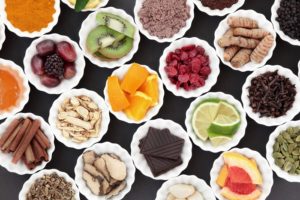 Nutrition is fuel for your body. Choose the right fuel and your body, including your mind, may function better.
Research on the role of nutrition in fighting anxiety is mixed, but studies consistently find people with anxiety may have lower quality diets that are low in fruits and vegetables and high in fats and sugars. Emerging research also suggests some foods may help regulate neurotransmitters, thereby improving brain health and potentially reducing anxiety.
Dietary changes are not magic, and a few nutritional tweaks are unlikely to correct serious anxiety or the lingering effects of trauma. They may, however, supplement the effects of therapy, medication, lifestyle changes, and other strategies. Diet changes may also help alleviate some of the physical effects of anxiety, such as muscle tension and a racing heart.
Experimenting with a different diet can help people with anxiety feel an increased sense of control and self-efficacy. Many people with anxiety struggle with feeling out of control. Proactive measures to fight anxiety may help with this feeling. Be open to experimentation, and know that it can take time to realize the anxiety-fighting benefits of anti-anxiety foods.
The Science Behind Foods That Reduce Anxiety
Nutrition affects anxiety in both direct and indirect ways. Low blood glucose can be an anxiety trigger, so crash diets and prolonged periods without food may make anxiety worse. Sugary foods, caffeine, and alcohol can also trigger or exacerbate anxiety. People struggling with anxiety may wish to cut back on these ingredients or eliminate them altogether.
Experimenting with a different diet can help people with anxiety feel an increased sense of control and self-efficacy.
Certain foods may also reduce anxiety. There’s no single mechanism through which food reduces anxiety. Each anxiety-friendly food boasts its own unique benefits. Some common features include:
- Promoting general health. Some evidence suggests that simply eating a more balanced, nutrient-dense diet can help with anxiety. For example, some people report reductions in anxiety when they eat a whole foods diet or when they correct nutritional deficits.
- Neurotransmitter regulation. Certain chemicals, particularly eicosapentaenoic acid (EPA) and docosehexaenoic acid (DHA) may help regulate neurotransmitters, which are brain chemicals that help carry messages across a synapse. Many anti-anxiety and antidepressant medications also work on neurotransmitters.
- Vitamin D. Vitamin D deficiency is common, especially among seniors and those who do not spend much time in natural sunlight. Vitamin D supports healthy brain function and may regulate neurotransmitters. Doctors think it may be especially critical for regulating dopamine, a brain chemical that plays important roles in motivation and pleasure.
- Fighting inflammation. Inflammation is the body’s natural response to an injury. Chronic inflammation, however, can cause a wide range of maladies. Some research links it to anxiety. Foods that fight inflammation may help with anxiety as well as other chronic health problems.
8 Best Foods for Anxiety
The best foods for anxiety are rich in nutrients, tasty, and adaptable to a wide range of diets. This ensures that even if they don’t immediately help with anxiety, they offer other health benefits. Try incorporating some of the following anxiety-reducing foods into your diet:
 Salmon
Salmon is rich in vitamin D, DHA, and EPA. It’s also a healthy source of protein and an excellent substitute for other meats. A 2014 study weighed the effects of salmon on men seeking inpatient mental health treatment. Men who ate salmon three times a week for 5 months had fewer symptoms of anxiety. Salmon was especially effective at alleviating physical measures of anxiety, such as a rapid pulse.
Nuts and seeds
Nuts and seeds are nutritionally dense foods that are rich in DHA. DHA is linked to improved brain health, including reductions in anxiety and better regulated neurotransmitters. Additionally, most nuts and seeds are high in selenium.
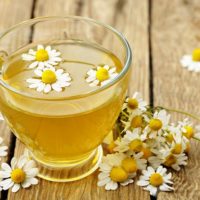 Chamomile
Chamomile tea is one of the world’s oldest and most popular folk remedies for insomnia. This may be due in part to its effects on anxiety. A 2009 double-blind, placebo-controlled study found that chamomile could modestly improve symptoms of generalized anxiety.
Eggs
Choline is an essential nutrient that plays a role in numerous functions, including supporting brain health, memory, and concentration. It’s also a precursor to acetylcholine. Preliminary research suggests choline deficiency may increase the risk of anxiety. Many vegetarians are deficient in choline, since the primary sources of this important nutrient are all meats. Eggs offer a viable alternative. Consider incorporating one or two hard-boiled eggs into your diet for a protein-packed source of this important nutrient.
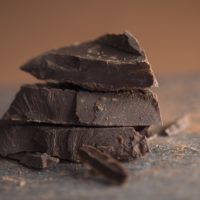 Dark chocolate
Dark chocolate is rich in antioxidants that can fight inflammation. It’s also a healthy substitute for milk chocolate and other sugary snacks. A 2012 study found that regular consumption of dark chocolate was associated with a decrease in biochemical measures of stress, such as cortisol production. For some people, dark chocolate can also be a powerful comfort food that eases stress after a difficult day.
Berries and citrus fruits
Inflammation may be a culprit in anxiety. Inflammation can also trigger other health issues, such as chronic pain and autoimmune disorders. These conditions can intensify anxiety. Fruits that contain antioxidants may help reduce chronic inflammation. Berries, especially blueberries, are high in anti-inflammatory ingredients. Citrus fruits are a rich source of the antioxidant vitamin C.
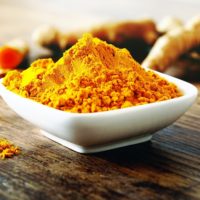 Turmeric
Turmeric has long been used in herbal medicine. Emerging research suggests it may play a role in general brain health, perhaps by fighting inflammation. A 2015 study found significant reductions in anxiety scores among people who consumed turmeric.
Dairy products
Most dairy products are fortified with vitamin D. For people who do not get enough vitamin D in the diet or who spend little time outdoors, vitamin D supplementation can ease anxiety. Dairy is also a rich source of protein. Particularly for people who do not eat meat, dairy consumption may ensure adequate protein intake. Protein helps the body produce key neurotransmitters, potentially improving mood and reducing anxiety.
Every person is different. The ideal diet for one person can prove catastrophic for another. Foods that ease anxiety in some people may make it worse than others. For example, a 2015 case study details how fish oil supplements made anxiety and insomnia worse following treatment of depression.
It’s important to consult with a doctor or mental health provider who is knowledgeable about nutrition and up-to-date on recent nutritional research.
Even with expert advice, some people find their anxiety makes it difficult to adopt a healthy lifestyle or change their diet. The right therapist can help people overcome anxiety and make healthy diet and lifestyle changes. Therapy also supports people in understanding their anxiety, managing the lingering effects of trauma, and improving their quality of life. To find your therapist, click here.
References:
- Amsterdam, J. D., Li, Y., Soeller, I., Rockwell, K., Mao, J. J., & Shults, J. (2009). A randomized, double-blind, placebo-controlled trial of oral Matricaria recutita (chamomile) extract therapy for generalized anxiety disorder. Journal of Clinical Psychopharmacology, 29(4), 378-382. doi: 10.1097/JCP.0b013e3181ac935c
- Bjelland, I., Tell, G. S., Vollset, S. E., Konstantinova, S., & Ueland, P. M. (2009). Choline in anxiety and depression: The Hordaland Health Study. The American Journal of Clinical Nutrition, 90(4), 1056-1060. Retrieved from https://academic.oup.com/ajcn/article/90/4/1056/4596992
- Blanchard, L. B., & Mccarter, G. C. (2015). Insomnia and exacerbation of anxiety associated with high-EPA fish oil supplements after successful treatment of depression. Oxford Medical Case Reports, 2015(3), 244-245. doi: 10.1093/omcr/omv024
- Cui, X., Gooch, H., Groves, N. J., Sah, P., Burne, T. H., Eyles, D. W., & Mcgrath, J. J. (2015). Vitamin D and the brain: Key questions for future research. The Journal of Steroid Biochemistry and Molecular Biology, 148, 305-309. doi: 10.1016/j.jsbmb.2014.11.004
- Dyall, S. C. (2015). Long-chain omega-3 fatty acids and the brain: A review of the independent and shared effects of EPA, DPA and DHA. Frontiers in Aging Neuroscience, 7, 52. doi: 10.3389/fnagi.2015.00052
- Esmaily, H., Sahebkar, A., Iranshahi, M., Ganjali, S., Mohammadi, A., Ferns, G., & Ghayour-Mobarhan, M. (2015). An investigation of the effects of curcumin on anxiety and depression in obese individuals: A randomized controlled trial. Chinese Journal of Integrative Medicine, 21(5), 332-338. Retrieved from https://link.springer.com/article/10.1007/s11655-015-2160-z
- Hansen, A., Olson, G., Dahl, L., Thornton, D., Grung, B., Graff, I., . . . Thayer, J. (2014). Reduced anxiety in forensic inpatients after a long-term intervention with Atlantic salmon. Nutrients, 6(12), 5405-5418. doi: 10.3390/nu6125405
- Martin, F. J., Antille, N., Rezzi, S., & Kochhar, S. (2012). Everyday eating experiences of chocolate and non-chocolate snacks impact postprandial anxiety, energy and emotional states. Nutrients, 4(6), 554-567. doi: 10.3390/nu4060554
- Murphy, M., & Mercer, J. G. (2013). Diet-regulated anxiety. International Journal of Endocrinology, 2013, 1-9. doi: 10.1155/2013/701967
- Naidoo, U. (2018, March 14). Eating well to help manage anxiety: Your questions answered. Retrieved from https://www.health.harvard.edu/blog/eating-well-to-help-manage-anxiety-your-questions-answered-2018031413460
- Salim, S., Chugh, G., & Asghar, M. (2012). Inflammation in anxiety. Advances in Protein Chemistry and Structural Biology, 88, 1-25. doi: 10.1016/b978-0-12-398314-5.00001-5