 My husband was surprised the first time he got a Father’s Day card from our kids. Not having any kids of his own, his assumed role of step-father was one he was utterly unfamiliar with. He had been raised by his mother and has never known his father. Perhaps that is why that the whole concept of celebrating Father’s Day was foreign to him. When he first saw the cards lying on the table, he did not realize they were for him. After a few moments, it sunk in and a look of confusion and trepidation came over him. After graciously accepting them from the kids, and thanking them profusely, he shared with me his true feelings.
He was uncomfortable at first, being recognized as a dad. He had no frame of reference for this title, and felt very awkward accepting gifts that he did not feel he deserved. My husband saw himself as an active parent in my children’s lives. But he shared that role, and does to this day, with their biological father. Their “real dad” is very present in their lives and sees them weekly. He speaks to them almost every day and is pretty up to speed on the events that transpire in their worlds. But my husband, their “other dad,” is the one who interacts with them daily. He is the one who bathes them, shops for them, tucks them in, attends their events and listens to their problems. So as each year passes, I wonder how sharing that title sits with each of the dads. (more…)
When we describe the relationship between mother and infant, we understand that baby and mother are one. In that symbiotic relationship, there is merger. There are not two separate selves with their own subjectivities who are relating to one another. (One’s subjectivity is the unique way in which we perceive our self and the world.) Our selves and subjectivities develop as we grow from infant to child to adolescent to adult. When two people come together with their subjectivities, they are relating as two different people. When the processes of separation and individuation have been problematic, the development of one’s unique subjectivity is impaired. The ability to consider someone else’s subjectivity is also not developed. This makes relationship difficult. When a self is undeveloped in a relationship, there is no “other” to connect to.
Ken has been married for 15 months to Ellen. They met when he was finishing law school and she was teaching at the local high school. Ken loved her. She was smart and pretty and Ken was excited about making a life with her and starting a family. Ken was an optimist and nothing seemed more wonderful to him than the thought of their future together. It came as a shock when Ellen told Ken that she didn’t want to be married to him any more. She said it was nothing about him, but that she was just not as happy as she wanted to be and thought they should end the marriage. This was what Ken told me when he came to see me for therapy. (more…)
Each of us has our own unique identity made up of a combination of personality traits, personal and family history, and other attributes. But what happens inside when an identity is not celebrated by a person’s community?
In Stigma: Notes on the Management of a Spoiled Identity (1963), author Erving Goffman uses the term “spoiled identity†to refer to an identity that causes a person to experience stigma. For Goffman, “stigma†describes the experience of moving through life with an attribute that is deeply discrediting. This attribute divides people into those-who-are-normal and those-who-are-not, thereby making those-who-are-not less worthy. Spoiled identities include racial minority, ethnic minority, sexual orientation, gender, sex, and religious identities, body size, and visible and invisible disabilities. (more…)
 I decided to dedicate myself to investigating and writing about the experience of body in transgender people. Though I am by no means an “expert” in working with this population, I have learned significantly from people I have worked with who identified themselves as transgender. I set out to organize my observations and insights by grounding them in current research, to offer something of use to the reader that is legitimized by work in the field. It struck me that in looking at body-appearance satisfaction we could learn a lot from people who experience being born with, and living with, a body that they experience as opposite of what they were suppose to have.
What is the nature of the relationship to the body for transgender people? How do they value their body? How do they take care of it, take pleasure in it? How do they deal with other people’s perceptions versus what they see or what they wish they could see? Does that change if they are able to change their body to look like what they believe they were supposed to have? What I was to discover was a dearth of research and a complete lack of theory or even sufficient conversation on the topic. There was certainly almost nothing scientific or academic of any use to working with clients. So here are my truncated thoughts combined with what I learned in my search for information on a very complicated subject.
For those new to this area, know that for transgender people, the desired body isn’t a thought, or a feeling, or even a drive. History has shown that the experience is relatively unchangeable. I would describe it as an experience of persistent identity messages incongruent with the physical body. There is a “hardwired” nature to this lived experience, though science hasn’t found the neural connections yet. Despite abusive efforts to create aversion in people who feel they are in the wrong body, to force them to stop thinking of it and stop expressing it (society can’t handle ambiguity or non-conformity, apparently), transgender people don’t stop being transgender.
[fat_widget_right]For most documented cases, it has proven to be a life-long struggle between the inner sense of self and the physical, external self. It has also, for most, been a struggle between expressing the true self and repressing it in order to earn or keep acceptance and belonging in relationships and in society in general. The extent that people (often rightfully) fear societal reactions to their true identity is directly related to how much psychological distress they suffer.
Interestingly, to the transgender child, there is no incongruence or distress about the body until they are confronted with the gender that is socially assigned according to the worlds’ image of them. They are often shamed, ridiculed, and otherwise discouraged from expressing what they consider to be their true selves, from an early age. You don’t have to be a therapist to think about the impact of such conditions of worth on the development of self-esteem. Indeed, transgender people have the highest rate of suicide.
There is some published anecdotal evidence that children who are allowed to explore their gender-related interests and self-expressions without external pressure to conform are better adjusted. There is also some research that suggests that trans people who have the resources and support to transition—and who believe they will be able to “pass” as the desired, chosen gender—have better mental and physical health outcomes. Also, while trans people have been shown to be at greater risk for developing eating disorders due to body-image dissatisfaction, depressive symptoms, and low self-esteem—they have also been shown to have reduced risk of these problems after gender-confirmatory surgery.
How do we begin to support these people or even understand their struggle and offer them hope? What is our role as therapists or friends in supporting transgender people? We know that body image issues are a problem for women who feel the pressure to conform to societal ideals and this can result in negative self-perception and negative health outcomes. In clinical studies, trans people have been described as being obsessed with the aesthetics of outward appearance. It makes sense that a trans person, having to live with a body that looks nothing like what they want and one that is often in complete opposition to social ideals for the gender they feel they are, would have even worse self-perception and greater negative health outcomes. So how do we help?
I believe in the fundamental healing value of acceptance and understanding of human experience. In my role as a therapist, I must be a non-judgmental mirror for the people I work with. In asking “what” rather than “why” questions, like at the outset of this article—I can get closer to an understanding that can allow me to mirror a person’s inner view of themselves. In that way I can strengthen the sense of self and self-worth of a person. I work to emphasize the importance of the functions and joys of the body, not just its appearance.
I share the idea that self-esteem comes from dedication to loving self-care and encourage habits that lead to better relationship to the body. This can be life enhancing for a person who has had very little acceptance and hence suffers low self-worth. Indeed most trans people I have met tend to focus on the well-being of everyone other then themselves. However, to truly support trans people in healing their relationship to the body, I must also educate myself on their unique experiences and needs, whether they are in transition or not. I must also be political in joining the struggle for their rights, including educating others. I must be an advocate that supports their rights to dignity and well-being, if that involves gender-confirmatory surgery or other procedures or services. Hopefully this article is a drop in the bucket towards that monumental task.
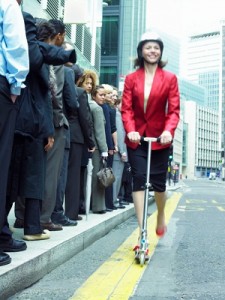 Which of the following statements are true?
People with high self-esteem:
A. Are convinced they can never be wrong
B. Don’t usually appreciate negative feedback
C. Think whatever they do is great
D. Couldn’t care less what others think of them
E. All of the above
Answer: None of these are true of people with genuine self-esteem! The truth is, the higher your self-esteem, the better you tolerate criticism and disappointment.
Let’s go over these again and get the real scoop on people with high self-esteem:
False: They’re convinced they can never be wrong
True: People with healthy self-esteem aren’t delusional; they know and accept that sometimes they mess up. (more…)
 One way to understand the healing journey is to think of growing from a place of victimization to survival, and ultimately, to thriving. While a person has had no choice about being victimized, he or she does have a choice about growing through these stages.
Regardless of what the traumatic event was, where or when it occurred, there was a period of time when victimization occurred. This victimization is not something one should feel guilt or shame about, rather it is a factual reality to understand, accept, and grow through. When an individual cannot or does not grow through the period of victimization, one can think of this person as being stuck within the victim stage.
An individual in the victim stage feels as though he or she is still in the trauma—no matter how long ago the actual traumatic incident(s) occurred. The sense of being in that moment of time permeates the person’s feelings, thoughts, and behaviors and even his or her sense of self. It is common for an individual in this stage to avoid many emotions while experiencing in abundance feelings of helplessness, vulnerability, fragility, self-pity, numbness, defeat, shame, self-hatred, and discouragement. The person might feel out of control or angry, want to hide and hope to be rescued. The individual often believes he or she lacks choices and has few possibilities and a shortened future. This combination of thoughts leads to little planning for the future and a preoccupation with the past.
In addition, the individual may feel plagued by memories of the event, particularly if he or she is struggling with flashbacks. Common behaviors that arise out of these thoughts and feelings are self-destructive ones such as addictions or a pervasive passivity. While most individuals, even those who have been stuck within this stage for quite some time, do not desire to be within the victimization stage, some individuals do experience secondary gains (such as love, support, attention, assistance) from being within this victim stage.
[fat_widget_trauma_ptsd_left]These benefits can also become intertwined with the individual’s way of life and identity, making it all the more difficult to grow through this phase. Just as some individuals struggle with leaving this stage, some individuals struggle with being in this stage and try to avoid acknowledging the truth of the victimization. Neither approach is healthy, because true recovery can only occur when ones has dwelt within and then healed out of this stage.
Once a person has grown through the victim stage, he or she enters into the survivor stage, which is the time when one begins to feel strong and confident and to truly believe that there are resources and choices. A key realization of this stage is that an individual has gotten through the trauma intact, or mostly intact, and is indeed outside of it. This understanding allows the person to begin integrating the trauma into his or her life story, to take control of life, and to recognize potential for change and growth.
For many, a sense of satisfaction accompanies this realization as does a shift into an emotional state that has less suffering, less pain, less guilt, and definitely less depression. Many of the difficult emotions decrease, and though this is not necessarily a happy phase of life, moments of happiness will start to occur more often. As one progresses through this stage, living one day at a time increasingly becomes a primary focus. Coping from day to day and acting upon a commitment to healing, trusting, and restoring relationships becomes the essence of healing.
The thriver stage crystallizes the growth of the survivor stage and takes one’s healing to the point where he or she has general satisfaction with life as well as a sense that ordinary life is both interesting and enjoyable. Commitment to moving forward, to taking care of one’s physical health, to investing in one’s career, relationships, and love and life allow these gains to occur. On an emotional level, feelings of strength, empowerment, compassion, resilience, and self-determination eclipse the emotions experienced within the victim stage. In addition a renewed sense of joy, peace, and happiness arises because one has grown, despite the traumatic experience, and is living well.
It is within this thriver stage that a person’s thinking becomes less pessimistic; he or she begins to think and believe that that there are long-term options, that there is a point to planning for the future, and he or she begins to recognize and embrace new possibilities. This living well is also exemplified in an ability to connect with others who are suffering, to accept imperfections in loved ones, and to reach out to others. Life is once again rich in meaningful relationships which help the person find a sense of meaning and purpose. If any symptoms of posttraumatic stress or other issues remain, the individual has learned how to effectively cope with these symptoms. Ultimately, he or she perceives him- or herself as more than a victim. One recognizes him- or herself as a valuable individual who, though tempered by tragedy, has risen and moved beyond the trauma.
When a baby is born the process of Separation/Individuation begins. First, baby and mother are one. Mother has the wish to love and protect her baby. She wants to keep her from physical and emotional harm. She bonds with her baby and these loving and protective feelings give mother pleasure as she enjoys the closeness and the wonderful feeling of oneness (symbiosis). Baby thrives with this oneness and is blissful. As baby grows and develops, the oneness will become twoness in which baby suffers the reality of a separate mother who no longer responds to every need. Mother also suffers from the loss of her own blissful feelings of oneness. Over time, as the child separates and individuates, both mother and child begin to experience the rewards of a mutual relationship between two different and separate individuals. When this process goes awry, the developing adult may find herself in conflict. She wants to be independent but also likes being taken care of. She may be concerned that asserting her individuality would result in her mother being hurt or upset. This may also lead to fear that mother’s love and approval could be jeopardized. These kinds of conflicts can interfere with the child’s becoming a person who feels she knows what she wants and how to get it.
“For years it lay in an iron box buried so deep inside me that I was never sure just what it was. I knew it carried slippery, combustible things more secret than sex and more dangerous than any shadow or ghost. … I saw things I knew no little girl should see. Blood and shattered glass. Piles of skeletons and blackened barbed wire with bits of flesh stuck to it…The iron box contained a special room for my mother and father, warm and moist as a greenhouse. They lived there inside me, rare and separate from other beings. … I knew my parents had crossed over a chasm … The box became a vault, collecting in darkness, always collecting; pictures, words, my parent’s glances, becoming loaded with weight. It sank deeper as I grew older, so packed with undigested things that finally it became impossible to ignore.”
-Helen Epstein, Children of the Holocaust
Why do so many men sabotage relationships and careers? Current cultural stereotypes of men range from bumbling incompetence to aggressive, macho insensitivity. I’ve worked with men in therapy and personal growth workshops for over 25 years, and I’ve identified a type of adult man I call the LATE Men, Lost, Angry Teens, and they are often stuck in an adolescent level of development – literally, LATE to grow into full adult functioning.
We all have four primary internal parts: An Inner Child, a Teenager, an Inner Critic, and a loving, responsible Adult. The Teenager seeks independence, identity, and acceptance with peers. Teens may also become rebellious, angry, confused and withdrawn. Adjustment problems are more likely to occur in distressed or dysfunctional families, where adolescents do not receive the guidance, emotional support, and other resources necessary for healthy maturation and individuation. (more…)

It might seem absurd or counterintuitive to think of a two-person relationship as consisting of three parts. So why would someone suggest you consider it?
Developing a coherent sense of self and establishing a long-term relationship are two developmental tasks during emerging adulthood, and these dual needs continue throughout our lives. Think of your relationship like a three-legged table, where each leg must be strong: you, your partner, and your relationship with each other. To bloom a truly happy partnership with lasting strength, each piece is an integral part of the equation. If one person absorbs too much energy, the other gets left out. If not enough attention is paid to the relationship itself, your partnership suffers. Take away one piece, neglect one part, and you have a wobbly table.
A positive sign of marriage identity is when both partners maintain their individual interests, hobbies, and friendships while also valuing and prioritizing time spent together. This balance allows for personal growth and a strong couple bond.
Meeting Each Other’s Needs
Many people believe that the only thing they can work on in their relationship is their partner’s happiness. The problem with looking at relationships this way is that the person trying to make sure their mate is doing well runs the risk of neglecting themselves. This person may be sacrificing what they want or need in the relationship so their partner will feel good.
That might work for a while, but eventually the person doing all the giving can run out of energy and feel exhausted and depleted. If the pattern continues, those feelings can turn into anger and resentment. If one partner feels like they are the giver and don’t receive anything in return, they can end up feeling used and alone.

Researchers describe this balancing act as “risk regulation”: we weigh our desire for closeness against our fear of rejection, and it is confidence in a partner’s care and positive regard that makes it feel safe to depend on them. In couples work, an early warning sign that this balance has tipped is “relational accounting”—keeping score of who has done what for whom. Once partners are tallying contributions, the assumption of good faith between them has usually already begun to erode.
The receiver of this energy doesn’t get their needs met either, they may be happy for a while, but this constant state of receiving can become tiresome, too. There is no room for real bonding between the two because their positions are not equal. There is imbalance in the relationship. Balance is essential in a healthy relationship because both partners have individual needs, desires, and aspirations that must be acknowledged and met to sustain personal well-being.
Meeting Your Own Needs
I recommend that each person learn about themselves as individuals as an important part of improving their relationship. Part of self-knowledge is understanding what makes you happy. Do you know what makes you feel happy and fulfilled? If you think that being loved by your partner is all you need, that is not the answer I’m looking for. Your answer though, could be something like this: “I love to spend time working in the garden, and I like to volunteer my time with the humane society.” These are endeavors that could make a person feel whole and worthwhile. What about your job? Some people find their happiness through their profession—maybe this is your source of enrichment. By working to understand yourself as an individual, you will learn what you need to make your leg of the table strong.
Self-care means taking the time to do things that help you live well and improve both your physical health and mental health. Self-care ensures you have the emotional and physical energy for yourself and others. Balancing caregiving with self-care improves the overall quality of your life and the health of your relationship.
When we as individuals have attained knowledge about ourselves, we are in a better position to stay in balance. Knowing what makes you happy is the best contribution you can make to your relationship. When you understand yourself and you know how to keep yourself in a good state, you will be a contributing member to the relationship. Without this knowledge, you may depend on your partner to provide you your happiness—and that can lead to problems. If a couple places too much emphasis on the relationship, one or both partners may feel suffocated, lose a sense of individuality, or sacrifice personal goals. On the other hand, if individual needs consistently take precedence, the relationship itself may weaken, leading to emotional distance, resentment, or a loss of intimacy.

When both people know themselves, they can spend time understanding their partners. When we learn what our mate loves, likes, wishes for, and enjoys, we become more adept at providing it to them. The Gottman Method calls this kind of ongoing curiosity building “Love Maps”—an intentional exploration of what makes your partner tick, what they worry about, and what they hope for. And when something is unclear, ask rather than assume: psychologist Carol Dweck describes hearing her husband say he “needed space” and, instead of interpreting it as distance, asking what he meant—he simply wanted to reposition his arm.
Meeting the Needs of Your Relationship
Building the relationship together is like solidifying the last leg of the table. What are your combined values, goals and dreams? What do the two of you as a unit stand for? What is your “mission statement?” In the Gottman Method, this is the work of “creating shared meaning”—the top level of the Sound Relationship House—where a couple names what is fun, uplifting, and purposeful about their life together and actively supports each other’s dreams.
Relationship researchers have a name for this sense of shared identity: “we-ness.” Across decades of studies, couples with a stronger sense of we-ness report greater satisfaction with, and commitment to, their relationship. Couples with a strong shared identity often refer to themselves as “we” or “us,” indicating a strong sense of being a team. They also likely use positive and affirming language when speaking to and about each other.
You have a chance to create something unique to the two of you. Understanding all the pieces of your three-legged table gives you the best opportunity to build a healthy, lasting relationship. Tending to this third leg may even pay physical dividends. In a 2022 study published in the Annals of Behavioral Medicine, couples who were more satisfied with their relationship also ate, slept, and exercised together more often—and both the satisfaction and the shared routines predicted better self-rated health and fewer depressive symptoms.
Please note: This article is for informational purposes only and is not a substitute for professional medical advice, diagnosis, or treatment. Always seek the advice of your physician or other qualified health provider with any questions you may have regarding your mental health or relationships.
Find a therapist who can help you balance your individual and relationship needs.
References:
- Auger, E., Thai, S., Birnie-Porter, C., & Lydon, J. E. (2025). On creating deeper relationship bonds: Felt understanding enhances relationship identification. Journal of Personality and Social Psychology, 128(3), 907-942. https://doi.org/10.1177/01461672241233419
- Canevello, A., & Crocker, J. (2010). Creating good relationships: Responsiveness, relationship quality, and interpersonal goals. Journal of Personality and Social Psychology, 99(1), 78-106. https://doi.org/10.1037/a0018186
- Cruwys, T., South, E. I., Halford, W. K., Murray, J. A., & Fladerer, M. P. (2023). Measuring “we‐ness” in couple relationships: A social identity approach. Family Process, 62, 795–817. https://doi.org/10.1111/famp.12811
- Dover, C. R., Serrano, C., López-Madrigal, C., García-Manglano, J., & Willoughby, B. J. (2024). Relational identity and relationship functioning in emerging adulthood: A brief report. Emerging Adulthood, 12(2), 245-253. https://doi.org/10.1177/21676968241234953
- McLean Hospital. (2024). How relationships impact mental health—and vice versa. https://www.mcleanhospital.org/essential/relationships
- Meridian Counseling. (2024). Balancing individual and relationship needs for long-term happiness. https://www.meridian-counseling.com/blog/how-to-balance-individual-and-relationship-needs-for-a-happier-relationship
- Murray, S. L., Holmes, J. G., & Collins, N. L. (2006). Optimizing assurance: The risk regulation system in relationships. Psychological Bulletin, 132(5), 641-666. https://doi.org/10.1037/0033-2909.132.5.641
- National Institute of Mental Health. (2024). Caring for your mental health. U.S. Department of Health and Human Services. https://www.nimh.nih.gov/health/topics/caring-for-your-mental-health
- Travers, M. (2024, May 31). 3 signs that a couple’s connection is bulletproof. Psychology Today. https://www.psychologytoday.com/us/blog/social-instincts/202405/3-signs-that-your-marriage-identity-is-bulletproof
- Wilson, S. J., Stadler, G., Milek, A., Kamarck, T. W., Otero, M. C., & Novak, S. A. (2022). The implications of being “in it together”: Relationship satisfaction and joint health behaviors predict better health and stronger concordance between partners. Annals of Behavioral Medicine, 56(12), 1259-1273. https://doi.org/10.1093/abm/kaac043
 In my practice, people trace depression back to trauma most of the time. Emotional trauma is an overwhelming shock to a person’s equilibrium. Trauma might be linked to an emotional, physical, or sexual attack or witnessing such an attack. War, rape, murder, accidents, and even well-intentioned medical procedures might all lead to trauma. So can single or repeated incidents of shaming and other emotional and verbal attacks. Trauma can also happen when heartbreaking losses of any kind occur.
When people are traumatized, it often shapes their beliefs about themselves or life. These trauma-induced beliefs—such as “I’m never safe,” “I’m unlovable,” “I’m a monster,” “love is dangerous,” “I’m a failure,” “I’m helpless”—affect how people feel and often contribute to depression. Sometimes an individual’s belief is based on something that was true at the moment of the trauma: “I’m helpless” is true when a person is in surgery under anesthesia (where unconsciously-remembered thoughts can still affect us).
But beliefs that formed during a traumatic event are stored without information about what that means over time. So “I’m helpless at this moment” can become “I’m always helpless.” This underlying belief may contribute to depression and helpless behavior indefinitely. If this person doesn’t get a chance to talk about their helpless feelings and express their emotions, they could carry that belief into the rest of their life. It is trauma that turns time-limited events into a part of people’s belief system and identity. It makes sense that people would be depressed when they believe they have no personal power to create the life they want.
“I’m a Coward”
Trauma-related beliefs can be a formative part of a person’s personality, particularly if trauma occurs in childhood. The trauma-related beliefs can be so painful that the traumatized person has to develop ways to coping with the belief—and then the methods for coping become a new part of who the person is.
For example, say a child watches his mother get mugged and freezes in fear until it’s over. Perhaps in his child mind, he concludes, “I’m a coward.” Living with the belief that he is a coward is so painful that he deals with it by trying to prove he’s brave: picking fights and engaging in high-risk behavior. These behaviors give him a euphoric feeling of self-confidence and he gets some relief from the pain of the “I’m a coward” belief. The combination of euphoria and the desire to avoid the shame of believing he’s a coward keeps him trying risky things.
He is new to taking risks, so he and others begin to think of him with a new identity. Risky behaviors get him in trouble in school, which means other kids in trouble gravitate toward him while cautious kids avoid him. This makes it hard for him to do well in school and he develops an identity as a tough street kid with crime rather than college in his future. This trauma-belief comes to shape every decision he makes and pretty much everything about him: who he dates, what he does for money, where he lives, who his friends are.
In situations where he might feel vulnerable or scared, he doesn’t dare show it for fear of revealing himself as a “coward.” So when he experiences other trauma, he can’t express his vulnerable feelings, which keeps him from processing the trauma, causing each new trauma to incapacitate him further. When he does start to feel vulnerable, afraid, or sad, he uses drugs or alcohol to suppress the feelings and give him the high of confidence again.
At some point, this man may realize he is depressed, perhaps when a friend dies of an overdose, a woman he loves leaves him, or he ends up in jail or a hospital. At this point, unraveling his story to find what is causing the depression will be complicated. The depression he feels is caused by this most recent loss, but it’s also caused by drugs and alcohol, living a life that keeps him from reaching his potential, and the self-hate that has developed over the years through taking risks despite serious consequences. But ultimately, the depression began when he watched his mother get mugged. When that is resolved, and he realizes he never was a coward, that freezing was normal and even wise at that moment, he will feel much better. He will probably begin to feel free to redefine himself and make different choices for his life. But because his whole life has been based on the way he reacted to trauma and the way he continued to react to his reaction, he will also have to unravel and replace all the aspects of his life and self-image that were created by that initial belief and shame that he was a coward.
“I’m Worthless”
Another example: imagine a child who is sexually assaulted by an adult. That child may respond to the trauma by believing “I’m only worth something if I’m being used for someone’s sexual satisfaction.” It’s not hard to imagine that this child might become an adult who deals with this belief by being sexually available to many people, who she may not even find attractive, as a way of getting some temporary relief from feeling worthless.
Being sexual with many people becomes part of her personality and identity, both of which would have been very different if she hadn’t been assaulted as a child. When this method of coping with trauma stops working—maybe because she can’t find lovers anymore, or she gets caught compulsively having sex outside her marriage and loses her husband—she may become depressed. She will be depressed about the recent changes in her life, but again, ultimately, the depression comes from the original trauma, and from the problems caused by trying to cope with the original trauma.
As complicated as these scenarios may seem, the origins of a given person’s depression can be even more complicated. Sometimes trauma isn’t involved in the origins of depression, but most of the time, with enough exploration, I find the roots of depression in trauma.
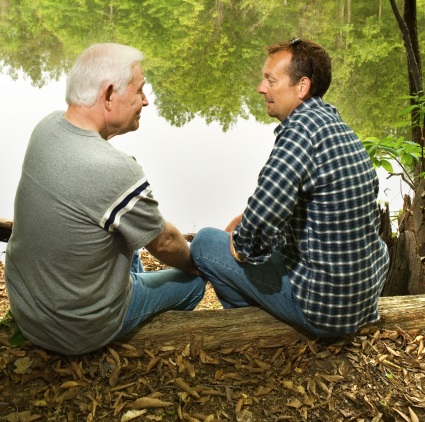 Most teenagers naturally reach a point where the bounds of sexuality are explored and roles and sexual identity are created. For LGBT teens this natural part of growing up can often be confusing and overwhelming, resulting in a variety of responses. Some individuals experience such intense negative emotions about their sexual feelings that they repress and push those feelings as far away as possible and choose to ignore their sexuality.
By hiding deep in the closet, these teens are setting themselves up for an uphill battle as they get older and inevitably arrive at a point in their adult lives when the reality of their feelings can no longer be ignored. In other cases, this aspect of an individual’s personality does not surface until later in life at which time they may uncover feelings of same sex attraction, for example.
However they arrive there, the challenge of coming out in adulthood is a unique and often mystifying journey for both the person coming out and the people in their lives. As an adult, the fabric of life is often strongly developed with work relationships, long-term friends, and even children and spouses. The complexity of this web of relationships can make the process of coming out quite messy in adulthood, characterized by experiences of deep confusion, guilt, betrayal, rejection, and heartbreak.
When LGBT adults make the difficult but necessary choice to come out, they are often faced with many emotionally fraught questions from people who are shaken by the revelation that their friend or family member is not the person they thought they knew. There can be feelings of shock, anger, and disapproval from those close to the newly identified LGBT person. It is a bewildering experience for everyone involved.
The most basic questions from friends and family address concerns that the newly open LGBT person has been hiding their true nature and their sexuality, and that the trust of the relationship has been broken. Both parties experience feelings of loss and confusion that can severely strain the bonds of the relationship. [fat_widget_left]
For the person coming out, at a time when they most need the support of their friends and family, this layer of confusion can create a perceived lack of safety from the people who would otherwise be that individual’s support network. This lack of support can sometimes lead to an interruption in the coming out process and lead the newly open LGBT individual to regret the decision to come out.
In addressing this issue, it can be important to realize that not only are adults who come out having to redefine themselves and their relationship to their community but also the people they are coming out to have to create a new framework of understanding.
When an adult child comes out to family members, the family story of kids, grandchildren, spouses, and family that has been carried for many years must be re-authored to make the new details meld into the existing family scenario. A time of transition will occur where parents, relatives, and siblings will need to re-establish the family story with fresh details adding a vital new definition to the fabric of the family history. Some family members may become estranged as a result of religious disapproval or an inability to move past feelings of betrayal.
For close friends, there is also a redefinition that must occur in order to assist in building a strong bond between the newly out and open LGBT person and their friends. With both family and friends, questions of lifestyle, safety, and the impact this news will have on future relationships may come to the forefront. Some people who have just come out will feel comfortable answering all of these questions and more, while others may be unsure of their own feelings and may not have all of the answers at that time.
Leaving room to discover this newly developed aspect of the LGBT person’s identity is vital in their ability to define and understand who they are. All of the answers may not be available immediately but the process of coming out is an ongoing experience with new pieces of understanding being continually discovered.
And most important for all people involved in the coming out process—from the LGBT person coming out to family and friends—the qualities of the person coming out are not changing. All of that person’s vital goodness and qualities remain, with the addition of new and exciting aspects being shared openly and honestly for the first time.