 As discussed in Part I of this series, surviving a traumatic event often results in negative and harsh altered beliefs about yourself. A traumatic event can also impact your sense of worth, meaning, and trust.
After a traumatic experience, you may believe that you are no longer worth anything: that you do not deserve things, do not have a right to have your needs met, or deserve to be happy or content. This erosion of your sense of worth and conviction that you deserve and have a right to things like safety and kindness impacts real-life decisions you make. For example, if you no longer believe that you have a right to stand up for yourself, then you might not say anything when a boss inappropriately berates you. Learning how to reclaim your rights and increasing your conviction in your inherent worth are truly difficult steps in the healing process. Reading the United Nations’ Universal Declaration of Human Rights might help you begin this recalibration process.
Traumatic experiences also damage your sense of self by shattering the beliefs, morals, philosophies, and ethics that gave your life meaning. The beliefs that once made sense, like good things happening to good people and bad things happening to bad people, no longer fit with the real-world experiences you went through. Due to this disconnect between beliefs and experiences, you may feel that life is now bereft of any moral or ethical bearings, as if you have awoken in a counterfeit world.
This disconnect can also manifest itself as questioning your spiritual or religious beliefs. This can result in decisions that your beliefs are no longer accurate, or in a new or deeper sense of spirituality or religious devotion. While any of these reactions are painful to go through and difficult for friends and loved ones to understand, each of these reactions is an understandable and normal way to make sense of the trauma.
Intertwined with spiritual beliefs are the beliefs that each of us carry about the orderly nature of the world. Whether or not we acknowledge it, most of us function in the world presuming that there are cause-and-effect relationships at work, like “I am nice to the cashier at the grocery store and she bags my produce in a gentle manner.” Posttrauma, the orderliness of the world is called into question, because trauma is not part of any casual relationship that you, the victim, initiated or willingly participated in. The tarnishing or breaking of this belief can lead you to think that there is no order whatsoever in the world and that none of your actions make any sense. However, as your healing progresses, you will grow to a place where you can balance the truth in both of these tenants: sometimes the world is an orderly place, and sometimes there is no rhyme or reason.
A final aspect of self that is altered through a traumatic event is your sense of community. All of us are social creatures—even those of us who are on the shyer end—and some of our sense of self comes from the social relationships we have. Because a traumatic event distorts our belief that, on the whole, people are trustworthy, and because you may have experienced secondary wounding experiences (painful, possibly even traumatizing experiences following the trauma inflicted by people who are trying to help or who are in an official helping role—for example, a police officer blaming a woman for the sexual assault she experienced) you may find yourself questioning the trustworthiness of people in general, which in turn negatively impacts your ability to be in healthy and nourishing relationships.
A deeper discussion of how trauma interferes with healthy relationships will be the focus of the next few articles, but in the meantime know that you are not damaged, toxic, or beyond all hope. If you engage in the healing process and find your way to grow through the traumatic events of your past, you can and will reclaim the healthy and whole relationship with yourself that you have an inherent right to. Know that there are trained professionals who are ready and willing to help guide you through this process.
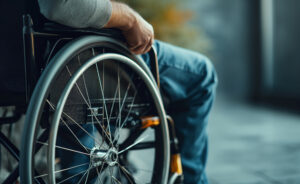
The onset of disabling illness or physical or sensory impairment is often accompanied by complicated grief processes, including depression and posttraumatic stress disorder. These grief processes are frequently developed in response to the concurrent losses people may experience when living with new abilities.
Most obviously, people who acquire a disability or disabling disease lose a part of their bodies and/or the functionality of parts of their bodies. Additionally, they may lose physical comfort, vigor, mobility, spontaneity, the ability to engage in certain activities, aspects of their previous lifestyles, privacy, a sense of dignity, a sense of control, a sense of efficacy/agency, a degree of independence, actual or perceived life roles, friends and other social supports, the ability to work, financial stability, their previous sense of identity and purpose, the ability to pursue previously established dreams, their previous body image, and, all in all, their previous sense of self as a whole. Therapists should be attuned to what a newly disabled person may have lost, or may perceive themselves to have lost, beyond the obvious loss of physical or sensory functionality.
[fat_widget_right]
How well people adjust to this potentially staggering array of losses is usually much more closely correlated to who they have been prior to the disability, and what social, emotional, and financial resources they have available to them, than to how “severe” the impairment itself is. The huge importance of social support after a disabling event cannot be overstated; people with new-onset disabilities may realize how lucky they are to have loving people in their lives as they have never realized it before, or they may feel almost completely socially and emotionally isolated. The most difficult disabilities to deal with in regard to social support seem to be “disenfranchised” disabilities (e.g., those resulting from Fibromyalgia/Chronic Fatigue Syndrome) in which others do not quite believe.
Non-professionals wishing to support a newly disabled person can be most helpful by being available to him or her as a friend who is willing to listen and meet him or her where he or she is emotionally. Trying artificially to cheer the person up or suggest that the person does not, or will not, have losses is not helpful. Newly disabled people will “cheer up” once they have finished grieving their losses and reorienting themselves to their new situation, often with the assistance of a counselor or therapist.
Another key to successful adaptation to a new disabling condition seems to be successful identity reconstruction, a process in which therapists can be particularly helpful. This may often entail psychological, existential, and/or spiritual shifts in perspective toward valuing innate qualities (as opposed to physical or comparative ones), authenticity, and taking life slowly and savoring it. Identity reconstruction, it should be noted, is not necessarily a finite process, as some disabling conditions are progressive and require constant readjustment.
Keep in mind that a large number of the losses with which a person with an acquired disability must learn to cope are not due to the physical impairment itself but rather to limitations imposed on the person by society. Therefore, therapists should not insist that people with disabilities “accept” their condition of disablement as theirs to adjust to, rather than, say, as an invitation to fight injustice.
Ultimately, it is much more helpful for therapists to view identity reconstruction, rather than “acceptance” of one’s disability, as the end-stage of grieving an acquired disability.
 Trauma unequivocally impacts your relationship with yourself and challenges and changes how you think about yourself.
Before a traumatic life experience, it is common to believe in your ability to make good decisions, control your environment, and keep yourself safe. Trauma smashes these beliefs and leads to new ones, namely being unable to count on your judgment: if you once judged a situation, person, or behavior to be safe, and it proved to be traumatic, it is easy to believe that your actions cannot change or influence things, that you cannot control your fate, and that forces beyond your power dictate your safety.
These new beliefs can feel more accurate and convincing than the ones you held pretrauma, and thereby lead to a reduced sense of agency and safety—and a natural consequence of that is more frequent and intense feelings of vulnerability and fearfulness.
A common way to try and reduce or manage this increased sense of vulnerability and fearfulness is to increase your sense of responsibility and control. You might find yourself claiming responsibility for the traumatic occurrence, ignoring the fact that no traumatic event is caused by the person who experiences it. Or you may try and control all facets of your life: scheduling every minute of the day, micromanaging the lives of those around you, or establishing impossible standards of perfection.
Even though these efforts at increasing your sense of control are entirely understandable, they do not lead to the desired outcome and often cause you to try and control more elements of your life. Not only does a control agenda not deliver the safety and security you are trying to achieve, but such an approach exacts a high psychological cost. Excessive activities exhaust the human body, mind, and spirit and excessive expectations lead to harsh criticisms and even self-hatred.
The damage that trauma exacts upon your self-esteem also feeds into the harshness and self-hatred that frequently arises following a traumatic life event. It is common to believe that if you had been smarter, faster, fought harder, yelled louder, or simply been a better person, then the trauma would not have occurred. These inaccurate beliefs, though understandable, cause damage by creating a falsely logical conclusion that since the trauma did happen, you must have deserved or caused it—and if you did, then all the shame and self-hatred you feel is warranted.
These beliefs grate away your self-esteem and stoke harsh opinions of yourself to the point where the ensuing self-loathing can become unbearable and paralyzing, leading you to want to hide, disappear, perpetually apologize for your existence, or desperately prove that you are worthy.
You deserve and need to work on challenging these beliefs in order to reclaim the fact that you can make good decisions, that you do have some control over the vagaries of life, and that you are able to impact your safety in the world. Stay connected with the friends and loved ones in your life who are emotionally healthy so that you can hear and give credence to their thoughts regarding your abilities and capabilities. Finally, don’t forget to reach out to a professional and harness her or his training, compassion, and expertise to help you heal and grow through these trauma-induced beliefs.