Great question—simply and clearly put—and I enjoy thinking about it. Thank you. I’m afraid my answer is going to be pretty long, though, because the question touches on a variety of issues.
Let’s start with the difference between secrecy and privacy. I’d like to keep my weight private. But if I wear a body stocking sometimes, that’s my secret because I’m a little ashamed about it. Someone else might not be. The contents of my email are private and I don’t want my husband to read them—even if I don’t keep any deep and dark secrets from him. My diary is private, and may contain a few secrets too; I don’t want anyone to read it. Sometimes privacy and secrecy overlap. Clearly, what’s private and what’s secret varies from one person to the next, but the development of boundaries of what is private grows with a child’s increasing independence from his or her parents. A child might ask the therapist, “Can I tell you a secret?†but really mean “Can I trust you? Can I tell you something that you will keep private?â€
Privacy between people, called confidentiality when it refers to communications between therapist and client, is a prime value in therapy—the therapist under most circumstances must keep everything said in session private so the client can speak freely. This rule is a bit different when working with minors.
First off, there are legal issues which apply to minors in therapy. Minors are unable to consent to treatment; their parents consent on their behalf. There are exceptions to this (minors who are married or in the armed services), but generally anyone under the age of 18 is not legally able to make treatment decisions. A parent who consents to treatment for a minor child has the legal right to know the content of the child’s treatment. For more information, please consult this American Psychological Association page: http://www.apa.org/monitor/mar02/confidentiality.aspx. Reports on content may be more or less detailed, depending on the agreements the parents, child, and therapist have made with one another. Often, a general sense of progress or lack thereof is reported; specifics may not be.
Privacy issues in clinical practice are not as clear as the legalities are. The child needs privacy, and needs to be able to speak freely and know that the parents will not be told about what is said, in order to foster independent growth. Children’s needs for privacy grow as they mature, and the therapist might encourage the child to develop personal boundaries about what the parents (and others) should know and what they do not need to know—what should be kept private. This seems to conflict with the law.
To preserve clarity, remain within legal boundaries, and protect the child /client, therapists should make clear at the outset of treatment what the therapist’s relationship will be with the child and with the parent and how information will be shared—in short, who will know what and when. Clearly, as the child matures this will change—people need more privacy as their independence and individuality develop. When this happens, the therapist will meet with parent and child to explain that the structure previously agreed upon must be adjusted.
At the same time, the therapist cannot promise the child that all information will be kept private if it is felt helpful to the child to tell the parent. If the therapist feels the parent may harm the child as a result of information the therapist might report, the therapist should seek legal advice. The therapist is mandated to report indications of possible harm to the client or others; neglect or abuse must be reported in most states. This applies to both children and adults.
All my best,
Lynn
 Created by Dr. William Glasser, reality therapy and its theoretical underpinning of choice theory provide a wonderful lens through which to help clients evaluate their needs. Individuals are thought to have five basic needs that their behaviors seek to satisfy in order for them to be happy and fulfilled. These are: survival or self-preservation; love and belonging; achievement; independence or freedom; and fun. All behavior is believed to be an attempt to meet these needs—even when the behavior is unhealthy or harmful (Glasser).
Having children and adults evaluate their needs has multiple benefits. It immediately shows the therapist or counselor what is in abundance in these five areas of the client’s world and what is lacking. It provokes client awareness and a highly relevant dialogue, and is empowering for clients in that it helps them to see they are usually the catalyst of any hoped-for change.
In working with children, I utilize a graphing utility, designed by Arlin Peterson, called Pete’s Pathogram (Peterson). The five basic needs are depicted on the “X†axis, and the “Y†axis shows the degree to which the need is being met with a range from 0 (not met) to 10 (totally met). Children “score†their needs with me on the paper graph. Inner-city schoolchildren will often score themselves with a 3 or 4 on the “survival†need.
When asked a series of question that seek to provoke self-reflection, a conversation will usually ensue about the dangerous neighborhood in which they live, fears of gangs, shootings, violence in the home, and sometimes shortages of food. Counselor/therapist and children can process these very real fears and discuss if there is a way to improve the degree to which a need is being met. For instance, asking a child why that score is low and what it would take to make that survival need score a 5 might encourage a conversation about a move to a different neighborhood, their being alone less frequently in the home, providing them an additional meal at school, or having their parents come in for counseling. One by one, clients score each need.
Utilization of this exercise provides an opportunity for immediate insight into the client’s life at a profound level. As counselor/therapist and client reflect on the degree to which a need is being met, the balance or imbalance of the five basic needs in the client’s life becomes apparent. This exercise works extremely well with adults also. The workaholic will score himself/herself a 10 on the achievement need, but he or she will most likely rate low for love and belonging, fun, and freedom.
The evaluative, self-reflective, and internalizing elements of this exercise are extremely rich, in my opinion. Clients are supported to identify ways they can create change for the better. As with the creation of one’s quality world through the use of pictures and words (explained in my first blog), the client’s active role in examining the five basic needs with the therapist can rapidly provide rich content with which to work.
References:
- Peterson, Arlin V. (2008). Pete’s Pathogram. Action Printing, U.S.
- Glasser, William (1998). Choice Theory. A New Psychology of Personal Freedom. HarperCollins Publishers, Inc., N.Y.
It has been well established that adverse childhood experiences (ACE) result in negative outcomes. People who have experienced neglect, emotional abuse, domestic violence, childhood sexual abuse, physical abuse, or other traumatic events in childhood are at increased risk for psychological and physical illnesses.
Divorce, death of a parent, caregiver mental illness, and other environmental factors also place children at increased risk for negative behaviors, including smoking, drug use, and sexual risk taking. Psychological illnesses such as post-traumatic stress, depression, anxiety and even suicidal ideation are often associated with ACE.
Some research has even suggested that ACE increases the likelihood of cancer and other chronic illnesses by way of risky and maladaptive behavior and through changes in physiological and biological elements during childhood. Specifically, incidences of lung cancer and heart disease have been found to be higher in people with ACE most often as a result of smoking. However, until now, no study has looked specifically at how ACE affects risk of all cancers in childhood and adulthood.
Monique J. Brown of the Department of Family Medicine and Population Health at the Virginia Commonwealth University School of Medicine in Virginia wanted to examine whether or not ACEs increased overall risk of cancer. Brown assessed a large sample of participants and evaluated their ACE in relation to either cancer in childhood or adulthood.
She found that over 60% of all the participants had experienced at least one ACE and nearly 10% had a history of cancer. Of all the types of ACE, childhood sexual abuse was the most common in those with adult cancer, but appeared to have little impact on childhood cancer. The rate of cancer prevalence among the participants with ACE was much higher than the national average of 4.2% and suggests that ACE, and in particular, childhood sexual abuse, has a strong indirect impact on cancer risk in adulthood.
Brown was unable to find any evidence of ACE influencing childhood cancer risk, which suggests that biological and physiological effects of ACE may have less of an impact on overall health than the behavioral and emotional impacts of ACEs. Brown believes that these results reveal a particular segment of the population in need of early intervention. She added, “More research should focus on the impact of sexual abuse ACEs and adverse health outcomes.â€
Reference:
Brown, M.J., Thacker, L.R., Cohen, S.A. (2013). Association between adverse childhood experiences and diagnosis of cancer. PLoS ONE 8(6): e65524. doi:10.1371/journal.pone.0065524
 Play therapy has become a very important element of my work with families and children. In this article, I hope to give you parents some idea of how powerful play can be as an intervention as well as some ideas of how to utilize play with your own children.
Play Therapy at Work
It is Father’s Day as I write this article and I am reminded of one particular case where play therapy had a profound impact on a family. This family had a child with severe autism. They were unable to manage him at home and he was living at the residential treatment facility where I worked. The child in question was very routine-oriented, and he had an extremely restricted range of activities in which he would engage. If he wasn’t repeatedly watching small snippets of Disney videos, he wasn’t happy.
[fat_widget_right]
To make matters worse, if he wasn’t happy, he tended to throw tantrums, or hit and bite those around him. As a result of these behaviors, not only could he not live at home, but the family was challenged to even have him home for short visits. They had to put the entire house on lockdown to prevent their son from wandering away, and at least one of them had to take time off of work to stay up all night to supervise their son.
When this child came onto my caseload, another therapist and I decided we wanted to work with the family to improve the quality of their interactions with their son and make their time together less stressful and challenging. We decided to use a therapy called Theraplay to accomplish this. We did several sessions with the child in which we exposed him to various new activities. We made note of what he liked, what he disliked, and what he just didn’t seem to get (but didn’t hate).
We expected to see a lot of behaviors due to the change in routine, but that wasn’t the case. We quickly found that there were a number of activities that the child seemed to enjoy. Furthermore, we found that a number of activities that he didn’t understand at first he learned and started to enjoy in subsequent sessions. Pretty soon, we had a list of about 20-or-so activities that required minimal material (about $20 of stuff from the dollar store) that he enjoyed. We could easily keep the child happily engaged for over 30 minutes at a time.
We then started doing sessions with the family at their house. First, they watched as we played with their son. Then we started showing them how to do the games. During the course of this session, we were demonstrating a modified version of catch. The child tended to want to catch the ball when thrown to him, but would then walk over and hand the ball back to us instead of throwing it. We learned that playing catch over a table got the child to actually throw the ball back.
As we were demonstrating this, he started throwing the ball to his dad and playing catch with him. Dad immediately started tearing up. He said, “This is the first time I’ve ever had a catch with my child.†There was not a dry eye in the room after that. What father doesn’t want to have a catch with his son? Imagine having to wait 17 years to make that happen. It was an unexpected, but awesome outcome of our therapy.
The Importance of Play in Development
Play is one of the fundamental ways in which children learn. Through play, they learn to how to connect or form secure attachments to others. The quality of the relationships children have growing up will impact the quality of the relationships they form as adults. So it stands to reason that good, quality play as a child can lead to quality relationships in adulthood.
Through play, children learn how to self-regulate. We get excited as we play games with each other, but then we learn how to self-calm and soothe to continue to excel at the games we play. We learn when it is appropriate to get excited and when we need to calm. In fact, I find that using play with children who have problems with regulation is a fantastic way to teach them impulse control and self-control.
Finally, through play, we learn how to socialize. We learn such things as taking turns, cooperation, and competition. We learn about rules and creativity. Through play we develop the basic skills that allow us to navigate the challenges that life presents us. Kids who don’t play are often at a great social disadvantage compared to kids who play.
Guidelines for Play
Ok, so play is important. However, the best play has some structure. To maximize the impact of play on your child’s behaviors, here are some basic guidelines to follow.
- Play with your child. When engaging in play, do things that involve interaction between you and your child. It’s not enough to simply be in the room (what I call proctoring). It’s great to sit with children as they do a puzzle, but it’s better to do the puzzle with them. You want to promote that social-emotional connection with you. You want to make yourself a source of never ending reinforcement in your child’s eyes. So, do activities that promote things like touch and eye contact (something the typical child with autism might be struggling with and need practice to do or tolerate). Make the time your child spends with you silly and fun; watch how your child positively responds to you in other situations.
- Keep it simple and developmentally appropriate. Make sure the activities you do with your child are geared towards their mental and emotional age. In the example at the beginning of the article, even though the child was 17, he enjoyed things like holding hands, rocking, and singing “Row Your Boat.†He enjoyed the sensory nature of the rocking, as well as the familiarity of the song. Other teenagers might enjoy singing and dancing with you to music they like. Again, focus on enhancing the connection between yourself and the child.
- It’s ok to be silly (in fact, it’s recommended)! The games I play with my kids (at home and at work) aren’t complicated. In fact, on the face of it they are pretty silly. I find that even with more resistant, morose children, silliness draws them in. There’s something about being silly with someone else that just brings down defenses. Besides, taking time to relax, laugh, and be a little silly is FUN! It’s a marvelous way to spend some time.
- Inexpensive is better! It’s very easy to spend a lot of money on toys. Heck, expensive toys can be great (I adore my Xbox). but for the types of interaction I’m thinking about, expensive toys are unnecessary. Blowing a feather back and forth, blowing bubbles, playing clapping games, or playing “red light, green light†require very little in the way of materials. Be creative and see what kinds of things are sitting around your house and look to those for inspiration. Have you ever seen a young child at Christmas? They open up all their expensive presents and spend most of the time playing with wrapping paper and boxes. Tap into that instinct with your child and you will be well on your way to successful play.
Ways to Use Play Therapeutically
Here are some more ideas on how to structure play sessions with your child to get specific results.
Planned sessions to increase engagement: While my usual play style is typically to improvise with whatever is at hand and make things up as I go along, I find that planning out sessions can be helpful when trying to engage with a child. I simply make a list of 5 to 10 activities that I want to do before I do the session and try to at least get through those. I make note of what activities seemed to get the child to respond positively to me so I can use them again later. If I don’t do this, I tend to more easily get shut down by the child if he/she doesn’t immediately engage with me. I focus on activities that promote touch, eye contact, and positive sensory experiences. Good examples are singing/clapping games, blowing up a balloon while the child holds the balloon, and blowing a feather back and forth between your hands and the child’s hands.
Repeated sessions to increase skills: If I am trying to help a child acquire or improve a skill, then I want to focus on repeating activities between sessions instead of changing things up frequently. Repeated exposure is good for skill acquisition. For example, I often use play to teach deep breathing through things like blowing bubbles, singing, and a game called “monkey ride†(in which I put a stuffed monkey on the child’s belly and then have him take a deep breath in and give the monkey a “ride†up to my hand which I place a couple of inches about the monkey’s head). I will repeat these games and variations of them through several sessions until the child has mastered belly breathing.
Short sessions for planned breaks from difficult tasks (The head cooler): When a child gets upset, frustrated, or anxious during specific situations, play can be a great way to manage this. For instance, a lot of my kids have problems around homework. They get upset if there’s too much, or if they don’t understand it. Some can’t make themselves take a break before the homework is complete. These children then get so upset they couldn’t do the work even if they wanted to. The poor parents are stuck not only trying to calm an upset child, but also facing daunting task of getting the child to return to finish the dreaded homework. Hours of this every night can be a major stressor for the whole family.
To counteract this, I suggest trying many short spurts. The parent works with the child to do homework, but also watches the child for the initial signs of agitation, frustration, or upset. As soon as the parent or child notices those signs, they take a short break. During the break, they spend just a few minutes doing something fun and silly (no video games or other major distractions). The goal of the activities is to allow the child’s head to “cool off.†Once calm, the child returns to the homework with a clear head. Families that have been successful in doing this find that not only are there fewer fights and tantrums around homework, but that more homework is getting done in less time.
The bottom line is that play is important. The more challenges you face with your child, the more important it is to put time aside every day to have some positive interactions. Be silly and have fun. Please share in the comments section your ideas for play or any questions you might have. In the meantime, play more with your kids and remember to BREATHE. You’ve got this!
Conduct issues are becoming a global problem for parents, educators, and children. They usually first appear and early childhood and can be identified through behavioral and psychological screenings, such as the Strengths and Difficulties Questionnaire (SDQ). The issues that arise from conduct problems include anger, aggression, hostility, academic challenges, social problems, and other behavioral and emotional issues.
Although the SDQ has been shown to be effective at identifying symptoms of conduct disorder, it is lengthy and time consuming. Therefore, Melissa E. Duncombe of the Psychological Sciences Department at the University of Melbourne in Australia wanted to see if an alternative brief assessment would be as effective and provide results that are equal to that of the SDQ.
For her study, Duncombe used the Conduct Problems Risk Screen (CPRS), a seven-item scale, to identify conduct problems in a group of over 4,700 elementary school children. Because traits found in oppositional defiance (ODD) and attention-deficit hyperactivity (ADHD) have been shown to be precursors for later conduct problems, the CPRS was designed to reveal any specific inattentive or aggressive behaviors as well.
Parents and teachers reported their evaluations of children, and Duncombe found that although there was a much higher rating of conduct issues in the parents’ reports, the overall consistency between the two groups was high. Duncombe believes that parents may witness more behavioral problems and may also incorporate family reactions, disciplinary consequences, and other factors into their assessments when filling out the CPRS. Teachers, on the other hand, can only report on what they witness and experience during the school day.
Another strength of the CPRS is that it only takes a few minutes to administer. Unlike the lengthy SDQ, the CPRS can be completed in under two minutes, and may be viewed as more applicable tool with younger children. This can be especially important for early identification of the children at risk for later conduct, ADHD, or ODD issues. Dunscombe added, “The CPRS is a valid and reliable instrument and could be used effectively as a screening tool to identify those children at risk of developing conduct disorder.â€
Reference:
Duncombe, Melissa E., Sophie S. Havighurst, Kerry A. Holland, and Emma J. Frankling. (2012). Psychometric evaluation of a brief parent- and teacher-rated screen for children at risk of conduct disorder. Australian Journal of Educational & Developmental Psychology 12 (2012): 1-11. Print.
 At the heart of this therapeutic approach is a focus on human connection, since the underlying theory in reality therapy posits that human relationships are the most vital of the five basic needs we must satisfy to be happy and fulfilled. The remaining four needs include: survival or self preservation, achievement, independence or freedom, and fun.
This approach is founded on the belief that individuals choose many of their behaviors in order to satisfy these needs, which are innate. Therapy provides the opportunity for an exploration of the degree to which a person in therapy’s needs are being met.
A problematic relationship, past or present, is thought to be the major source of a person’s presenting problems. The relationship could be one of many—for example, with one’s significant other, sibling, parent, child, friend, teacher, colleague, or boss. The goal of reality therapy is to support people in identifying the problematic relationship, assist them to evaluate how their behavior may be helping or hurting, and to give them tools to reconnect in a healthy way.
As a school counselor and therapist, I utilize reality therapy concepts both with adults and children and find them exceptionally useful in gathering immediate, vital data about the person. I especially like that reality therapy has an artistic/drawing component that helps people feel less threatened and more able to access and evaluate behaviors and emotions than might be possible using a traditional therapeutic approach.
Discovering One’s ‘Quality World’
Exploration of the person’s quality world provides both clinician and person in therapy valuable information. One’s quality world is unique to each person and is essentially that place inside us that holds a vision (pictures) of all that is most important to us. Among many, the pictures may include our homes, special people, places we hope to visit, hobbies and interests, our religious or spiritual practices. Quality world pictures depict present circumstances and dreams for the future. Quality world pictures may reflect things we presently possess or long for in the future; other pictures may indicate what we have relinquished hope of manifesting (the adult who always wanted to play the violin, go to Paris, learn a language, or have a baby; or the child who wished he could be a better student but has given up).
I have never found an adult or child who was not eager to depict their quality world when invited to do so. I generally describe the quality world as I have above, and I give a few examples of the pictures in my own to help people understand what I am asking of them. The simplest way is for people to use a piece of paper and either draw symbols to represent a specific want, or write a word that represents it. I encourage them to be as creative as they’d like. There is no wrong way to do the exercise.
Living One’s Quality World
In as little as 10 or 15 minutes, the counselor or therapist can learn the most important and desired aspects of the person’s inner world. The counselor or therapist also learns what the person is lacking—for example, the child whose quality world depicts no friends, or no parents. People are invited to talk about their words and symbolic representations and this provokes a rich dialogue and the beginning of a close connection between person in therapy and clinician. It also helps people to reflect on and appreciate what they have, as well as to evaluate their goals, the probability of their success, and the action they are taking to attain them.
What impresses me most about reality therapy is that it is an effective and collaborate approach for multiple environments (schools, businesses, counseling, and therapy). Some of my child clients even go home and use reality therapy concepts they learn with me on mom and dad. It helps people to be accountable and teaches them skills that are empowering and easy to share with others.
 Shouting, yelling, screaming. Nearly all parents have done it; nearly all children age 10 and under have heard it. In small doses, such as in emergencies, yelling is not believed to be harmful. Yet, as common as this interaction is within families, if it happens too often it can break down positive conflict-management skills and flood a family’s emotional field with negative affect.
Why Do We Yell?
The most basic reason we yell in any situation is because, on some level, we feel we are not being heard. Whether literally—the person is in another room, for example—or figuratively, not feeling heard is an incredibly frustrating experience. When we believe we have a valid point and are being intentionally ignored, misheard, or invalidated, inside our brains we are thinking, “They must not really be hearing me. I will speak louder. That should do the trick!â€
Yelling also stems from a need for control. Yelling is a form of verbal aggression; it carries the message that the yeller desires to be the loudest and most dominant person in the room. If someone is yelling, it is a good bet that the yeller is feeling out of control and is feeling the need to dominate the interaction.
[fat_widget_right]
Parents often experience frustrating and even oppositional behaviors from young children. Depending on your child’s age, he or she may be focusing on developmental tasks ranging from establishing a sense of independence to experimenting with rebellion. The act of not listening to you can actually be part of your child’s necessary development.
At various times of the day or week, parents’ reserves of patience and energy can already be low. For example, a full-time parent may feel that he or she can barely make it to nap time with sanity intact. A pre-nap meltdown from their toddler hits them at their absolute lowest point of the day. A working parent’s morning can be so tightly orchestrated that just the slightest alteration in routine can cause a cascade of setbacks and tardiness. Throw in an early meeting and some traffic, and there is a perfect storm of frustration which can come lashing out toward a child. Parents can reach a saturation point at which their own coping skills are no longer carrying them through a particular interaction. At these points, parents often resort to yelling in an attempt to regain a sense of validation or control.
What’s the Case against Yelling in Families?
Yelling raises blood pressure, heart rates, and adrenaline levels. Those who yell exhibit higher levels of the stress hormone cortisol in their bloodstreams over time. These physical consequences are also seen in those who are yelled at. Like second-hand smoke, second-hand anger can take a big toll on health.
That’s a case against yelling in general, but in families with children age 10 and under, there are several other reasons that yelling isn’t healthy.
Children look to their parents to maintain the safety—physical and emotional—of the family. Babies and very young children do not yet have the ability to determine the difference between a real threat to their safety and an upsetting or frustrating circumstance. Many parents can attest to this, hurrying to the scene after having heard their toddler scream as if hurt, only to discover the source of the scream was a minor frustration such as not being able to reach a toy. The child’s cognitions in this stage are quite concrete; circumstances are either “all good†or “all bad†and there is little room for ambiguity. Children under age 5 can therefore mistake a parent’s loud tone with an alert to a true threat. This can be terrifying for a child in this developmental stage.
Fear is one of the most basic and universal emotions—every animal experiences it. Fear is centered on a primitive part of our brain called the amygdala. When fear permeates a young child’s emotional experience, such as in a household with daily episodes of yelling, the amygdala will become overly active and this will inhibit the child’s brain from working on higher-level functions such as concentration, reflection, learning, decision making, and behavior planning.
With older children who are more verbal, the words that are shouted can be even more harmful than the tone itself. Even though yelling is an attempt to gain control through aggression, the irony is that in doing so, we actually lose control of our behavior and our ability to filter and manage what we are expressing. Negative labeling, blaming, and other harsh words are especially harmful to children because children accept unconditionally that what their parents say is true. Children between approximately ages 5 and 10 have the cognitive ability to understand the words themselves, but not the adult’s emotional context. They will internalize the messages from the parent without questioning if they are accurate, and will add those messages to their budding self-concept.
[fat_widget_left]Finally, many parents who yell can relate to this scenario: “When I don’t yell, my child doesn’t listen to me. He or she only seems to respond (do what I want) when I yell.†The escalation involved in yelling can become a self-reinforcing feedback loop. Children can become desensitized over time to their parent’s escalation pattern. The child, who is interested mainly in persisting in play or attending to his or her own agenda, will naturally search for ways out of responding to a parent’s demands. We cannot fault the child for this; it is simply a piece of his or her development. The more parent-free space and time a growing child can carve out, the more he or she can explore the world around him/her and his/her own inner experience. The child learns that the parent will eventually escalate to yelling each time, and so the child learns that he or she does not need to respond until and unless yelling is used. The “pre-yelling†time becomes seen by the child as “don’t have to listen yet†time. And the parent, on the other side of this interaction, keeps needing to up the ante over time to get the same response.
How Do We Break the Yelling ‘Addiction’?
1. Set a SMART goal around yelling: a Specific, Measurable, Attainable, Relevant, and Time-bound goal that solidifies your commitment to changing this behavior. Such a goal may sound like this: “Within the next month, I will decrease my instances of yelling on weekday mornings until I’m yelling once per week or less during that time period.†Write down your goal and put it in a place you will see it every day.
2. Find ways to increase true power, so that false control is less tempting. Yelling is false control. It feels powerful in the moment, but it undermines our internal self-control and the quality of our relationships over time. Ways to gain true power include:
- rearranging your schedule to relieve some of the pressure on certain times of the day or week that you tend to yell
- asking for help and delegating tasks to decrease your overall stress
- planning ahead for triggering moments, such as taking a distracting toy to the grocery store, or laying out your child’s school clothes the night before
- taking advantage of calm times to focus on strengthening a positive relationship with your children which will serve to buffer any episodes of yelling
3. Assume responsibility for the outcome of each interaction. You are the parent. You set the stage for the relationship between you and your child. If your child escalates, this does not mean you must escalate. If the situation escalates, this does not mean you must escalate. No matter how bad the traffic, how frustrating the missing shoe, how grating the whining, or how sassy the defiance—in the end, you always have a choice.
4. Speaking of choices, realize that yelling is only one of hundreds of things you can choose to do in a frustrating moment. Instead of yelling, you could:
- whisper
- sing
- dance a jig
- say a little prayer
- close your eyes and count to 268
- take a lap around the house
- splash your face with water
- go outside and yell at the snowman or rosebush in your yard instead
Some parents choose a grounding object, color, or mantra which they use to bring their attention away from their momentary anger and refocus it on their goal.
5. Return often to a developmental lens through which to view your children. At all times, children must be expected to behave as children. They cannot and do not think, process, or behave as you do. It is entirely predictable that children will lose things, drag their feet, misunderstand you, ignore you, and throw tantrums at inopportune times. The more you can remind yourself that this is developmentally normal, the less you will feel personally offended or annoyed by childish behavior.
6. When—not if—you do yell, be prepared to acknowledge and apologize for this to your children. Parents must be willing to role-model to children the process of owning up to poor choices and the effects they can have on others. If as parents we are not willing to do so, how can we expect the same from our children?
Breaking ingrained patterns of interaction like yelling is not an easy thing to do. Parents must take full responsibility for “being the change they want to see†in their families. Parents must make their tendencies and triggers conscious, face them honestly, and focus their attention on them if they wish to change. Keeping a written goal, a list of alternatives, and a developmental perspective will be of great help to the parent who wishes to reduce yelling. Over time, parents who make these efforts will be able to enjoy a great deal more peace in their family, a reduction in stressful feelings, and an increase in the amount of true power they are able to exert over their lives and actions.
 Counselors and their work are changing and developing constantly. Some counselors are choosing to work in one particular area of home-based counseling with children and families. These families are comprised of varying cultural and socio-economic status. Because working with these families is often inconsistent, sporadic, or engaged in crisis, the traits of a professional working in this area include positive “rapport, warmth, optimism, humor, and commitment†[4].
There are several advantages of performing in-home therapy, including, as a therapist, being able to build rapport, observe child and family functions outside of an office setting, make assessments, and model consistency and routine [3]. Additionally, research is showing that children in families who attend more sessions in therapy (approximately greater than 50%) have better outcomes than those families with poor attendance, [1]. It is more efficient or convenient at times for the counselor to come to the client, given transportation issues or hectic schedules.
The disadvantages for in-home counseling include safety concerns for both therapist and family, as well as lack of consistency. It can also require extra scheduling time (accounting for travel) [3].
Unfortunately, there is not a singular theory that can encompass the needs for home-based therapy. Instead, home-based therapy combines techniques cognitive behavioral therapy, multisystemic therapy, social leaning theory, solution-focused therapy, and psychoeducation for families [2]. These provide additional barriers for counselors doing this work, because they must be trained in several areas and remain flexible when executing them on a case-by-case basis.
Personally, I recommend that in-home counselors create their unique approaches to working with children and families. At the same time, I recommend that they remember basic ethics training. I have titled the professionals in this field “unconventional counselors.†We are those counselors who are trained, licensed, and affiliated with certain larger entities. We act as our own strongest agent of change.
Here’s a list that might be helpful for a first-time home-based therapist:
- Create your own personalized “on-the-go†counselor toolkit. Each counselor toolkit is going to be different based on your client population and your own therapeutic strengths. The more you are genuine to your own self, the more honest your toolkit is going to be.
- Be prepared and well-trained in flexibility. This is not the kind of position that you take lightly, nor is it one in which you participate in routine hours or appointments. Be ready to have at least two back-up plans in case your scheduled day does not go as planned.
- Clients that receive in-home counseling are notorious for inconsistency, whether that manifests with appointments, progression, or regression.
- Supervision, supervision, supervision. Adopting the role of an in-home counselor is based in a familial approach. In our world, however, a familial approach does not mean a family of origin. This may include other professionals (caseworkers), fictive kin (long-term friends of the family), foster parents, and alternate community supports. An ethical “unconventional counselor†will always seek consultation and professional supervision from other professionals.
References:
- Carrasco, J. M., & Fox, R. A. (2012). Varying treatment intensity in a home-based parent and child therapy program for families living in poverty: A Randomized Clinic Trial. Journal of Community Psychology, 40, (621-630). doi:10.1002/jcop.21492
- Macchi, C. R. & O’Conner, N. O. (2010). Common Components of Home-Based Family Therapy models: The HBFT Partnership in Kansas. Contemporary Family Therapy, 32, 444-458. doi: 10.1007/s10591-010-9127-1.
- Morris, J. (2003). The home visit in family therapy. Journal of Family Psychotherapy, 14(3), 95-99. doi:10.10.1300/J085v14n03_06
- Thompson, S. J., Bender, K., Lantry, J., & Flynn, P. M. (2007). Treatment engagement: Building therapeutic alliance in home-based treatment with adolescents and their families. Contemporary Family Therapy: An International Journal, 29(1-2), 39-55. doi:10.1007/s10591-007-9030-6
 Shock. Disbelief. Anger. Disappointment. These are just a few of the emotions you may have experienced when you discovered that your child viewed pornography.
Twenty years ago, you had to go out of your way to obtain pornography. Today, it is accessible at the click of a button. More innocence is lost earlier and earlier in today’s world. Because pornography is everywhere, seeing it is difficult to avoid—indeed, overexposure is an issue for many. Greater exposure to sexually oriented media (e.g., soap operas, music videos, reality television) contributes to adolescents developing the impression that “everybody is doing it.†Kids can also develop skewed perceptions regarding infidelity, abortion, sexually transmitted disease, and divorce, among other things.
Most figures suggest that the average age of initial porn exposure is around 11, but there is research that puts the number closer to 8. Sexual objectification impacts the mental and physical health of our children. When girls are objectified, they are often not viewed as people with dignity. Research also suggests that there is a significant relationship between pornography consumption and violence.
So when you discover that a child has viewed pornography, how should you respond as a parent? How do you prevent recurrence of viewing?
Questions to Ask Yourself Before the Conversation
- What is your ultimate goal for the formation of your child’s sexual attitudes?
- What do you model in your own intimate relationships?
What Not to Do When Confronting Your Child
- Do not jump to conclusions or overreact. You want to be a healthy advocate for your child’s well-being.
- Do not express extreme anger. Acknowledge mistakes.
- Do not shame the child with your words or actions. This can lead to the child acting out in unhealthy ways as an adult.
Questions to Ask Your Child
Keep in mind that if the person who introduced pornography to your child was at least four years older, it may be an unlawful act. If you’re unsure, contact local authorities.
- When was the first time that you saw this kind of thing?
- Have you viewed it with anyone else?
- How often do you view it? (Frequency matters; desensitization and overstimulation can occur, which can lead to unhealthy coping and relationship patterns.)
- Just what, exactly, did you see? (Be a trusted confidant for your child. He or she may be embarrassed and confused, so be gentle and patient.)
- What questions do you have? (They may be embarrassed to ask.)
- Who or what may have influenced you?
- Do you understand why this matters and why I am taking this seriously? (Position yourself to be the child’s advocate.)
- Has anything in your home encouraged this? (Be open and not defensive.)
Prevention of Future Occurrences
- Behavioral modification: Know media-based triggers, and limit time online or in front of the TV.
- Develop a family mission statement of appropriate use of computers, social media, television, movies, and books.
- Cognitive modification: Teach your child a healthy view of sexuality.
- Emotive modification: Teach your child the emotional attachment that comes with a sexual relationship. More is caught than taught by parents, so guard your home and your hearts and minds. Parents are still the No. 1 influence in a child’s life.
- Know your kids and what they’re engaging with in their life. Set boundaries and monitor use of social media, books, etc.
- Use software and parental controls on all Internet-based devices.
 With the magnitude of demands placed on special needs families, siblings of special needs children can often feel overlooked and in need of emotional support. A “special needs child†is defined as having a medical, developmental, or neurological challenges, or another type of disability which impacts the entire family system, thereby requiring special supports (i.e. medical, educational, etc.). In many families where such challenges are present, it’s inevitable that the added stress impacts not only parents and the child in question, but also typically developing siblings. In fact, rates of depression, anxiety, and chronic stress are higher for the special needs family. But with adequate supports, such impediments can be reduced. Special needs disabilities can run the gamut from severely disabling conditions, such as cerebral palsy, in which a child is wheelchair bound and cannot speak, to a high-functioning child with an “invisible†disability, such as attention deficit (ADHD) or dyslexia.
Special needs siblings may feel the following:
- guilt about being a “typically†developing youngster;
- embarrassment about a sibling’s behavior in front of friends;
- frustration that the sibling may not be able to relate or play at the same level;
- worries about the health and survival of the sibling, and the impact of responsibility placed upon the sibling once parents become elderly;
- resentment that attention/services are diverted to the special needs sibling;
- loneliness, or a feeling that peers may not understand what they are going through;
- parentification in caretaking role of sibling, should parents not have adequate support/resources or emotional attunement to the sibling. It would make sense that special needs siblings might be at higher risk for depression and anxiety if they do not have support and resources available.
Your child may benefit from a referral to a competent and compassionate psychotherapist who specializes in special needs family therapy. It is of vital importance to special needs parents is to look for the following symptoms in siblings of special needs children:
- feelings of hopelessness, marked depressed or anxious mood for more days than not, isolation and withdrawal from peers, or a drop in grades or absence from school;
- marked increase in irritability;
- insomnia, appetite changes, panic attacks, and any clear behavioral/mood change that is in sharp contrast to the child’s typical baseline mood/behavior.
Likewise, if any parent/caregiver exhibits the above symptoms, I recommend seeing a family psychotherapist as soon as possible.
There are also many benefits and unique experiences for siblings of special needs children, however. They have the opportunity to learn caregiving and sensitivity that many of their peers may not experience.
Special needs siblings may also feel the following:
- higher level of maturity than peers, given the opportunities to practice empathy and patience with the special needs sibling;
- ability to embrace cultural diversity as relates to special needs and families that are not “typicalâ€;
- protectiveness of the sibling, should he or she be in a position of bullying;
- pride in milestones accomplished by the special needs sibling;
- tolerance of people’s differences;
- increased emotional intelligence and insight to the human condition;
- opportunities to be involved in a strong family unit that focuses time and attention on all family members;
- loyalty to and cohesiveness with the family unit;
- gratitude for health and vitality;
- appreciation for siblings’ gifts/strengths, in light of any challenges;
- social adeptness: the sibling often is quite gifted in reading social cues and relating to people, having had much practice “translating†the world to the special needs sibling;
- resilience: they have also had much practice in managing adversity; they are often well-prepared for the real world, having had to problem-solve and endure challenge as a young person;
- creativity and resourcefulness: Siblings often must creatively problem solve strategies to help special needs families work around the special needs child (i.e. researching wheelchair friendly restaurants, creating a music CD for a blind sibling, etc.)
- mindfulness, focus, and gratitude: many siblings have found a peaceful emotional state as they accept the challenges and advantages that accompany a special needs family.
It is true that there are an equal or greater number of positives and opportunities for the special needs sibling, when given the appropriate support and resources. Several websites and references are listed at the end of this article to support the special needs sibling in acquiring appropriate support to thrive and embrace being a special needs family member. The following objectives are also of great importance for special needs parents, in an effort to ameliorate the stress involved with being a member of a special needs family:
- Provide ample one-on-one attention to all children in the family, not just the special needs child.
- Maintain high standards and expectations for all children, and, as much as possible, an expectation for all children in the household to abide by the same rules, consequences, and privileges.
- Be able to describe the special needs child’s disability to your “typical†child in a developmentally sensitive manner. Allow your child to ask questions about medical/educational/etc. interventions, course of treatment, what to expect long-term, etc. Be aware that preschool-age and younger may have a difficult time understanding and may need play/art therapy with a trained professional to assist in understanding the disability and answering any questions the child has. Older children (school-age) may wonder if the disability is contagious, and may need reassurance that they can’t “catch†the disability. Teens may need help with their mixed feelings of loyalty and embarrassment, as peer relationships become increasingly more important. Children of all ages may wrestle with guilt that they do not struggle with the same challenge as their siblings, and may even feel a pressure to achieve greater accomplishments to compensate for any “deficits†in their sibling.
- Reassure your typically developing child that his/her sibling is receiving the services he/she needs to develop optimally, that it is not their fault that their sibling has a disability, and that it is paramount to be a unique individual with her/his own unique dreams and gifts. Take the pressure off siblings and practice stress management activities like deep breathing, journaling, family discussions, and family fun.
- Family fun is really important. Find ways the entire family can bond together and laugh, whether you do something like swimming, hiking, singing, Pictionary, or whatever common-ground activity brings smiles, laughter, and family unity.
- Connect your typically developing child with a support group for special needs siblings to reduce isolation, increase validation, and reduce stress (see #5 in Resources, below).
- Acknowledge any concerns siblings may feel or demonstrate in behavior, and do not hesitate to enroll your child/family in a supportive psychotherapy program for the entire family.
- Model self-care as a parent; get your own psychotherapy, self-care regimen, and support, engage in stress-reduction activities, and include your family or designate a quiet time where everyone practices meditation, deep breathing, yoga, listening to music, etc.
- Allow typically developing siblings to have their own activities, which are specific to their talents and interests. Help them to flourish by attending sporting events, cheering them on, and encouraging friends and family to do the same. Honor each family member with rewards for unique gifts and talents (winning a spelling bee, scoring a goal in soccer, etc.). Pay attention to each family member and celebrate everyone’s successes and triumphs.
Most importantly, keep communication open with regular family meetings to problem solve about communication issues, chores, etc. Then take the opportunity to play a family game, laugh, dance, sing, and bond. As parents, keep a positive spin on being a special needs family; your situation does not have to be one of drudgery.
On the contrary, with the right resources and supports in place, life can be deeply meaningful, full of purpose, and imbued with unconditional love. Gifts and talents not detected before are discovered and embraced. Life can actually be beautiful. It is up to the parent to set the tone, to take the “emotional read†on the family, and link the family up with resources and supports, which make a world of difference in supporting the emotional health of the special needs family.
Resources for special needs siblings:
- Siblingsupport.org: for a listing of support groups for special needs siblings and how to get a group up and running in your community
- Thearc.org: sibling support network
- med.umich.edu/yourchild/topics/specneed.htm: University of Michigan link for special needs families
- friendshipcircle.org/blog/2013/04/25/the-importance-of-parental-support-and-guidance-for-special-needs-siblings/: Article with resources for sibling support The Friendship Circle website
- nytimes.com/2001/03/06/health/06SIBL.html: Article from New York Times (2001) in support of special needs siblings
- Meyer, Donald and Vadasy, Patricia. (2008). Sibshops: Workshops for Siblings of Children with Special Needs (Revised Edition), Brookes Publishing Co.
- Meyer Donald. (1997). Views from Our Shoes: Growing Up with a Brother or Sister with Special Needs, Woodbine House.
- Meyer, Donald. (2005). The Sibling Slam Book: What it’s Really Like to have a Brother or Sister with Special Needs, Woodbine House.
- Bleach, Fiona. (2002). Everybody is Different: A Book for Young People Who Have Brothers or Sisters with Autism
- Gordon, Michael. (1992). My Brother is a World-Class Pain: A Sibling’s Guide to ADHD-Hyperactivity
- Stuve-Bodeen, Stephanie and Devito, Pam. (1998). We’ll Paint the Octopus Red
- Choldenko, Gennifer. (2004). Al Capone Does My Shirts
- The Sibling Information Network Newsletter: for quarterly support for special needs families
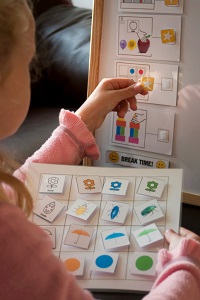 Transitions: What Are They? Why Are They Difficult for Children with Autism?
A transition occurs when there is some sort of change to the parameters of an activity or situation, such as going from one activity to a different activity or changing plans. For example, going from playing computer to doing homework, riding the school bus home, going on vacation, going out for ice cream with dad when you planned on doing that with mom — all represent examples of transition situations.
The problem with transitions is that either something is ending, or something is beginning. Often, this means going from doing something preferred to doing something nonpreferred. Â This can be problematic for just about anyone. For the autistic individual who is very driven by being comfortable, being obligated to stop doing preferred, comfortable activities is even tougher. After all, why would one want to stop playing a favorite video game just to take a bath?
As for all human beings, as well as for individuals on the spectrum, transitions mean uncertainty. Increased uncertainty means increased anxiety. New situations mean different rules and expectations. Rigidness and routine adherence are coping characteristics of autism, and these serve to reduce uncertainty, thereby reducing anxiety. These qualities tend to make transition situations that much more difficult.
Here are a few things you, as a parent, can do to make transitions a little easier for yourself and your child.
Scheduling: Planning Ahead to Reduce Anxiety
Since uncertainty and the anxiety that goes with it is a large part of the problem with transitions, it makes sense that reducing uncertainty might make transitions easier. Scheduling is an easy way of doing this.
Providing your child with a schedule does two things: It allows your child to have a better sense of what is going to happen in the future, and provides a better sense of control over his life (if you make him a part of the scheduling process).
Here are some tips to maximize the effectiveness of your scheduling strategy:
- Schedules should be understandable. Make sure the schedule is written in such a way that the child can read/utilize it. Use pictures instead of words if that will make things more concrete for him/her.
- Schedules need to be seen to be effective. Make sure the schedule is easily available or can be carried by your child so they can refer to it whenever they need to do so.
- Scheduling should be a collaborative activity. Whenever possible, give your child both choices of activities and the order in which they will be done. This increases your child’s sense of control and reduces uncertainty and anxiety.
The “Ease-in†Proactive Warning Strategy
Give your child as much warning as possible about upcoming transitions. Instead of just springing change on your child with little or no warning, give him/her time to mentally process and prepare for the change. Making the sudden mental shift from one activity to another can just be too much for some kids.
Give your child progressive reminders of the upcoming change. So, 10 to 15 minutes before the transition is going to occur, tell your child of what is going to happen, when it is going to happen, and what they need to do. Do this again a few more times, maybe at five minutes and two minutes. You can also do this when the activity itself hasn’t changed but other details of the activity have changed (change in time, who’s going, order of activities, etc.) Giving repeated reminders of what is going to occur beforehand helps reduce uncertainty and alleviate anxiety for your child.
Priming: Setting Expectations ahead of Time
This strategy is simply a variation of the “ease-in†strategy. This is where you review what is going to happen and what the expectations are before going into a given situation. The difference between this and the “ease-in†is that this is done just prior to the transition. It puts your expectations forefront in your child’s mind and makes it more likely that they will remember them. It’s not a guarantee they will follow directions, but it stacks the deck in your favor.
I often use this for more familiar activities. For example, every time I take my kids to the store, I say the following:
“OK kids, we are about to go in the store. Let’s review the rules. We are here to buy [x] and [y]. If you are good, I may get you [z]. Please keep your hands and feet to yourselves. Follow my directions. We will use the bathroom as soon as we get in and that’s it. Finally, if you can’t see me, I can’t see you, so let’s stay together.â€
I’ve said this or something like this before every shopping trip with my kids for years. They can sometimes recite it with me. My kids have learned to stay with me in the store. They don’t ask to go to the bathroom 15 times during a shopping trip. They generally behave well, and earn treats as a result. It was not always so easy.
“Grandma’s Law:†The Power of the Premack Principle
The premack principle, or “grandma’s law,†refers to alternating between nonpreferred and preferred activities. In essence, it’s “if you want dessert, you need to finish your vegetables.†By doing this, you can always give your child something to which to look forward, even when he/she has to do something they don’t like doing. This strategy both reduces uncertainty and increases compliance through increased motivation (people are more willing to do nonpreferred activities if this gets them access to or leads to preferred activities).
Incidentally, premacking works really well with scheduling. Alternating between preferred and non-preferred activities will increase the power and motivation of the schedule. This, in turn, will make it easier for your child to make the transitions.
One Last Piece of Advice
These strategies work really well together. Furthermore, the more consistently they are used the better they work. To get this to happen, it behooves you, as parents, to train the other caregivers in your child’s life as to how best to guide them through transition situations. When the child’s parents, teachers, babysitters, home health therapists, etc., are all doing the same thing, your child is going to experience less uncertainty and, therefore, less stress. This, in turn, should result in fewer negative behaviors and better transitions.
I hope you found this information useful and that it makes life with your child a little easier. As always, remember to breathe… you got this.
Attention deficit hyperactivity (ADHD) manifests with symptoms of inattention, hyperactivity, and impulsivity. In the criminal population, impulsive behavior is a common thread. However, few studies have sought to determine whether ADHD increases the likelihood that a person will engage in criminal behavior. The effects of ADHD are broad, varied, and long term. To accurately predict how ADHD will influence future behavior, one must look at other environmental and familial factors. To this end, Jean-Baptiste Pingault of the Research Unit on Children’s Psychosocial Maladjustment at the University of Montreal and Sainte-Justine Hospital in Canada recently led a longitudinal study involving more than 2,700 individuals.
The participants were first evaluated for ADHD, physical aggression, inattention, and family adversity when they were 6 years old. They were reassessed annually for seven years. When they were 25, criminal records and teacher and parent reports were examined in order to find any association between the measured risk factors and criminal behavior. Pingault discovered that in certain analyses, childhood ADHD was linked to criminal behavior. But in the most sensitive analysis, the association was weak at best. However, childhood physical aggression was directly predictive of later criminal behavior.
The findings revealed that while less than 10% of the total sample exhibited physical aggression in childhood, this small group represented 30% of the criminal activity in adolescence and young adulthood. Further, these same participants were responsible for almost half of the criminal charges on record and nearly 60% of all the violent criminal charges. Family adversity also increased the risk for criminal behavior in the aggressive participants. Pingault believes these results show that not all children with ADHD are at risk of engaging in criminal behavior. But children with aggressive traits, and especially those with ADHD and family adversity, are more vulnerable to criminal activities. Therefore, efforts to reduce crime may not be most effective if focused solely on children and young people with ADHD. “Crime prevention should instead target children with the highest levels of childhood physical aggression and family adversity,†said Pingault.
Reference:
Pingault, J-B., Côté, S.M., Lacourse, E., Galéra, C., Vitaro, F., et al. (2013). Childhood hyperactivity, physical aggression and criminality: A 19-year prospective population-based study. PLoS ONE 8(5): e62594. doi:10.1371/journal.pone.0062594