

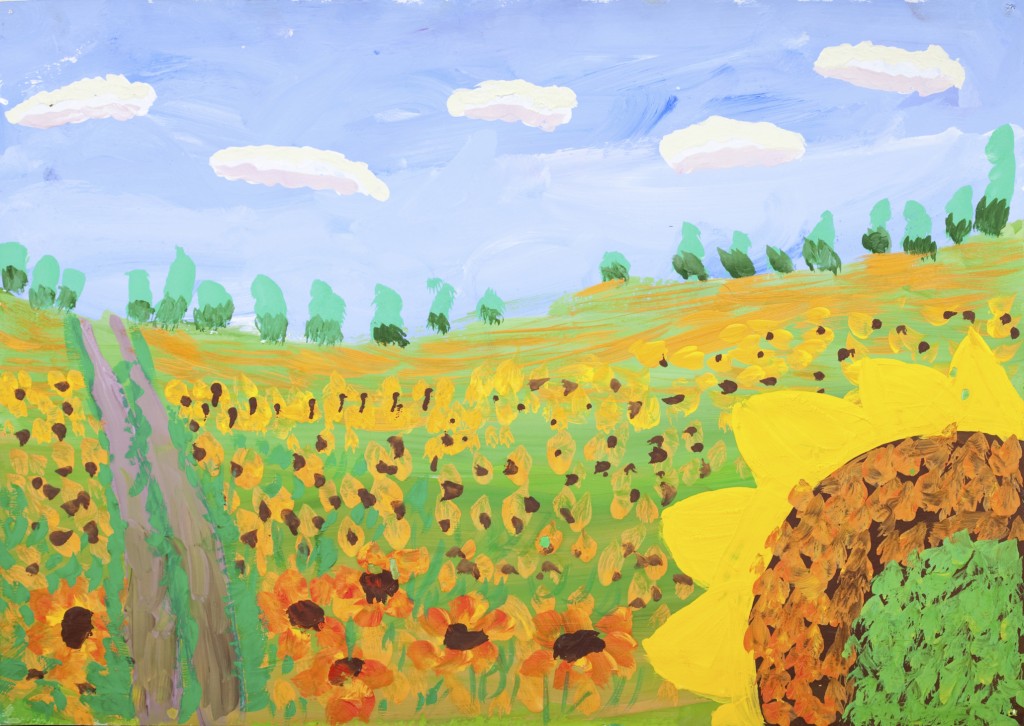
 “It is so difficult to put the complexities of the trauma recovery process into words—artwork does this much better!” – Joan Turkus, M.D.
Posttraumatic stress (PTSD) is a condition that is, unfortunately, quite common in modern society. Statistics show that 70% of adults in the United States have experienced some form of traumatic event at some time in their lives and that up to 20% of this population will go on to develop PTSD. If you have undergone trauma, you are not alone. While many forms of therapy continue to emerge to treat those who have experienced trauma, art therapy is one that has been proven by a number of studies to be effective in dealing with the aftereffects of trauma. Whether you are a survivor of abuse, war, natural disaster, or another traumatic event, art therapy will likely be able to help you heal.
Breaking the Silence
A common occurrence after a person has experienced trauma is a hesitancy or inability to discuss the incident out loud or verbally, even with a professional therapist. Repressing all thoughts and feelings is one reason this can happen. In expressive arts therapy, words are not necessary; much can be achieved without them. Expressive arts therapy moves the client and therapist from the traditional talk therapy roles and into a process that may be less provocative. The medium serves as a bridge between you and the therapist, allowing exploration to occur at a comfortable pace.
Each medium is carefully selected by the therapist to support giving voice to your experience. You don’t have to strain to say the right thing; the medium can speak for you and act as a support for your experience. Some emotions may be better expressed through art than through verbal language anyway. While you may not be able to put what you feel into words, viewing your work in front of you is something else entirely—something that can lead to your healing.
Journey to the Unconscious
Repression, or the brain’s attempt to send difficult thoughts straight into the unconscious, supports clients in handling their trauma. This phenomenon is observed frequently in trauma victims, who claim to have no recollections of the disturbing events. Many experts view art therapy as a way to tap into these unconscious thoughts and memories and bring them to the surface, so that individuals can heal and reconcile them.
You’re probably familiar with the left-brain and right-brain theory, which has been common knowledge among the general public for quite some time now. The act of creative expression utilizes the right-brain hemisphere. What’s interesting is that the right brain is also where visual memories are stored. Many theorize that the two are therefore very closely linked and that this is one of the reasons that art therapy has been so successful at uncovering repressed, unconscious images.
Helping Children Heal
Although art therapy has been proven to be a successful treatment for people of all ages, research shows that it has been particularly effective in the treatment of children. Various developmental theories claim that children do not fully develop verbal skills until adolescence, and it is therefore no surprise that your child may better respond to a creative outlet for self-expression than a chat with a therapist.
Seeking the right treatment for you or your child following a trauma is often frustrating, particularly when you do not know where to turn. While it is important to read about all of your options, if you or your child has experienced any form of trauma, then art therapy may be helpful.
References:
- Art therapy. (2011). Retrieved July 15, 2012, from Trauma Recovery Center: http://www.traumarecoverycenter.com/art_therapy.html
- Art therapy. (n.d.). Retrieved July 15, 2012, from Casa Palmera: http://www.casapalmera.com/articles/art-therapy/
Art therapy what is it? (n.d.). Retrieved July 15, 2012, from CRC Health Group: http://www.crchealth.com/types-of-therapy/what-is-art-therapy/ - Clatch, M. (2012, January 1). Trauma recovery through art and play therapy. Retrieved July 15, 2012, from Courage to Connect Therapeutic Center: http://www.couragetoconnecttherapy.com/trauma-recovery-through-art-and-play-therapy
- Malchiodi, C. (2012, February 22). Art therapy shows promise in treatment of PTSD & trauma. Retrieved July 15, 2012, from Art Therapy: http://www.arttherapyblog.com/ptsd/ptsd-treatment-showing-promise/#more-26
- Malchiodi, C. (2012, March 6). Trauma-informed expressive arts therapy. Retrieved July 15, 2012, from Psychology Today: http://www.psychologytoday.com/blog/the-healing-arts/201203/trauma-informed-expressive-arts-therapy
- Rosenthal, M. (n.d.). PTSD statistics. Retrieved July 15, 2012, from Heal My PTSD: http://healmyptsd.com/education/post-traumatic-stress-disorder-statistics

The preceding article was solely written by the author named above. Any views and opinions expressed are not necessarily shared by GoodTherapy.org. Questions or concerns about the preceding article can be directed to the author or posted as a comment below.


Please fill out all required fields to submit your message.
Invalid Email Address.
Please confirm that you are human.
Leave a Comment
By commenting you acknowledge acceptance of GoodTherapy.org's Terms and Conditions of Use.