 Many years ago, before I had children, I worked with a parent who confided that she would sometimes get so frustrated with her baby that she fantasized about throwing him out the window. I was horrified to hear this, and thought there was something really troubled about this parent—that is, until I had my own (colicky) baby and began to have similar fantasies.
Just to be clear, neither this parent nor I was going to hurt anyone. There is a world of difference between fantasizing and acting. But our feelings of frustration and hate were very real and powerful. And we are not alone. Having had the pleasure of both participating in and leading several parenting support groups over the years, I can tell you that many parents have feelings of hate or other strongly negative feelings toward their kids at one time or another.
So, if hating our children is so ubiquitous, why isn’t it more openly acknowledged?
We have all heard (ad nauseam) about the positive feelings we are supposed to cultivate in ourselves and express toward our children, feelings such as patience, acceptance, unconditional love, pride, etc. Rarely, though, do we hear about the validity of feeling hate or other strongly negative feelings toward our children.
Fortunately, this has shifted somewhat in the past decade or so. The proliferation of parent support groups where the expression of negative feelings is accepted and supported, and the publication of books such as the satirical parenting guides Sh*tty Mom: The Parenting Guide for the Rest of Us by Laurie Kilmartin, et al., Toddlers Are A**holes: It’s not Your Fault by Bunmi Laditan, and the faux children’s book Go the F**k to Sleep by Adam Mansbach and Ricardo Cortes, have helped normalize parents’ negative feelings. Despite these advances, however, a culture of secrecy and shame around hating our kids persists.
[fat_widget_right]
In order to understand why this is, it might be helpful to first look at the question of why we hate our kids.
To some extent, it’s just common sense: spending hours upon hours, days upon days, years upon years taking care of someone who is dependent on you, but often demanding and resentful of you, naturally breeds some negative feelings.
For a more in-depth look at parental hate, Donald Winnicott (a psychoanalyst and coiner of the phrase “the good enough motherâ€) explained it best when he gave the following reasons (among others) as to why a mother might hate her baby (1975; p. 201).
- The baby is a danger to her in pregnancy and in birth.
- The baby is an interference with her private life.
- The baby hurts her nipples even by suckling, bites her, and tries to hurt her in other ways.
- The baby can be ruthless, treats her like scum, an unpaid servant, a slave.
- The baby at first must dominate, life must unfold at the baby’s rate, and all this needs the mother’s continuous and detailed study.
- After an awful morning with her baby, when the mother goes out with him/her, s/he smiles at a stranger who says: “Isn’t s/he sweet?”
And yet, Winnicott goes on, for all the hate the mother may feel toward her baby, she must learn to tolerate this feeling without acting on it or expressing it in its raw, rageful form (p. 202). In short, mothers—and I would add fathers, too—must contain their feelings of rage. Perhaps it is this need for containment and the challenges this task poses that explains why parental hate is still somewhat taboo.
But what does it even mean to contain one’s negative feelings toward one’s child? And why is it so important?
I would argue that containment is achieved when parents are able to accept and integrate into their emotional landscape, at least to some extent, their negative feelings toward their children. Generally, when we fail to accept our negative feelings toward our children, we act in one of two ways: we become rageful or we withdraw emotionally, either of which can be problematic.
When we rage at our children, we give them the message that we are not in control of our negative feelings, that negative feelings are scary and bad, and that any such feelings they have should be expressed in a similar way, or hidden away because they are too scary.
Alternatively, when we cut ourselves off from our negative feelings or hide them away such that we don’t have access to and don’t express them to our children, our children get the message that negative feelings are unacceptable and wrong and that when they feel and/or express negative feelings, they are bad for doing so. Having negative feelings becomes a scary, lonely, and powerless experience.
So, if we aren’t supposed to act on or hide our hateful feelings toward our kids, what the heck do we do with them?
As I suggested above, the first step is to accept them, to not feel ashamed of them, to understand that they are valid. In this way, we come to integrate these feelings into the rest of who we are and what we feel. In practice, this might mean sharing our feelings with other parents, complaining about or talking trash about our kids to others, or maybe speaking with a counselor or therapist—release! Often, this is enough for us to feel sane and in control and to contain our negative feelings in a way our child needs.
Sometimes, though, it is not enough for us to calmly hold our negative feelings without expressing them. Sometimes our children need to feel our hate or negative feelings toward them—not necessarily in their raw form, but in a controlled way.
Why is this? Why do our children ever need to experience our hate toward them?
How Psychoanalysis Can Inform Parenting
Once again, I believe Winnicott explained it best when he stated (1975): “It seems doubtful whether a human child as he develops is capable of tolerating the full extent of his own hate in a sentimental environment. He needs hate to hate.†(p. 202)
Hyman Spotnitz, founder of modern psychoanalysis, a branch of psychoanalysis, elaborated on Winnicott’s thesis when he wrote about the relationship between the therapist and the person in therapy. In psychoanalysis, it is believed that the relationship between the person in therapy and the therapist inherently evokes feelings from the former’s past (and sometimes the therapist’s, too), particularly with regards to the relationship to his or her parents. When evoked in the context of the psychoanalytic relationship, certain powerful feelings can arise in the person toward the therapist and the therapist towards the person in therapy, including feelings of hate.
Although he cautioned against expressing all of one’s feelings toward the people one works with in therapy, Spotnitz warned against the therapist always hiding his negative feelings (2004). He wrote, “To allot too little hate to a patient who needs to learn to experience and sustain it comfortably is unjust. To give him too little feeling because the analyst has too much of it is a technical error. The patient is entitled to whatever feeling—positive or negative—he needs …” (p. 159)
Spotnitz further writes (2004) that the therapist needs to express his hatred in order to help the person in therapy experience and sustain his or her own negative feelings. In this way, the therapist helps the person feel less alone with his or her hate, feel that the therapist is more like him/her, with a more equitable balance of goodness and badness (that is, the person is not all bad for his or her negative feelings, and the therapist not all good for not expressing his/hers).
Spotnitz also suggests (2004) that the sharing of the therapist’s hate can reassure the person in therapy of his or her impact on the therapist, giving the person a sense of control and power. Furthermore, when the therapist expresses negative feelings to the person, the person can see that the therapist’s verbal expression does not necessarily lead to action, the therapist thereby modeling for the person the importance of putting feelings into words rather than acting out.
While I do not advocate being therapists to our children (in fact, I strongly caution against it), I would argue that many of the beliefs of psychoanalysis more generally, and modern psychoanalysis specifically, very much apply to parenting. We need to try to accept and integrate our feelings of hate and other negative feelings toward our children so that we can contain them and, when appropriate, choose to express them to our children in a controlled fashion. In this way, our children can see that we have powerful, negative feelings, too, and that they are not alone with their scary, hateful feelings and are not bad for having them. We let our children know that despite how powerless they feel at times, they do have some power in being able to affect us and stir up powerful feelings in us. We help our children accept and integrate their own hate, so that it becomes one of many feelings they can experience and express, not one that is split off and acted out because of fear or shame.
In short, sometimes our hate can be helpful to our kids.
So, what does “helpful hate” look like in practice?
How Hate Can Be Helpful
To illustrate, I recount a situation with a parent, whom I shall call Angela, who was a member of one of my parenting groups.
Angela was a parent of two—a 6-year-old girl, whom I will call Josephine, and a 3-year-old boy whom I will call Sam. Josephine had been a very easy baby and toddler; she had a calm temperament and was well-behaved. Angela felt confident and competent in her parenting of Josephine.
It was therefore a bit of a surprise and disappointment to Angela when Sam was born and turned out to be a very difficult baby and toddler. Much more physically developed than verbal, Sam would get frustrated when he didn’t get his way and couldn’t express himself, and would often hit Angela, quite hard, to express his frustration. Angela would become enraged and scream at Sam when he hit her. Sam, in turn, became very scared and would start sobbing inconsolably, at which point Angela would feel so guilty that she would apologize profusely and try to comfort Sam, to no avail. Unfortunately, this became a cycle, with Angela and Sam clearly both very upset about what was happening between them, but with the hitting and screaming continuing.
As parents, when we learn how to do these things, we become more comfortable with who we are and what we feel, and can therefore be more in control and more deliberate in our parenting choices. And all this helps us be the best parents we can be, no matter what we are feeling toward our children.
When Angela spoke in the parenting group about this dynamic, she expressed deep shame about her rage and her screaming and the cycle in which she and Sam were engaged. She so desperately wanted to be in control and to figure out a way to break the cycle.
After several weeks of discussing her predicament, one of the other members of the group blurted out, “Sam’s a terror! Of course you want to scream at him! It’s a miracle you don’t hit him back!” Angela looked stunned, but then burst out laughing, as did the rest of the group.
It seemed that something had been liberated in Angela. She had finally been given permission to accept her strongly negative feelings toward Sam. Little by little, Angela was able to discuss and accept her more negative feelings—her disappointment that Sam wasn’t easier like his sister, her anger at Sam for leading her to feel like an inadequate parent, and much more.
Over time, these feelings stopped being so scary and shameful to Angela. As Angela became more accepting of her negative feelings, her rage began to dissipate, and when Sam hit her, she often felt “simply†angry rather than enraged. Angela began to feel more in control of her feelings and more able to focus on what to do with Sam in a less reactive, guilty way.
Over time, Angela’s yelling at Sam began to decrease. Rather, when Sam hit her, Angela would firmly and somewhat angrily tell Sam to stop, that she knew he was mad but that hitting was not OK, that if he was mad, he could yell “No!” or “I’m mad!†She would then send Sam to his room for a time-out.
It seemed to have the desired effect. Over time, Sam’s hitting greatly decreased and his use of the words “no!†and “mad!†greatly increased. It would seem that, for both Sam and Angela, negative feelings had become more acceptable, more integrated parts of who they were and how they interacted with each other.
Although it is impossible to know what Sam’s subjective experience of all this was or even to be sure what aspect of Angela’s approach was effective, I would speculate that because of the changes in Angela’s feelings and actions, she was able to accomplish at least some of the following:
- Help Sam feel that his negative feelings had an impact on Angela but were not bad or overwhelming.
- Set the limit, “Hitting is not OK; you need to go to your room,” so that Sam felt his anger was being contained, which helped him feel safe.
- Give Sam alternative forms of expression, i.e. words, to teach Sam how to express his strong feelings rather than act out on them.
Of course, there are times when this type of approach doesn’t work for a variety of reasons. Hey, nothing works all the time in parenting. We are human; we lose control; our kids lose control. And certainly, many parents are perfectly capable of handling their hatred and other negative feelings without the help of psychoanalysis.
Nonetheless, what I think is unique about psychoanalysis and what it can contribute to parenting is its ability to help people learn about and accept all their feelings, both positive and negative, and to show people what to do with their feelings (contain, express, etc.), particularly the more difficult ones such as hate.
As parents, when we learn how to do these things, we become more comfortable with who we are and what we feel, and can therefore be more in control and more deliberate in our parenting choices. And all this helps us be the best parents we can be, no matter what we are feeling toward our children.
References:
- Kilmartin, L., Moline, K., Ybarbo, A., & Zoellner, Mary Ann. (2012). Sh*tty Mom: The Parenting Guide for the Rest of Us. Harry Abrams.
- Latidan, B. (2015). Toddlers Are A**holes: It’s not Your Fault. Workman Publishing Company.
- Mansbach, A., & Cortes, R. (2011). Go the F**k to Sleep. Akashic Books.
- Spotnitz, H. (2004). Modern Psychoanalysis of the Schizophrenic Patient. YBK Publishers.
- Winnicott, D.W. (1975). Hate in the Countertransference. Through Pediatrics to Psychoanalysis, pp. 194-203. New York: Basic Books.
 At the beginning of therapy, many people are curious about what they need to do to make therapy work for them. They know that they will have to work in therapy to make it effective, but they often don’t know what that entails. Unfortunately, the unknowns of therapy cause some to feel that they’re just wandering and not making progress, or it causes them to leave therapy before they get to experience all the wonderful benefits. On a different end of the spectrum, these circumstances can also cause a person to stay in therapy too long and still not reap the rewards of good psychotherapy.
Getting the most out of therapy requires an alternation of spontaneity and focused reflection. It’s important to let your feelings and thoughts flow freely, but it’s also important to slow down, step back, and reflect on what those thoughts and feelings tell you. There are many ways and many areas of your own self-exploration in which you can practice this. While the content of your therapy sessions will be unique, I’d like to offer some additional guidance I’ve picked up from people who seem to get a great deal out of their therapy sessions:
[fat_widget_right]
- Bring all of the different parts of your personality into your session. There may be a frightened and vulnerable child who needs to come in and cry, a micromanager who wants to tell the therapist what to do, a demon filled with hate, or an angel too sensitive for the real world. We all have many different parts to our personalities; some we’d like to hide, and some that are the only parts we’d like to show. Notice what you’d like to leave at the door and instead bring it in, either by showing it to your therapist or by telling him or her about it. Then, reflect on why you feel you’ve needed to deny this part, and what it may have to offer you if it could be included mindfully.
- Bring all of your emotions into your sessions. Your tears, your anger, your fear, your shame, and your delight—bring them all. Notice which ones you try to avoid, and welcome them all in as much as possible. Be willing to step back, contain them, and be curious about them without letting your emotions get out of control. In therapy, we exercise the capacity to have an emotion without it having us.
- Try to keep the focus on yourself. It certainly feels good to be able to blow off steam about what others have done wrong. A little venting can go a long way, and your therapist’s empathy, at this point, is indispensable. Eventually, though, you’ll need to step back and ask how you can think about the situation differently and how you can respond to it differently. When you focus within, you’ll find a lot of resources to make the changes you want and be much more empowered to make them.
- Forge an authentic connection with your therapist. Research tells us that the connection between a Please don’t feel you have use all of these suggestions, or that these are rigid rules that you must follow. It may take time to develop the ability to use these, and that’s OK.therapist and a person in therapy is profoundly important for change. But, as with all relationships, a good therapeutic relationship is made rather than simply found. To accomplish this, be direct with your therapist.No therapist is perfect. What is your therapist doing that works and doesn’t work? Is he or she leaving things out that you had hoped would be part of your work together? Do you find him or her cold? Intrusive? Not challenging enough? Too challenging? Do you worry that you like the therapist too much or that you depend on him or her too much? Say so.This sort of direct communication not only helps your therapist help you, it also helps you get comfortable with parts of yourself that you usually hide. A core principle of therapy is that it’s the relationship that heals. But you can’t just show up; you need to open up, too.
- Be very curious about why you are the way you are, and don’t judge yourself for what you find out. We’ve all adopted strategies for getting along in life; some help and some hinder. What are your strategies? Why have you developed them, and what do you get out of them? Some people, for instance, realize that they amplify their anxiety in order to get help from others because that’s the only way they were heard when they were young. Once you identify your strategy, don’t judge it. Have compassion for yourself. Self-acceptance is indispensable for therapeutic progress.
- Take responsibility for your behavior, but not for things that are out of your control. There is a huge price to pay for imagining that you can control things you can’t. Depression and anxiety are two mental health conditions that often arise from this dilemma. On the other hand, if you spend your therapy sessions blaming other people for how you live now, your progress will be slow to nonexistent.
- Use your sessions to identify themes and patterns in your life. Therapy is most effective when we connect the dots between events and understand how our personalities and our responses affect our well-being. Search for a deeper understanding of how you operate in different circumstances and it will serve you once you stop attending sessions and navigate the world on your own. Your therapist will help you recognize themes and patterns that underlie the events you discuss in session, but you don’t need to wait for your therapist to do this.
- Continue your work outside of session. Once you’ve made progress in some of these areas, it’s time to take the show on the road and apply what you’ve learned in therapy to your world. This can take the form of specific assignments you want to take on, such as going to the admissions counselor at a community college to find out what you need to do to start a degree. Or it can take the form of more general intentions about how you want to behave going forward, such as an intention to not avoid situations that make you anxious. Also, meditation, exercise, support groups, community, and creative work can all help you to actualize the change you’ve been discussing in your sessions.
- Use your challenges—even the small ones—as opportunities for growth. Once you know what your triggers are, welcome these situations as opportunities to respond differently. This is an attitude that often develops without conscious effort in therapy as we bring in the most challenging situations from our lives each week. But if you can begin to do this in a more conscious way, your difficulties will be less painful, and you are more likely to grow as a result of them.
Use of even a few of these points can help you not only overcome symptoms, but it can also help you develop a fuller, more satisfying life. Please don’t feel you have use all of these suggestions, or that these are rigid rules that you must follow. It may take time to develop the ability to use these, and that’s OK. It is the exercise of them that makes therapy so potentially powerful. Many people have entered therapy to fix a specific problem and leave treatment with a more balanced personality and more fulfilling approach to life. If you are using these suggestions, rest assured that your work in therapy will bear fruit.
I’m always curious as to what others have done to make their therapy effective. Please leave a comment and let me and other readers know how you get the most out of your therapy.
 Professor Martin S. Bergmann died January 22, 2014, at a little less than 101 years old. In style, he was the quintessential European gentleman of a certain age and class. Although his reputation made him seem forbidding, he was in fact charming, humorous, flirtatious, and even a bit of a tease sometimes. He was kind, generous to deserving students, and compassionate in his understanding of the human psyche.
When he was still in his eighties, I decided that I wanted to study with him; after all, he embodied the history of the development of psychoanalysis. Who better to study with than someone who had lived it?
Professor Bergmann was a master teacher and analyst, famous for his classes in the New York University postdoctoral program in psychotherapy and psychoanalysis, at the National Psychological Association for Psychoanalysis, my alma mater, for his many books, for his presentations at countless conferences, and for his private seminars, one of which I hoped to join.
He was old school and highly cultured. I wrote a formal letter asking to be admitted to one of his classes, telling him about some of our mutual interests—the Holocaust, psychoanalytic theory, best practices for patient treatment, and his book about Western religion, which was an important reference in my doctoral dissertation. We also knew some of the same people, and I had the necessary references, so I earned a place at his seminar table, which I prized.
I was invited to join the Thursday group, composed of seven or eight mature men and women, although we were all youngsters to Martin. The room where we gathered to study together was, like him, elegant—beautiful furniture, famous works of art, Oriental rugs, luxurious, all framed by stunning views of Central Park. The conversations were as rich as the surroundings, and I saved my notes—two manuscript-sized boxes worth, a trove of explanations and ideas for possible future research.
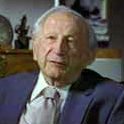
Bergmann’s teaching methods were clear and simple, well grounded in theory, and characterized by his open-mindedness, excitement about learning, and his questioning attitude. He was never satisfied with anyone’s easy answers, including his own, and encouraged us all to press on until we reached the bedrock of our understanding. His persistence was enlivened by his use of metaphor, his playful mind, his courtliness, and the twinkle in his eyes. The Bergmann seminars were electrifying.
He wrote countless articles and  books, including Generations of the Holocaust, The Evolution of Psychoanalytic Technique, The Anatomy of Loving, In the Shadow of Moloch: The Sacrifice of Children and Its Impact on Western Religions, and (with son Michael Bergmann) What Silent Love Has Writ: A Psychoanalytic Exploration of Shakespeare’s Sonnets. His last book, published in 2013, is The Unconscious in Shakespeare’s Plays. Martin loved Shakespeare and often referred to his writings to elucidate psychoanalytic theory. Studying psychoanalysis with Martin was like taking a seminar in art, music, and literature.
Bergmann edited the classic psychoanalytic texts, Generations of the Holocaust (with Milton E. Jucovy), The Hartmann Era in Psychoanalysis, and Understanding Dissidence and Controversy in the History of Psychoanalysis, which received the Gradiva Award. He was honored with the Sigourney Award for outstanding contributions to psychoanalysis and the Distinguished Psychoanalytic Educator Award.
He considered the development of what he called the “psychoanalytic blackboard†his most important contribution to teaching psychoanalysis. The blackboard was a translation of a person’s narrative about his or her life. I will let Martin explain in his own words, in a speech he delivered last year at his 100th birthday party, hosted by NPAP.
To various degrees, most patients are willing to tell their life stories. The question is how to translate what we hear into an analytic relationship, and here many treatments fail. I coined the term active listening, which translates the story of the patient into a workable “psychoanalytic blackboard†that consists of a series of abstractions that we make out of the patient’s story. In our mind we then compare what we have heard with another fiction: the normal person who encountered no obstacles and no traumatic experiences in her or his childhood. This imagined comparison tells me what was less than optimal in my patient’s development and therefore how to proceed. …
Teaching psychoanalysis, working with patients, and writing and presenting at conferences was not enough, however—Martin liked trying new things, and he took a turn at acting. He appeared in three movies: Schindler’s List, Crimes and Misdemeanors, and The Century of the Self.
Most of all, Martin Bergmann loved working as a psychoanalyst. He concluded his birthday speech as follows:
I remain thankful to psychoanalysis for protecting me from an early retirement and the swimming pools of Florida, and for enabling me to still work and teach at the age of 100 and to still make discoveries and write. I have been told more than once that I had a love affair with psychoanalysis, and this may explain why, as the lover of psychoanalysis, I find it exhilarating to be an analyst.
His exhilaration, compassion, elegance, and intelligence enriched his many students and patients, who miss him. His life will be celebrated at a memorial to be held in the spring.