 I decided to dedicate myself to investigating and writing about the experience of body in transgender people. Though I am by no means an “expert” in working with this population, I have learned significantly from people I have worked with who identified themselves as transgender. I set out to organize my observations and insights by grounding them in current research, to offer something of use to the reader that is legitimized by work in the field. It struck me that in looking at body-appearance satisfaction we could learn a lot from people who experience being born with, and living with, a body that they experience as opposite of what they were suppose to have.
What is the nature of the relationship to the body for transgender people? How do they value their body? How do they take care of it, take pleasure in it? How do they deal with other people’s perceptions versus what they see or what they wish they could see? Does that change if they are able to change their body to look like what they believe they were supposed to have? What I was to discover was a dearth of research and a complete lack of theory or even sufficient conversation on the topic. There was certainly almost nothing scientific or academic of any use to working with clients. So here are my truncated thoughts combined with what I learned in my search for information on a very complicated subject.
For those new to this area, know that for transgender people, the desired body isn’t a thought, or a feeling, or even a drive. History has shown that the experience is relatively unchangeable. I would describe it as an experience of persistent identity messages incongruent with the physical body. There is a “hardwired” nature to this lived experience, though science hasn’t found the neural connections yet. Despite abusive efforts to create aversion in people who feel they are in the wrong body, to force them to stop thinking of it and stop expressing it (society can’t handle ambiguity or non-conformity, apparently), transgender people don’t stop being transgender.
[fat_widget_right]For most documented cases, it has proven to be a life-long struggle between the inner sense of self and the physical, external self. It has also, for most, been a struggle between expressing the true self and repressing it in order to earn or keep acceptance and belonging in relationships and in society in general. The extent that people (often rightfully) fear societal reactions to their true identity is directly related to how much psychological distress they suffer.
Interestingly, to the transgender child, there is no incongruence or distress about the body until they are confronted with the gender that is socially assigned according to the worlds’ image of them. They are often shamed, ridiculed, and otherwise discouraged from expressing what they consider to be their true selves, from an early age. You don’t have to be a therapist to think about the impact of such conditions of worth on the development of self-esteem. Indeed, transgender people have the highest rate of suicide.
There is some published anecdotal evidence that children who are allowed to explore their gender-related interests and self-expressions without external pressure to conform are better adjusted. There is also some research that suggests that trans people who have the resources and support to transition—and who believe they will be able to “pass” as the desired, chosen gender—have better mental and physical health outcomes. Also, while trans people have been shown to be at greater risk for developing eating disorders due to body-image dissatisfaction, depressive symptoms, and low self-esteem—they have also been shown to have reduced risk of these problems after gender-confirmatory surgery.
How do we begin to support these people or even understand their struggle and offer them hope? What is our role as therapists or friends in supporting transgender people? We know that body image issues are a problem for women who feel the pressure to conform to societal ideals and this can result in negative self-perception and negative health outcomes. In clinical studies, trans people have been described as being obsessed with the aesthetics of outward appearance. It makes sense that a trans person, having to live with a body that looks nothing like what they want and one that is often in complete opposition to social ideals for the gender they feel they are, would have even worse self-perception and greater negative health outcomes. So how do we help?
I believe in the fundamental healing value of acceptance and understanding of human experience. In my role as a therapist, I must be a non-judgmental mirror for the people I work with. In asking “what” rather than “why” questions, like at the outset of this article—I can get closer to an understanding that can allow me to mirror a person’s inner view of themselves. In that way I can strengthen the sense of self and self-worth of a person. I work to emphasize the importance of the functions and joys of the body, not just its appearance.
I share the idea that self-esteem comes from dedication to loving self-care and encourage habits that lead to better relationship to the body. This can be life enhancing for a person who has had very little acceptance and hence suffers low self-worth. Indeed most trans people I have met tend to focus on the well-being of everyone other then themselves. However, to truly support trans people in healing their relationship to the body, I must also educate myself on their unique experiences and needs, whether they are in transition or not. I must also be political in joining the struggle for their rights, including educating others. I must be an advocate that supports their rights to dignity and well-being, if that involves gender-confirmatory surgery or other procedures or services. Hopefully this article is a drop in the bucket towards that monumental task.
As much as indulging in “retail therapy” can trigger a short-term giddy feeling, new research shows that some products actually work in the opposite manner: we buy them because they make us feel bad. A new study finds that beauty product marketing, in particular, makes female shoppers feel bad about their appearance by suggesting to women that without the product, they are not as attractive as they should be. The unrealistic appearance of air-brushed models has already been shown to have a negative affect on female self-esteem. But this study found that even packaging and advertisements without humans in the imagery had a negative psychological impact on female viewers.
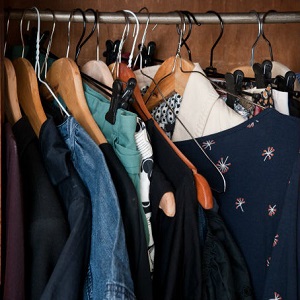 While working in my office in the summer, on a hot day, I had cause to consider the clothing I was wearing. My office is on the second floor, and by mid-afternoon the sun had moved over to my side of the building. Even with the AC blasting, it gets swelteringly hot.
I wear sleeveless tops and skirts or capri pants, and sandals. This isn’t so for everyone. I know lots of people who do not like the heat. I find that people who come to see me for help with eating disorders have their own unique set of concerns, activated by the hot weather. I know that folks who have larger bodies, or are obese, often will feel hotter, simply because the adipose tissue provides insulation, in much the same way that very thin people or people with anorexia are more sensitive to the cold.
And I’ll digress here a moment, and say that when I make reference to people with larger-bodies, I strive to use language that isn’t charged with judgment. To refer to a person as fat is usually considered an epithet rather than a statement of fact. Webster’s Dictionary defines fat, when used as an adjective and applied to a person, as “having large amounts of excess flesh.” To people who experience eating disorders, it goes beyond that, to a sense of being unlovable, unacceptable, unwanted, and, ultimately, in danger of being utterly alone.
Which brings me back to hot weather and clothing: some of the large-bodied people I work with come to sessions in jeans in 95°F weather. This looks horribly uncomfortable. There was a time when I was in the throes of a binge eating issue. My body was much larger than it is now. The inseams of my jeans would develop holes where my thighs rubbed together. The waistbands and snaps pressed painfully into the flesh of my belly. I hated cool weather because it meant I couldn’t wear light, loose clothing. So when I sit in my office across from some one whose body has large amounts of “flesh” and see them in jeans, I can’t imagine that they are comfortable. When appropriate, I ask why they are dressed so heavily in such heat.
People give varying answers. Some have to do with their dislike of shopping due to how disheartening it can be to find plus-sized clothing in stores. Others can’t stand dealing with the difficulty of finding appropriately-sized clothes. One such person I work with wears plus-sized petites, another wears a much smaller size on top than on the bottom. Clothes shopping makes them feel at odds with what is “normal.”
Shopping for clothing brings up shame some people spend lots of energy trying to ignore. Webster’s defines shame as, “a painful feeling of humiliation or distress caused by the consciousness of wrong or foolish behavior,” and, “a loss of respect or esteem; dishonor.” In this case, the “wrong or foolish behavior,” as decided by social norms, is the size and shape of their bodies.
This body-shame isn’t limited to people with a large body in our society. I often hear complaints about finding satisfactory clothing from people who have bulimia or anorexia. They reportedly try on several outfits before they can leave the house, because everything makes them “look fat.”
People with anorexia routinely say that they can’t stand the feel of clothing that lays against the skin of their hips and legs, so they buy pants that fit loosely and might wear a belt to hold them up. Conversely, I know people with bulimia who tell me that wearing baggy clothes makes them look as big as the clothing, so they only feel comfortable in clothing that is form-fitting.
Body-shame is commonly focused on specific regions of the body. I’ve had people tell me, “I don’t show my legs,” or “Nobody sees my arms.” One individual with life-threatening anorexia told me that no matter how much weight she loses, her thighs are too big. Another said that, although everyone tells her she is emaciated, she has “rolls” on her stomach and waist that are “disgusting.” When she and I discussed this further, I discovered that these were the skin folds that appeared when she sat down. Yet another, whose anorexia manifests most prominently in compulsive exercise, is quite muscular with a very low body fat percentage. She said she sits up very straight because she is so self-conscious about the size of her stomach.
Clothing and vanity are both normal parts of human life. But there’s a fine line between “normal” (there’s that word again) attentiveness to appearance, and serious obsession or shame. For a person who experiences shame, their body image is inseparable from his or her character and worth.
Consequently, clothing choices aren’t based on physical comfort but, rather, psychological comfort: the comfort that comes from knowing their legs or arms or stomach are covered, even if it means wearing jeans in 95°F weather. I’ve been encouraging the people who are larger-bodied to go shopping for light, pretty summer clothing. My hope for everyone I work with, is that they choose clothing in the spirit of physical comfort and body acceptance.
 Long after eating patterns and weight have stabilized, many women with an eating-disorder continue to struggle with issues of body image. In fact, body dissatisfaction has become so prevalent, many authors propose it has sadly become simply part of the female experience. Body dissatisfaction is believed to be one of the highest predictors in adolescent girls who go on to develop an eating disorder.
The National Eating Disorders Association (NEDA) defines negative body image as:
[fat_widget_right]
- A distorted perception of your shape—you perceive parts of your body unlike they really are
- You are convinced that only other people are attractive and that your body size or shape is a sign of personal failure
- You feel ashamed, self-conscious, and anxious about your body
- You feel uncomfortable or awkward in your body
I am a psychotherapist who specializes in the treatment of adolescents and women with eating disorders. For several years I have been leading body-image therapy groups in my outpatient practice. What follows are some of the group topics we cover as well as resources and activities I have found useful for helping people with their body image.
Generally, the group therapy series is focused on improving body image and runs for eight to ten sessions, as outlined below:
Session 1: My Body Relationship.
How do I feel about my body? To introduce this topic, group members participate in an art activity exploring how they feel about different parts of their bodies—from head to toenails. When asked to voice to the group the body part they like most, frequently the women will speak about a part that allows them to pleasantly experience some aspect of life, for example: “My hands—because I love to play the piano.” This activity allows members to recognize that some parts of their body are just fine, in their eyes. It’s not all body hatred. Great! We can build on this.
Leslea Newman’s book SomeBody to Love: A Guide to Loving the Body You Have (1991) has journaling exercises to help people creatively work toward repairing a broken relationship with the body. She recommends writing love letters, having dialogues with body parts, speaking compliments into the mirror, and more.
Session 2: Create a Vision.
How do I want to feel inside this body? If I felt this way, how would I move differently, how would I interact with others differently, what would this free me to do and experience? Using guided visualization, to step into and experience this vision, allows each person to plant and hold in their awareness a goal to guide them in the work ahead.
Session 3: Contributing Factors.
How did I come to define beauty? What experiences and messages contributed to my personal body opinions? Using a time-line, each group member looks at significant life events and paralleling patterns of weight and feelings about the body. The women in group often speak of having felt “different” from their peers. They feel dissimilar in their relationships with one another and with food. They also feel ambivalence about their developing bodies. We take a critical look at the media and the conflicting messages received from advertising. NEDA offers a number of handouts useful in facilitating this discussion.
Session 4: Body Talk.
What’s being said inside my head? How we talk to ourselves and what is said has a powerful effect on how we feel. Thomas Cash, PhD, in The Body Image Workbook: An eight-Step Program for Learning to Like Your Looks (2008) tells us this talk is often self-defeating, derogatory, and distorted rather than realistic. His book and audio program provide people with specific steps and tools to help them become aware of their negative body talk and begin to transform these messages.
Session 5: Body as Camouflage.
What do I hide with my body? To explore this dynamic, each group member creates a collage with magazine clippings portraying the “inside me/outside me.” People have used this activity to explore their beliefs about what others assume and expect of them, the image they try to portray, and then what they really feel like on the inside. We explore how they have used their bodies to protect or distract them from certain feelings and what it has been like to live with such a dichotomy.
Session 6: Body as a Vehicle.
What can I do and experience, thanks to my body? Sondra Kronberg, RD, writes, “True body power is the power of the body to accomplish tasks and be the vehicle through which to experience life” (Fall, 2002). As a group, we meet for a nature walk, adapted from the chapter called “Sensual Walk,” in Working with Groups to Explore Food & Body Connections: Eating Issues, Body Image, Size Acceptance, Self-Care (1996). In silence, we mindfully pay attention to the titillation of all of the senses: “Notice the smell of air, the feel of the elements, the textures beneath your feet, the views along your route, the taste on your lips, the ever-changing sounds in the background or foreground” (1996). In processing the experience, we talk about beginning a new relationship with our bodies by celebrating all the amazing things our bodies do for us and allow us to experience. Using Thomas Cash’s chapter called “Adult Pleasant Activities List” (1996), members are asked to mindfully and joyfully experience something from the list each day for the next week.
Session 7: Body as Container.
What is this spirit, this essence-of-me that lives inside my body? Kronberg goes on to write about the importance of helping our clients find their “real beauty,” that is the beauty “stored inside of them” (2002, Fall). During this session, group members create a word and picture collage of favorite things, causes they passionately believe in, relationships that matter most, compliments received, qualities of character they admire in themselves. This activity is often a favorite and reminds participants that they are so much more than the size of their clothes.
Session 8: Body as a Rich Source of Wisdom.
What can I learn if I slow down and listen to my body? This session opens with a deep-breathing exercise to practice being still, quiet, and focused. We then explore “gut instinct”—where and how we experience it in our bodies and how we have used this information to reliably guide us. Members are also invited to explore feeling states in the same way. Using a body outline on paper, members draw where in their bodies they feel anger, sadness, or loneliness, noting the size, color, and shape of each, and what distinguishes one from the other.
Session 9: Body Respect.
I can honor and take care of my body. This is a brainstorming session of all the things we can do to take care of and nurture our physical selves. Belleruth Naparestek’s affirmations are used from A Meditation for Relaxation and Wellness.
The following is excerpted from her beautiful work:
- I thank my body for all it has done for me in the past and all it will do for me in the future.
- I am learning to trust my body and to make good use of the information it offers me.
- More and more I will save my energy for what truly matters to me.
- I am aware that with each breath in I am sending precious oxygen and rich nutrients to the places in my body that need them.
- I welcome my ability to listen to the wisdom of my body and sense what it needs—telling me to rest, pace my energy, and take gentle good care of myself.
- More and more I can understand that my body is my ally, my oldest friend, and steadiest companion.
Body image work is a critical step in full recovery from an eating disorder.
Recommended Reading:
- The Body Image Workbook by Thomas Cash, PhD
- The Body Myth by Margo Maine, PhD & Joe Kelly
- Eating in the Light of the Moon by Anita Johnston, PhD
- A Meditation for Relaxation & Wellness (CD) by Belleruth Naparstek
- SomeBody to Love by Leslea Newman
- Transforming Body Image: Learning to Love the Body You Have by Marcia G. Hutchinson, EdD
- Working with Groups to Explore Food & Body Connections by S. Christian, Editor
References:
- Kronberg, Sondra. (2002, Fall). Nourishing a Healthy Body Image: A Nutritionist’s Perspective. Perspective.
- Levine, Paula. (1993). The Meaning of the 3D’s, Eating Disorders & Awareness Prevention. Perspective.
- Naparstek, Belleruth. (2002). A Meditation for Relaxation & Wellness. Akron, OH: Health Journeys.
- Ressler, Adrienne. (2006, May) A Body to Die For: Advanced Training in the Treatment of Eating Disorders & Body Image Disturbance in Women. Perspective.
- Hawkins, Nicole. (2009). Battling Our Bodies: Understanding and Overcoming Negative Body Images. Center for Change. Retrieved from: http://centerforchange.com/content/battling-our-bodies-understanding-and-overcoming-negative-body-images