 The other day I was supposed to meet a dear old friend. The last few times we had plans, she canceled last minute because her mother, now 86, needed something. I understood, of course. This time she didn’t cancel, but she did tell me we’d have to meet for breakfast and it would have to be a quick one because it was her weekend to have her mother at the house and she didn’t want to leave her alone for long. This time, I opened my mouth.
“It seems like you have put your life on hold a lot lately, and your siblings don’t seem to do that. When do you get to have a life?†I must have struck a chord because she burst into tears.
“There just isn’t time for me,†she said.
Sound familiar?
With a growing number of people living longer and more adult children caring for them, this has become an issue of epic proportion. For those who have assumed the major responsibility of caretaking for an elderly parent (or two), their overwhelming needs can become a full-time job. Women especially fall prey to the feeling that they must take care of those around them before tending to their own needs (though more and more men are also facing this dilemma).
[fat_widget_right]
The analogy I like to use—whether in relation to a child, partner, or dependent elder—is the following: when you are flying on a plane, they tell parents to put their oxygen masks on first, and afterward to put on their child’s. The idea being that, when we first take care of ourselves, we can be better caretakers—not negligent, as we may often feel ourselves to be. Sometimes we are so busy “giving†that we don’t even realize we’ve got nothing left to give!
So, what are some basic guidelines for self-care when you are a caretaker?
- Recognize that the more you give, the more you are expected to give. I observe this phenomenon in all aspects of daily life: the person who takes on the lion’s share will be expected to do more and more, while the absentee parties will be not only exempted from expectations, but often excused with understanding for their lack of participation. To combat this, maintain healthy boundaries. This means sometimes saying “no†to taking a loved one to an appointment and “forcing†them to call a less active sibling or friend who they never want to “bother†(though of course they think nothing of “bothering†you!). It also means scheduling your own activities and sometimes expecting that person to work around your schedule. This isn’t mean; it’s establishing that you have a life and your time and energy need to be honored and valued.
- Dependence creates dependence. Encourage your loved one to be engaged in something he or she enjoys. Ideally it would be great to have at least one activity outside the home (community transportation is often available, so you don’t necessarily have to drive). The person can join a community center, take a class, spend time at another sibling’s house for the weekend, etc. This not only frees up your time, but also helps foster your loved one’s independence and happiness, which makes for a much more harmonious interaction with you.
- Keep in mind that this person may live for a long time and you can’t put your life on hold forever. I have a friend who has been retired since age 62 and has postponed her plan to relocate until her mother passes away. She never dreamed her mother would live so long (she’s now 96!), and now she regrets not having relocated herself and her mother years ago. I’m not suggesting you dump your parent so you can go out partying, but rather that you figure in your own needs as much as his or hers as you plan for the long term as well as the minutiae of daily life.
- Get help! Don’t take on everything yourself. I often hear about parents who want only their adult child (usually a female) to deal with their daily needs. But sometimes it is too much. Get a helper, companion, home aide, or something to spread the care around. Many elderly (and chronically ill people) who are fortunate enough to live in their own homes or their children’s can take for granted what goes into this process. You can also find many useful websites and organizations that can support you in being a caretaker. A support group can be a wonderful addition to your self-care routine.
Many, many people are caring for elderly parents, whether in their own homes or supporting them so they can stay in their homes. Know that you are not alone, and that this can be both a wonderful, enriching experience as well as a deeply challenging one. The more you take care of yourself, the more rewarding—and less depleting—it will be.
 This evening my local newspaper contained this sad headline: “Maryland couple found dead at home.” A husband and wife, both aged 72, died in an apparent murder-suicide. The wife reportedly had a stroke a few years ago, and the husband’s health had recently deteriorated as well, according to the story. The article quoted friends of the family who said that while the husband was devoted to his wife, he had become overwhelmed by the demands of caregiving combined with his own health problems.
No matter the circumstances, this is a tragic story. While reading it, I couldn’t help but think about the difficulty faced by so many caregivers with whom I have worked. Each one expressed absolute determination to care for his or her spouse without assistance, believing that no one else could do it as well. The loyalty, patience, and nurturing care demonstrated by these individuals are admirable, perhaps even saintly. But nobody, even the most patient person on earth, is immune from the effects of putting someone else’s needs above one’s own day after day, week after week, month after month.
[fat_widget_right]
According to WebMD, caregiver burnout is defined as “a state of physical and emotional exhaustion” resulting from the one-sided nature of caring for someone who is chronically ill. The person who is sick does not intend to burden his or her caregiver, but the nature of being unable to care for oneself creates that one-sided dynamic. The spouse who is caring for the ill person may be happy to take on the responsibility of feeding, bathing, and taking his or her loved one to appointments, knowing that were the situation reversed, the other person would gladly oblige. Even so, constant caregiving for a chronically ill spouse can disrupt one’s life in multiple ways. Many caregivers are reluctant to reach out for help, which puts them at risk of burnout.
Help is out there! Caregivers do not have to feel alone.
According to HelpGuide.org, here are some of the signs and symptoms of caregiver stress leading to burnout:
- Anxiety, depression, irritability
- Feeling tired
- Trouble sleeping
- Increased health problems of your own
- Difficulty concentrating
- Increased feelings of resentment about caring for your ill loved one
If you feel that you may have some of these symptoms, please don’t wait to ask for help!
Fortunately, if a caregiver begins to experience some of these symptoms, it is not too late to make changes. The following self-care tips, from CareGiver.org, can reduce caregiver stress and lessen the risk for burnout:
- Practice stress-reduction strategies. Examples include taking a yoga class, learning deep-breathing techniques, meditating, praying, or chanting.
- Get plenty of rest.
- Maintain a routine including nutritious meals and a regular bedtime.
- Exercise! Walk, run, swim, stretch, or take a group exercise class at a local gym. Try to get a minimum of 10 minutes of exercise daily.
- Schedule time off from caregiving. Whether you ask for help from a family member, a friend, a neighbor, someone from your religious community, or hire someone from an agency, it is healthy to take a break.
- Ask for help. People who care about you and your loved one are likely to be glad to offer support.
- Reach out for support to help you with your feelings. Talk to your pastor, a trusted friend, or a counselor. Many communities have support groups for caregivers.
- Remember, you must care for yourself in order to care of someone else. There is nothing selfish about caring for your own health.
Your local department of aging/disabilities can guide you to the resources available in your community. It’s important for your chronically ill loved one that you are taking care of yourself while taking care of him or her. You can also find help here. The National Center on Caregiving has numerous outstanding resources to help you.
To find a therapist for help with caregiver issues/stress, click here.
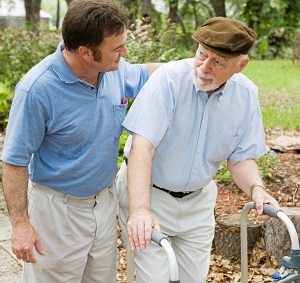 The work of caregivers is difficult, at best. This is particularly true for those who provide care before they start the workday and after they come home in the evening. I am often amazed by the stories I hear from caregivers.
I recently learned something from a group member that I want to pass along to other caregivers. It is so simple that it may seem unlikely to make a difference. But don’t let the simplicity of it fool you—the people in our group totally got it when she talked about it. Had I tried to teach it to them in the language of a therapist, I doubt the result would have been a collective “wow.â€
Managing Resentment and Anger as a Caregiver
The question of how to manage resentment is frequently a theme in our support group. Caregivers grapple with guilt about experiencing resentment—both regarding the unfairness of being thrust into the role of caring for their partner or spouse, and about spending more time as a caregiver and less as a partner/spouse.
Most are clear that the resentment and anger they feel is directed toward the ailment or disability, but we all know how easy it is for our anger and resentment to spill over into other areas or be misdirected. The last thing most caregivers want to do is allow their resentment or anger to taint their relationships with those they care for.
Someone in our group raised this issue again recently: How do we deal with the seething resentment that we feel? How do we prevent this rage from spilling over into our relationships?
It was clear that everyone in the room knew what he was talking about. Everyone responded with the perfunctory nods of agreement and reminders to breathe, be grateful, and hang in there. These are veteran caregivers who already do most of the things recommended for self-care:Â exercising, setting boundaries, eating well, getting as much rest as possible, etc. The urgency of their desire to address this issue was apparent.
How Do We Change Our Feelings?
Luckily, one of the women who had asked the same question in the past spoke up. She shared that she had intuitively discovered something that helped. She talked about how she had automatically shifted her feelings one day while helping with an unpleasant task. This generous soul has granted me permission to share this with you.
What my friend found was that by focusing on the process of what she was doing—by mindfully paying attention to each tiny step in the task at hand—she was able to change her feelings. She inadvertently alleviated the resentment and dread!
She changed her thoughts from, “I hate this; this is horrible. I can’t believe I have to do this every day and night for the rest of my life†to, “Okay, now I need to do this… put this here, then take it over there. Next I do that… yes, like that. Oh, that was much better than last time.â€
As she explained it, my friend was able to “relax her brain, much like releasing a tightened fist.†By relaxing her brain, she was able to release the resentment and dread. She described it as letting go—releasing the breath that she had been holding. And in doing so, she discovered how to give up her resentment and anger.
Attention Is Key
Remember that when you truly focus your attention to the task, the switch to thinking mindfully about your action results in a change in your feelings and behavior. By forcing her attention to the minute processes of her admittedly unpleasant task, my friend also gained control over her emotions. She stopped the negative thoughts. Your mind can only hold one thought at a time. What you choose to think about creates your emotions.
It is your choice. Choose to focus on the process—the actions. That is mindfulness. By changing your focus to each step of the process (whether washing dishes, filing, changing a catheter, or meditating) you are also altering your feelings.
It takes practice. Begin with something easy, like learning to laser focus on your breathing. Feel the air going into your nostrils, your stomach rising, the air moving through your head and into your lungs, and then moving back up and out of your nose.
Next, try mindfully taking a bath or shower. Feel the water on your skin, smell the soap… feel the cloth in your hands and your hands moving over your body. Don’t allow your mind to wander to other things. Keep it contained in the actions and senses.
Finally, try this when doing a difficult task. Make your thoughts about what you are doing step by step. There is no room for thoughts that create dread and resentment.
Try it, and let us know how it works for you!
It sounds like you have been a tremendous source of love, strength, and support for your girlfriend in her battle with depression. That takes incredible patience and compassion, but it can also take a toll on you. In cases of chronic depression, it is very common for partners to begin to feel more like caretakers than anything else. Very often, when one takes on the role of caretaker, it becomes such a consuming task that the caretaker loses touch with himself/herself. It’s a positive sign that you seem to have a solid sense not only of where she is, but also where you are. It also seems like you have come to the realization that this situation is not sustainable and that something must change. So the question, as you insightfully pose, is where do you go from here?
You’ve asked some really important questions about yourself: “Am I codependent?†“What’s my issue?†“What steps can or should I take?†These questions are as important as they are complicated. I strongly encourage you to begin your own therapy. Developing a strong therapeutic relationship with a clinician will afford you a much-needed opportunity to focus on yourself. You’ve managed to take care of your girlfriend and remain connected enough to yourself to come up with these questions. A trusted therapist will help you thoroughly explore these questions, develop insights, and create and implement a plan of action. You might also want to look for a caretakers’ support group. The burden on caretakers is significant, and there is great therapeutic value in realizing you are not alone. You’ve been shouldering a significant burden on your own for years; it sounds like you are ready to let someone help you carry the load.
You mention that your girlfriend’s medication does not seem to be helping her. The specific mention of medication but not therapy makes me wonder whether your girlfriend is in therapy. If she is not, I would suggest you encourage her to begin therapy, in addition to the medication treatment. Medication treats symptoms, but it doesn’t address all of the problems that often underlie depression. In order for her to have a chance at any kind of substantive change and lasting relief, she needs to be working on these issues in therapy. Also, it is very important that a psychiatrist, and not a general practitioner, be managing her medication. Psychiatrists are the experts in the medical treatment of depression, and they will be able to provide better care than a general practitioner.
Also, if her depression has lasted for years with no improvement, it might be time to look at changing the treatment plan. This could mean adding individual and/or group therapy to her treatment regimen, trying a new therapeutic approach, or making a change to her medication. Consider suggesting that she talk about these possibilities with her psychiatrist and therapist (if she has one). If, after years of treatment, she isn’t getting any better, something probably needs to change. Your girlfriend should know that she has the right to be an active participant in her treatment plan and to discuss changes to this plan with her clinicians.
You took a leap when you wrote in with your question. I hope you will take another one and find some support for yourself. This is a painful, complicated issue, and you deserve to have support as you work on figuring out what is best for you.
Respectfully,
Sarah
 Palliative care is designed to provide comfort and peace to individuals facing terminal illness and end-of-life transitions. Caregivers who watch over someone in palliative care often get to spend precious moments with their loved ones in ways that would not be possible in a hospital or nursing setting. Individuals who are dying can benefit from palliative care by having those closest to them with them during their last days allowing for final wishes to be expressed and sentiments to be shared.
When death is sudden and tragic, as with an accident or unexpected illness, caregivers can experience shock and traumatic responses. Prolonged grief (PGD), also known as complicated grief, can occur when symptoms of grief are exacerbated and persist over lengthy periods of time. Experiences such as reliving the death event; being reminded of the death through mental, visual, or auditory stimuli; and even experiencing intrusive thoughts are all symptoms of posttraumatic stress (PTSD), which is not uncommon among bereaved parents and survivors of disasters or abuse.
But until now, few studies have examined whether or not caregivers of individuals who die expectedly are at risk for PTSD. To explore this issue, Christine Sanderson of Cavalry Health Care Sydney in Australia recently interviewed 32 caregivers grieving the loss of a patient who died from ovarian cancer six months prior.
The caregivers’ responses were assessed for signs of grief, emotional reactions to stimuli, language, and trauma response. For the most part, Sanderson found that the caregivers had high levels of resiliency, although some exhibited symptoms of PGD and PTSD. Specifically, trauma symptoms included strong reactions to sounds, smells, and sights that caregivers remembered from the palliative setting and also intrusive thoughts related to the death and the predeath period.
Sanderson believes that palliative care can be a cathartic experience for some, providing time for a dying person to be with family in the last days of their lives. But for some caregivers and loved ones, watching the death of someone close to them, while making no attempt to stop it, can be excruciating and lead to shock and extreme emotional distress.
Because caregivers are at increased risk for negative physical and mental health outcomes when compared to those who are not caregivers, exploration of resiliency or susceptibility after a patient’s death is essential. Sanderson added, “Skillful care of caregivers requires an understanding of the nature of their experiences, if we are to reduce traumatisation of vulnerable individuals.â€
Reference:
Sanderson, Christine, et al. (2013). Signs of post-traumatic stress disorder in caregivers following an expected death: A qualitative study. Palliative Medicine 27.7 (2013): 625-31. ProQuest. Web.
 Traumatic events usually occur without notice and result in people trying to deal with the aftereffects long after the event is over. Recent events, such as the Boston Marathon bombings, bring to light how traumatic events can create effects for long periods of time. Traumatic events can result in the development of posttraumatic stress (PTSD), which is a prevalent and serious mental health issue.
According to the National Institute for Mental Health, 26.2% of the adult American population will meet the criteria for a diagnosis of PTSD at some point in their lifetime. PTSD can severely impact a person’s ability to function in day-to-day life and interactions and relationships with loved ones. In my practice, I have noticed that relationships can become strained or distant, or even end due to the stress caused by PTSD.
Just as it is important for the person who experienced the trauma to address his or her symptoms, it is also important for their loved ones. Loved ones often report feeling helpless in assisting the person with PTSD to feel better. So what can loved ones do to help those who have PTSD in their recovery?
Practice good self-care. When a loved one has been traumatized, the stress can take a toll on that person’s entire support network. Making sure you are practicing good self–care habits such as eating well, getting enough sleep and rest, and continuing to engage in activities you find pleasurable can be very helpful in addressing the stress that can come with a traumatic event.
Offer your support, but don’t push the person affected with PTSD to describe or talk about the event that traumatized them if they do not want to. Many people affected with PTSD do not wish to “relive†the trauma by frequently talking about it or by going into detail. Sometimes well-meaning loved ones will push them to talk about the trauma without realizing that doing so can do more harm than good. Loved ones may feel offended or rejected when the traumatized individual does not want to talk about the incident. Know that this is nothing to personalize. You can be there as a supportive person to listen when they want to talk, without trying to “fix†what they are going through. Simply saying something like, “It sounds like that was really hard†or just letting them know you are happy to be a listener can be validating and can help the person to feel supported as they work through their trauma.
Encourage the person affected with PTSD to seek professional help. PTSD is a serious mental health issue that requires professional assistance to treat and overcome. There are many treatment modalities that have been successful in the treatment of PTSD. It is possible for a person with PTSD to get to the point where the traumatic event has little or no disturbance associated with it. There is much hope for overcoming PTSD, but it is much more likely for someone to overcome PTSD with professional help. Support groups can also be helpful for people suffering from PTSD as it gives them additional care in their recovery.
Get support and treatment for yourself. Having someone you love go through a traumatic event and supporting him or her as they recover can result in secondary trauma. Secondary trauma is defined by Figley (1995) as “the stress resulting from helping or wanting to help a traumatized or suffering person.†The signs of secondary trauma can include similar symptoms to PTSD, including (but not limited to) having overwhelming emotions, exhaustion, having thoughts that are intrusive and disturbing, difficulty concentrating, nightmares, and detachment from others. These are symptoms a therapist and support group can help you overcome. Be aware of your own emotions and mental health in order to identify the signs early.
Above all, don’t go through such a difficult time alone. There is support and an abundance of resources available to help people with PTSD and their caregivers overcome trauma and secondary trauma.
References:
- Figley, C.R. (Ed.) (1995). Compassion fatigue: Secondary traumatic stress disorders from treating the traumatized. New York: Brunner/Mazel, p.7.
- National Institute of Mental Health. Post-traumatic stress disorder among adults. NIMH. Retrieved May 28, 2013. From nimh.nih.gov/statistics/1ad_ptsd_adult.shtml.
 With the magnitude of demands placed on special needs families, siblings of special needs children can often feel overlooked and in need of emotional support. A “special needs child†is defined as having a medical, developmental, or neurological challenges, or another type of disability which impacts the entire family system, thereby requiring special supports (i.e. medical, educational, etc.). In many families where such challenges are present, it’s inevitable that the added stress impacts not only parents and the child in question, but also typically developing siblings. In fact, rates of depression, anxiety, and chronic stress are higher for the special needs family. But with adequate supports, such impediments can be reduced. Special needs disabilities can run the gamut from severely disabling conditions, such as cerebral palsy, in which a child is wheelchair bound and cannot speak, to a high-functioning child with an “invisible†disability, such as attention deficit (ADHD) or dyslexia.
Special needs siblings may feel the following:
- guilt about being a “typically†developing youngster;
- embarrassment about a sibling’s behavior in front of friends;
- frustration that the sibling may not be able to relate or play at the same level;
- worries about the health and survival of the sibling, and the impact of responsibility placed upon the sibling once parents become elderly;
- resentment that attention/services are diverted to the special needs sibling;
- loneliness, or a feeling that peers may not understand what they are going through;
- parentification in caretaking role of sibling, should parents not have adequate support/resources or emotional attunement to the sibling. It would make sense that special needs siblings might be at higher risk for depression and anxiety if they do not have support and resources available.
Your child may benefit from a referral to a competent and compassionate psychotherapist who specializes in special needs family therapy. It is of vital importance to special needs parents is to look for the following symptoms in siblings of special needs children:
- feelings of hopelessness, marked depressed or anxious mood for more days than not, isolation and withdrawal from peers, or a drop in grades or absence from school;
- marked increase in irritability;
- insomnia, appetite changes, panic attacks, and any clear behavioral/mood change that is in sharp contrast to the child’s typical baseline mood/behavior.
Likewise, if any parent/caregiver exhibits the above symptoms, I recommend seeing a family psychotherapist as soon as possible.
There are also many benefits and unique experiences for siblings of special needs children, however. They have the opportunity to learn caregiving and sensitivity that many of their peers may not experience.
Special needs siblings may also feel the following:
- higher level of maturity than peers, given the opportunities to practice empathy and patience with the special needs sibling;
- ability to embrace cultural diversity as relates to special needs and families that are not “typicalâ€;
- protectiveness of the sibling, should he or she be in a position of bullying;
- pride in milestones accomplished by the special needs sibling;
- tolerance of people’s differences;
- increased emotional intelligence and insight to the human condition;
- opportunities to be involved in a strong family unit that focuses time and attention on all family members;
- loyalty to and cohesiveness with the family unit;
- gratitude for health and vitality;
- appreciation for siblings’ gifts/strengths, in light of any challenges;
- social adeptness: the sibling often is quite gifted in reading social cues and relating to people, having had much practice “translating†the world to the special needs sibling;
- resilience: they have also had much practice in managing adversity; they are often well-prepared for the real world, having had to problem-solve and endure challenge as a young person;
- creativity and resourcefulness: Siblings often must creatively problem solve strategies to help special needs families work around the special needs child (i.e. researching wheelchair friendly restaurants, creating a music CD for a blind sibling, etc.)
- mindfulness, focus, and gratitude: many siblings have found a peaceful emotional state as they accept the challenges and advantages that accompany a special needs family.
It is true that there are an equal or greater number of positives and opportunities for the special needs sibling, when given the appropriate support and resources. Several websites and references are listed at the end of this article to support the special needs sibling in acquiring appropriate support to thrive and embrace being a special needs family member. The following objectives are also of great importance for special needs parents, in an effort to ameliorate the stress involved with being a member of a special needs family:
- Provide ample one-on-one attention to all children in the family, not just the special needs child.
- Maintain high standards and expectations for all children, and, as much as possible, an expectation for all children in the household to abide by the same rules, consequences, and privileges.
- Be able to describe the special needs child’s disability to your “typical†child in a developmentally sensitive manner. Allow your child to ask questions about medical/educational/etc. interventions, course of treatment, what to expect long-term, etc. Be aware that preschool-age and younger may have a difficult time understanding and may need play/art therapy with a trained professional to assist in understanding the disability and answering any questions the child has. Older children (school-age) may wonder if the disability is contagious, and may need reassurance that they can’t “catch†the disability. Teens may need help with their mixed feelings of loyalty and embarrassment, as peer relationships become increasingly more important. Children of all ages may wrestle with guilt that they do not struggle with the same challenge as their siblings, and may even feel a pressure to achieve greater accomplishments to compensate for any “deficits†in their sibling.
- Reassure your typically developing child that his/her sibling is receiving the services he/she needs to develop optimally, that it is not their fault that their sibling has a disability, and that it is paramount to be a unique individual with her/his own unique dreams and gifts. Take the pressure off siblings and practice stress management activities like deep breathing, journaling, family discussions, and family fun.
- Family fun is really important. Find ways the entire family can bond together and laugh, whether you do something like swimming, hiking, singing, Pictionary, or whatever common-ground activity brings smiles, laughter, and family unity.
- Connect your typically developing child with a support group for special needs siblings to reduce isolation, increase validation, and reduce stress (see #5 in Resources, below).
- Acknowledge any concerns siblings may feel or demonstrate in behavior, and do not hesitate to enroll your child/family in a supportive psychotherapy program for the entire family.
- Model self-care as a parent; get your own psychotherapy, self-care regimen, and support, engage in stress-reduction activities, and include your family or designate a quiet time where everyone practices meditation, deep breathing, yoga, listening to music, etc.
- Allow typically developing siblings to have their own activities, which are specific to their talents and interests. Help them to flourish by attending sporting events, cheering them on, and encouraging friends and family to do the same. Honor each family member with rewards for unique gifts and talents (winning a spelling bee, scoring a goal in soccer, etc.). Pay attention to each family member and celebrate everyone’s successes and triumphs.
Most importantly, keep communication open with regular family meetings to problem solve about communication issues, chores, etc. Then take the opportunity to play a family game, laugh, dance, sing, and bond. As parents, keep a positive spin on being a special needs family; your situation does not have to be one of drudgery.
On the contrary, with the right resources and supports in place, life can be deeply meaningful, full of purpose, and imbued with unconditional love. Gifts and talents not detected before are discovered and embraced. Life can actually be beautiful. It is up to the parent to set the tone, to take the “emotional read†on the family, and link the family up with resources and supports, which make a world of difference in supporting the emotional health of the special needs family.
Resources for special needs siblings:
- Siblingsupport.org: for a listing of support groups for special needs siblings and how to get a group up and running in your community
- Thearc.org: sibling support network
- med.umich.edu/yourchild/topics/specneed.htm: University of Michigan link for special needs families
- friendshipcircle.org/blog/2013/04/25/the-importance-of-parental-support-and-guidance-for-special-needs-siblings/: Article with resources for sibling support The Friendship Circle website
- nytimes.com/2001/03/06/health/06SIBL.html: Article from New York Times (2001) in support of special needs siblings
- Meyer, Donald and Vadasy, Patricia. (2008). Sibshops: Workshops for Siblings of Children with Special Needs (Revised Edition), Brookes Publishing Co.
- Meyer Donald. (1997). Views from Our Shoes: Growing Up with a Brother or Sister with Special Needs, Woodbine House.
- Meyer, Donald. (2005). The Sibling Slam Book: What it’s Really Like to have a Brother or Sister with Special Needs, Woodbine House.
- Bleach, Fiona. (2002). Everybody is Different: A Book for Young People Who Have Brothers or Sisters with Autism
- Gordon, Michael. (1992). My Brother is a World-Class Pain: A Sibling’s Guide to ADHD-Hyperactivity
- Stuve-Bodeen, Stephanie and Devito, Pam. (1998). We’ll Paint the Octopus Red
- Choldenko, Gennifer. (2004). Al Capone Does My Shirts
- The Sibling Information Network Newsletter: for quarterly support for special needs families
 History repeats itself, especially in our psychological lives and in our relationships.
Although this fact has been recognized for millennia, one of its earliest formulations in the field of psychology is called repetition compulsion. According to Freud (1914) repetition compulsion is a psychological phenomenon in which a person repeats a traumatic event or its circumstances over and over again, either in real life or in dreams.
Does this idea resonate with you? Are there patterns you tend to repeat in your relational life that you just can’t seem to break or, at the very least, have been slow in changing?
Although Freud attempted many explanations of this phenomenon, some more satisfactory than others, it was only in later years that we’ve gained a fuller picture of why these sorts of events are repeated.
Over the course of our lives, we interact with many different systems. However, our family of origin – the first system we encounter – has the most pervasive influence on our emotional and physical development and future relationships. As we grow up, our parents teach us what’s good or bad, valued or worthless, important or unimportant. In many cases, we learn this from what our parents say and do. In other cases, we learn more indirectly, impacted by our family’s emotional atmosphere [1].
Dorothy was a 45-year-old woman who came to psychotherapy knowing exactly what the problem was but with no idea how to solve it. Mostly, I was struck by her exhaustion – she had deep circles beneath her eyes and looked completely drained.
“I’m not living my own life anymore,†she quickly told me.
As we talked, I learned that Dorothy was exclusively caring for her aging mother, in spite of the fact that her two sisters lived less than an hour away. She visited her mother morning and night. Most days, they talked on the phone ten times. Dorothy’s mother was emotionally abusive, often calling her a terrible, hateful daughter; at other times, she phoned Dorothy’s husband to complain about Dorothy’s failings. Dorothy never confronted her mother or insisted that her sisters contribute to their mother’s care.
Dorothy experienced ongoing emotional neglect during her childhood. Although her mother was well intentioned, she’d suffered from severe mental health issues. Dorothy recounted innumerable incidents in which she sought, without success, to elicit her mother’s love. “I remember her lying on the couch almost every afternoon when I got home from school. She’d been crying and hadn’t changed out of her pajamas.â€
After a brief pause, I asked, “You just wanted her to notice you?â€
Dorothy sighed. “Yes,†she continued, “but no matter what I did, that never happened. I brought home artwork from school, cleaned up the house. Several times, I even cooked dinner. But my mother never got off the couch or thanked me for my effort.â€
“I wonder,†I offered, “whether you’re still trying to get her to love you now.†Dorothy began to cry, a first lightly but then in more heavily, making contact with deeply held but rarely acknowledged feelings of disappointment and loss.
We all leave our family of origin with emotional baggage. Some people have more baggage than others, and some are more aware of what’s packed in their bags than others [1]. Learning what’s packed in these bags, and perhaps deciding to work through and leave a few items behind, is the essence of family of origin work.
Dorothy understood that she was repeating a pattern from her early childhood. But change did not come quickly. Over a series of meetings, we discussed the strong emotional pull Dorothy felt to recapture her mother’s love and attention – though she freely admitted that she’d never had these in the first place. Several months later, Dorothy came in and said, “My mother started insulting me again on the phone today.â€
“And?†I said, waiting for her to respond.
“And I told her, ‘If you can’t speak to me kindly, then we’ll have to talk another time. Maybe tomorrow when you’re feeling better.’â€
“What happened next?†I asked
Dorothy sighed. “She kept going, like we expected she would. But I rose to the occasion. I said, ‘I’m sorry mother, we’ll have to talk later,’ and I hung up the phone.â€
This article will be continued in future installments.
References:
- Brown, F.H. (2006). Reweaving the family tapestry: A multigenerational approach to families. New York: W.W. Norton & Company.
- Freud, S. (1914). Remembering, Repeating and Working-Through (Further Recommendations on the Technique of Psycho-Analysis II). The Standard Edition of the Complete Psychological Works of Sigmund Freud, Volume XII (1911-1913): The Case of Schreb¬¬History Repeats Itself
Family burden is a term that encompasses all of the challenges that may exist for an individual who lives with someone who has experienced a significant illness, particularly a long-term illness. Even if the illness does not require that the family member provide care for their loved one, the emotional toll that the illness can have on the family is part of the overall burden. Additionally, any caregiving responsibilities and financial, relational, and personal effects are considered part of family burden. Because family caregiving is becoming increasingly popular and more individuals are living for longer periods with physical and mental illnesses, it is imperative to understand how family burden affects the caregivers and even significant others who do not have to provide care. Therefore, Edel Ennis of the School of Psychology at the University of Ulster in the UK recently conducted a study that explored the relationship between family health, family burden, and participant psychological well-being.
Ennis considered the type of illness, noting that some illnesses such as bipolar, dementia, and Alzheimer’s are particularly emotionally taxing on family members, the relationship between the participant and ill family member, marital status, income, and gender. After examining over 3,000 participants, Ennis found a direct and distinct relationship between family burden and individual mental health. Specifically, the higher the perceived family burden was; the worse the psychological well-being of the participant. For women, high family burden was related to increased risk for depression. For men and women, low income, and singlehood were risk factors for increased stress and poor mood. Ennis believes that limited finances and lack of other people in the home to provide support could explain this finding.
One result that was unexpected was that the participant’s relationship to the ill family member did not affect overall psychological well-being. Previous research has suggested that caring for a spouse is often more emotionally depleting than caring for a parent or child. However, in this study, that was not the case. But, Ennis did find that younger caregivers were more vulnerable to negative psychological outcomes. For all the participants, higher family burden was reported for family member mental health problems versus physical health problems. In conclusion, this study shows that individuals living with an ill family member, even those who do not directly provide care, are at risk for psychological problems and should be targeted for interventions. Ennis added, “This is essential given the increasing numbers of individuals requiring additional support, and the increasing reliance on the family to provide this support.â€
Reference:
Ennis E., Bunting, B.P. (2013). Family burden, family health and personal mental health. BMC Public Health 13: 255. Published online 2013 March 21. doi: 10.1186/1471-2458-13-255
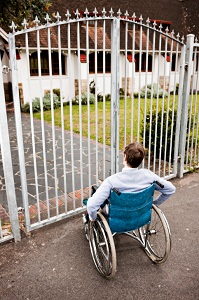 Many who live with disabilities are burdened by a chronic sense of shame that can be as difficult to live with as the actual disability. Shame is not the same as guilt. Shame is persistent and represents how we feel about ourselves (“I am a shame and disgraceâ€) rather than how we feel about something we did or did not do (“I feel guilty and embarrassedâ€).
The term “ashamed†is often used interchangeably with “humiliated.†Shame may be the result of humiliation, but not humility. Humiliation entails stripping a person of his or her sense or worth—of wounding the person’s very being. Humility is more a sense of meekness or equality with others. Dr. Brené Brown has been researching shame and vulnerability for a few years, asking people how they experience shame. Many say it makes them feel small and vulnerable; it includes an almost physical sensation of being kicked in the gut; it takes them to place that feels wounded; and they want to disappear.
How does this happen? How do we begin to feel wounded? Small? Vulnerable? Shamed? Humiliated? It is usually a response to something that happens to us—that is done to us. We are somehow victimized, humiliated, or traumatized by the actions of a person or people who inflict injury upon our sense of self—our very being.
This wounding may be intentional or inadvertent: The shame of a child whose first-grade teacher refused to allow her to go to the bathroom, resulting in an accident in her clothes in front of the whole class. The man who can’t read well enough to complete a job application being verbally harangued by an uncaring receptionist in front of an office full of people. A person in a wheelchair who is “holding up the line†for an elevator when a busy executive is in a hurry. The family with an older autistic child boarding an airplane in advance while others accuse them of making excuses to avoid waiting.
Regardless of the source, this pervasive sense of shame can result in a lifetime of fear, avoidance, and anxiety when faced with issues that trigger similar feelings. The triggers may be subtle and seemingly unconnected, but that feeling of being diminished remains.
For the first-grader who was humiliated by the refusal of her teacher to allow her to go to the bathroom, triggers may transfer to a dislike for authority figures, issues with toileting, or avoidance of school.
The man with difficulty reading who was humiliated by the lack of awareness or disregard of the receptionist may avoid looking for work, find that he is defensive with people working in offices, or resist going to the doctor if it requires filling out forms.
A person in a wheelchair who was humiliated due to holding up the elevator and inconveniencing the busy executive may avoid leaving home, resist taking the safety precautions necessary in a busy location, or feel “less than†people in white-collar jobs.
The family of the child with autism may avoid traveling by plane, become defensive when in need of special treatment, or limit interactions with people waiting in line.
I recommend that those who have feelings of shame learn more about the causes and triggers by getting professional help to address these feelings. Two types of therapy—EFT (emotional freedom technique, aka tapping) and EMDR (eye-movement desensitization reprocessing)—may reduce or eliminate shame reactions.
 I woke up to my dad staring blankly at the wall the morning of October 14, 2004. It was the day before my 23rd birthday. I knew this day was coming, but nothing would prepare me to wake up and find my dad no longer alive—just a lifeless shell. He had battled Hodgkin’s lymphoma for a year and a half. At 54, his time here was over.
After my mom and I had cried over his body and walked the body bag down the hall, we decided to go out for lunch. Such an odd next step after your father was here on earth and now is suddenly just … not. We ate steak and potatoes and drank Diet Coke in his honor. It’s these things, I’m pretty sure, that led him down the cancer path, but that’s another story.
When I got home from lunch, I was all alone in the apartment we had lived in together. Strange things started happening. The lights went on and off. The song “Time Is Ticking Out” by The Cranberries was stuck on repeat on my stereo, the caps and num locks on my keyboard blinked back and forth without me touching anything at all, and my quiet cat, Bastian, was staring up at the corner, meowing at the wall. I was sure this was my dad trying to communicate that he had crossed over.
When I looked at him earlier that day and had called out, “Dad?” as if he was going to respond to me … I knew he wasn’t there, but what an odd thing? How can you be there and then … just not be there anymore? This moment made me come to be obsessed with learning about near-death experiences and worlds beyond the physical.
As I attempted to maneuver life, I felt like everyone started to disappear. The relationships my dad had built slowly started to fade. People were as scared to see or talk to me as I was of them, fearful of dealing with the harsh realities that my father was no longer with us. This took such a toll on my heart, as I wanted so badly to connect but had no idea how. How could life have brought me to this place of being 23 and not able to enjoy my dad in my life? Why do other people get this opportunity, yet it was “stolen” from me?
The Real Truth About Death
I continued to explore spirituality, reading many books about near-death experiences. P.M.H. Atwater changed my life with her book, The Real Truth About Death. In this book, Atwater tells the story of physically dying three times, each time going deeper into the afterlife. After returning from the dead, she interviewed more than 3,000 people from around the world who also had near-death experiences. After reading this book, I fully believed there was life after death. How could there not be? So many people from all over the world telling similar stories of tunnels, light, loved ones who had passed greeting them, and many times someone telling them their time is not over and it’s time to go back … doctors who can verify that their heart stopped beating for long periods and they were thought to be totally dead … there are too many similarities from all walks of life, all religions and ages, not to believe.
One evening in September 2008, I had one of the most dramatic spiritual experiences of my existence. I remember this event very clearly because I was conscious for all of it. My father came to me as what I can only describe as a spiritual entity—a ball of energy and white light. I knew it was him because I could feel him. The last time I had felt him in that way, he was alive and here on earth. He told me, “You need to spend more time with your mom because you don’ t know how much longer she’s going to be here.” I took this information very seriously and decided to take the opportunity to have a big 27th birthday party and invite my mom.
The Red Party
In October 2008, I had a red-themed party. Everyone came dressed in their brightest red. It was so good to see my mom, as we were just beginning to become friends again after a long period of post-teenage-into-early-twenties angst and her not fully accepting me dating women (I’d like to note that on my dad’s deathbed, he asked my mom to please accept me for who I am. Without the acceptance, we probably would not have a relationship in life.) This would be the last birthday she would spend with me.
A few days later, I learned that my uncle had taken my mom to the hospital. She was feeling weak and wanted to get checked out. I had planned to meet some new web clients at a cafe on this particular day. I’ll never forget waiting for my clients to arrive and, in the meantime, getting the phone call from my mom. She never expressed too much sadness in my life, but on the other end of the line, she was crying. “Lisa, I have leukemia,” she said. My heart dropped into my stomach. I realized this could be the very moment my father tried to warn me about.
We started the cancer roller-coaster ride of deciding what chemo to get and hospital visits. A few months in, the doctors had told us she was officially in remission. Come to think of it, this may have been a lie my mom had told everyone so we wouldn’t worry. In April 2009, her doctors had a sit-down with us and had the dreaded “there’s nothing else we can do for you” conversation. “All of your inner organs have a tumor wrapped around them.” ARE YOU SERIOUS? Part of me thought it was all a joke, and the other part of me was like, OK … OK universe … I know what’s going to happen. You have prepared me for this once before, and I’m going to have to do this again.
“I’m Sorry You Won’t Have Parentsâ€
Later that day, I sat at my mother’s feet as she placed herself in the Pepto Bismol-colored recliner I had slept in many a night. She said, “I’m sorry you’re not going to have any parents anymore.” (This sentence has echoed in my brain thousands of times since this moment.) We used our time wisely, attempting to get things in order (or at least as in order as my mother would let them be). We watched our favorite movies, like “The Golden Child,†and laughed and cried in each other’s arms. I told her how much I was going to miss her … how much she meant to me, how thankful I was for her having me and everything she did for me in her life. She confided in me about things she would have never told a soul if she had the opportunity to continue on. We giggled at night about farts and stinky feet. I stopped my life to spend as much time with her as I could. I knew this time was precious and measured by the universe. I wasn’t going to let one drop of it go.
I was with her during her last weeks on earth. As the day got closer, she began to see people. My dad and her mother had come to tell her it was soon time. She had also seen people in Bermuda shirts with red balloons getting ready to welcome her. She saw an angel and I asked her to describe her to me. Long, blonde hair, white light around her, beautiful white dress … I could tell my mom was readying herself to transition, and these greetings were comforting to her. I played Enya in the background. Got her a professional, cancer-trained masseuse. Asked friends to join us and play music. The dreaded coma before death finally began to set in, and I wasn’t sure what moment she was going to go; it seemed like every breath could be her last.
Before I left to get some sleep, my mom had woken up with that last energy thrust many speak about (my dad had done the same). She was thirsty and hadn’t had water in what felt like days. I had been wearing a special shirt just for my mom because she liked it. The last thing she ever said to me—and I have no idea how she could have even formed words, because she had been on the edge of death for so long—was, “That’s a pretty shirt.” Hours before she passed, I began to get blank emails sent from no one, with nowhere to reply to and no subject line. Friends came to spend last moments with her. Her body got cold, her temperature was no longer reading on a thermometer … and after midnight on June 23, 2009, I watched my mom take one last, long breath. I had been watching the heartbeat through her neck for hours; after the long sigh that came from her lips, there was no movement at all. She seemed to settle into a peaceful smile. Her brow had calmed … her last day on earth had finally come … and I realized all at once that I was actually, totally, and utterly alone.
I sat with her for a little while, until a crew of people came barreling in to “place” her body so that when rigor mortis set in, she wasn’t in a weird position. They told my uncle and me that we had about an hour and then had to leave, so we gathered up her things and walked out to the parking lot—which may have been even more weird than when I went out to lunch and then went home after my dad died. I told my uncle I loved him, went into my tired, blue jalopy, and cried harder than I had ever cried in my life. I wailed as the idea of being alone in the world sunk in … that I knew this day would come … but I was only 27 and would now have to live out the rest of my days attempting to make sense of being so young and without parents.
The days that followed were the most difficult in my life. Freshly moved by two beloved friends (I will never forget what you did for me) the day after my mom’s funeral, one by one everyone I knew went back to their regularly scheduled lives and I was left in an empty apartment, with no parents and way too much alone time.
A Turning Point
During my mom’s illness, I had started to paint whenever I came home from visiting her or when I felt sadness. Although I had gone to art school, I had never really done much work with the canvas. It gave me peace to move paint around with a brush … my fingers … a random object. It was something I felt was beautiful, that I could control, and that helped me express feelings that continued to bottle up. This was the creative outlet I needed.
For several years, friends had asked me to submit to a local community art show. I felt finally this was the year I was going to submit. I found this painting I had worked on during my mom’s illness and decided to submit it to the show, completely releasing whether it would get bought and just focusing on the satisfaction of the simple act of submitting to a public show I’d always wanted to participate in.
I submitted it very last minute and the piece was placed in what I thought was a semi-punishing, badly lit area of the show. We spent hours at the show and, prior to our departure, my girlfriend and I stopped by for one more look—and there it was: a red dot! The piece had been sold!
Submitting this piece was a complete turning point for me. I learned that I had created a healing method that was between me and me. I could work through feelings by placing energy on the canvas, and suddenly I felt like negative energies such as fear and anxiety were being channeled and released on these canvases. The healing process had truly begun.
In April 2011, I decided I wanted to explore blogging. As a web designer, putting one together was easy, but what kind of writer was I? There was only one way to find out! I told myself that I would write when I felt pain and try to turn it into something positive, creating what has become a recipe book for myself and future life situations. My intention was to connect those who were suffering from parental loss, like I was, and to hopefully help myself and others heal through art, writing, and focusing on the positive. Thus, LosingYourParents.org was born.
My intention is to enjoy the time I have in this life, and if I’m not enjoying it, to figure out what I need to do to get unstuck. I got a tattoo that says “follow your bliss” to always remind me of this thing that can seem so easy to forget.
Using my blog and art has helped me tremendously through the healing process. Those of us who have lost our parents are forever changed and will never forget. I do have faith that if you’re dedicated to wanting to live a brighter, lighter life, doing the work, finding the tools, and feeling the feelings will help you move forward. It has helped me. You’ve got to feel to heal.
 “I hate you!â€
“You’re the worst parent who ever existed!â€
“I can’t wait to move out!â€
If you have recently heard these words (usually screamed at full volume, followed by the loud slamming of a bedroom door), you may be the parent of a teenager.
Only those of us with halos and wings are consistently able to respond to such statements with perfect compassion and sweetness: “I love you, honey, and I’ll be right here for you whenever you need me!†Parents are human beings, and as such we have a limited set of emotional reserves and resources, which can quickly become taxed by a raging or withdrawn teen.
[fat_widget_right]
In fact, although you love your child as much as ever, you may be struggling with feelings of intense hurt, anger, dislike, distrust, grief, anxiety, and loneliness. You may feel that although you love your teenager, you just don’t like him or her very much right now. It may feel at times that your teenager has his or her finger on every one of your buttons, and is pushing them … all at once!
What can you do when the very child you love and worry over appears to hate and reject you as a parent?
Teens are known for their emotional volatility. Unfortunately, when parents become as overwhelmed by negative emotions as their teens are, they are no longer in a strong position to be stable, loving, or helpful to the teen. In fact, the parents’ hurt and anger can easily add fuel to the fire and bring about a downward spiral that both parents and teens feel helpless to stop.
To say teenagers value their friends and social life is an obvious understatement. However, to family members around that teenager, it can seem as if by “choosing†to value their friends, the teen is showing the family that they no longer matter. Indeed, as illustrated by the quotes above, the average teenager may even say as much in the midst of an angry, hormone-fueled argument.
The traditional task of adolescence is to move away from exclusive identification with family and to explore the greater world outside of the home. Separation of the child from the parents is absolutely necessary and healthy at this stage. However, that separation must be counterbalanced by the availability of the parent to continue to meet the adolescent’s needs. Therefore, this is an extremely frustrating time for many parents. They feel as if the teen is pushing the parent away, only to pull the parent back whenever he or she “wants something from me.â€
In order for the adolescent to explore the larger world in a healthy way, the home and family must be a sort of “home base.†This means the teenager needs to experience his or her family as stable, its identity as stable, its love and acceptance as unconditional, and its boundaries as safe and secure.
Understand that by focusing on his or her peers, your teenager is not rejecting you. Instead, the teenager is simply transitioning through an intense period of changes. The teen needs the family life to remain solid and secure, so that he or she can return to it for comfort and healing when the peer world becomes too intense or overwhelming.
Teenagers may often resemble adults physically, but socially as well as cognitively, they still resemble children much more than adults. We now know that the human brain does not fully mature until the mid- to late twenties. Executive functions such as prioritizing, consequential thinking, and evaluating options are still coming online. Furthermore, teenagers do not have the life experience, confidence, or savvy to navigate the complicated demands of life as adults do.
Because of these factors, it can be useful for parents to see past the bravado and the occasional glimpses of maturity that their adolescent displays; to understand that, inside, there still exists the child who has needs he or she does not have words to express, who cannot meet those needs independently of the parent.
The family itself is also moving through a transition period. They must move into a new life stage, with new roles for each family member. It can be difficult to feel entirely ready for these changes. Many parents of teenagers experience this time as a loss: the loss of the innocent and impressionable child they once knew and enjoyed; the loss of the role of all-knowing nurturer and protector.
Parents often report that they feel that “time is running out.†When your 5-year-old threw a temper tantrum, you knew as a parent that you still had “endless†years in which to heal relationships and correct behavior. When your child is 15, you understand that the years are not endless and that damage done to the relationship now may persist into your child’s adulthood.
Because the family is a “safe launching pad†for their forays into the larger world, teenagers move into and out of their family, and not always on the parents’ timeline. Your teen may refuse to join you for dinner, hiding out in his or her room; he or she may seem to eat, sleep, and shower with iPod headphones on. He or she may argue endlessly over attending important family functions such as weddings or funerals. And, just when you think the teen has disowned the family forever, there he or she is, curling up next to you to watch a movie or opening up from the passenger seat on a long drive.
Recognize your teenager’s attempts to reach out to you for what they are: The teen is looking for reassurance from you that he or she is still a part of the family; he or she wants to know that no matter what he or she screamed at you last week, you still love him or her. The teen needs to feel certain that if the “real world†becomes too scary, he or she still has a safe place to return. In order to practice being an adult, your teen needs to periodically return to being a child—and this will happen when you least expect.
Nobody said being the parent of a teenager is always easy, fun, or fair. As the adult in the relationship, it is you who holds the responsibility. It is you whose role, although different, is still most important in these last years of your child’s development. It is you who must keep the gates of the family open for your teen when he or she needs to reenter them.
Once you can view your teen’s behavior from this developmental context, you can depersonalize it. It is no longer about your teen’s rejection or manipulation; it’s an understandable and necessary stage in his or her journey to reaching his or her own, full potential as a young adult. It becomes easier and more natural to meet the ebbs and flows of your teen’s changing needs. Even when, sometimes, the need is for separation from the parent.