


Many people who menstruate notice shifts in mood, energy, and emotional sensitivity throughout the month. These changes can feel confusing, especially when they seem to contradict how you felt just days earlier.
In This Blog
It’s not uncommon to think:
- “Why am I suddenly so irritable?”
- “Why does everything feel harder this week?”
- “Why do I feel like a completely different person?”
These experiences are often dismissed as “just hormones.” But that framing can feel minimizing and it doesn’t help you understand what’s happening.
A more helpful perspective is this: your emotional patterns may not be random at all; they may be cyclical.
Understanding how your menstrual cycle interacts with your mental health can help reduce self-criticism, improve emotional awareness, and support more effective coping strategies.
Why Your Cycle Can Affect Your Mood
Across the menstrual cycle, levels of hormones like estrogen and progesterone rise and fall. These hormonal shifts don’t just affect the body, they also influence brain chemistry, including systems involved in mood regulation, stress response, and emotional processing.
This means for some:
- Emotional sensitivity can fluctuate
- Stress tolerance can change
- Energy and motivation can vary
Importantly, this doesn’t mean your emotions are “irrational.”
It means your baseline for emotional regulation is shifting.
For some people, these changes are subtle. For others, they can be more noticeable and occasionally disruptive.
Common Emotional Patterns Across the Cycle
While every individual is different, many people report patterns like:
→Menses Phase (aka your period)
What’s happening
Hormone levels- particularly estrogen and progesterone- are at their lowest. The body is shedding the uterine lining, and energy levels may dip as a result.
Common emotional patterns
- Lower energy and motivation
- Increased need for rest and solitude
- Greater introspection or emotional sensitivity
- Feeling more inward-focused or reflective
For some, this phase can feel grounding or clarifying. For others, it may feel heavy or draining, especially if combined with physical symptoms like cramps or fatigue.
→Follicular Phase (after menstruation)
What’s happening
Estrogen levels begin to rise, supporting increased energy, cognitive function, and mood stability. The body is preparing for ovulation.
Common emotional patterns
- Increased clarity and motivation
- Greater emotional resilience
- More openness to social interaction
This phase is often associated with feeling more like yourself again- mentally sharper and more forward-looking.
→Ovulation Phase (mid-cycle)
What’s happening
Estrogen peaks just before ovulation (the release of an egg). This is typically when energy and confidence are at their highest.
Common emotional patterns
- Higher confidence and energy
- Increased sociability
- More emotional steadiness
Many people find it easier to engage socially, express themselves, and navigate interpersonal dynamics during this phase.
→Luteal Phase (before menstruation)
What’s happening
After ovulation, progesterone rises and then gradually falls if pregnancy does not occur. This hormonal shift can affect mood, sleep, and stress sensitivity.
Common emotional patterns
- Heightened emotional sensitivity
- Lower frustration tolerance
- Increased irritability or anxiety
- Greater need for rest and withdrawal
This phase often brings a lower threshold for stress. Things that felt manageable earlier in the cycle may feel more overwhelming here.
When Emotional Changes Get Misinterpreted
One of the most challenging aspects of cycle-related mood shifts is how easily they’re misunderstood; both by individuals and by others.
You might interpret these changes as:
- A personality flaw (“I’m just too sensitive”)
- A relationship issue (“Why am I suddenly annoyed with my partner?”)
- A mental health setback (“I thought I was doing better”)
Without context, cyclical emotional changes can lead to:
- Self-doubt
- Shame
- Overgeneralizing temporary feelings
Recognizing patterns can help separate what you’re feeling from what it means about you.
It’s Not Just Hormones: The Role of Sleep, Nutrition, and Stress
Mood changes across the cycle aren’t driven by hormones alone. Other factors can amplify- or ease- emotional fluctuations.
Sleep
Sleep disturbances are more common in certain phases of the cycle, especially before menstruation. Poor sleep can increase irritability, lower stress tolerance, and intensify emotional reactions.
Nutrition
Changes in appetite and cravings are also common. Blood sugar fluctuations and nutrient intake can influence mood stability, energy levels, and focus.
Stress Load
When life stress is already high, cycle-related emotional sensitivity can feel more intense. What might feel manageable one week can feel overwhelming the next.
Looking at these factors together creates a more complete picture: your emotional experience is shaped by an interplay of biology, behavior, and environment.
How to Work With Your Cycle (Instead of Against It)
Rather than trying to maintain the same expectations every day of the month, it can be helpful to adapt your approach based on patterns you notice.
1. Track Patterns, Not Just Symptoms
Tracking mood, energy, sleep, and stress alongside your cycle can help identify recurring trends.
Over time, this can answer questions like:
- When do I feel most overwhelmed?
- When do I have the most emotional bandwidth?
Awareness creates predictability and predictability reduces distress.
2. Adjust Expectations Across the Month
If you notice fluctuations across the month, instead of expecting consistent productivity or emotional capacity, consider:
- Scheduling demanding tasks during higher-energy phases
- Allowing more flexibility and rest when sensitivity is higher
This isn’t about lowering standards, it’s about aligning expectations with reality.
3. Build Phase-Specific Coping Strategies
Different phases may call for different tools.
For example:
- During high-energy periods: proactive problem-solving, social engagement
- During more sensitive periods: boundaries, reflection
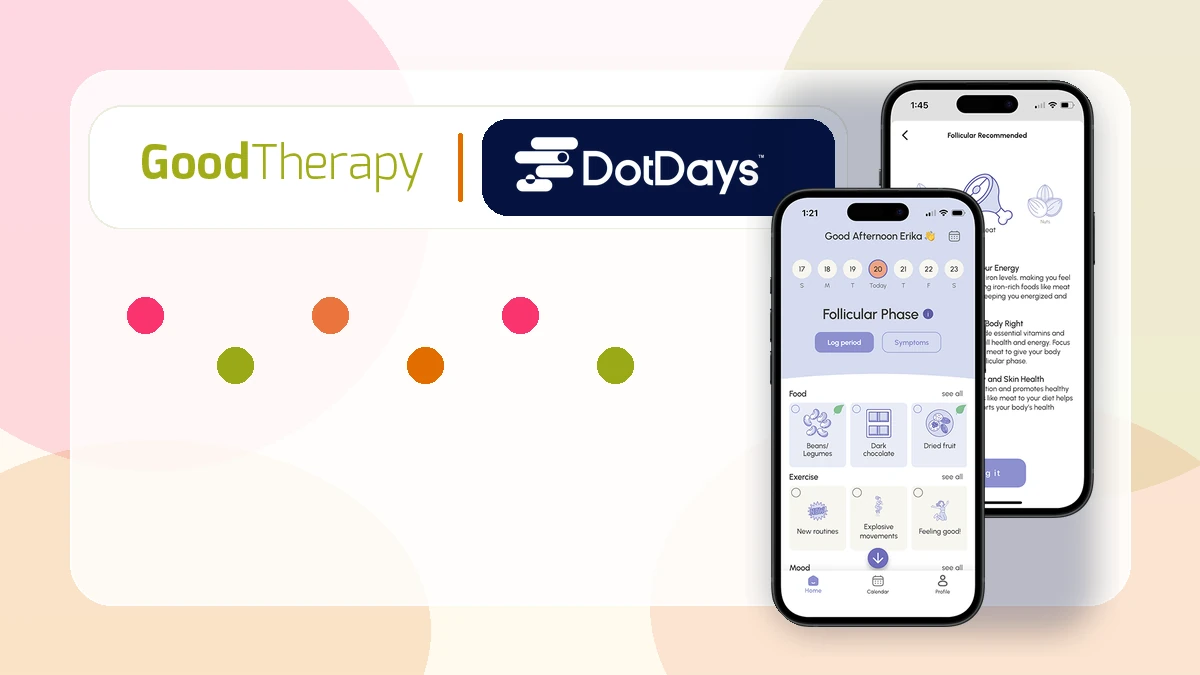
The goal is not to “fix” your emotions, but to support yourself more effectively within them. Our partner DotDays, provides many additional easy-to-follow phase-specific tips in their free app as well.
4. Use Awareness to Improve Communication
Cycle awareness can also support relationships.
For example:
- Recognizing when you may be more reactive
- Communicating needs more clearly
- Choosing timing for difficult conversations more intentionally
This can reduce misunderstandings and help others better support you.
Why This Matters in Therapy
For individuals in therapy, understanding cycle-related patterns can be especially valuable.
It can help:
- Identify recurring emotional cycles
- Differentiate between situational and physiological influences
- Reduce mislabeling of symptoms
For therapists, integrating cycle awareness into conversations can provide additional context, especially when clients report fluctuating mood, energy, or distress levels.
This perspective doesn’t replace other therapeutic approaches. Instead, it adds another layer of insight.
When to Look More Closely
While many mood changes across the cycle are within a typical range, some individuals experience more pronounced symptoms.
If emotional shifts:
- Feel extreme or unmanageable
- Interfere significantly with daily life
- Consistently occur in the same phase
- Include severe depression, anxiety, anger, or hopelessness
- Make it difficult to function or feel safe
…it may be worth exploring further with a healthcare provider.
More intense cyclical mood symptoms can sometimes be linked to conditions like premenstrual dysphoric disorder (PMDD), which may benefit from targeted support.
You do not have to wait until symptoms feel unbearable to ask for help.
A More Compassionate Way to Understand Yourself
Recognizing the connection between your menstrual cycle and your mental health isn’t about reducing your experiences to biology. It’s about expanding your understanding.
Instead of asking, “What’s wrong with me?” you might begin asking:
“What patterns am I noticing, and how can I support myself within them?”
That shift can reduce self-judgment, increase self-awareness, and create more space for intentional care.
If you are noticing recurring mood changes, therapy can help you understand your emotional patterns with more clarity and compassion. You can also explore tools like DotDays to track your cycle and receive personalized support throughout the month.
-This blog post was created in partnership with DotDays, the free science-backed menstrual-cycle wellness app that helps users feel better throughout their cycle with personalized guidance across nutrition, mood, sleep, and exercise.

The preceding article was solely written by the author named above. Any views and opinions expressed are not necessarily shared by GoodTherapy.org. Questions or concerns about the preceding article can be directed to the author or posted as a comment below.


Please fill out all required fields to submit your message.
Invalid Email Address.
Please confirm that you are human.
Leave a Comment
By commenting you acknowledge acceptance of GoodTherapy.org's Terms and Conditions of Use.