 Many of us have close friendships that we value. Unfortunately, there is often a pattern of decline in friendships after a diagnosis of autism. Through the work I’ve done with people in therapy and my own experience of raising a child on the autism spectrum, I have found that there are several reasons for this.
A Diagnosis Changes Relationships
I often caution parents new to the diagnosis that their lives are about to completely change. After an autism diagnosis, almost nothing remains the same. Parents typically enter a grieving process while trying to navigate new doctor and therapy schedules. Maintaining friendships often becomes the least of their concerns.
Autism also has a way of weeding out “friends” who were never all that supportive in the first place. People who are overly dependent, toxic people, or those who simply drain tend to go by the wayside. You no longer have time or patience for drama. Those who don’t understand or empathize with your grief process may become angry that you don’t have time for them or accuse you of changing. “You’re just not the same person,” they might say. “I miss the old Sally.”
[fat_widget_right]
Sally represents myriad autism moms, especially, who continue to share the same story: “My friends just don’t get it.”
There is a “get it” factor in parenting kids with autism spectrum issues. Those who get it become part of your inner circle. Those who don’t are weeded out, often through no particular fault of their own.
Time and Energy Are Precious
Autism takes a great amount of time and energy as a parent. This is perhaps the biggest obstacle to maintaining friendships. If you work, even part-time, the challenge becomes greater. Children on the spectrum tend to miss more school than the average child due to associated health issues. Their sleep hygiene tends to be poor or more irregular. Children with autism often need constant supervision to ensure they don’t get hurt or run away. It can be overwhelming.
If you have other children in the household, it can be a struggle to maintain a balance of time with them and your child on the spectrum. There never seems to be enough of you to go around.
If there is a spouse or significant other, there is the additional challenge of nurturing that relationship.
At the end of the day, you might be so exhausted that the last thing you want to do is get on the phone to call (or return a call from) a friend.
There is a “get it” factor in parenting kids with autism spectrum issues. Those who get it become part of your inner circle. Those who don’t are weeded out, often through no particular fault of their own.
Assumptions Can Get in the Way
There are assumptions that we make about others that may or may not be true. One of the most prevalent is that people are judging us. Many autism parents’ homes are unkempt at best, and some are embarrassed to invite others into their chaos. Right or wrong, healthy or not, this is a reality for many spectrum moms in my community. Also, many children with autism don’t adapt well to others in their physical space, so some parents don’t invite others over for that reason.
Of course, parents may also assume that others don’t want to be friends anymore because it’s too much of a hassle. Let’s face it: When friends call and I can’t call back; when they invite me to events and I keep declining; when I finally do make plans but back out at the last minute, these things do not serve friendships. It may begin to appear as if I don’t want to engage, even if this couldn’t be further from the truth.
Another common assumption is that other parents don’t want their kids to socialize with children on the spectrum. This is sometimes untrue, but not universally.
The Importance of Letting It Go
So what’s the solution? Is there one? I think the answer varies from person to person, family to family. The guilt associated with not being able to call others back or return favors tends to eat away at the people I’ve encountered in therapy. My advice to them is the same as the advice I received while in my counseling internship. One day while I was agonizing over feeling like a bad friend, my then-supervisor (now someone I call a friend) said, “Janeen, you have enough BS and ‘have-tos’ in your life. Let this go.”
And that was it. I had permission to let it go, and so I did.
There aren’t many people I call “friend.” There are only two I call in crises who can talk me off my ledge. After almost 18 years of parenting a child with special needs, I have come to know what’s truly important in life. My inability to return a phone call, and all of the guilt that accompanies it, is at the bottom of the list.
If you’re the parent of a child on the spectrum, I hope it’s at the bottom of your list as well.
 Somehow, in recent times, the term “aspie” has jumped tracks from a being an insider’s term of endearment to an all-purpose adjective used to describe quirky or geeky aspects of one’s own or another individual’s personality: “I couldn’t wait to get home and read more of that astrophysics book. How aspie is that?”
Is there anything wrong with that? Well, yes. And no.
If you really are on the autism spectrum—at the “high” end, where the diagnosis is Asperger’s Syndrome (AS) or high-functioning autism (HFA)—you might find usages of this nature confusing. They might even feel derogatory.
Before I go further, let me say I am not a button-pushing, “that’s offensive” kind of person. I’m not on a rant here. But there is room for sensitization with regard to the throwing around of the term “aspie” that would serve us all well. My observations come from working with many individuals who are on the spectrum. This is important to them.
[fat_widget_right]
First of all, there is no such thing as an AS/HFA personality. There are as many personalities among people on the spectrum as there are among those who are not on the spectrum. Just as not all neurotypical individuals watch reality TV; just as not all feel magnanimously comfortable in social situations; just as there are millions of individual interests represented, so, too, is the variety among those on the spectrum.
The aspects that distinguish a person on the spectrum from one who is not are related to structural differences in the brain. For people on the spectrum, these differences make living in the neurotypical world a minute-by-minute challenge. Figuring out subtexts and metamessages in conversations and other forms of communication is exhausting, and always bears the risk of failure. Sharing a three-dimensional, visual way of thinking with those whose thought patterns are more linear is exhausting. Understanding social and work expectations that are not explicit is exhausting.
When a person with Asperger’s/high-functioning autism calls things aspie, you can bet he or she knows exactly what it means. But that’s not an invitation to co-opt (and quite possibly misuse) the term.
Sometimes, due to misreading context and expectations, people on the spectrum make what is viewed as a social mistake. Is that an “aspie” thing?
Sometimes, a person on the spectrum has a deep interest in a topic that is not generally understood or even valued by other people. Is that an “aspie” thing?
Who among us has not been in a social situation in which we did or said something we later regretted? Who among us is without an interest, habit, or hobby that might not be considered mainstream?
If you have friends on the spectrum and they use “aspie” in reference to themselves, be careful. When a person with Asperger’s/high-functioning autism calls things aspie, you can bet he or she knows exactly what it means. But that’s not an invitation to co-opt (and quite possibly misuse) the term.
Do you know what it means to the person with AS/HFA who uses it to describe himself or herself? If you don’t, ask. That’s what I meant above when I suggested that use of the term isn’t entirely bad. It can open up a conversation that could be instructive to everyone involved.
I would bet that once you hear a person on the spectrum give his or her definition of the term “aspie,” you won’t be throwing it around casually anymore. You might even feel an urge to help other neurotypical individuals who use it to understand what it means to those for whom it matters most.
 If you are what is commonly referred to as a “neurotypical” spouse of a person who is diagnosed as being on the autism spectrum, you are probably accustomed to anxiety. I don’t mean to imply that you enjoy it, but I suspect you are accustomed to walking the line between your initial reaction to a conversation, for example, and the way you may come to sort it out afterward.
It usually falls to the neurotypical spouse to make these distinctions, because he or she is the person who has the capability of doing so. This derives from the differences between the brains of the partners.
You may know that Asperger’s (AS)/high-functioning autism (HFA) is a structural, neurological condition and not a mental illness. This is of great significance because there is always risk of shame around a psychiatric diagnosis. If it is clear to you and to your partner that this is not a mental illness, you will be able to manage it more readily. Secondly, you may realize that if you attribute intent to something your AS/HFA spouse said or did based on your assumptions about what you might have said or done in similar circumstances, you are winding down the wrong path.
This error of attribution, natural as it may feel at the time, is one of the sources of the anxiety you experience, but there is seldom intent to inflict pain in your life on the part of your AS/HFA spouse. There is a difference in the way your brains process information, and you are the one most capable of seeing and understanding these differences; you are neurotypical. But your spouse is not setting out to confound you, regardless of how frustrating conversational and situational conflicts may feel to you.
[fat_widget_anxiety_right]
Educating yourself about AS/HFA is an excellent place to start. You can learn about the neurological differences. You can learn about the difficulties your spouse has faced his/her entire life in trying to figure out social protocols and nonverbal cues for meaning in interpersonal communication. You can begin to understand that there is nothing wrong with you, and that your expectations have been normal and natural; they simply haven’t been met because your spouse is unable to meet them. You can also learn means of expressing your thoughts that are less likely to cause confusion.
For example, if you bear in mind that nearly 70% of interpersonal communication is nonverbal, and that your AS/HFA spouse is very literal in his/her approach to communication, you can quickly see the limits. And even that is compromised by nonliteral forms of speech, such as metaphor, analogy, or figure of speech, all of which can be extremely difficult to discern and comprehend for a person on the autism spectrum.
Tony Attwood is an Australia-based clinical psychologist who has made the study of AS/HFA his life’s work. I recommend his works for anyone setting out on the path of understanding this diagnosis.
Now I’d like to return to the first point regarding your anxiety. It is important to acknowledge your anxiety and frustration so that you don’t fall into the trap of assigning blame where there is none, neither on your spouse’s part nor on your own. Understanding AS/HFA from a clinical standpoint is an excellent first step.
The second step I recommend is couples counseling with a psychotherapist who understands both the world of the individual with AS/HFA and the world of the spouse. Be mindful of this as you speak with potential counselors, because you don’t want to find yourself in a situation in which one side or the other is advocated and the remaining partner is expected to do all the adapting.
Finally, I would like to point out that in my clinical experience, nearly every individual I have met with AS/FHA experiences constant anxiety often coupled with depression, due to the complex demands of coping with a world that seems as inscrutable to them as the world of the person with AS/HFA may seem to be to you.
A final word of counsel: be kind to each other. Remember that bridges can be built between you and your spouse with the help of a talented counselor who understands what lies on both sides.
 Children and teens with Asperger’s syndrome (AS) often miss basic social cues, impeding their ability to interact successfully with others. Included in the missed social cues are personal hygiene considerations, which often go unnoticed by kids with Asperger’s. Parents of children with AS frequently complain that it is difficult to get their children to brush their teeth or comb their hair. As the child matures into adolescence, additional hygiene issues, such as the use of deodorant, become problematic. Understanding the causes of these challenges can help improve personal hygiene by enabling parents and loved ones to provide appropriate supports for proper behaviors.
Why Is Hygiene Such a Difficult Issue?
Problems with hygiene for the child or adolescent with AS appear to stem from two things: sensory issues and social awareness. Many children with AS will refuse to shower or to brush their teeth. Although caregivers may initially believe that these responses are due to laziness on the part of the child, in many instances refusal to engage in personal hygiene activities results from sensory issues encountered by the child. In an effort to illustrate this point, consider the AS child who has difficulty trying new foods because of their texture. Inserting a toothbrush with abrasive toothpaste into the mouth can overwhelm the child’s senses, creating an aversion to brushing one’s teeth. As a result, the AS child may not willingly brush his or her teeth each night despite efforts to educate the child about the potential harm that may result.
A lack of social awareness may also impact decision making when it comes to personal hygiene. As children mature into adolescence, their personal hygiene needs become more extensive. Boys and girls will need to use deodorant, shave, comb their hair, and make sure they are properly and appropriately dressed. These hygiene issues are particularly important for adolescents in order for them to project a positive self-image that is acceptable to their peers. Because many adolescents with AS lack a basic understanding of social awareness, hygiene issues may not be an important consideration for this group. Putting on deodorant may not be viewed as important by the adolescent with AS despite the fact it is necessary to prevent body odor: an obstacle which can hinder peer interaction.
What Can Be Done?
With the realization that hygiene is such a difficult and challenging issue for children and adolescents, it is important for caregivers to consider what they can do to promote personal hygiene without overwhelming their child or adolescent with sensory issues or negative criticism. Although the specific hygiene needs of each child will be different, there are some steps that parents and caregivers can take to improve outcomes in these areas:
- Make personal hygiene a part of the daily routine: Routine and structure are important components for reducing stress in children and adolescents with AS. By making personal hygiene activities such as brushing teeth and showering a part of daily life, individuals with AS will come to view these activities as an integral part of their daily lives. This can reduce the stress of engaging in activities that may cause sensory challenges.
- Model personal hygiene for your child: Same-sex parents should work with the child or adolescent to model personal hygiene activities. For instance, a male caregiver should help a teenage boy learn to shave. By modeling behavior, the caregiver not only provides an important teaching support but also serves as a role model for the importance of certain hygiene activities.
- Consider the use of accommodations to make personal hygiene easier: One example that is useful in this area is the use of electric toothbrushes to address sensory issues related to teeth brushing. Electric toothbrushes can provide stimulation to the gums and teeth that is soothing for the child with AS. The use of accommodations may make personal hygiene activities more enjoyable for children with AS.
- Consider professional help and support: If you continue to struggle to promote personal hygiene issues with your child or adolescent, consider professional help. Therapists may be able to assess your child’s needs to provide instruction and education that is commensurate with your child’s ability to understand hygiene issues. Therapists can work with you to translate skills learned in the therapeutic setting to the home. As your child matures into adolescence and sexual maturation occurs, help in guiding your child through professional expertise may be essential.
 It is not uncommon for a man with high-functioning autism/Asperger’s to have a child who also has it, because there are genetic components to this brain structure variance that manifests as what we call HFA. These differences are in the prefrontal cortex and the amygdala.
High-functioning autism is not a mental illness. It is not a personality disorder. It is not ADHD, ADD, or oppositional defiance disorder. It is a physiologic difference in the brain with a spectrum of possible manifestations. A father passes on his genetic material to his son. Some of this material can contain the code for HFA.
In my practice, I often see neurotypical women in such a triad. Usually, the pathway for the wife is difficult, as she feels as if she is the outsider as she struggles to be understood and to feel that she is valued in her family.
It is a difficult challenge for a neurotypical woman to put herself in the mindset of the HFA husband or son. She can understand the differences intellectually, but when it comes to feelings, she inadvertently defaults to her neurotypical frame of reference. She tells me she can’t help it. She tells me it is exhausting and, most often, fruitless.
I tell her that I understand her position. We talk about feeling alone and alienated. But I also try to bring her to a place of being able to see what it might be like for her if she were in her husband’s or son’s position as individuals with HFA trying to make their way in a neurotypical world.
They are often exhausted, confused, and frustrated. They feel intense anxiety and fears about missing social cues, misunderstanding subtexts in conversations, and taking everything literally, missing the nonverbal aspects of communication.
When I see women married to HFA husbands whose children also carry the diagnosis, we work together on several things: the grief that attends the loss of her dreams and hopes, the reconstruction of her sense of self and the reinvigoration of her personal goals, and ways in which she can retain her newly-regained confidence. We also work on methods she can use so that she can communicate with her husband and son in such a way that they understand cognitively what she is explaining about her emotions.
It is not easy. But with support, the wife in such a situation can learn techniques and strategies for getting her point across that may not seem comfortable to her at first. Once she begins to see that they work, however, they can become second nature to her.
They will never be her first nature, however. Good support along her journey of discovery is of extreme importance for her well-being and for reinforcement that she is doing the best she can. She will also need help decoding things she does not understand and things she has tried which have not worked, or which have backfired. A good therapist who understands the unique position of the woman in this family is an ally in this journey.
The family dynamics are challenging, but they can be managed with care and with the intent to hold the family together.
 Children with autism often have a variety of sensory issues. Sometimes they are very sensitive to certain sensations or, conversely, very insensitive to certain sensations. Understanding your child’s sensory needs can be a crucial component of treatment.
One of the most common sensory issues seems to revolve around food and eating. Specifically, many children on the autism spectrum have a particular palate that significantly limits what they will eat. This is known as food selectivity.
Food Selectivity vs. Picky Eating
Food selectivity is NOT just being a picky eater. Plenty of people are picky eaters. However, when push comes to shove (or when they are hungry enough), they will eat whatever food is available. When a child is a selective eater, he or she will eat only certain foods or strictly avoid foods and will not vary his/her diet without extraordinary intervention. It can get to the point that the child makes himself/herself sick. A child may not eat unless preferred foods are available. For parents of selective eaters, this can make mealtime a stressful and challenging time.
Examples
In my 15-plus years working and living with children with autism, I have seen food selectivity in action a number of times. One time, I was consulted about a young girl whose diet consisted entirely of McDonald’s chicken nuggets and fries. That was all she would willingly eat. To keep her child fed, her mother would buy four servings of each from McDonald’s at lunch time. She would reheat one serving at dinner and pack one for school in the morning. She did this seven days a week. Any attempt to try to get her child to eat anything else resulted in severe tantrums and aggression. To put food that wasn’t chicken nuggets or fries in her mouth practically required holding the child down and force-feeding her. The team I was on helped craft a behavior support plan geared toward decreasing tantrums around mealtimes and increasing acceptance of novel foods. It took a couple of years and a lot of hard work to change her palate and get her to eat a more balanced diet.
Another child I worked with was my foster child. He came to us at 6 years of age. We were told his diet consisted of the following: round cereal, chicken nuggets, fries, and grilled cheese sandwiches (we quickly learned he didn’t like grilled cheese). I remember putting a sugar snap pea on his plate with some chicken; he started screaming and threw the plate of food across the room. Basically, if we tried to feed him anything grown from the earth that wasn’t fried first, he would reject it. His diet was high fat, high starch—what I lovingly call the autism diet. Not only was his diet restricted, he had severe gastrointestinal issues due to high levels of lead in his blood (which can lead to constipation) combined with a family history of constipation issues. For him, a balanced diet rich in high-fiber vegetables was not merely a good idea but a necessity. I crafted a behavior-shaping protocol geared toward getting him to accept new foods and we worked on it for years. It was slow and frustrating, but we made progress. He is still with us today and now eats a fairly balanced diet. He has even learned to enjoy fresh fruits such as apples and oranges.
It’s Not the Result of Lazy Parenting
Some readers may be wondering if these issues are just a result of lazy parenting. The answer is a resounding no. Think about the aforementioned examples, and imagine each meal being a literal, physical fight to get food into your child. Imagine having to spend hours to get your child to eat a meal while he or she screams and yells and hits and bites you. Imagine doing this every day, several times a day. It might be a relief to find a couple of foods your child will eat. Having a quiet meal might be an incredible gift.
I know a lot of parents of special needs kids, and very few are lazy. They are simply dealing with problems that go far beyond what many parents have to face with neurotypical children.
Treating Eating Issues Is Autism Treatment
After my success with my son in getting him to eat better, I attended a conference about eating issues in autism. The presenter was a national expert whose practice revolved around this issue. I was pleasantly surprised to find that the methods I used with my son closely mirrored what he did. One thing he said that resonated with me was that treating eating issues was autism treatment. The act of expanding your child’s palate addresses many core autism issues such as rigidity, tolerance of change, sensory needs, and improved health and wellness.
Why They Won’t Simply Eat When They Get Hungry Enough
I can’t say why, for sure, children with autism and food selectivity don’t simply eat nonpreferred foods out of hunger. What I know from treating my son and working with many other children is that these children will make themselves ill rather than willingly eat nonpreferred foods. One child refused meals for days just because the cafeteria switched butter brands and he didn’t like the new spread. Since he primarily ate half a loaf of bread with butter as the main part of his meals, we had to get ahold of surplus packets of the old butter spread and gradually get him to adjust slowly to the new spread just to get him to eat.
My son, despite painful GI issues, would not alter his diet from foods that made him sicker. He was never able to connect his stomach pains with his diet. It took extraordinary measures (and a great deal of time) to turn things around for him. The bottom line is that while a neurotypical child will probably eat differently when there is no other choice, children on the spectrum typically will not. This leaves their parents in a quandary—do they starve and harm their child to force compliance with a healthy diet or do they simply defer to the pressures of autism and give in to their child’s desires to get him or her fed? Luckily, there is a possible solution.
Expanding the Palate Teaches Flexibility and Tolerance
One of the hallmark issues of autism is a need for structure and sameness. Children on the spectrum simply do not do well with change. By treating food selectivity and teaching a child to accept new foods, we combat this need for sameness and introduce tolerance. Learning to like new foods expands the child’s sensory world in a positive direction.
Improved Health and Well-Being Decreases Challenging Behaviors
Food selectivity often results in a poor diet. Poor diet impacts one’s overall health and well-being. When one’s health and well-being are poor, it leads to feeling lousy. When a child with autism feels lousy, he or she tends to act out. By improving the child’s diet, you improve his or her health, which leads to feeling better, which reduces challenging behaviors.
The Basic System in Five Steps
Here is the system I developed to treat my son’s food selectivity issue. I was able over the course of about a year and a half to take him from eating four foods (round cereal, red juice, chicken nuggets, and grilled cheese sandwiches) to eating a wide variety of fruits and vegetables and being willing to at least try bites of new foods. This system is based on sound principles regarding behavioral shaping.
- Introduce one food at a time: You don’t want to overwhelm the child with too much change at once. Pick a new food and work it until your child accepts it. Then introduce the next food. Usually after three new foods are successfully introduced, things accelerate quickly. In my son’s case, he suddenly started eating apples (a food we hadn’t introduced) and it became his new favorite snack.
- Small bites/alternate with preferred food: When you do feeding sessions with your child, introduce the food in small bites (microbites … no larger than a small pea). Alternate the new food with preferred foods. I find it helps to put the foods on separate plates so you can swap them out more easily.
- Ease into actually eating the food: Don’t insist on your child eating the new food at first. Start with having the child just be willing to pick up the food (let him or her look at it, sniff it, get used to it) before rewarding him or her with a bite of preferred food. Once that is accomplished, reward the child for putting the food to his or her lips, then for putting it on his/her tongue, then for putting it in his/her mouth (but not swallowing), then for taking a tiny bite, and so on until the child is able to eat a small portion of the new food. Always alternate between the new food and preferred foods. If the child starts to tantrum, use your judgement; if the tantrum is minor, wait it out. If the tantrum is major, end the eating session. Try again later when your child is calm.
- Frequent practice throughout the day—not just at meal times: Don’t practice this just at meal times. Add frequent small-snack practice sessions throughout the day where you do most of your work. In fact, it may be beneficial to do the bulk of your work during these practice sessions and present new food only during meal times with a little less pressure to eat it (so as to make sure your child is getting some nutrition at first). Just remember that the more your child is exposed to the new food, the sooner he or she will learn to accept it. Also, make note of foods your child is simply not accepting. If after a week or two your child is not showing improvement, move on to a different food. In my son’s case, he simply did not like corn. No matter how often we tried to introduce it, he would not accept it. We finally figured he was not going to like corn and focused on other foods.
- Collect data on progress: Make note of which foods are being introduced and when. Chart how many and what kinds of prompts are needed with each trial. By collecting this data, you can more easily track small progress. You can also catch things such as plateaus and reversals sooner and make crucial adjustments.
Final Thoughts
Think about how often we eat. If every meal is a fight, imagine how draining and demoralizing that might be for a parent. By utilizing this system, meal times can become less stressful and more pleasant. The act of treating food selectivity is an important part of autism treatment. It doesn’t take any fancy therapy (although working with a skilled behavior therapist can make the process go quicker and smoother) and is well within the realm of possibility for most dedicated parents. I welcome your thoughts and experiences with food selectivity and its treatment.
Remember, parents: You’ve got this!
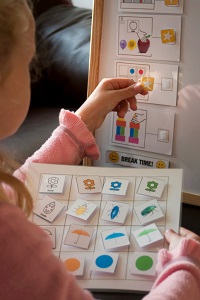 Transitions: What Are They? Why Are They Difficult for Children with Autism?
A transition occurs when there is some sort of change to the parameters of an activity or situation, such as going from one activity to a different activity or changing plans. For example, going from playing computer to doing homework, riding the school bus home, going on vacation, going out for ice cream with dad when you planned on doing that with mom — all represent examples of transition situations.
The problem with transitions is that either something is ending, or something is beginning. Often, this means going from doing something preferred to doing something nonpreferred. This can be problematic for just about anyone. For the autistic individual who is very driven by being comfortable, being obligated to stop doing preferred, comfortable activities is even tougher. After all, why would one want to stop playing a favorite video game just to take a bath?
As for all human beings, as well as for individuals on the spectrum, transitions mean uncertainty. Increased uncertainty means increased anxiety. New situations mean different rules and expectations. Rigidness and routine adherence are coping characteristics of autism, and these serve to reduce uncertainty, thereby reducing anxiety. These qualities tend to make transition situations that much more difficult.
Here are a few things you, as a parent, can do to make transitions a little easier for yourself and your child.
Scheduling: Planning Ahead to Reduce Anxiety
Since uncertainty and the anxiety that goes with it is a large part of the problem with transitions, it makes sense that reducing uncertainty might make transitions easier. Scheduling is an easy way of doing this.
Providing your child with a schedule does two things: It allows your child to have a better sense of what is going to happen in the future, and provides a better sense of control over his life (if you make him a part of the scheduling process).
Here are some tips to maximize the effectiveness of your scheduling strategy:
- Schedules should be understandable. Make sure the schedule is written in such a way that the child can read/utilize it. Use pictures instead of words if that will make things more concrete for him/her.
- Schedules need to be seen to be effective. Make sure the schedule is easily available or can be carried by your child so they can refer to it whenever they need to do so.
- Scheduling should be a collaborative activity. Whenever possible, give your child both choices of activities and the order in which they will be done. This increases your child’s sense of control and reduces uncertainty and anxiety.
The “Ease-in” Proactive Warning Strategy
Give your child as much warning as possible about upcoming transitions. Instead of just springing change on your child with little or no warning, give him/her time to mentally process and prepare for the change. Making the sudden mental shift from one activity to another can just be too much for some kids.
Give your child progressive reminders of the upcoming change. So, 10 to 15 minutes before the transition is going to occur, tell your child of what is going to happen, when it is going to happen, and what they need to do. Do this again a few more times, maybe at five minutes and two minutes. You can also do this when the activity itself hasn’t changed but other details of the activity have changed (change in time, who’s going, order of activities, etc.) Giving repeated reminders of what is going to occur beforehand helps reduce uncertainty and alleviate anxiety for your child.
Priming: Setting Expectations ahead of Time
This strategy is simply a variation of the “ease-in” strategy. This is where you review what is going to happen and what the expectations are before going into a given situation. The difference between this and the “ease-in” is that this is done just prior to the transition. It puts your expectations forefront in your child’s mind and makes it more likely that they will remember them. It’s not a guarantee they will follow directions, but it stacks the deck in your favor.
I often use this for more familiar activities. For example, every time I take my kids to the store, I say the following:
“OK kids, we are about to go in the store. Let’s review the rules. We are here to buy [x] and [y]. If you are good, I may get you [z]. Please keep your hands and feet to yourselves. Follow my directions. We will use the bathroom as soon as we get in and that’s it. Finally, if you can’t see me, I can’t see you, so let’s stay together.”
I’ve said this or something like this before every shopping trip with my kids for years. They can sometimes recite it with me. My kids have learned to stay with me in the store. They don’t ask to go to the bathroom 15 times during a shopping trip. They generally behave well, and earn treats as a result. It was not always so easy.
“Grandma’s Law:” The Power of the Premack Principle
The premack principle, or “grandma’s law,” refers to alternating between nonpreferred and preferred activities. In essence, it’s “if you want dessert, you need to finish your vegetables.” By doing this, you can always give your child something to which to look forward, even when he/she has to do something they don’t like doing. This strategy both reduces uncertainty and increases compliance through increased motivation (people are more willing to do nonpreferred activities if this gets them access to or leads to preferred activities).
Incidentally, premacking works really well with scheduling. Alternating between preferred and non-preferred activities will increase the power and motivation of the schedule. This, in turn, will make it easier for your child to make the transitions.
One Last Piece of Advice
These strategies work really well together. Furthermore, the more consistently they are used the better they work. To get this to happen, it behooves you, as parents, to train the other caregivers in your child’s life as to how best to guide them through transition situations. When the child’s parents, teachers, babysitters, home health therapists, etc., are all doing the same thing, your child is going to experience less uncertainty and, therefore, less stress. This, in turn, should result in fewer negative behaviors and better transitions.
I hope you found this information useful and that it makes life with your child a little easier. As always, remember to breathe… you got this.
 Evidence has shown that not only are many children with autism spectrum (ASD) highly intelligent, demonstrating creative and cognitive abilities that far exceed those of their non-ASD peers, but autistic children are also better able to process details than other children. In many tests, autistic children outperform their peers on local processing tasks, or tasks that require identification of parts of a whole. This is especially true when there are clear delineations between the individual segments of a global picture. When there is less distinction, the ASD children tend to perform equal to that of their non-ASD peers. Some researchers believe that this local processing skill is a trait of ASD and accounts for the high levels of artistic talent among children with ASD. But Jennifer E. Drake of the Department of Psychology at Boston College hypothesized that perhaps this local processing strength is a trait of artistic talent and not exclusive to individuals with autism.
To test her theory, Drake enlisted 30 children, half of whom had ASD, for a drawing and visuospatial test. She used the Block Design Task and the Group Embedded Figures Test to determine local processing, and also had the children create still life drawings. She found that the children with more drawing talent had higher levels of local processing abilities, regardless of whether they had ASD or not. Drake also noticed that the tests she administered were more predictive of drawing talent than they were of ASD. In other words, tests that are sometimes used to identify ASD traits in children may actually be indicating artistic abilities and not autistic tendencies.
Drake believes that her findings have significant clinical implications. Many children are assessed for autism at a very young age. It is at this time that strengths first appear as well, including artistic strengths. She believes it is possible that many young children with strong local processing abilities may actually be exhibiting artistic strengths when they take these types of tests. In the absence of global deficits, these children may not be demonstrating true characteristics of autism. “Thus, the superior local processing seen in ASD may be due to the drawing talent so often present in those with ASD,” Drake said. But Drake cautions that any deficits or strengths that are outside of the normal range should not be ignored in young children, especially if the children exhibit other reasons for concern.
Reference:
Drake, J. E. (2012). Is superior local processing in the visuospatial domain a function of drawing talent rather than autism spectrum disorder? Psychology of Aesthetics, Creativity, and the Arts. Advance online publication. doi: 10.1037/a0030636
 The American Psychiatric Association has approved changes to the Diagnostic and Statistical Manual of Mental Disorders, commonly referred to as the DSM. The fifth edition of the flagship guide to psychiatric diagnosis, due for release in May 2013 and known as the DSM-5, features several controversial revisions.
The DSM establishes criteria for the diagnosis of mental health conditions. Because changes to the manual can affect insurance coverage for certain issues and help define “normal” behavior, advocacy groups are often concerned about the effect additions and alterations will have. The latest revision is no exception.
[fat_widget_right]
Children and Mental Health
Diagnosing children with mental health conditions is often dicey because of concerns about stigma and the use, or overuse, of psychiatric drugs. At a time when some groups argue that fewer children should be diagnosed with mental health issues, the DSM-5 adds new diagnostic criteria for children. Those over the age of 6 who display irritability or frequent angry outbursts now qualify for a diagnosis of disruptive mood dysregulation disorder. While some mental health professionals emphasize that this new diagnosis could make it easier to plan early intervention for children who have extreme difficulties controlling their emotions, some advocacy groups have expressed concern that such a diagnosis could stigmatize normal childhood behavior or lead to the prescribing of unnecessary drugs to young children.
Autism Spectrum Disorder
The DSM-5 eliminates Asperger’s syndrome, folding it into a broader category called autism spectrum disorder. Diagnoses of Asperger’s and autism have been steadily increasing over the past several years, and many children with less severe symptoms of autism have been diagnosed with Asperger’s. The DSM-5, however, incorporates several autism-like issues, including Asperger’s, into the diagnosis of autism spectrum disorder. Not everyone is happy with this change. Many people with Asperger’s view the issue as part of their identity and do not want it to be lumped in with other issues. The APA, however, argues that this change will make diagnosis of autism more consistent and access to treatment easier.
Grief and Depression
Previous versions of the DSM incorporated a bereavement exception into depression diagnoses. This exclusion prevented mental health professionals from diagnosing a person who was grieving the death of a loved one with depression. The DSM-5, however, permits depression diagnoses in the bereaved. Members of the APA argued that the old bereavement exception excluded grieving people who had been diagnosed with chronic depression from being diagnosed with, and receiving treatment for, depression. But some people worry that the new changes pathologize grief and turn normal grieving—which often looks a lot like depression—into a mental health diagnosis.
Other Changes
The DSM-5 adds hoarding and excoriation disorder—a diagnosis for people who compulsively pick their skin. The APA also rejected several proposed disorders, including parental alienation syndrome, hypersexual disorder, and anxious depression. While the APA emphasized that the revisions—like all changes to the DSM—are intended to clarify diagnostic criteria and improve consistency in diagnosing, mental health advocacy groups argue that many diagnostic criteria have been loosened and that the DSM-5 will increase the number of people diagnosed with mental health conditions.
Which changes to the DSM did you find most controversial? Please share your comments below.
References:
- Asperger’s syndrome dropped from American Psychiatric Association manual. (n.d.). MedPage Today. Retrieved from http://www.medpagetoday.com/Psychiatry/DSM-5/36206
- Gever, J. (n.d.). DSM-5 wins APA board approval. MedPage Today. Retrieved from http://www.medpagetoday.com/Psychiatry/DSM-5/36206
- Gupta, P. (n.d.). Controversial changes to stay in DSM-5. Salon. Retrieved from http://www.salon.com/2012/12/02/controversial_changes_to_stay_in_dsm_5/
- Spiegel, A. (2012, November 30). Weekend vote will bring controversial changes to psychiatrists’ bible. NPR. Retrieved from http://www.npr.org/blogs/health/2012/11/30/166252201/weekend-vote-will-bring-controversial-changes-to-psychiatrists-bible
 Last month, we talked about how figuring out why someone is doing something is key to changing his or her behaviors. We learned that most behaviors are motivated by getting something, getting away from or stopping something, feeling good, or are simply automatic (a reflex, for example).
In order to change behaviors, we must learn about reinforcement, not merely the functions of the behaviors.
Case Example
Imagine this scene, one that is played out in countless grocery stores every day around the world. Picture, if you will, a harried mother trying to get the shopping for the house completed. She is tired and in a rush to get home. With her is her young son. In the checkout line, as Mom tries to load the groceries on the little conveyor belt, her child asks for a candy bar (located conveniently an arm’s reach away, at child eye level). Mom, being a kind and benevolent mom, says, “No, we’re going home and having dinner. You don’t need a candy bar right now.” Her son, being like most children of his age, doesn’t like this state of affairs. In response to the denial of sucrose refreshment, he starts wailing at the top of his lungs, “PLEEAAAASEE! I WANNA CANDY! I WANNA CANDY! I WANNA CANDY!”
Other store patrons stare at the impending debacle. Mom feels embarrassed and more than a little ticked off. She still has to get the groceries home, get them unpacked, and make dinner. Dealing with a tantrum is the last thing she wants to do. At first she tries to calmly explain to her child that dinner will be soon, but the child screams louder. Then she commands him to cease his tantrum. That works about as well as can be expected (not at all). Finally, Mom gives in and buys her little angel the candy bar, at which point he immediately ceases his caterwauling.
Can you name all the reinforcement that occurred in the above example? What do you think will happen next time Mom brings her son to the grocery store?
What Is Reinforcement?
The technical definition of reinforcement is anything that occurs after a behavior that increases the chances of that behavior occurring again. Simply put, when your child does something (a behavior) and you do something immediately afterward, if your child repeats the behavior, whatever you did was a reinforcer.
This idea is key to behavior change. We want to provide rich and powerful reinforcement for the behaviors we wish to see (start behaviors) and avoid reinforcement for the behaviors we do not wish to see (stop behaviors). This interaction is at the heart of everything we wish to accomplish.
Important points:
- Reinforcement occurs only if you see the behavior again. You might feel you are rewarding your child, but if the reward does not result in increased frequency, intensity, or other improvement in the behavior, then the reward is not reinforcing.
- Reinforcement can be anything. It doesn’t have to be pleasant, either. For example, a person who likes fighting might enjoy when he is in a fight and find getting hit or yelled at reinforcing.
- Reinforcement always increases behaviors. Anything that decreases the chances of seeing a behavior is called a punisher.
The bottom line? Reward your kids when they do what you want them to do and they will do those things more. If you simultaneously remove the rewards from the behaviors you want to see less of, you will see less of those behaviors.
Isn’t this just bribery, you may ask? Nope. There are some key differences between bribery and reinforcement. Bribery is typically something (often money) given to someone in advance of behavior. It is generally given to get a person to do something unethical or illegal. Reinforcement always occurs after a behavior, and we are not using it to get our children to do anything unethical or illegal (hopefully!).
You might also ask: Why should I be rewarding my kid for doing what he is supposed to do? Shouldn’t he just do it? In a perfect world, yes, your child would do what he or she is supposed to do. However, in the real world, children are compelled by the “drive-your-parents-nuts accord” to not always follow directions. If we, as parents, want to keep our sanity, it behooves us to use all the tools at our disposal to encourage and reward our children, and ultimately to teach them what to do and when to do it.
Types of Reinforcement
- Positive: This is the most common type. It is something that is added to the situation (money, candy, praise). Basically, if you give your child something because he did something good, that’s positive reinforcement. In the case example, the mother positively reinforced her child’s checkout-line tantrum behavior by buying him the candy.
- Negative: This not punishment. (That decreases behaviors.) It is the removal of something. In the case example, the child negatively reinforced his mother’s candy-buying behavior by ceasing his tantrum when she gave in and bought it.
Classes of Reinforcers
- Primary: These are typically those things that all people need—food, air, companionship, etc.—and are often tied to basic survival. These are good because almost everybody will respond to them. However, they suffer from the “too-much-of-a-good-thing” effect, also known as satiety. When you’ve had enough of something, it loses its reinforcing qualities.
- Secondary: These are learned reinforcers. Typically paired in some way with primary reinforcement, these can be anything. Money is perhaps one of the most prevalent secondary reinforcers in the world. It always amazes me what people will do for colored bits of paper.
Putting This Information to Use
Follow these simple steps:
- Ask yourself: Is this a start behavior or a stop behavior? (Do you want to see this more or less?)
- Ask yourself: What is the function of the behavior?
- For stop behaviors, the answer to question No. 3 will tell you what you need to decrease or eliminate from the situation to make the behavior go away. Do that.
- For start behaviors, the answer to question No. 3 will tell you what you need to do to get the person to do the behavior more (or better).
As with all things simple, there is a lot more to look at, but it ultimately comes down to these four points. (We will discuss more about reinforcement and how to set it up and deliver it in future articles.)
What’s the Best Reinforcer?
The best reinforcer is the one that works in a given situation. However, my preference is praise. I will cover praise in more detail in a future article, but here is why I like it as a reinforcer: Just about everybody responds to praise. The more you praise someone, the more he or she likes you. The more he or she likes you, the more he or she will respond to you. Praise is free. It takes up no space. People rarely get tired of it. It pairs well with every other kind of reinforcer (thus making the praise and the other reinforcer more effective). In your experiments with reinforcement, try adding a little praise to your efforts and see how it enhances things.
I hope this information helps make your day-to-day challenges less challenging. Please comment below, ask questions, or make suggestions. Let me know about creative ways you have found to reinforce your children (or anyone else, for that matter). Hang in there, parents!
 This is the third in a series of articles designed to explore some of the issues and concerns that arise around what is currently called Asperger’s syndrome, which will soon be incorporated into the broader spectrum of autism disorder when the new Diagnostic and Statistical Manual of Mental Disorders (DSM-5) is published in 2013.
I had a client we’ll call Brian, a man in his mid-thirties with a diagnosis of Asperger’s syndrome who came to me to discuss what he referred to as “issues he was having with people at work.”
It is not an unusual request for a person with Asperger’s to want to work on the confusion that surrounds social interactions in general. Interactions at work often are more challenging because in the office, not only do the normal social protocols apply, but there often is an additional layer of a particular corporate culture overlaid upon this basic structure, invisibly directing everything.
Bryan was a pleasant and engaging man. He held good eye contact, spoke with precision, and demonstrated a light touch with humor. His demeanor changed, though, when I asked him about his colleagues in the office where he worked as a certified public accountant.
A quiet earnestness overcame him. He spoke clearly and without breaking to collect his thoughts or in expectation of response. He discussed one individual after another in great detail, including information about the kind of work they did, their areas of responsibility, and where they stood in the hierarchy. This was precisely the sort of information I expected to get from Brian on the topic of work relationships.
Then, however, he began to speak of his colleagues in more personal terms. He knew who was married and who was single. He knew who had children, their names and ages, and the schools they attended. Brian told me who had recently vacationed and where they had gone; who golfed and who played tennis; who had iPhones and who used Androids. He knew the makes and models of everyone’s cars. He knew the names of spouses. He knew which neighborhoods his coworkers called home. He even knew who had housekeepers and who did not.
It might appear surprising on first glance to read that I was given such detailed and personal information about others from a man with Asperger’s who came into my office with self-identified problems related to interpersonal relationships. But I have seen this before. Once you look at this apparent contradiction in another light, you may recognize it, too.
I’m talking about the illusion of friendship.
Further discussion with Brian demonstrated to me that he had gleaned all this information about his coworkers not from interactions with them over time, the way you or I might imagine getting to know the people we work with. Instead, Brian had developed his extensive knowledge of everyone around him by listening and even eavesdropping on conversations others were having around him, but in which he had not once been involved personally.
And he was having problems with his coworkers when he would make a statement revealing his knowledge about a person, info he had no apparently legitimate way of knowing. People became uncomfortable around him because of this and withdrew from him, which left him utterly confused.
Of course, this became the starting point for our work together. Brian had to learn about the ways that acquaintanceships and friendships develop over time. Importantly, he also had to learn the concept of reciprocity: It is not enough to know things about another person, but one must also share personal information about oneself as well in the give-and-take manner of casual conversation. This is how trust develops between people. This is the foundation from which we can make a statement such as, “Oh, yes, I know Brian,” with legitimacy.
Brian had to learn that knowing confidential or intimate facts about another person without that reciprocity was considered socially gauche, and that it had the potential even to be frightening to some individuals. Brian had to learn the difference between having friends and having the illusion that he had friends.
Once we began to tease this distinction apart, Brian began making progress in his social interactions. We used role-playing techniques and many “what-if” exercises, and Brian’s distress around the topic of his work environment noticeably decreased over time.
Play therapy is widely recognized as an effective therapeutic approach for children who are unable or unwilling to communicate their psychological distress. Elementary-aged children represent an especially vulnerable segment of the population when it comes to mental health barriers. First, it is during these formative years that behavior patterns are set. Children who have psychological problems early on tend to have higher rates of substance misuse, aggression, risk-taking behavior, and academic challenges than their peers. Additionally, many young children who have attention-deficit hyperactivity disorder, obsessive compulsive disorder, posttraumatic stress, autism, or other difficulties may have significant academic challenges and can benefit greatly from effective and meaningful in-school therapy.
But believing in the viability of play therapy and delivering it are two different things. Many school counselors report significant barriers to play therapy. Christine Ebrahim of the Department of Counseling at Loyola University in New York wanted to take a closer look at the barriers that counselors faced and how they overcame them. Ebrahim enlisted 359 elementary school counselors from the American School Counselor Association and had them complete online surveys regarding barriers to play therapy. The participants reported barriers such as time, space allocation, financial resources, and administrative and parental support. However, nearly all the counselors who cited these obstacles also described how they overcame them. For instance, they used their own money for supplies when they could not get funding, moved sessions to alternative locations when space was limited, and provided education about the benefits of play therapy when administrative and parental support was lacking.
One barrier was more difficult to surmount: the limited availability of play therapy training. “In looking at the data, most counselors identified specifically a lack of training as their primary problem,” Ebrahim said. Play therapy courses are not part of the curriculum at all colleges. Therefore, counselors are forced to learn through textbooks or online, or they must pay for training out of their own pockets. These results are promising in that they suggest that counselors are willing to do whatever it takes to offer play therapy to students in need. However, Ebrahim believes the findings clearly demonstrate that elementary school counselors are in desperate need of more professional play therapy training.
Reference:
Ebrahim, C., Steen, R. L., Paradise, L. (2012). Overcoming school counselors’ barriers to play therapy. International Journal of Play Therapy. Advance online publication. doi: 10.1037/a0029791