Learn about our editorial process

I used to think that closure and healing were the same. I was wrong. Finding closure is not an easy thing to come by. Most of the time, finding closure is harder to attain than healing. You can heal and move forward without ever receiving closure from another person.
Finding closure does not come from an outside source. It comes from realizing what took place, leaving it there, and choosing not to carry it with you.
|
What Finding Closure Really Means
Finding closure is not synonymous with healing, and it is not something another person can hand to you. Whether you are processing the end of a relationship, a loss, or a painful experience, the search for closure after a breakup or any significant chapter can feel elusive and out of reach.
Closure does not come from an outside source. It comes from realizing what took place, leaving it there, and choosing not to carry it with you. That is not an easy thing to do. But it is possible.
|
“ This is the closure: The lack of respect was the closure. The lack of apology was the closure. The lack of care was closure. The lack of accountability was the closure. The lack of honesty was the closure. |
Forgiveness, Healing, and Finding Closure
Forgiveness is a change of heart. Healing is an internal recovery. And closure is the ability to move on. Sometimes you can forgive, but that does not mean forgetting is always an option. It just means that you choose not to become bitter.
Healing is what happens when forgiveness takes place. But closure takes time. If you choose not to forgive, it breeds resentment and vitriol, which leads to bitterness. Letting go of that resentment and learning how to forgive is a significant step toward healing. Research from the American Psychological Association confirms that practicing forgiveness is linked to lower anxiety, less depression, and greater emotional well-being.
|
Key Insight Healing is what happens when forgiveness takes place. But finding closure goes one step further. Closure is the choice to stop perseverating on the past and to begin moving forward, on your own terms. |
Is Closure Really a Myth?
Sometimes people wait for the clouds to part and the light to shine on them, for everything to become butterflies and rainbows, before they allow themselves to feel closure. But closure is simply the ability to move past what was and to begin living again. It does not require a perfect ending.
I came across a quote that challenged me deeply:
|
“ Closure is a myth. The way people leave you, the way they exit your life, the way they leave their relationship or connection with you, is all the closure you need. Find clarity in actions, not words. |
This was hard to fully agree with at first. I felt like it was saying that words did not matter, like “sticks and stones.” But what this quote is really saying is that you get the closure from witnessing their actions, their true self. And when you realize that, finding closure becomes less about what they say and more about what you choose to see.
Turning the Page: Finding Closure as a Choice
Realizing that has given me the understanding that finding closure is the choice to stop perseverating on the past, coupled with the choice to move forward. Just like reading a book: each chapter has a different issue, a different problem, a different dynamic. And once that chapter is over, the reader must turn the page.
It is the ending of a chapter, not the end of the story. Your life is the book. What was is the past. And what will be is yet to be read.
What Finding Closure Gives You
I can say that I have forgiven it. I can say that I have healed. And now, I can say that I have closure.
Does this mean I will forget it? No. Does this mean there is no scar? No. Does this mean that because the chapter is over it never happened? No.
It means that because I will remember, because I have scars, and because I experienced that chapter, I have more wisdom moving forward. Working on forgiving to help yourself heal is not about erasing what happened. It is about choosing what you carry forward. The American Psychological Association notes that processing grief and loss is an active journey, one that requires making meaning of what happened rather than simply waiting for the pain to pass.
I now have the ability to not see the world through a tainted, broken, distorted lens of pain, sadness, and grief. It means I can move forward and embark on a new chapter, looking forward to what comes next, instead of dreading it.
Closure to me is not just the ability to move on.
Closure is finding peace.
|
Ready to Work Through It with a Therapist? A licensed therapist can help you navigate the journey of healing, forgiveness, and finding closure at your own pace. |
|
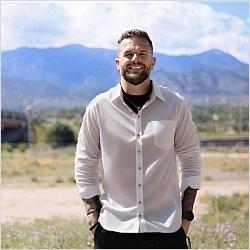
Josiah Dicken MA, LPCC |
About the Author Licensed Professional Clinical Counselor Wayfinder Counseling & Coaching, LLC · Colorado Springs, CO Josiah Dicken, MA, LPCC, is a licensed professional clinical counselor and founder of Wayfinder Counseling & Coaching, LLC in Colorado Springs, Colorado. He specializes in helping individuals, couples, and families navigate life’s challenges using a personalized, evidence-based approach. Josiah is known for creating a safe, non-judgmental space where clients feel heard, validated, and empowered to heal, grow, and move forward. |