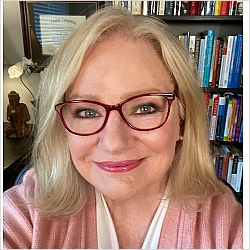
Sarah Swenson LMHC, Neurodiverse Couple Support
Seattle, Washington
VerifiedTelehealth AvailableExpert in Autism Spectrum Disorder: Understanding the Latest Research and Treatment Approaches
Professions: Life Coach, Psychotherapist, Counselor
Languages: English, German, Italian
Telephone: 206-539-0994
Website: Visit Website
My Approach to Therapy
A relationship in which one partner is autistic and the other is neurotypical can be lonely for both partners. You can feel isolated and hurt, which often leads to a fear that nothing can ever change for the better.
As a specialist in working online with neurodiverse couples, I offer you a unique understanding of the dilemmas and challenges encountered by each of you. You can learn to identify the differences between you and understand the effects of these differences. Our work together includes creating strategies for effective communication in a blame-free environment where you can begin to show compassion not only to your partner but to yourself.
If you have children, we can include parenting concerns. Often, a parent begins to see autism in himselfherself only after one of the children has been diagnosed. Family considerations are key to our work together.
Sometimes, couples are confused about their relationship goals: one partner wants to leave and the other wants to stay. Individually, we will look at each partner's hopes, dreams, and needs, and then come together to see what is possible. Our work includes a frank assessment of the difficulties and the rewards involved in this unique relationship. I will support you with education and skills development along the way.
If you choose to work with me, we will focus on your specific concerns and issues as they arise. I will offer you supportive education and strategies as we look at your lives together. My role is slightly different than you may be accustomed to if you have worked with a therapist previously because of the additional emphasis on clinical education.
My goal is to be certain you understand the neurodiverse relationship in terms of what can change and what cannot change so that you move in directions that are productive, while offering you suggestions for communication skills and strategies. I help partners understand their own way of being in the world and their partner's, as well as how to create news ways of communicating that can lead to a stronger relationship and increased intimacy.
Please contact me by email. I am not able to return phone calls.
My Practice & Services
You may leave a conversation relieved that the two of you have finally settled something, only to discover a few days later that your partner is still waiting for an answer. How can two people who were there for the entire conversation come away with such different ideas about what happened?
In my work with neurodiverse couples, I often ask each partner to take me back to an exchange like that one. What did you hope your partner would understand? What did you understand your partner to be saying? As we talk, we can often identify the moment when the conversation began to mean something different to each of you. That gives you both a place to begin understanding why you keep finding yourselves in the same difficulty.
A large part of our work together includes education about autism and also about the neurotypical experience, and how the relationship is shaped by these differences.
If you discern during our work that it might be better to go your separate ways, we can work together on creating a new path. There are more options to consider than marriage as you currently experience it and divorce.
My clients and I work online with a video chat platform created specifically for telemedicine. Depending on where you live, we form a counseling (Washington state) or coaching relationship (everywhere else). There is overlap in these two practices but they are different. You can find a full exploration of the distinctions on my website.
Supporting Neurodiverse Couples and also High Intelligence Individuals
I work with neurodiverse couples - autistic + neurotypical partners - and also with individuals in these relationships. As a member of Mensa, my second area of clinical expertise is supporting the complexity of high intelligence. Often, these two specialties merge in the couples with whom I work.
Can I come on my own if my partner doesn’t want to participate?
Yes. I work individually with both autistic and nonautistic partners. You’re welcome to come on your own, even if your partner never chooses to join you.
We can begin with a situation you wish you understood better. Perhaps you’ve tried several times to tell your partner about something that hurts you, and you’re puzzled by the way the conversation goes each time. We can look at what you hoped your partner would understand, how your partner responded, and what that exchange was like for you. Over time, that work can help you decide what you’d like to ask of your partner, what you can live with, and what you can’t live without.
My Book for Neurodiverse Couples
What can you say when you realize your partner heard something quite different from what you meant? In "How We Miss Each Other," I show you how to trace a misunderstanding back to the remark, question, or silence that each of you interpreted differently. Once you see where you lost each other, you can change course while you’re still talking. And if the conversation has already ended painfully, you can come back to it, acknowledge what hurt, and begin to repair the damage together.
How Psychotherapy Can Help
My practice is unique and highly specialized. Together, we can work to help you understand your unique issues and replace them with strategies for communication behaviors that help you feel better about yourself and your relationship. Please visit my website TheNeurodiverseCouple.com for extensive information about my practice. I work exclusively online. International clients are welcome. I work primarily in English and also in Italian and German.
On the Fence About Going to Therapy?
Many neurodiverse couples have had negative experience even with highly skilled counselors and therapists. This is because most couple therapy modalities have been developed by neurotypical clinicians and are effective for neurotypical couples, and because our education and training as therapists lack emphasis on the unique qualities of the neurodiverse relationship. Traditional couple counseling relies on the ability of both partners to reflect on their interior lives and to articulate their experience. This is often a great challenge for autistic individuals within the context of a conventional couple session. My work with couples acknowledges and accommodates these differences at the outset so that both partners feel heard. However, if you're not ready to work with me, I have developed a series of courses that are available online that you might find interesting and useful. They include sound clinical information about neurodiversity as well as strategies and skills geared toward improving your communication now. You can find the courses at my teaching website, TheNeurodiverseCouple.thinkific.com, which is also linked from my website above. Previews of the courses are available on my YouTube Channel, The Neurodiverse Couple.
Had a Negative Therapy Experience?
I created "The Neurodiverse Couple" on Substack. Here you will find articles, tips, reliable resources, and my podcast covering issues pertaining to neurodiversity in intimate relationships. You can subscribe to get articles delivered straight to your inbox weekly. Paid subscriptions will include access to group seminars and discussions. Details can be found on my professional website under the tab called Subscription Service. The direct address to the substack is https:sarahswensonlmhc.substack.com
Why Going to Therapy Does Not Mean You are Weak or Flawed
We seek coaching for our tennis game. We learn new languages from tutors. We explore our challenges with counselors. It is perfectly healthy to seek professional support when you want to understand something better than you do at the moment.
If you're neurotypical partner and your partner is or may be autistic, you may find support in the series of articles I write just for you, which you will find here: SarahSwensonLMHC.substack.com You may subscribe to have weekly articles sent directly to your inbox and the opportunity to join group discussions on topics specific to your neurodiverse relationship. It's all right to get support for your own unique needs. It means you care about your personal growth, just as it does when you work with your tennis coach.
The Duration and Frequency of Therapy
My approach centers on helping you to understand yourselves and your relationship, and on helping you develop more effective communication so that you are not reliant upon counseling indefinitely. We take your goals, schedules, and budget into considation before we chart our course for working together.
Please contact my by email if you are interested in being on the wait list for services. I am not able to return phone calls.
Expertise & Specialties
Age Groups I Work With
AdultsElders
Groups I Work With
Neurodiverse Autistic+Neurotypical Couples, Individuals with Autistic Partners, Autism Spectrum, High Intelligence Individuals, Engineers, Entertainment professionals, Educators, Attorneys, Physicians, Mental Health Professionals, Academics
Therapy Services & Specialties
Concerns & Challenges Addressed
AnxietyCommunication ProblemsDevelopmental Conditions (Autism, Aspergers, etc.)Emotional IntelligenceRelationships and MarriageSelf-EsteemShame
Therapeutic Approaches & Evidence-Based Methods
Cognitive Behavioral Therapy (CBT)Integration of different therapy models
Video Introduction
Gallery
Location & Contact
Follow on Social Media

My Blog Posts
- Getting the Help You Want: Neurodiverse Couples Therapy
- Identifying the Partner of Someone Who May Be Autistic: They're Usually Misdiagnosed
- How to Deal with Loneliness in a Relationship When Your Partner Is Autistic
- Is It Still Gaslighting If My Partner Has Asperger's?
- When Therapists Behave Unethically
- The Harmful Effects of Sarcasm in Relationships and Communication
- Coming of Age in Divisive Times: The Power of Fantasy and the Arts
- When There Is No Getting Away: The Grief of Sibling Bullying
- Learning to Trust Again After Gaslighting
- The Blameless Burden: Scapegoating in Dysfunctional Families
- What Do You Really Mean When You Call Someone a Narcissist?
- How Envy Differs from Jealousy and What We Can Learn from It
- When You Suspect a Parent May Be on the Autism Spectrum
- Before You Blow Up Your ASD/Neurotypical Marriage, Read This
- Married with Undiagnosed ASD: Why Women Who Leave Lose Twice
- Understanding Autism and Communication in Your Relationship: Moving Beyond Blame
- If You Say This and You're Not on the Autism Spectrum, Stop
- Anxiety in the Asperger’s/Autism Marriage: It Cuts Both Ways
- How Learning about Child Development Can Improve Your Parenting
- What If My Husband and Child Both Have High-Functioning Autism?
- Asperger’s Syndrome and the Illusion of Friendship
- Asperger’s Syndrome and Emotional Intelligence
- Asperger's Syndrome: What Is Theory of Mind?