In some settings, therapy may involved other people. In others, your therapy session will only involve you and your therapist. Different circumstances will dictate who should attend your therapy session and what type of therapy will be practiced. Here, therapists discuss who should come with you to your therapy sessions:
 As parents, we hear the word “resilience” all the time these days: “Children are resilient.” “We must help our children be resilient.” Most of us have a vague sense of what resilience means and why it is important, but few really have a handle on what, exactly, we are supposed to do to help our children be resilient. In this article, I will give you some tools for doing just that, but first the basics.
What Is Resilience?
Merriam-Webster defines resilience as “the ability to become strong, healthy, or successful again after something bad happens.” According to Google, resilience is “the capacity to recover quickly from difficulties; toughness.”
Underlying both of these definitions is an assumption that (1) bad stuff inevitably happens in life and (2) we all have the capacity to handle it. In some ways, this seems pretty obvious. However, as parents we tend to worry about our children’s ability to handle the bad stuff and want to protect our children from it. To some extent, especially when our children are very young, this makes absolute sense. The problem is that we won’t be in our children’s lives forever and, even while we are, we simply can’t protect them from all the slings and arrows that life sends their way.
Given these cold, hard facts, our job as parents is to help our children learn to cope with our difficult, imperfect world so that, eventually, they can take care of themselves—emotionally, physically, financially, etc.—if not completely on their own (no one can, nor should, handle life completely on their own), then at least somewhat on their own.
[fat_widget_child_counselor_right]
Now that we’ve established what resilience is and why it is important, let’s look at how we can foster resilience in our children. I believe there are five basic steps to helping build resilience in our children: empathizing, making meaning, problem solving, tolerating uncertainty, and modeling resilience.
1. Empathizing
When your child is struggling, or when something negative has happened to him or her, the first thing the child needs to know is that you understand his or her feelings. Rather than, “Oh, my god, that’s terrible! What are we going to do?” it is more helpful to say something like, “That sounds really painful/difficult/scary.” Even if your child did something wrong or made a mistake, he or she needs your empathy, at least at first. To say you empathize with your child does not necessarily mean you condone his or her behavior, but before you discuss the behavior, it can really help if you say something like, “It feels horrible to hurt a friend’s feelings,” or, “You seem furious at Jane.” In validating your child’s feelings, you are letting him or her know that you accept and can handle his/her feelings, that the feelings are not too upsetting, scary, or infuriating for you. Your child will eventually internalize this message—whatever I feel has validity—which will help build self-esteem and emotional resilience.
2. Meaning Making
If/when your child is able to discuss the situation further, going over what happened and helping your child make sense of it will help him or her feel less frightened, upset, and/or overwhelmed. Making meaning of what happened and why also gives your child a better understanding of the world and some sense of control. Sometimes how we do this is pretty straightforward, such as, “It sounds like it was slippery and you were running too fast and that’s why you fell,” or, “Do you think maybe you didn’t study enough for the test and that’s why you did badly?” Other times, it may require a more subtle approach, such as, “I wonder why Sam was so mad at you?” How you help your child make meaning will obviously depend on the situation and the age of your child. In general, though, the more questions you ask and the fewer answers or opinions you give, the better. When children feel that they are in charge of making sense of their world, the more in control and confident they feel, which only adds to their resilience.
3. Problem Solving
One of the “benefits” of difficult situations is that they give us an opportunity to learn from our mistakes or, even if we didn’t make a mistake, learn what we might do differently in the future. This is no easy task. One of our jobs as parents, therefore, is to teach our children how to learn from their mistakes and to handle the difficult situations they may encounter. Sometimes this involves little more than conveying information, such as, “Ice is slippery. If you run on an icy sidewalk, you will probably fall.” More often than not, however, what our children need to learn is the process by which a good decision gets made or a thorny problem solved. Some basic techniques that you can use to teach your child how to problem solve are brainstorming, role playing, and speculating.
For example, let’s say your daughter complains that her friend was very mean to her, and let’s say that after you have empathized with your daughter and helped her make sense of what happened, she asks you to help her figure out what to do. Although it will probably be tempting to give advice or state your opinion—”If she’s going to treat you like that, there’s no point in you being friends with her!”—your daughter is going to benefit a lot more if you help her problem-solve the situation. One way to do this is to brainstorm her options with her—stop spending time with her friend, be more guarded with her friend, confront her friend in person, call her, etc. After you and your daughter have come up with a few ideas, you might role play the ideas to see how they feel and how they turn out (some kids find role plays very helpful) or have a discussion around what each option might feel like: “What would it feel like if you said/did this?” “What do you think her response would be if you did that?”
4. Tolerating Uncertainty
Sometimes things happen that are completely out of your child’s control and that no amount of problem solving will fix. Illness, death, and natural disasters are but a few examples. In these instances, empathizing (“It is scary not knowing what’s going to happen”) and making meaning (“Sometimes things happen that we can’t control”) with your child are important in terms of helping your child feel less scared and alone. Also, by sticking with your child’s feelings, whatever they may be, and sticking with the truth about life’s uncertainty, you give your child the message that, as scary and uncertain as life can be, you are confident that he or she can tolerate not knowing sometimes.
Of course, whenever possible, it is helpful to reassure your child that (certain) bad things happen very rarely or that it is unlikely that they will happen to him or her—”Aunt Mary has an illness that only adults get”—or that there is hope even amidst the uncertainty: “The doctors are doing everything they can to help her get better.” Obviously, the more your child can feel safe and hopeful, the better.
5. Modeling Resilience
One of the hardest parts about helping our children develop resilience is that we don’t always feel so resilient ourselves. Developing an awareness of our own feelings around difficulty, failure, loss, and uncertainty is therefore very important. You might want to ask yourself: when I struggle with something or make a mistake, how do I feel about myself? How well am I able to work through or problem-solve a tough situation? How well do I tolerate uncertainty and loss? How confident am I in my ability to handle life’s misfortunes? If you are able to feel somewhat confident about at least some of the areas above (hey, no one ever feels completely self-accepting or anxiety-free), then you are modeling resilience for your child in a very powerful way.
Fortunately, even if we don’t feel so resilient all the time, having an awareness of our own vulnerabilities and insecurities can help us deal with our child’s. For example, in the situation where the friend is mean to your daughter, you may find yourself feeling very anxious: “Oh, my poor baby, this is going to be devastating to her!” “What if my daughter doesn’t know how to keep friends?” In these moments, it is helpful to stop and ask yourself, “Why am I feeling so worried? Who is my anxiety really about—me or her?” Much of the time, our own insecurities and past experiences color our perception of our children’s experience. To the degree to which we can, it really helps if we put aside our own experiences and self-doubts and focus on our child’s feelings and experience.
Temperament and Resilience
Although all children have the capacity for resilience, it seems that some children struggle more than others with life’s stressors. For example, there are children who are especially hard on themselves, children who are particularly sensitive to changes in their environment, children for whom uncertainty is extremely anxiety-producing, etc. However, although they may struggle more than other children in some areas, in the process of struggling, these children often develop greater self-awareness (about their needs, their limitations, their strengths, etc.) and an even larger toolbox of problem-solving skills, all of which greatly serves them as they go through life.
All children have the capacity for resilience. Our job as parents is “simply” to nurture this innate capacity. Following the above steps of empathizing, making meaning, problem solving, tolerating uncertainty, and modeling resilience, you can achieve just this. Even if you miss a step or two, if you are able more often than not to convey an attitude of acceptance (that life can be difficult and uncertain) and confidence (that he or she can handle life’s difficulties and uncertainties) to your child, you will be going a long way toward helping your child build resilience and succeed in life.
If your family is beginning family therapy, it is important that the appropriate members attend. The concerns that brought your family to therapy may dictate who should be there. Here, therapists explain circumstances that require different family members for therapy to be successful:
Same-sex couples are welcome to seek out a couples therapist if their relationship could use some work. However, it is important to know that not all couples therapists may be a good option. Here, several therapists explain how a couples therapist can help same-sex couples, and what you should look for if you are a same-sex couple looking for a couples therapist:
[fat_widget_right]Families seek therapy with a family counselor for many different reasons. Some members of the family may not understand the purpose of going to family therapy, or why family counseling is more effective when all members of the family unit attend. Here, actual therapists explain what family therapy is, and how it helps families overcome challenges they may be facing:
(more…)
[fat_widget_right]Many families seek a therapist because of a breakdown in their family system. This breakdown may be the result of poor communication, substance abuse, a major change in the family, or something else that causes tension. This may lead to verbal arguments, and sometimes a family may start fighting during a therapy session. Below, several therapists weigh in on how they handle conflicts that occur during therapy sessions, why they are completely normal, and how fighting can be used to overcome your family’s challenges:
[fat_widget_right]It may seem illogical to ask an entire family to attend therapy when only one member of the family appears to be causing problems or experiencing challenges. Understanding how a family dynamic can change when there is an imbalance, however, is essential to understanding why having the whole family in therapy might actually be the most effective way to help the family member who is in distress. Below, therapists discuss the role of family members in family therapy:
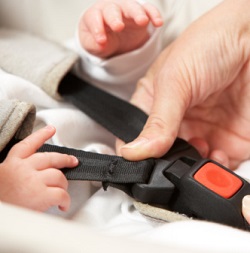 The tragic story of Cooper Harris, a Georgia toddler whose father left him in a hot car all day, has yielded a criminal prosecution and a national debate about kids and cars. Some media pundits and parenting experts have pointed to so-called “forgotten baby syndrome.” Forgotten baby syndrome isn’t an actual disease or mental health condition that you’ll find listed in psychiatry’s bible, the Diagnostic and Statistical Manual (DSM). However, the fact that 623 children have died of heat stroke in hot cars on warm days since 1998 suggests that forgetting children in cars is a real problem.
Why Parents Forget Their Children
Most parents now put their children in the backseat, with babies facing the rear, to minimize their risks of injury in a car accident. This positive parenting practice, though, means that parents may not interact with their children during a car ride and that they may not even be able to see their children. The tendency of most parents to be overwhelmed and distracted increases the chances that a child in the backseat will slip the parent’s mind.
When we drive our cars, prepare food, and complete other routine, everyday tasks, our brains go into auto-pilot. This means many parents are not consciously thinking about their children while driving them to and from daycare or activities, instead they may be thinking through the day to come. And deviating from a standard routine makes it easy to forget that the child is there at all. One recent study found that 11% of all parents have forgotten their children, and 1 in 4 parents of children under age 3 have accidentally left their child in a car.
How to Avoid Forgetting Your Child[fat_widget_left]
If you’re concerned about forgetting your child, the key is to jar your brain out of auto-pilot. When something’s out of place, it’s hard for your mind to continue working unconsciously. Put something that is an integral part of your daily routine— such as one shoe, your laptop, purse, or office keys—in the backseat. As you get out of the car, you’ll notice you’re missing something, even if you’re not thinking about your child. And once you notice the missing item, you’ll discover the item and your child in the backseat.
References:
- Null, Jan. (2014). Heatstroke Deaths of Children in Vehicles. Department of Earth and Climate Sciences, San Francisco State University. Retrieved from http://www.ggweather.com/heat/
- Martin, L. (2012, March 12). Forgotten baby syndrome. MailOnline. Retrieved from http://www.dailymail.co.uk/femail/article-2113440/Forgotten-baby-syndrome-It-unthinkable–accidentally-leaving-baby-hours-lots-busy-parents-devastating-consequences.html
- Payne, M. (2014, July 16). Shoe trick will prevent child deaths in hot cars. News-press.com. Retrieved from http://www.news-press.com/story/news/investigations/melanie-payne/2014/06/20/tell-mel-neverleft-campaign/11102697/
[fat_widget_right]It is common for a heated argument to break out behind closed doors when couples enter into couples therapy. It is nothing to be ashamed of, and it is the reason many couples are seeking therapy in the first place. The great news is that your therapist will be trained to deescalate the situation and he or she can teach you effect ways to cope with conflict. Here, several therapists explain why fighting in therapy under the right circumstances may actually be a good thing for your relationship:
[fat_widget_right] Many people find themselves in couples therapy because of communication problems. Therefore, it is common for one or both parties involved in couples therapy to enter into it withholding a secret they know will hurt the other. Therapists approach this situation carefully, usually by establishing a “no secrets” policy for couples in therapy. Here, several therapists explain the role of truth in couples therapy, and why it can be important to stop keeping secrets—even painful ones—from your partner:
Confidentiality is important for people in therapy to be able to form a trusting relationship with their therapist. Confidentiality is also important legally because it protects the person in therapy and the therapist in circumstances where they may find themselves in a court of law. Below, several therapists explain confidentiality as it pertains to couples therapy and couples that file for divorce:
 Insurance is not typically required to cover marriage counseling.
Under the Affordable Care Act, the Mental Health Parity and Addiction Equity Act, and other federal laws, insurers must provide equitable coverage for mental health conditions. This means they must treat mental health conditions like physical health conditions, must not exclude them from coverage, and must not charge higher co-pays for these conditions.
Insurance equity laws don’t usually apply to couples counseling. That’s because mental health parity laws treat mental health conditions as a medical diagnosis. The need for couples counseling is not a medical diagnosis, so it is not analogous to a physical health issue.
In some cases, an insurer might be required to cover couples counseling if the need for counseling directly arises from a mental health condition. For example, some insurers might cover marriage counseling for a person with a sex addiction or another condition that affects their marriage. Even then, it can be difficult to get insurance coverage.
Though plans are not required to cover marriage counseling, some offer it as an additional benefit. It’s important to read your plan documents to get a clear understanding of what is and is not covered. In most cases, you’ll have to choose from a pre-approved list of providers. You might have to reach a deductible before coverage kicks in. Or you might have to apply for reimbursement instead of paying a copay.
In some cases, employee assistance programs cover a portion of the costs of couples counseling, especially when marriage problems are due to a serious issue such as depression or addiction.
How Much Does Marriage Counseling Cost Without Insurance?
The cost of marriage counseling, like the cost of individual therapy, varies with the clinician’s skill level, geographic location, and training. Famous and well-respected therapists typically charge more. People who live in areas with high incomes or a high cost of living should expect to pay higher rates.
Couples counseling can be demanding work and requires a unique skill set. Therapists must protect both parties’ well-being, continually check their own biases, and draw upon complex research in numerous fields. For this reason, many therapists charge more for couples counseling than they do for individual therapy.
Without insurance, most couples pay between $75-$200 per hour. Some therapists offer sliding-scale fees based on income or discounts for buying multiple sessions.
Most couples see their therapist weekly, so the cost of couples therapy without insurance can quickly add up. The overall value, however, is hard to quantify. Therapy can save a marriage, preventing the exorbitant costs of a divorce. Even if a couple decides to split, going through therapy can save money by helping them communicate more effectively, potentially making it easier to divide assets and talk about child custody.
A person’s marriage can be a source of immense joy. It can also cause unbearable stress. Divorce and marital difficulties consistently top lists of life’s most stressful experiences. By reducing or even eliminating relationship stress, marriage counseling can improve quality of life. This can yield far-reaching benefits that extend to a person’s work, relationships with their children, health, and sense of self.
Will Insurance Cover Couples Counseling If My Partner and I Aren’t Married?
Because insurers aren’t legally required to cover couples therapy in most cases, there is no single rule that applies to unmarried couples. You will need to check your benefits agreement. In some cases, an insurance policy only specifies under what circumstances it will cover couples counseling, not whether the couple must be married. Some policies make explicit that the couple must be legally married.
If your insurer does not cover therapy for unmarried couples and you must pay out-of-pocket, the therapist should charge the same rate whether or not you are married. Some therapists may, however, charge different rates based on the number of people in therapy, since more people require more skill. A polyamorous triad, for example, might pay slightly more than a couple.