
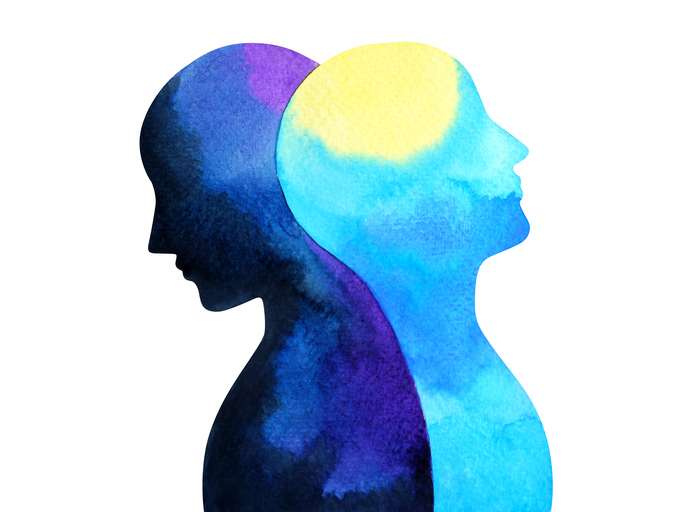
Bipolar disorder is a complex mental health condition characterized by significant shifts in mood, energy, and activity levels that substantially impact daily functioning. People with bipolar disorder experience periods of unusually intense emotion, changes in sleep patterns and activity levels, and unusual behaviors. These changes are far more severe than typical mood fluctuations and can profoundly affect relationships, work performance, and overall quality of life.
Affecting over 1% of the global population, bipolar disorder contributes significantly to disability and mortality, often due to suicide and cardiovascular disease. While bipolar disorder is a lifelong condition, with proper treatment and support, people with bipolar disorder can manage their symptoms and live healthy, fulfilling lives.
Table of Contents
- Types of Bipolar Disorder
- Symptoms and Mood Episodes
- Prevalence and Demographics
- Causes and Risk Factors
- Diagnosis and Assessment
- Treatment Options
- Living with Bipolar Disorder
- Comorbid Conditions
- Frequently Asked Questions
- How Therapy Can Help
Types of Bipolar Disorder
The Diagnostic and Statistical Manual of Mental Disorders, Fifth Edition, Text Revision (DSM-5-TR) recognizes several types of bipolar disorder, each with distinct characteristics:
Bipolar I Disorder
Bipolar I disorder requires at least one manic episode in a person's lifetime. These individuals may also experience depressive or hypomanic episodes, though these are not required for diagnosis. By definition, manic episodes cause marked impairment in functioning, often leading to hospitalization or significant disruption in daily life.
Bipolar II Disorder
Bipolar II disorder involves a pattern of hypomanic and depressive episodes, where the highs are less extreme than in bipolar I. The depressive episodes may be just as severe as those in major depressive disorder or bipolar I disorder. Importantly, bipolar II is not a "milder" form of bipolar I—while hypomanic symptoms tend to be less severe, the depressive phases are often longer and more frequent.
Cyclothymic Disorder
Cyclothymic disorder (or cyclothymia) involves chronic mood instability with both hypomanic and depressive symptoms that are not as long, severe, or frequent as those in bipolar I or II. To be diagnosed, adults must experience symptoms for at least 2 years, while children and teens need only 1 year. Someone with cyclothymia has a 15-50% chance of developing bipolar I or II later in life.
Other Specified and Unspecified Bipolar Disorders
These categories include bipolar-like symptoms that don't fully meet criteria for the disorders above. Examples include short-duration hypomanic episodes or hypomanic episodes without prior major depressive episodes.
Symptoms and Mood Episodes
Bipolar disorder involves distinct mood episodes with specific symptoms and durations:
Manic Episodes
During mania, individuals experience an abnormally elevated, expansive, or irritable mood along with increased activity or energy. These symptoms must last at least one week and be present most of the day, nearly every day. Key symptoms include:
- Inflated self-esteem or grandiosity - Believing one has special powers or is destined for greatness
- Decreased need for sleep - Feeling rested after only 2-3 hours of sleep
- Pressured speech - Talking rapidly, often too quickly to be understood
- Racing thoughts - Ideas flowing faster than can be expressed
- Distractibility - Unable to focus due to irrelevant stimuli
- Increased goal-directed activity - Taking on multiple projects simultaneously
- Risky behavior - Excessive spending, sexual indiscretions, or foolish investments
During severe manic episodes, individuals may experience psychotic symptoms such as hallucinations or delusions.
Hypomanic Episodes
Hypomania involves the same symptoms as mania but is less severe. Episodes must last at least four consecutive days. The key distinction is that hypomania rarely prevents a person from functioning on a day-to-day basis and doesn't require hospitalization.
Major Depressive Episodes
Depressive episodes in bipolar disorder involve at least five of the following symptoms for two weeks or more:
- Depressed mood most of the day, nearly every day
- Diminished interest or pleasure in activities
- Significant weight change (gain or loss of more than 5% in a month)
- Sleep disturbances (insomnia or hypersomnia)
- Psychomotor changes (agitation or retardation)
- Fatigue or loss of energy
- Feelings of worthlessness or excessive guilt
- Difficulty concentrating or making decisions
- Recurrent thoughts of death or suicide
Mixed Features

Individuals can experience mixed features—having symptoms of both mania/hypomania and depression simultaneously. This presentation is particularly challenging to treat and may increase suicide risk.
Prevalence and Demographics
General Statistics
An estimated 2.8% of U.S. adults experience bipolar disorder in any given year, while 4.4% will experience it at some point in their lives. According to SAMHSA, approximately 3.1 million American adults (aged 18 to 65) live with bipolar disorder, making up 1.5% of the adult population.
Age of Onset
Most people are diagnosed with bipolar disorder in their teens or twenties, though it can occur at any age. Bipolar disorder is typically diagnosed in early adulthood and is less common among younger age groups. Most patients experience their first manic episode in their early 20s, with bipolar I disorder being most common among young adults aged 18 to 25.
Gender Differences
Past-year prevalence is similar for males (2.9%) and females (2.8%), though worldwide data suggests approximately 48% of people with bipolar disorder are male and 52% are female. Among adolescents, prevalence is higher for females (3.3%) than males (2.6%).
Racial and Ethnic Disparities
Native American/Alaskan Natives have the highest rate of bipolar spectrum disorder diagnoses (1.5%), while Asians have the lowest (0.2%). Native Hawaiian/Other Pacific Islanders are 49% less likely to receive medication for bipolar disorder compared to non-Hispanic whites, highlighting significant treatment disparities.
Global Impact
According to the World Health Organization, one in eight people worldwide lives with a mental disorder—approximately 970 million people, with bipolar disorder representing a significant portion of this burden.
Causes and Risk Factors
Bipolar disorder results from a complex interaction of multiple factors:
Genetic Factors
Bipolar disorder has significant genetic predisposition. Family history is one of the strongest risk factors—individuals with a first-degree relative with bipolar disorder have approximately a 10-fold increased risk of developing the condition.
Neurobiological Factors
Research reveals differences in brain structure and function, including abnormalities in limbic and cortical regions associated with emotion regulation. Chronic neuroinflammation and immune dysregulation affect onset, with changes in glucocorticoid receptors under chronic stress conditions.
Environmental Triggers
People are at higher risk if they have experienced a traumatic event or misused drugs or alcohol. Stressful life events, sleep disruption, and substance use can trigger mood episodes in vulnerable individuals.
Diagnosis and Assessment
Diagnostic Process
Diagnosis requires careful clinical assessment, as diagnostic challenges arise from symptom overlap with unipolar depression, frequently leading to delays. Average delays in diagnosis range from 5 to 10 years.
The diagnostic process typically involves:
- Comprehensive clinical interview - Detailed history of mood episodes and symptoms
- Medical evaluation - Rule out medical conditions that can mimic bipolar symptoms
- Psychiatric assessment - Evaluation using DSM-5-TR criteria
- Collateral information - Input from family members about observed behaviors
- Mood charting - Tracking mood patterns over time
Differential Diagnosis
Several conditions can present similarly to bipolar disorder:
- Major depressive disorder - Distinguished by the absence of manic/hypomanic episodes
- Borderline personality disorder - Mood changes are typically more reactive and brief
- ADHD - Symptoms are more consistent rather than episodic
- Substance use disorders - Can induce mood symptoms that mimic bipolar disorder
- Medical conditions - Thyroid disorders, neurological conditions
Treatment Options
Modern treatment for bipolar disorder has evolved significantly, with recent neuroscience research revolutionizing approaches, moving beyond one-size-fits-all to personalized, evidence-based care combining advanced medication management, targeted psychotherapy, and lifestyle medicine.
Medications
Mood Stabilizers
Mood stabilizers remain a cornerstone of treatment. Common options include:
- Lithium - Still considered the gold standard for many patients
- Valproate - Effective but requires careful monitoring, especially in people of childbearing age
- Carbamazepine - Alternative mood stabilizer
- Lamotrigine - Particularly effective for bipolar depression
Antipsychotics
Second-generation antipsychotics like lurasidone, olanzapine, cariprazine, lumateperone, quetiapine, and ziprasidone have shown efficacy in treating bipolar depression and mixed features. Atypical antipsychotics are recommended for both acute and long-term management.
Antidepressants
Antidepressants can be used in augmentation with mood stabilizers or antipsychotics for bipolar depression, though their use remains controversial. They should never be used as monotherapy due to risk of triggering mania.
Psychotherapy
Therapy helps people accept their disorder, recognize warning signs, develop coping skills, and stick with medication schedules. Evidence-based approaches include:
- Cognitive Behavioral Therapy (CBT) - Helps identify and change negative thought patterns
- Family-Focused Therapy - Improves family communication and support
- Interpersonal and Social Rhythm Therapy - Stabilizes daily routines and sleep patterns
- Psychoeducation - Understanding the illness improves treatment adherence
Lifestyle Interventions
A 2023 systematic review found lifestyle interventions targeting diet, physical activity, sleep, and stress management showed significant benefits. Key components include:
- Sleep hygiene - Maintaining consistent sleep-wake cycles
- Regular exercise - Moderate aerobic activity helps stabilize mood
- Stress reduction - Mindfulness, meditation, yoga
- Substance avoidance - Alcohol and drugs can trigger episodes
- Routine maintenance - Consistent daily schedules help prevent mood episodes
Emerging Treatments
Neuromodulation
Non-invasive brain stimulation techniques show promise for bipolar depression treatment, including:
- Transcranial magnetic stimulation (TMS)
- Electroconvulsive therapy (ECT) for severe cases
Novel Medications
Ketamine shows rapid antidepressant effects in treatment-resistant bipolar depression, though evidence for treating manic symptoms remains limited. Psilocybin-assisted psychotherapy is being investigated for bipolar II disorder with promising safety results.
Living with Bipolar Disorder
Daily Management
Living successfully with bipolar disorder requires ongoing commitment to treatment and self-care:
- Medication adherence - Taking medications as prescribed, even when feeling well
- Mood monitoring - Daily tracking helps identify early warning signs
- Trigger identification - Recognizing personal triggers for mood episodes
- Support systems - Building strong relationships with family, friends, and peers
- Crisis planning - Having a plan for managing severe symptoms
Work and Relationships
Mood episodes can interfere with everyday activities, relationships, and work or school responsibilities. Strategies for success include:
- Open communication with employers about needs
- Utilizing workplace accommodations when necessary
- Building understanding with partners and family members
- Joining support groups for connection with others who understand
Long-term Outlook
People with severe mental disorders like bipolar disorder have a 10-25 year shorter life expectancy than the general population, often due to untreated physical conditions. However, with proper treatment and lifestyle management, many individuals with bipolar disorder lead fulfilling, productive lives.
Comorbid Conditions
Approximately 65% of individuals with bipolar disorder have at least one psychiatric comorbidity. Common co-occurring conditions include:
Psychiatric Comorbidities
- Anxiety disorders - Occurring in 75% of people with bipolar I and II
- Substance use disorders - Over half of people with bipolar I and 37% with bipolar II
- ADHD - Common especially in children and young adults
- Eating disorders - Around 14% of people with bipolar II
- PTSD - Often complicates treatment
Medical Comorbidities
Bipolar disorder has higher rates of medical conditions like cardiovascular disease, metabolic syndrome, and diabetes. Major depression and bipolar disorder predispose youth to accelerated atherosclerosis and early cardiovascular disease.
Frequently Asked Questions
What's the difference between bipolar I and bipolar II?
Bipolar I disorder requires at least one full manic episode that causes significant impairment or hospitalization. Bipolar II involves hypomanic episodes (less severe than mania) alternating with major depressive episodes. While bipolar II may seem "milder," the depressive episodes can be just as severe and are often more frequent than in bipolar I.
Can children have bipolar disorder?
Yes, though it's less common and can be challenging to diagnose. Many types of disruptive behavioral disorders are more common in childhood, but bipolar disorder typically emerges in adolescence or early adulthood. Symptoms in children may present differently than in adults.
Is bipolar disorder curable?
Bipolar disorder is a lifelong condition that doesn't go away on its own. However, with proper treatment including medication, therapy, and lifestyle management, most people can effectively manage their symptoms and live fulfilling lives.
What triggers mood episodes?
Common triggers include sleep disruption, stress, substance use, medication changes, seasonal changes, and major life events. Identifying personal triggers through mood tracking can help prevent episodes.
How is bipolar disorder different from mood swings?
The mood changes in bipolar disorder are more severe than normal ups and downs experienced by everyone. Bipolar mood episodes last for days to weeks, significantly impair functioning, and may include psychotic symptoms.
Can people with bipolar disorder live normal lives?
Yes, with proper treatment and support. Many successful professionals, artists, and public figures manage bipolar disorder while maintaining careers and relationships. The key is consistent treatment adherence and lifestyle management.
How Therapy Can Help
Therapy plays a crucial role in managing bipolar disorder. Treatment can help individuals manage their moods and prevent symptoms from becoming more severe. A skilled therapist can provide:
- Psychoeducation about the condition and its management
- Mood monitoring techniques to identify early warning signs
- Coping strategies for managing symptoms and stress
- Medication support to improve adherence and manage side effects
- Relationship counseling to address interpersonal challenges
- Crisis intervention planning for severe symptoms
Finding a therapist experienced in treating bipolar disorder is essential. Look for professionals who:
- Have specific training in mood disorders
- Use evidence-based approaches like CBT or family-focused therapy
- Collaborate with psychiatrists for integrated care
- Understand the importance of medication in treatment
- Respect your treatment preferences and goals
If you or someone you love is struggling with mood symptoms, don't wait to seek help. Find a qualified therapist who specializes in bipolar disorder treatment and begin your journey toward stability and wellness today.
References:
- Ahmed, Y. B., Al-Bzour, A. N., Alzghoul, S. M., et al. (2023). Limbic and cortical regions as functional biomarkers associated with emotion regulation in bipolar disorder: A meta-analysis of neuroimaging studies. Journal of Affective Disorders, 323, 506-513.
- American Psychiatric Association. (2022). Diagnostic and statistical manual of mental disorders (5th ed., text rev.). https://doi.org/10.1176/appi.books.9780890425787
- Centers for Disease Control and Prevention. (2025, August 25). Mental health data sources. U.S. Department of Health and Human Services. https://www.cdc.gov/mental-health/about-data/mental-health-data-sources.html
- Hsu, C. W., Chou, P. H., Brunoni, A. R., et al. (2023). Comparing different non-invasive brain stimulation interventions for bipolar depression treatment: A network meta-analysis of randomized controlled trials. Neuroscience & Biobehavioral Reviews, 145, 105016.
- International Bipolar Foundation. (2024). Bipolar disorder statistics and patterns. Retrieved from https://ibpf.org/learn/bipolar-disorder-statistics/
- Kishi, T., Ikuta, T., Matsuda, Y., et al. (2021). Mood stabilizers and/or antipsychotics for bipolar disorder in the maintenance phase: A systematic review and network meta-analysis of randomized controlled trials. Molecular Psychiatry, 26(8), 4146-4157. https://doi.org/10.1038/s41380-020-00946-6
- Léda-Rêgo, G., Studart-Bottó, P., Abbade, P., et al. (2024). Lifetime prevalence of psychiatric comorbidities in patients with bipolar disorder: A systematic review and meta-analysis. Psychiatry Research, 337, 115953.
- Li, Y., Zhang, L., Wang, X., et al. (2024). Global, regional and national burdens of bipolar disorders in adolescents and young adults: A trend analysis from 1990 to 2019. General Psychiatry, 37(1), e101255. https://doi.org/10.1136/gpsych-2023-101255
- Miskowiak, K. W., Seeberg, I., Jensen, M. B., et al. (2023). Cognitive impairment in bipolar disorder: Neurodevelopment or neuroprogression? An ECNP expert meeting report. BMJ Mental Health, 26, e300700.
- National Comorbidity Survey Replication. (2024). Lifetime and 12-month prevalence of bipolar disorder in the United States. Harvard Medical School. https://www.hcp.med.harvard.edu/ncs/
- National Institute for Health and Care Excellence. (2025, September). Bipolar disorder: Assessment and management. Clinical guideline CG185. https://www.nice.org.uk/guidance/cg185
- National Institute of Mental Health. (2024, December). Bipolar disorder. U.S. Department of Health and Human Services, National Institutes of Health. https://www.nimh.nih.gov/health/topics/bipolar-disorder
- National Institute of Mental Health. (2025). Bipolar disorder (NIH Publication No. 25-MH-8088). U.S. Department of Health and Human Services, National Institutes of Health. https://www.nimh.nih.gov/sites/default/files/health/publications/bipolar-disorder/bipolar-disorder.pdf
- National Institute of Mental Health. (2025, March 4). Study illuminates the genetic architecture of bipolar disorder [Research Highlight]. U.S. Department of Health and Human Services, National Institutes of Health. https://www.nimh.nih.gov/news/science-updates/2025/study-illuminates-the-genetic-architecture-of-bipolar-disorder
- Nicoloro-SantaBarbara, J., Majd, M., Miskowiak, K., et al. (2023). Cognition in bipolar disorder: An update for clinicians. Focus: American Psychiatric Publishing, 21(4), 363-369.
- Oliva, V., Possidente, C., De Prisco, M., et al. (2024). Bipolar disorders: An update on critical aspects. The Lancet Regional Health – Europe, 46, 101135. https://doi.org/10.1016/j.lanepe.2024.101135
- Rosenblat, J. D., Carvalho, A. F., Li, M., et al. (2024). Psilocybin-assisted psychotherapy for treatment-resistant depression in bipolar II disorder: A pilot feasibility trial. Journal of Clinical Psychiatry, 85(3), 23m14966.
- Simjanoski, M., Patel, S., De Boni, R., et al. (2023). Lifestyle interventions for bipolar disorders: A systematic review and meta-analysis. Neuroscience & Biobehavioral Reviews, 152, 105257. https://doi.org/10.1016/j.neubiorev.2023.105257
- Singh, B., & Yocum, A. K. (2025). Global trends in the use of pharmacotherapy for the treatment of bipolar disorder. Current Psychiatry Reports, 27(5), 239-247. https://doi.org/10.1007/s11920-025-01606-8
- Substance Abuse and Mental Health Services Administration. (2025, February 13). What is bipolar disorder? U.S. Department of Health and Human Services. https://www.samhsa.gov/mental-health/what-is-mental-health/conditions/bipolar
- Valerino, S. M. (2025). Ketamine as a novel treatment for bipolar disorder. Advances in Clinical Medical Research and Healthcare Delivery, 5(3), Article 8. https://scholar.rochesterregional.org/advances/vol5/iss3/8
- Vieta, E., Berk, M., Schulze, T. G., et al. (2025). Bipolar disorder. The Lancet, 402(10447), 165-176. https://doi.org/10.1016/S0140-6736(25)01140-7
- Vigod, S. N., Frey, B. N., Clark, C. T., et al. (2025). Canadian Network for Mood and Anxiety Treatments 2024 clinical practice guideline for the management of perinatal mood, anxiety, and related disorders. Canadian Journal of Psychiatry. https://doi.org/10.1177/07067437241303031
- Xiao, N., Yin, L., Lee, S., et al. (2025). The efficacy of pharmacological interventions in the treatment of major depressive disorder and bipolar depression with mixed features: A systematic review. Bipolar Disorders, 27(5), 347-357. https://doi.org/10.1111/bdi.70049
- Yildiz, A., Siafis, S., Mavridis, D., Vieta, E., & Leucht, S. (2023). Comparative efficacy and tolerability of pharmacological interventions for acute bipolar depression in adults: A systematic review and network meta-analysis. Lancet Psychiatry, 10(9), 693-705. https://doi.org/10.1016/S2215-0366(23)00199-2
