
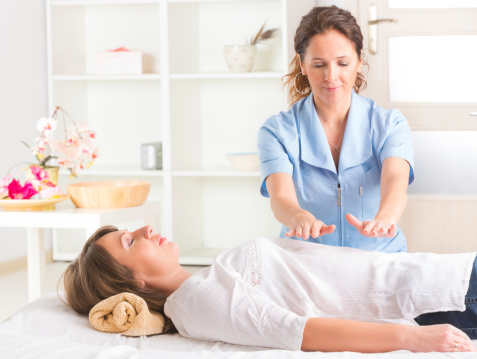
Healing Touch is a gentle, non-invasive energy therapy that works with the body's energy field to promote physical, emotional, mental, and spiritual healing. Developed in the late 1980s by registered nurse Janet Mentgen, this evidence-based approach has grown from a nursing intervention into an internationally recognized complementary therapy used in hospitals, clinics, and private practices worldwide.
As a biofield therapy, Healing Touch is based on the principle that the human body is surrounded by an energy field that directly impacts health and well-being. Touch is an essential human care need. Touch has been described as vital for growth and development; those deprived of touch fail to thrive. Touch is integral to nursing practice, both in instrumental forms such as touching during procedures, and in nurturing forms like touching to communicate support, connection, and compassion. When this energy becomes imbalanced or blocked due to stress, illness, or trauma, practitioners use specific techniques to restore harmony and activate the body's natural healing abilities.
Table of Contents
- What is Healing Touch?
- The Science Behind Healing Touch
- How Healing Touch Works
- What Happens During a Session
- Conditions Treated with Healing Touch
- Benefits and Effectiveness
- Training and Certification
- Safety and Ethical Considerations
- Frequently Asked Questions
- How Therapy Can Help / Find a Therapist
What is Healing Touch?
Healing Touch is an energy-based therapeutic approach that combines ancient healing traditions with modern nursing practice. Biofield therapies are noninvasive therapies in which the practitioner explicitly works with a client's biofield (interacting fields of energy and information that surround living systems) to stimulate healing responses in patients. While the practice of biofield therapies has existed in Eastern and Western cultures for thousands of years, empirical research on the effectiveness of biofield therapies is still relatively nascent.
The therapy is founded on several key principles:
- The human body has an innate capacity for self-healing
- Energy flows through and around the body in predictable patterns
- Disruptions in energy flow can contribute to illness and distress
- Gentle manipulation of the energy field can restore balance and promote healing
Unlike some other forms of energy work, Healing Touch follows a standardized curriculum and maintains professional standards through certification programs endorsed by the American Holistic Nurses Association (AHNA).
The Science Behind Healing Touch
While the mechanisms of action for biofield therapies continue to be studied, recent research has provided insights into their effects. A pre-registered systematic review and multilevel meta-analysis encompassing 137 studies in the meta-analysis and 75 additional studies in the systematic review (n = 12,966 individuals) found that touch interventions were especially effective in regulating cortisol levels (Hedges' g = 0.78, 95% confidence interval (CI) 0.24 to 1.31) and increasing weight (0.65, 95% CI 0.37 to 0.94) in newborns as well as in reducing pain (0.69, 95% CI 0.48 to 0.89), feelings of depression (0.59, 95% CI 0.40 to 0.78) and state (0.64, 95% CI 0.44 to 0.84) or trait anxiety (0.59, 95% CI 0.40 to 0.77) for adults.
The theoretical foundation of Healing Touch draws from:
- Quantum physics concepts suggesting interconnectedness at subatomic levels
- Psychoneuroimmunology research showing mind-body connections
- Electromagnetic field studies documenting measurable energy fields around living organisms
- Eastern medicine principles of energy meridians and chakras
Practices such as Reiki, therapeutic touch, healing touch, and external Qigong have been regarded as some form of "energy medicine" or "biofield therapy." The biofield concept has been studied and debated by researchers of distinct areas of expertise, and although the phenomenon was sometimes described as physically related to electromagnetics, other factors such as "subtle energy" and focused intention might be involved.
How Healing Touch Works
Healing Touch practitioners work to restore balance to the client's energy system through a series of gentle techniques. The process involves:
1. Assessment
Practitioners use their hands to scan the energy field around the client's body, sensing areas of imbalance, congestion, or depletion. This is done without necessarily touching the physical body.
2. Clearing
Using specific hand movements, practitioners work to remove energy blockages and restore smooth energy flow. This may involve sweeping motions above the body or light touch on specific areas.
3. Balancing
Techniques are applied to balance the energy centers (chakras) and create harmony throughout the energy system. This helps activate the body's natural healing processes.
4. Grounding
The session concludes with grounding techniques to help the client feel centered and fully present in their body.
What Happens During a Session
A typical Healing Touch session follows a structured format designed to create a safe, therapeutic environment:
Before the Session
- Initial consultation to discuss health concerns and goals
- Explanation of the process and obtaining informed consent
- Client remains fully clothed and lies on a massage table or sits in a chair
During the Session
The practitioner begins by "centering" - entering a meditative state to enhance focus and therapeutic presence. The purpose of the study is to determine whether administering healing touch (HT) is more effective than deep breathing (DB) for reducing acute care nurses' stress during a shift. A randomized cluster trial assessed 150 nurses' vital signs and Visual Analog Scale for Stress (VASS) levels pre, post, and at follow-up to achieve a power of .7 and medium effect size.
Key techniques may include:
- Chakra Connection: Gentle touch or near-body work at major joint areas to balance energy centers
- Magnetic Passes: Slow, sweeping hand movements over the body to clear the energy field
- Mind Clearing: Specific techniques to reduce mental chatter and promote relaxation
- Pain Drain: Targeted work to help release discomfort from specific areas
After the Session
- Time for integration and grounding
- Discussion of experiences during the session
- Recommendations for self-care and follow-up
Session experiences vary widely - some people feel deep relaxation, warmth, or tingling sensations, while others may experience emotional release or simply a sense of peace. All responses are considered normal and therapeutic.
Conditions Treated with Healing Touch
Research and clinical experience suggest Healing Touch may be beneficial for various conditions:
Physical Health
- Chronic pain management
- Post-operative recovery
- Cancer treatment side effects
- Cardiovascular conditions
- Immune system support
- Headaches and migraines
- Arthritis and joint pain
Mental and Emotional Health
- Anxiety disorders
- Depression
- Post-traumatic stress
- Stress-related conditions
- Sleep disturbances
- Grief and bereavement
General Well-being
- Fatigue and low energy
- Spiritual distress
- Life transitions
- Palliative and hospice care support
A review included 66 clinical studies encompassing several biofield therapies in different patient populations. The authors found strong evidence for reducing pain intensity in pain populations and moderate evidence of reducing pain intensity in hospitalized and cancer populations. Additionally, moderate evidence points to decreased negative behavioral symptoms in dementia and anxiety in hospitalized populations. This study points to reducing fatigue, improved quality of life in cancer patients, and decreased anxiety in cardiovascular patients.
Benefits and Effectiveness
Recent systematic reviews and meta-analyses have documented various benefits of touch-based therapies:
Evidence-Based Benefits
We found no difference in health benefits in adults when comparing touch applied by a familiar person or a health care professional (0.51, 95% CI 0.29 to 0.73 versus 0.50, 95% CI 0.38 to 0.61), but parental touch was more beneficial in newborns (0.69, 95% CI 0.50 to 0.88 versus 0.39, 95% CI 0.18 to 0.61).
Key findings from research include:
- Significant pain reduction across various conditions
- Decreased anxiety and depression symptoms
- Improved quality of life for cancer patients
- Enhanced relaxation response and stress reduction
- Faster post-surgical recovery times
- Better sleep quality
- Increased sense of well-being and spiritual connection
Clinical Applications
In total, 353 studies in 352 published reports were included: 255 randomized controlled trials, 36 controlled clinical trials, and 62 pre-post study designs. The most common conditions or populations across studies were healthy volunteers (n = 67; 19.0%), patients with pain (n = 55; 15.6%), patients with cancer (n = 46; 13.0%), and surgical patients (n = 40; 11.3%). Several studies included populations with musculoskeletal conditions (n = 29; 8.2%), pediatric populations (n = 27; 7.6%), and those with cardiovascular or circulatory conditions (n = 27; 7.6%).
Training and Certification
Becoming a certified Healing Touch practitioner requires comprehensive training through accredited programs:
Educational Pathway
The Healing Touch Program offers a standardized five-level curriculum:
- Level 1: Foundations of energy healing and basic techniques (16 hours)
- Level 2: Advanced techniques and deepening practice (16 hours)
- Level 3: Advanced practitioner skills and ethics (16 hours)
- Level 4: Practitioner development and mentorship (32+ hours)
- Level 5: Practitioner advancement and certification preparation (32+ hours)
Certification Requirements
To become a Healing Touch Certified Practitioner (HTCP):
- Complete all five levels of training (minimum 100 hours)
- Document 100 practice sessions
- Complete mentorship requirements
- Pass written and practical examinations
- Maintain continuing education requirements
Professional Recognition
Healing Touch certification programs are:
- Endorsed by the American Holistic Nurses Association (AHNA)
- Accredited for nursing continuing education
- Recognized by the National Certification Board for Therapeutic Massage and Bodywork
- Offered internationally with consistent standards
Safety and Ethical Considerations
Healing Touch is generally considered safe when practiced by trained professionals following ethical guidelines:
Safety Profile
- Non-invasive with minimal risk of adverse effects
- Complementary to conventional medical treatment
- Appropriate for all ages, from infants to elderly
- Gentle enough for those with serious illness or fragility
Ethical Standards
Our primary goal with these guidelines is to create a haptic experience during the psilocybin session that reinforces the participants' sense of safety and supports their own experience during the psilocybin session. For a new clinical trial testing a group retreat-based format of psilocybin-assisted therapy, our research team created an initial set of practice guidelines that aimed to describe facilitator use of touch in a way that is ethical, supportive, and minimizes harm. In this Technical Report, we describe our evolving guidelines specifying acceptable practices for facilitator use of touch to ensure a safe, supportive, and therapeutic participant experience. Our primary goal with these guidelines is to create a haptic experience during the psilocybin session that reinforces the participants' sense of safety and supports their own experience during the psilocybin session.
Practitioners follow strict ethical guidelines including:
- Informed consent before any touch or energy work
- Professional boundaries maintained at all times
- Client autonomy respected throughout treatment
- Confidentiality of all client information
- Scope of practice limitations acknowledged
Integration with Conventional Care
Healing Touch is designed as a complementary therapy that works alongside conventional medical treatment, not as a replacement. Practitioners encourage clients to:
- Continue prescribed medications
- Maintain regular medical care
- Inform healthcare providers about complementary therapies
- View Healing Touch as part of an integrative approach
Frequently Asked Questions
Is Healing Touch the same as massage therapy?
No, Healing Touch is distinct from massage therapy. While massage works primarily with muscles and soft tissues through physical manipulation, Healing Touch works with the body's energy field using light touch or near-body techniques. Many sessions involve minimal or no physical contact.
How many sessions are typically needed?
The number of sessions varies based on individual needs and conditions. Some people experience benefits after one session, while others prefer regular sessions for ongoing support. Acute conditions may respond quickly, while chronic issues often benefit from a series of treatments.
What should I expect to feel during a session?
Experiences vary widely. Common sensations include deep relaxation, warmth, coolness, tingling, or a floating feeling. Some people see colors or have emotional releases. Others may feel very little during the session but notice improvements afterward. All experiences are considered valid.
Is Healing Touch covered by insurance?
Coverage varies by insurance provider and region. Some plans cover Healing Touch when provided by licensed healthcare professionals as part of integrative care. Check with your insurance provider about specific coverage options.
Can Healing Touch be learned for self-care?
Yes, Level 1 Healing Touch classes teach techniques suitable for self-care and helping family members. While professional practice requires full certification, basic techniques can be valuable tools for personal wellness.
Are there any contraindications for Healing Touch?
Healing Touch is generally safe for everyone. However, practitioners may modify approaches for those with certain conditions like pacemakers, pregnancy, or mental health concerns. Always inform your practitioner about health conditions and medications.
How Therapy Can Help / Find a Therapist
Healing Touch offers a gentle, holistic approach to supporting health and well-being that complements traditional healthcare. Whether you're dealing with chronic pain, recovering from surgery, managing stress, or seeking deeper spiritual connection, working with a certified practitioner can provide valuable support on your healing journey.
Research suggests that integrating biofield therapies like Healing Touch into comprehensive care can enhance treatment outcomes and quality of life. According to a survey by NCCIH involving 31,000 participants, 55% reported improvements in their overall health through complementary health approaches, including biofield therapies. Over 1.6 million American adults annually seek the services of energy healing therapy practitioners, making biofield therapies a popular choice for many seeking holistic wellness.
To find a qualified Healing Touch practitioner:
- Search the Healing Touch International Practitioner Directory
- Ask for referrals from integrative healthcare providers
- Check with local hospitals offering integrative services
- Look for practitioners certified through recognized programs
When choosing a practitioner, consider:
- Certification credentials and training level
- Experience with your specific health concerns
- Comfort level and therapeutic rapport
- Integration with your existing healthcare team
Ready to explore how Healing Touch might support your wellness journey? Visit the GoodTherapy directory to find qualified energy healing practitioners in your area who can help you discover the benefits of this gentle, evidence-informed therapy.
References:
- American Psychedelic Practitioners Association. (2023). Professional practice guidelines for psychedelic-assisted therapy. Retrieved from https://www.appa-us.org/standards-and-guidelines/professionalpracticeguidelines
- American Psychological Association. (2021). Evidence-based psychological practice in health care. Retrieved from https://www.apa.org/about/policy/psychological-practice-health-care.pdf
- Back, A., Myers, S., Guy, J., Perez, J., Thorn, L. L., & McGregor, B. (2024). Evolving guidelines for the use of touch during a clinical trial of group psilocybin-assisted therapy. Psychedelic Medicine, 2(4), 187-191. https://doi.org/10.1089/psymed.2023.0069
- Burgess, J. E., Gorton, K. L., Lasiter, S., & Patel, S. E. (2023). Healing Touch: A strategy for acute care nurses' stress reduction. Journal of Caring Sciences, 12(1), 4-13. https://doi.org/10.34172/jcs.2023.31903
- Garrett, B., & Riou, M. (2021). A rapid evidence assessment of recent therapeutic touch research. ANS Advances in Nursing Science, 44(3), 223-236. https://doi.org/10.1097/ANS.0000000000000363
- Hammerschlag, R., Baldwin, A. L., Sutherland, E. G., Larson, A., Ward, P., Adams, J., ... & Kreitzer, M. J. (2024). Biofield Therapies: Guidelines for reporting clinical trials. Global Advances in Integrative Medicine and Health, 13. https://doi.org/10.1177/27536130231222295
- Healing Touch Program. (2024). Professional standards and ethics/scope of practice. Retrieved from https://www.healingtouchprogram.com
- Jain, S., Hammerschlag, R., Mills, P., Cohen, L., Krieger, R., Vieten, C., & Lutgendorf, S. (2015). Clinical studies of biofield therapies: Summary, methodological challenges, and recommendations. Global Advances in Integrative Medicine and Health, 4. https://doi.org/10.7453/gahmj.2015.034.suppl
- Luoma, J. B., & LeJeune, J. (2026). Practical guidelines for supportive touch in psychedelic-assisted and MDMA-assisted therapy: A model for practitioners and researchers. Neuroethics, 19(1). https://doi.org/10.1007/s12152-026-09631-x
- National Center for Complementary and Integrative Health. (2024). Stress. Retrieved from https://www.nccih.nih.gov/health/stress
- Packheiser, J., Hartmann, H., Fredriksen, K., Gazzola, V., Keysers, C., & Michon, F. (2024). A systematic review and multivariate meta-analysis of the physical and mental health benefits of touch interventions. Nature Human Behaviour, 8(5), 807-821. https://doi.org/10.1038/s41562-024-01841-8
- Rao, A., Hickman, L. D., Phillips, J. L., & Sibbritt, D. (2021). Perspectives, measurability and effects of non-contact biofield-based practices: A narrative review of quantitative research. International Journal of Environmental Research and Public Health, 18(12), 6397. https://doi.org/10.3390/ijerph18126397
- Rosamond, R. L., Wardell, D. W., Giarratano, G. P., Devier, D. J., & Yu, Q. (2025). Healing Touch as a method for supporting holistic nursing practice: A cluster randomized controlled trial. Journal of Holistic Nursing. https://doi.org/10.1177/08980101251337518
- Smith, M. C., & Reed, S. M. (2023). A unitary theory of healing through touch. ANS Advances in Nursing Science, 46(2), 219-232. https://doi.org/10.1097/ANS.0000000000000487
- Sprengel, M. L., Teo, L., Allen, S., Ijssennagger, N., Hammerschlag, R., Dyer, N. L., & Crawford, C. (2025). Biofield Therapies Clinical Research Landscape: A scoping review and interactive evidence map. Journal of Integrative and Complementary Medicine, 31(5), 406-430. https://doi.org/10.1089/jicm.2024.0773
