 I am guilty of spanking my children. My oldest has been spanked once, maybe twice, in his entire 17 years. My 7-year-old has received a few prime swats, and other forms of discipline, in her short lifetime. My middle child, a 14-year-old boy, is much more intimately familiar with spankings. As an extremely hyperactive and unruly child, my son was constantly exploring things that were off limits and often dangerous. Undeterred by the threats of toy removal, time-outs, and other nonphysical forms of punishment, he pushed me to my limits and I resorted to the only other method I knew: spanking. At the tender age of 5, he was quite adept at “assuming the position.†He no longer covered his back end with his tiny hands, and as much as it drove me crazy, he developed a stoic resistance and would receive his spanking without so much as a tear.
Was this child abuse? Or was it merely discipline? According to the statutes of my state, Florida, I have not committed child abuse because I did not significantly impair my children’s physical, mental, or emotional health. But if I look at an exception in the same statute, it is not so clear. It reads: “Corporal discipline of a child by a parent does not in itself constitute abuse when it does not result in harm to the child.†So even though I subjected my child—actually, all three of my children—to corporal punishment at one time or another, it is considered abuse only if I harmed them.
[fat_widget_right]
But doesn’t a spanking cause emotional injury? Doesn’t bending over and getting smacked, pretty firmly, on the bottom cause physical pain? Doesn’t this type of action potentially result in a traumatic event for a child who has never been struck by a parent? Did I cause harm?
I don’t know where discipline ends and abuse begins. I know that I was spanked as a child. I know that sometimes I learned the lesson and sometimes I didn’t. But I also know that when I was young, the thought of calling the police and reporting my parents as abusers never even entered my mind, no matter how sore my butt was.
Times changed as I grew up. Cable news outlets expanded, divorces were on the rise, and the stories of children being abused, and others claiming abuse to malign a parent, exploded. As an adult, I became keenly aware of how lucky I was, never having been subjected to horrific physical or mental traumas. My eyes were opened to the fact that what I saw as a form of discipline could be interpreted by some as abuse. I was also very cognizant of the fact that had my parents delivered the punishment out of anger, they could have easily crossed that fine line.
I don’t know where discipline ends and abuse begins. I know that I was spanked as a child. I know that sometimes I learned the lesson and sometimes I didn’t. But I also know that when I was young, the thought of calling the police and reporting my parents as abusers never even entered my mind, no matter how sore my butt was.
I heard members of the media discussing this very topic. They agreed that spanking is an acceptable form of discipline, if done appropriately. They stated that if the punishment is delivered out of anger, as an outlet for frustration and rage, then it is abuse. It is only when the punishment is administered out of love, and with the intention of teaching a child what is right, that it constitutes as discipline and not abuse. But doesn’t the mother who brushes her child’s teeth with steel wool say she does it only to teach her child the importance of dental hygiene? Doesn’t the father who forces his toddler to wear a dirty diaper for two days do so only to help the child become potty-trained?
Children have been spanked for generations. And yes, they have been given alcohol, medicine, and even hot sauce. A relative of mine got hot sauce on her thumb to help her quit sucking it. She ended up crying so hard after she tasted the hot sauce that she rubbed her eyes with the same thumb. The result? Very irritated eyes. But she didn’t lose her eyesight, didn’t call the police, and didn’t suck her thumb again.
I am an extremely fortunate person. I was not abused as a child. I was punished, had pickle juice put on my thumb, was sent to bed with no supper, and was spanked. But I was never beaten. I was never psychologically tortured. I was never burned, locked in a closet, or left hungry for days. And I never, ever had any potentially harmful liquid forced down my throat or got thrown into an ice-cold shower. I could not imagine doing this to any of my children, not matter the circumstances. But mothers, fathers, stepparents, foster parents, and other so-called “guardians†do these things every day to hundreds of thousands of children. And I’d bet that if you asked any one of them why, they would all say the same thing: they did it to teach a lesson; they did it to discipline; they did it out of love.
I’m really glad my parents didn’t love me that much.
 Mandy nuzzled her 3 month old baby happily as she warmed his bottle. It felt so good to breathe in his sweet baby smell and touch his soft delicate skin, his little body curled in a warm embrace into the curve of her neck. Mandy was starting to feel like she had her “sea-legs’ as a new mom and was particularly enamored of the fact that her new baby was sleeping through the night. The rough night-time awakenings were beginning to subside as baby Noah matured and slept for longer periods. She was looking forward to meeting a new mom friend in the park with their babies after she gave Noah a bottle.
Suddenly, in the wink of an eye, the tender moment vanished. Mandy watched the water warm Noah’s bottle on the stove. She was blind-sided by a horrific thought, flashing through her mind of the water morphing into hot lava and scalding her baby boy. Mandy flinched, gasping and clenching tightly onto Noah, quickly backing away from the oven. The thought terrified her, and she could not believe such an image threatened to envelop her mind. Mandy’s entire body tensed as she began to pant, shallow breaths. She didn’t know it at the time, but, she was well on her way to her first panic attack after experiencing an intrusive thought…a hallmark symptom of perinatal depression and/or perinatal OCD.
Experiences like Mandy’s are common in some 20% of all child-bearing women who develop perinatal mood/anxiety disorders (the clinical term for depression/anxiety during pregnancy and up through the first year after having a baby). Some women develop symptoms of anxiety with intrusive thoughts while others may not experience these often debilitating and traumatic images. Others may have more depression symptoms with a smattering of anxiety, panic attacks, and sometimes intrusive thoughts.
PMADs (perinatal mood/anxiety disorders) are the clinical term for a myriad of symptoms under the umbrella of depression and anxiety from conception through the first year following childbirth. In layman’s terms, perinatal challenges/neurobiochemical imbalances while pregnant and after having a baby often leave women completely stunned, horrified, and traumatized…because women don’t know what hit them. And no one talks about it.
The reality is that PMADs are very common, and most likely under-reported due to the stigma connected to them. Mothers can be wracked with so much guilt about any of the symptoms, particularly if she has intrusive thoughts, that they are loathe to talk to a specialist to get help or to a family member. Many women report they feel like they are “going crazy†or afraid to be “like that woman on TV who killed her kids.â€
I want to underscore the importance of supporting a woman who is experiencing intrusive thoughts to not delay in seeking help, to get help immediately with a trained specialist in perinatal challenges. The differential amongst these particular perinatal struggles is quite delicate. Furthermore, to receive the best care, she must have help from a skilled perinatal psychotherapist who can provide a comprehensive bio-psycho-social assessment and steer her in the appropriate direction for what is ideally a multidisciplinary approach to treatment.
This article is not intended to be a primer on the difference between perinatal intrusive thoughts and hallucinations since such is the subject of a workshop or conference. And, each set of circumstances requires a different course of treatment (both medically and in psychotherapy). Generally speaking, however, when a woman experiences intrusive thoughts, she is grounded in reality and horrified of the images that are occurring, feeling that her body is betraying her. She will often respond with disgust at the images and in turn demonstrate behaviors that lessen her anxiety and protect her baby (for example, Mandy avoided ovens for a time because such objects were a trigger for her). Intrusive thoughts can be part of perinatal depression and will remit with psychotherapy and in many cases, medication management (typically an SSRI), along with a good self-care plan and social supports in place. Hallucinations, on the other hand, are considered a medical emergency and potentially part of a more rare PMAD, perinatal bipolar disorder or psychosis. In such a case, the woman is not grounded in reality, and hallucinations can cause her to do or say things that she would not normally do and have the potential to be life-threatening to her or the baby. If you suspect that you or a loved one are experiencing hallucinations, call 911 or go to your nearest emergency room immediately. Do not attempt to diagnose.
Fortunately for Mandy, she realized something was amiss in her brain biochemistry and immediately sought help with a trained perinatal psychotherapist. Upon consulting with a psychiatrist specializing in reproductive mental health, she agreed to try an antidepressant (Zoloft) to help her biochemistry restore itself. Mandy’s recovery was swift because she sought help immediately, she received support, non-judgment, validation, psycho-education, as well as cognitive behavioral strategies in psychotherapy to help her diminish the anxiety and intrusive thoughts. She worked with her therapist on a solid self-care plan and put in place the help of a doula (hired caregiver specifically for new parents). Mandy feels empowered now as a new mom, free of intrusive thoughts and filled with pride at the arrival of Noah in her life. She is now on to a full recovery, enjoying her 7 month old son. (Please note: swiftness of recovery times vary with each individual’s unique circumstances).
If you or someone you love appears to have intrusive thoughts after having a baby (or even while pregnant), do not attempt to diagnose her. Do find a trained perinatal specialist to help the woman you care about to get treatment. The good news is that PMADs are treatable and temporary, and with help, women recover fully.
Other useful resources:
- Postpartum Support International—www.postpartum.net – largest non-profit dedicated to PMAD awareness; vast clearinghouse of information on PMADs, down-loadable fact sheets, online support groups for moms and dads, chat with an expert, stellar bibliography of recommended books, latest research findings and trainings in the perinatal world; current legislation in support of PMAD awareness, destigmatization, and treatment; coordinator/volunteers link callers/e-mailers with trained professionals; warmline in English/Spanish
- Postpartum Progress—www.postpartumprogress.com – most widely read blog on perinatal challenges, by Katherine Stone; the reader can subscribe to a daily news feed and a daily affirmation of hope.
- Real Mom Experts - www.realmomexperts.com – website dedicated to supporting women with PMADs, written by perinatal psychotherapists; self-care techniques for moms
Great book on intrusive thoughts:
Dropping the Baby and Other Scary Thoughts: Breaking the Cycle of Unwanted Thoughts in Motherhood by Karen Kleiman and Amy Wenzel (2010). –excellent book for new moms dealing with PMADs, also for perinatal professionals
 “Which is harder – mourning an actual loss or mourning the ‘ideal’ of something you never had?â€
This question was recently posted to the wall of my professional services page on a popular social networking site. I thought this was an intriguing question and one you yourself may have pondered in one version or another.
Grief is a natural feeling we have in response to a loss. Many people immediately associate grief with the deaths of those we love, but there are many kinds of loss that can plunge us into the deep well of grief. Loss comes in seemingly endless varieties. Loss of a relationship, loss of your job, loss of your home or a treasured object. Loss of the feeling of safety after a trauma. Loss of functioning after an accident or a medical crisis. Loss of your sense of security or self-assurance. Loss of freedom or independence. Loss of property or material goods. We can feel grief in response to the loss of anything we love and cherish. Being bereaved is the state of having lost something precious to us. I feel grief, I am bereaved. Mourning is a verb. Mourning is the outward expression of the feeling of grief. Mourning, in a broad sense, includes whatever acts we engage in to help us express our grief. Crying, wailing, wearing particular items of clothing or jewelry, building altars or shrines, creating art that reflects our feelings, engaging in grief rituals, writing, whatever it is that we do with the purpose of expressing our grief. Alan Wolfelt, internationally noted author, educator and grief counselor, said, (and I completely agree with him), “Everybody grieves…but only people who mourn really heal and move on to live and fully love again.”
[fat_widget_right]
So, can we mourn something we never had? At first, the answer may seem to be no. If we must lose something in order to feel grief and the something was never a real thing that actually existed, it can’t really be lost, right? As so many seemingly straightforward questions are, the question of whether we can mourn the loss of an ideal is more complex than it first appears. I don’t know what the “ideal†was that the questioner lost, but I can imagine many kinds of “ideals” that can be lost. We often find ourselves in the position of having to face the realization that what we once thought was ours was never really ours to begin with. I believe there can absolutely be grief and mourning over those kinds of losses. Let’s imagine that her loss was what she once thought was her ideal relationship. If the person she had pinned all her dreams on turned out not to be the person they seemed to be, and the relationship seems now a sham, that kind of loss can be heartbreaking. Perhaps you have experienced such a loss. There may have been painful betrayals, realizations that the person you loved, and who you thought loved you, did not really share your values, or feel the same way you felt. You may have trusted and believed that you had found your soul mate, your ideal, and then when the relationship ended, the realization that it was never the beautiful dream you had believed in, came crashing down. So, was it real? I think the answer is yes. And so is the loss and the grief that comes with it. Therefore it can be mourned.
Another example of mourning the loss of an ideal is the very real grief caused by the loss of hopes and dreams of the future. Families whose children are diagnosed with disabilities such as Down Syndrome, or who receive a diagnosis on the Autism Spectrum, understand this kind of grief and mourning for the loss of an ideal all too well. When a beloved child is diagnosed with a disorder that will absolutely impact his or her future, quality of life, learning, or functioning ability, parents can feel a multitude of losses. Most of us imagine what our “perfect” child will be like before he or she is born. We imagine the wonderful things she will accomplish, the goals he will achieve. Our hopes and dreams for our children’s lives do not include hardships or pain that they may have to endure. Many families’ hopes and dreams for their children can seem all but destroyed when a diagnosis of a life-altering condition is given. Many families eventually learn to move forward and discover that their children possess amazing gifts. Eventually, they can come to celebrate their children’s unique qualities and see them as treasured testaments to the beauty and diversity of the human condition. This doesn’t mean that they don’t grieve and mourn the loss of the ideal life they imagined, a typical existence for their family, or an uncomplicated, usual course of development for their child.
The questioner on my page also asked though, “which is harder?”–mourning an “actual” loss or the ideal? I think in looking at what loss is, and the huge spectrum therein, we can conclude that “actual”, doesn’t necessarily mean something tangible. The loss of  hopes, dreams, or an envisioned future, is definitely included in the arena of genuine losses. No, those are not concrete things that we can touch or see, but they are very real nonetheless. Grief comes in many packages. Whether one kind of loss, and the grief felt as a result, is harder to grieve or to mourn than another, is not a question that I can answer. There are many who feel that the death of a child is the “worst” kind of grief imaginable. In my personal experience, I can say that for me, in my life, based on my own experience of the death of my own child, I cannot imagine that any other loss I will experience will ever compare to that. The death of my son and my subsequent grief, I don’t think could ever be rivaled by any other loss in my life. This is true for sure of losses past, and I think I can accurately predict that it will remain true for losses future. The only other loss I could ever conceive in my own life that could bring the same kind of pain is if I ever have to endure the loss of my now living child. Hope is not a big enough word to describe my wish to never, ever have to live through that kind of pain again. However, that is only my experience.
Each person’s unique experiences of loss and grief cannot be held to another’s for comparison. Every one of us is different and responds in different ways to loss and to grief. I used to try to compare my own loss following the death of my son to that of a mother whose child had died of murder or violence, whose last moments were spent in fear or pain, and think, my loss is not as terrible as hers. I was trying to somehow make myself feel better, to help myself come to a place where I could stop feeling sorry for myself. But I came to realize that I was being terribly unfair to myself in thinking those kinds of things. I deserved to feel sorry, and to feel sorrow, for myself. Sometimes, I still feel sorry for myself. And that’s ok. My son will not be here with me, or any other member of our family, for the rest of our lives. I am sorry for all of us who don’t get to experience his physical presence, and all that would entail, for the rest of our lives. I know that things can almost always be worse, and I am grateful beyond words that my child died peacefully, surrounded by love, but to live in those kinds of comparison based thoughts is to diminish my experience as well as his. So, I stopped trying to make comparisons and I feel better for it. The same would apply for someone who tries on a regular basis to compare his or her loss to those of others in order to prove somehow that his or her loss is worse than others. That sort of comparing of grief never really works.
How an individual reacts to loss is very individual. Generally, the more we identify with, and the closer our emotional lives are entwined with the person, object or state of being that is lost, the more intense our feelings of grief. How entwined are your emotions and your identity with your home and all of your possessions? With your spouse or partner and all that relationship represents in your life? What about with your career? Your place of worship? Your friends? Your pets? Your investments? Your family? Various places and things and distinctive aspects of all that makes you who you are and which you hold dear? What if by some tragic turn of events any of those things were gone tomorrow?
The most important thing in getting through grief and loss, coming through to the other side, is having hope and having support. Research has shown that grieving people, no matter how acute the loss, who are able to identify some aspect of hopefulness, are able to move through grief with a better outcome. What is a “better outcome”? I think that means with the ability to feel functional, to feel as though you can contribute to the world, that you can feel happiness again, that you can begin new endeavors, and even though you may be left with a scar, you can move forward and not only survive, but thrive, in your life after loss. You may be in a place where hope seems hard to reach. But sometimes just hoping that you can get out of the bed today may be enough. You may hope to get out of the grocery store without crying, or hope that tomorrow will be a little bit better than today, or hope that you can get through the next five minutes. Honestly, having that little remnant of hope may get you through it. Without hope, you’d likely find yourself breaking down in the cereal aisle.
Find someone you can talk to who will not tell you what you should or shouldn’t be doing. Non-judgmental support that will allow you to express and explore your feelings. Look for a support group in your area. Finding others who have experienced similar losses can be very encouraging and empowering. If you feel that you need some extra help, seek out a counselor or therapist experienced in working with people dealing with grief and loss. Above all, do mourn your loss. Find a way to express your feelings, do something, create something, engage in some activity that allows you express your grief, even if only for yourself. While you are hurting, remember to be gentle with and take care of yourself.
 My husband was surprised the first time he got a Father’s Day card from our kids. Not having any kids of his own, his assumed role of step-father was one he was utterly unfamiliar with. He had been raised by his mother and has never known his father. Perhaps that is why that the whole concept of celebrating Father’s Day was foreign to him. When he first saw the cards lying on the table, he did not realize they were for him. After a few moments, it sunk in and a look of confusion and trepidation came over him. After graciously accepting them from the kids, and thanking them profusely, he shared with me his true feelings.
He was uncomfortable at first, being recognized as a dad. He had no frame of reference for this title, and felt very awkward accepting gifts that he did not feel he deserved. My husband saw himself as an active parent in my children’s lives. But he shared that role, and does to this day, with their biological father. Their “real dad†is very present in their lives and sees them weekly. He speaks to them almost every day and is pretty up to speed on the events that transpire in their worlds. But my husband, their “other dad,†is the one who interacts with them daily. He is the one who bathes them, shops for them, tucks them in, attends their events and listens to their problems. So as each year passes, I wonder how sharing that title sits with each of the dads. (more…)
 On a fairly regular basis I am asked by a divorced parent how old their child must be before they can choose which parent they want to live with. Many parents tell me their child will be 12 years old, 13 years old, 14 years old soon and will be able to make their own decisions. They appear to be uniformly surprised to learn that a minor child does not have the legal right to decide which parent to live with.
Depending on the jurisdiction in which you live, the age of your child may matter only in terms of the weight a judge might give to a child’s preference, should he or she have one. In general, the older they are the more their preference might be considered. Their preferences are not usually considered in a vacuum, however. It could be that Susie might want to live with Dad because he is more lenient in his rules… He doesn’t make her go to church, let’s her stay out an hour later, doesn’t nag her about homework, etc. Or the preference might be because Mom is supportive of Joey’s desire to be on the soccer team or takes him to his horseback riding lessons or is excited about the dance program he is in. When Mom or Dad uniformly does not support a child’s activities when that activity spans the parenting time of both parents, it is not surprising to a judge that a child might have a preference. However, children rarely know all the details of how a parent decides to do something or what both parents talk about regarding their decisions. Sometimes the decisions are financially impacting one parent differently than the other. The child may only know that Mom or Dad is not taking them where they want to go but not that it is not affordable. Whatever the reason, by early to mid teens, a court is likely to take the child’s concerns into consideration in making an order while being very careful not to ask the child to make a decision and learning as much as possible about the context of that preference.
[fat_widget_right] (more…)
 We are taught from the earliest of ages that good communication is imperative. In both subtle, and direct ways, we are taught to be competitive when we communicate. Simultaneously, we are told to be cooperative. What an impossible task–to be cooperative and competitive at the same time.
The conundrum we are all faced with has its roots in two complex social environments: those having hierarchy structures, and those which do not. Hierarchical institutions include schools, our family of origin, the family we create, workplaces, churches and government as the most common. Within those institutions we learn the power of the politics and practice of competitive communication. (more…)
Play is serious business!
–Caitlin ‘Cake’ Gateaux
I was asked by the US Play Coalition research committee to collect personal statements about ideas and beliefs that are connected to the question, what is play?
How we define play and its value is shaped by many personal, historical, and cultural influences. Darell Hammond, in his recently published book, KaBOOM! How One Man Built a Movement to Save Play, writes about the reality of a play deficit in our communities. He calls on those of us who recognize the value of play (and there aren’t enough of us out there, he says) to take action steps that will lead to a greater recognition of play’s value while brightening each child’s life and create playful communities for all ages no matter where we live. (more…)
Bullying has become a national epidemic with nearly forty percent of youths admitting to bullying at one time or another. But new research shows that parental behaviors, attitudes and mental health can all influence a child’s potential for bullying. Most parents of children who have been victims of bullying often ask what they can do to protect their children from such harassment. However, new research suggests that the real question to address is how a parent can prevent their child from bullying other children.
Rashmi Shetgiri, MD, FAAP, assistant professor of pediatrics at University of Texas Southwestern Medical Center and Children’s Medical Center, Dallas, and colleagues conducted a survey that identified trends in bullying over a four-year period. They examined the amount of bullying that was reported, and also the additional factors that influenced the rate of bullying. They discovered that the number of children who bullied others rose from 23 percent in 2003 to 35 percent in 2007. Reasons cited for the increase were feelings of neglect or anger felt by the children from their parents. Also, emotional, behavioral and developmental issues were common among children who bullied. And children who reported a mother with mental health challenges showed more potential for becoming a bully. (more…)
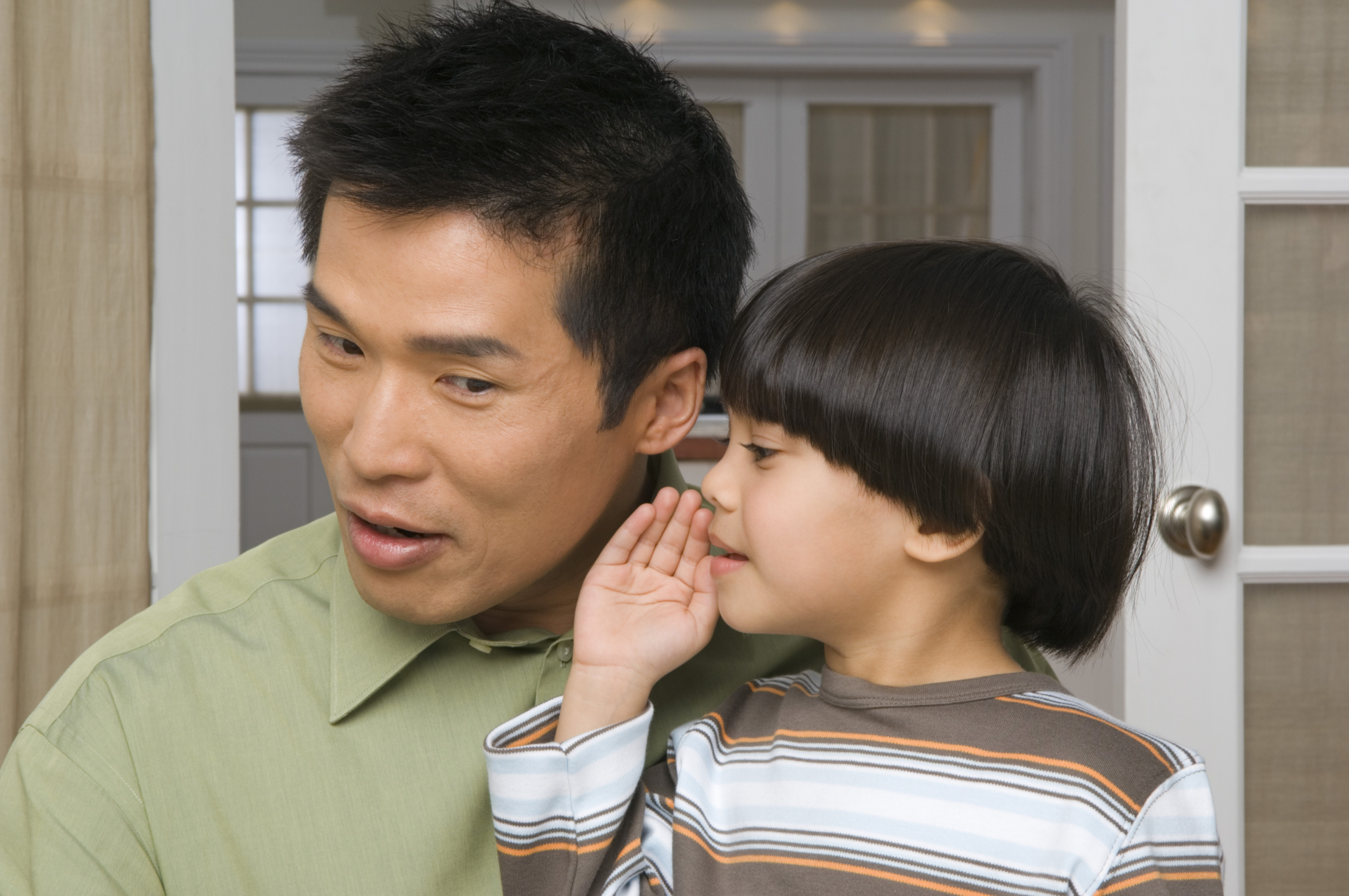 Connecting with and creating a stronger relationship with your children starts with listening to them. There are specific skills that a parent can master that can help to show your children that you care. Instead of arguments, listen and show your understanding while maintaining your position. By attending to them and inviting them to talk, you can take steps toward better communication and a great relationship.
Make Sure You Are Paying Attention
Carve time out of your day specifically to communicate with your youngsters, or set aside what you are working on for a few minutes. Make eye contact, turn toward your children, and get as close to their level as both of you are comfortable with. No need to stare.
Be aware that you are talking to another person. How does your body communicate that you are listening? Are your arms crossed, are you pulled away from them, or are you standing over them imposingly? Watch what their body language is saying to you. Use a natural vocal style; your voice often communicates your emotions.
Let Your Kids Start the Conversation
[fat_widget_right]Inviting your children to talk to you is more than just vaguely asking them about their day, feelings, or what happened at school. Give your kids a chance to start the conversation by asking them what they would like to talk about today.
Listen to what they have to say, and remember silence is golden. When you say nothing, it allows them to fill up the space in the conversation with what they want to say and encourages them to keep talking. Give encouragement as they are talking and being open with you.
Remember that you want to be having discussions with your children regularly, not just when they are in trouble. If your children are comfortable talking with you, then even when they are in trouble they should still be comfortable talking with you about their problems. Use simple acknowledgement responses that show you are listening. “I see. Oh. Uh-Huh. Hmmm.”
Identify and Summarize Your Childrens’ Emotions
Listen for and name the feelings you think you hear from what your children are telling you. Respond to the emotions being expressed, and not the content of what is being said when you want to connect emotionally with your kids. How are they saying things? What is their body language? Identify the emotion: “Wow, you are really mad,†or “You are showing me how sad you are.â€
When children share their sentiments, they are showing you trust. That trust helps to create a greater sense of connectedness that you and your children can share. Throughout your chat with your children, summarize and paraphrase what you have heard. Do not be a parrot and repeat what you have heard verbatim—just a quick sum of the ideas they are expressing. Providing a rundown of what you heard lets your children know you have been focused on their thoughts and emotions.
By modeling good listening behavior, you can teach your child to pay attention and stay focused during a talk with other people or at school. Remember that you can follow each of these ideas and reinforce the connection that you have with your children.
- Be interested and attentive
- Encourage talking
- Listen patiently
- Listen to nonverbal messages
- Avoid dead-end questions
- Observe signs
- Reflect feelings
- Summarize
 Hearing “I don’t like you!” from your child can hurt, but don’t believe that they really don’t like you. Kids, as young as 2, learn to say “No;” they have their feelings hurt and want to do things their own way. They do not have the cognizance to say, “Mom or Dad, I’m mad because I can’t get my own way at this time, but I understand why you said I can’t do that particular thing.†If only they could!
On You Tube, I saw a video of a 3-year-old that told his mom that he only liked her when she gave him cookies. She listened and acknowledged what he said. She told him it was okay and that she loved him. He said he loved her too but doesn’t always like her. It was cute. If he was a little older, he probably would have said, “I don’t like what you said.â€
If your child shouts, “I don’t like you!†in response to not getting his/her way, acknowledge his/ her feelings, remind him/her that it’s okay to not like the decision and remind your child that you love him/her. Though this may not always go smoothly, the more calm and consistent you are, the better.
When children say, “I don’t like you,†you have an opportunity to help them identify feelings and find more words so they can learn to express themselves verbally.
You might say:
- “It sounds like you are upset with Mommy or Daddy, and that’s okay. Let’s do something else together.†Here, you identify and acknowledge your child’s feelings, allowing these feelings to be felt. You are also saying that there are other things that the two of you could do together. Redirection is a great tool after the acknowledgment of the feelings. It may not always go as smoothly in this scenario, but it does help.
- “I know you may not like what Mommy or Daddy said. What are you mad about?†With this, you acknowledge the feelings and include a question that can help the child formulate thoughts and express how he/she sees it. If your child says, “I don’t want to take a nap. I want to play with my toys,†again, acknowledge his/her feelings and thoughts. You can even say that you agree with him/her that toys are more fun than a nap, but if it’s nap time, explain that the toys will be there when he/she gets up. Proceed to preparation for nap.
Some kids will accept this as sufficient and others won’t. When a child gets more upset or doesn’t like the answer, remain calm and consistent. He/she will be okay. If tantrums become more extreme, continue to remain calm and consistent. It’s difficult, but it is necessary to not give in. You can still acknowledge the feelings briefly, without fully engaging in conversation with your child. Reasoning with a child when he/she has a tantrum is not helpful in decreasing or eliminating the tantrums, in fact, it reinforces them.
You can remind your child that when the nap is done, both of you can play with the toys, go to the park, or do something else.
Remember, kids don’t mean it when they say, “I don’t like you.†It can hurt, but your job as a parent is to raise your child to be able to express the thoughts and feelings he/she has in appropriate ways, be helpful and respectful, and have a strong sense of self-worth.
When you remain calm and consistent as best you can, this will help you both to work through the particular situation and get to having a more fun time easier and faster.
One book that is very helpful is Making Children Mind Without Losing Yours by Dr. Kevin Lehman. Check it out!
A good therapist wouldn’t treat his or her clients like a science project. Though there is a scientific basis for how brain chemistry and feelings correspond, we don’t experience our world through chemicals. We experience it through pain and sadness, joy, and relief. These are the mediums that the psychotherapist works with, and these are where we make sense of our world.
But that doesn’t mean that better understanding of brain chemistry and neurology can’t inform even more effective therapy. Take, for example, post-traumatic stress disorder. Those who’ve lived through trauma know that their experiences are the cause of their flashbacks, moodiness and other symptoms. But severe forms of PTSD can be very hard to work through, even with the help of a great psychotherapist. Late last year, scientists performed experiments with rats to better understand how the brain processes memory in relation to stress. Physically documenting changes between experience and brain behavior can help therapists better understand how things like PTSD work and, therefore, develop specific therapeutic strategies in light of that new knowledge. Those strategies don’t manifest through scientific terminology—they may be as simple as changing the therapy setting—but they use the science as a jumping off point for real-world strategies. (more…)
 “The phrase ‘working mother’ is redundant.†Jane Sellman
“Making the decision to have a child-It’s momentous. It is to decide forever to have your heart go walking around outside your body.†Elizabeth Stone
I was inspired to write this article by many beautiful, courageous mothers, family, friends and clients. I believe all moms are working moms, whether working at home and/or out of an office. When I had my first son almost 10 years ago, I remember how difficult this transition was for me, as a mom who worked out of the home, and I needed all the support in the world. Having a baby for the first time is challenging enough. However, a second adjustment most definitely occurs when a mother returns to work after her baby is born. And if this mommy happens to also have other children, the transition can feel completely overwhelming.
I also want to add that for women who stay-at-home or who work part-time, they are working just as hard…doesn’t matter if work is at home, in an office, or both. Juggling it all can be tough, and all women need and deserve support. This article is geared mostly to the mom who is returning to an office job and/or a job that requires separating from baby. (more…)