
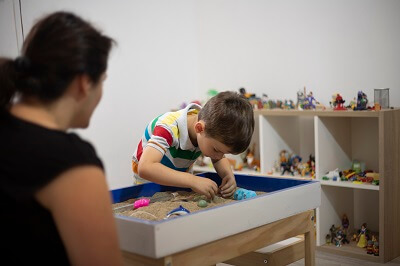
Sand tray therapy is a powerful form of expressive therapy that helps children, adolescents, and adults process emotions and experiences through creative play in a sandbox with miniature objects. This evidence-based approach allows people to communicate their inner world when words alone aren't enough, making it particularly effective for trauma, grief, and emotional healing.
Whether you're considering sand tray therapy for yourself or a loved one, this comprehensive guide explores how this therapeutic technique works, its proven benefits, and what to expect during treatment sessions.
Table of Contents
- What Is Sand Tray Therapy?
- How Sand Tray Therapy Works
- Sand Tray vs. Sandplay Therapy
- Benefits and Applications
- Who Can Benefit
- What to Expect in Sessions
- Research and Effectiveness
- Training and Certification
- Frequently Asked Questions
What Is Sand Tray Therapy?
Sand tray therapy is a form of expressive therapy that combines tactile, visual, and symbolic elements to help individuals explore and process their thoughts, feelings, and experiences. Developed by British pediatrician Margaret Lowenfeld in the 1920s, this therapeutic approach has evolved into a widely recognized treatment method supported by extensive research.
During sand tray therapy, clients create three-dimensional scenes using miniature figures, objects, and sand in a specially sized tray. This creative process allows them to express complex emotions, work through difficult experiences, and gain insights that might be challenging to articulate verbally.
Research shows that sand tray therapy activates both hemispheres of the brain simultaneously. While the left brain processes logical information, the right brain handles creative expression and emotional processing. This dual activation creates unique pathways for healing that traditional talk therapy alone may not access.
How Sand Tray Therapy Works
The Therapeutic Process
The therapeutic power of sand tray therapy lies in its multi-sensory approach. The tactile nature of working with sand also engages the sensory system, which can be particularly beneficial for individuals who have experienced trauma. Touch and movement help ground clients in the present moment while providing a safe space to process difficult memories, emotions, or experiences.
Key components of the process include:
- Creating a safe container: The sand tray provides a bounded space for exploration
- Non-verbal expression: Clients communicate through symbols and spatial arrangements
- Therapeutic witnessing: The therapist observes and supports without directing
- Integration: Insights from the sand tray are processed and integrated into daily life
Neuroscience Behind Sand Tray Therapy
Recent neuroscience research has revealed how sand tray therapy affects the brain. In a recent study examining the intra-brain hemodynamics of a sandplayer during therapy, near-infrared spectroscopy (NIRS) signals from various prefrontal and superior temporal channels were found to be temporarily correlated.
Moreover, Foo et al. (2020) assessed the metabolic changes in the bilateral thalami of an individual with generalized anxiety disorder. Using magnetic resonance spectroscopy, the N-acetyl aspartate to creatine (NAA/Cr) ratio (i.e., a measure of neuronal viability) was found to have improved after 18 sessions of ST.
Sand Tray vs. Sandplay Therapy
While often used interchangeably, sand tray therapy and sandplay therapy have important distinctions:
Sand Tray Therapy
- Emphasizes present-moment experiences
- Therapists actively facilitate awareness and growth
- Incorporates various theoretical orientations
- Includes verbal processing during sessions
- Suitable for short-term and long-term treatment
Sandplay Therapy
- Grounded in Jungian psychology
- Focus on unconscious processes
- Non-directive approach with minimal therapist intervention
- Analysis occurs after the session
- Requires specific certification through ISST
Benefits and Applications
Evidence-Based Benefits
Additionally, meta-analyses were conducted on several different presenting problems including anxiety (k = 7, g = 1.425), anger (k = 5, g = .760), depression (k = 7, g = 1.071), parent–child relationship issues (k = 5, g = 3.932), and self-esteem (k = 6, g = 1.588). The impact of moderator analyses was conducted which indicated that sand therapy was as effective in group formats (k = 11, g = 1.073) as it was in individual settings (k = 7, g = 1.285). Additionally, age groups were analyzed, which indicated that sand therapy had high effect sizes that were roughly the same for adults (k = 14, g = 1.414), adolescents (k = 8, g = 1.035), and children (k = 14, g = 1.112).
Key benefits include:
- Enhanced emotional regulation
- Improved self-expression
- Trauma processing without re-traumatization
- Increased self-awareness
- Strengthened coping skills
- Better social communication
Applications Across Populations
Children and Adolescents
The results show a significant effect of ST on post-traumatic, internalizing, and externalizing symptoms, as well as on adolescents' adherence to therapy and on the well-being of children who have suffered collective traumatization (natural disasters, bombings, etc.).
Sand tray therapy is particularly effective for:
- Trauma and abuse: Non-verbal processing of difficult experiences
- Behavioral problems: Reducing aggression and improving social skills
- Anxiety and depression: Creating external representations of internal struggles
- Autism spectrum disorders: To explore the efficacy of sandplay therapy in intervening in social communication deficits in children with autism spectrum disorders (ASD), and whether this efficacy is influenced by the age of the children and the dosage of sandplay therapy intervention.
- ADHD: Improving attention and emotional regulation
Adults
Results showed a decrease in trauma symptoms for four of the five participants. Thus, sand tray therapy could be an effective intervention for counselors to use with adults with trauma symptoms.
Adult applications include:
- Complex trauma: Processing experiences that are difficult to verbalize
- Grief and loss: Creating symbolic representations of relationships
- Anxiety disorders: A 2020 case study found that after 18 hour-long sessions of sandplay therapy over 9 weeks, an adult who had generalized anxiety disorder saw their symptoms decrease substantially.
- Relationship issues: Exploring interpersonal dynamics visually
- Life transitions: Working through change and uncertainty
Who Can Benefit
Children with Special Needs
Children with chronic diseases exhibit a higher incidence of emotional–behavioral problems. Though sandplay therapy is a universally recognized psychological treatment method, experimental evidence for this form of therapy is lacking. Our aims were to examine the effectiveness of sandplay therapy in reducing emotional and behavioral problems in school-age children with chronic diseases as well as anxiety and depression in their caregivers.
Research shows particular benefits for:
- Children with developmental disorders
- Those with language delays or difficulties
- Children experiencing medical trauma
- Youth with attachment disruptions
Trauma Survivors
Many trauma survivors struggle with verbal expression due to the overwhelming nature of their experiences. Sand tray therapy allows clients to communicate through symbols and metaphors, bypassing the need for detailed verbal recounting that can be retraumatizing.
The approach offers:
- Sense of control: Trauma often involves feelings of powerlessness and loss of control. In sand tray therapy, clients have complete authority over their creations, choosing what to include, where to place objects, and how to tell their story. This sense of agency can be profoundly healing.
- Integration of fragmented memories: Three-dimensional representation helps process non-linear experiences
- Gradual exposure: Working with symbols at a comfortable pace
Individuals in Crisis
Sand tray therapy provides immediate support for:
- Natural disaster survivors
- Those experiencing acute grief
- Individuals in emotional crisis
- People facing major life changes
What to Expect in Sessions
Initial Session
1. Introduction to materials: Exploring the sand tray and miniature collection
2. Creating safety: Establishing boundaries and comfort
3. First creation: Building an initial sand tray world
4. Gentle exploration: Discussing the creation if comfortable
Ongoing Treatment
- Sessions typically last 50-60 minutes
- Frequency varies based on individual needs
- The entire therapeutic procedure consisted of six sessions of sandplay therapy, performed 1–2 times a week for 60–90 min each, and the total treatment lasted about 2 months.
- Progress is tracked through photographic documentation
- Integration work between sessions
Therapeutic Materials
A well-equipped sand tray therapy space includes:
- Sand trays: Typically 30" x 20" x 3" with blue interior
- Sand options: Both dry and wet sand
- Miniatures: 200-300 objects representing:
- People and families
- Animals (wild and domestic)
- Buildings and structures
- Natural elements
- Spiritual/cultural symbols
- Fantasy figures
- Vehicles and transportation
Research and Effectiveness
Recent Meta-Analyses
Holliman and Foster (2023) conducted a meta-analysis of thirty-six studies that included sand tray and sandplay, yielding a large effect size of Hedges' g of 1.165. This indicates strong therapeutic effectiveness across various populations and presenting concerns.
Specific Population Studies
Children with Chronic Illness
Sandplay therapy can reduce anxiety, withdrawal, and social behavioral problems in school-age children with chronic diseases, as well as relieve anxiety and depression symptoms in their caregivers. Our study provided evidence for the clinical application of sandplay therapy and highlights the importance of offering and integrating psychological treatment in clinical nursing care.
Adolescents with Behavioral Issues
Prior research has established adolescent vulnerability to delinquent behavior. This single-arm, noninterventional, observational study investigated the effect of sandplay therapy on the psychopathologies of adolescents with delinquent behavior.
Adults with Trauma
Recent research demonstrates effectiveness for adults, with emerging research suggesting that adults with trauma-related symptoms as a result of adverse childhood experiences may benefit from non-directive sand tray therapy.
Training and Certification
Professional Requirements
Mental health professionals interested in sand tray therapy should understand:
1. Basic Licensure: Must be a licensed mental health professional (LPC, LCSW, LMFT, Psychologist)
2. Specialized Training: While not legally required, specialized training is essential for competent practice
3. Certification Options: Multiple organizations offer credentials
Training Pathways
International Association for Sandtray Therapy (IAST)
Complete Levels 1-4 provided by an ICST-P, which is an Approved Provider trained and recognized by the IAST. Complete 15 hours of case consultation with an ICST-P.
Requirements include:
- 48 hours of foundational training (Levels 1-4)
- 15 hours of case consultation
- 10 elective hours
- Ongoing supervision
International Society for Sandplay Therapy (ISST)
- 120 hours of training required
- Personal sandplay therapy experience
- Supervision by certified sandplay therapists
- Case consultation and symbol study
Continuing Education
Continued, provider #1742, is approved as an ACE provider to offer social work continuing education by the Association of Social Work Boards (ASWB) Approved Continuing Education (ACE) program. ACE provider approval period: 03/27/2024 – 03/27/2027. Social workers completing this course receive 1.25 clinical continuing education credits.
Frequently Asked Questions
How long does sand tray therapy take to work?
Treatment duration varies significantly based on individual needs and presenting concerns. Some clients experience meaningful change within 6-8 sessions, while others benefit from longer-term treatment. After completing 18 one-hour sessions of sandplay therapy over a 9-week period, her anxiety symptoms dropped from severe to within normal range.
Can sand tray therapy be done online?
Yes, digital adaptations have emerged, particularly since 2020. Through real-world case examples, demonstration, and step-by-step guidance, Dr. Rubio walks you through practical ways to implement sand tray therapy online. His integrative, brain-based approach helps clinicians use technology creatively and ethically to support clients' regulation, narrative processing, and recovery.
Is sand tray therapy covered by insurance?
Most insurance plans that cover mental health services will cover sand tray therapy when provided by a licensed mental health professional. Coverage depends on your specific plan and diagnosis codes used.
How do I find a qualified sand tray therapist?
Look for:
- Licensed mental health professionals with specialized training
- Certification through IAST or ISST
- Experience with your specific concerns
- Check the Sandplay Therapists of America directory
- Ask about their training and approach during consultation
How Therapy Can Help / Find a Therapist
Sand tray therapy offers a unique pathway to healing that engages multiple senses and bypasses the limitations of verbal expression. Whether you're an adult processing trauma, a parent seeking help for your child, or a professional looking to expand your therapeutic toolkit, sand tray therapy provides evidence-based support for emotional healing and growth.
If you or someone you love could benefit from the creative, non-verbal approach of sand tray therapy, we encourage you to find a therapist who specializes in this powerful modality. Our directory includes qualified professionals trained in both sand tray and sandplay therapy approaches.
References:
- Akimoto, M., Furukawa, K., & Ito, J. (2021). Inter-brain synchronization during sandplay therapy: Individual analyses. Frontiers in Psychology, 12, Article 723211. https://doi.org/10.3389/fpsyg.2021.723211
- Benito Herce, N., Ochoa de Alda, I., & Marrodán, J. (2024). Sandtray and sandplay in the treatment of trauma with children and adolescents: A systematic review. World Journal for Sand Therapy Practice®, 2(1). https://doi.org/10.58997/wjstp.v2i1.74
- Dong, J., Liu, L., & Liang, Q. (2024). Analysis of mental health problems of hospitalized sick adolescents guided by psychology and intervention with sandplay therapy. Current Psychology, 43(21), 1-11. https://doi.org/10.1007/s12144-024-05704-3
- Foo, M., Freedle, F., Sani, L. R., & Fonda, G. (2020). The effect of sandplay therapy on the thalamus in the treatment of generalized anxiety disorder: A case report. International Journal of Play Therapy, 29(2), 89-99. https://doi.org/10.1037/pla0000117
- Ge, Y., Li, S., Zhou, X., Wang, X., Wang, Q., & Wang, Q. (2024). A systematic review of the effect of sandplay therapy on social communication deficits in children with autism spectrum disorder. Frontiers in Pediatrics, 12, Article 1454710. https://doi.org/10.3389/fped.2024.1454710
- Hasanah, I., Nursalam, Lei, C. P., Sari, A. S., Simanjuntak, S. R., Supinganto, A., Zulkahfi, Halid, S., Hadi, I., & Mulianingsih, M. (2025). Factors related to quality of life in children with chronic illness from their own perspectives: A cross-sectional study. Journal of Pediatric Nursing, 80, e218–e227. https://doi.org/10.1016/j.pedn.2024.12.016
- He, Y., Song, Y., Hu, Y., & Liang, J. (2025). Forty years of sandplay therapy research: A systematic review with insights into emerging digital applications. The Arts in Psychotherapy, 94, 100563. https://doi.org/10.1016/j.aip.2025.100563
- Holliman, R., & Foster, R. D. (2023). The way we play in the sand: A meta-analytic investigation of sand therapy, its formats, and presenting problems. Journal of Child and Adolescent Counseling, 9(2), 165-182. https://doi.org/10.1080/23727810.2023.2218362
- International Association for Sandtray Therapy. (2025). How to become a sandtray therapist. Retrieved from https://sandtraytherapy.org/how-to-become-sandtray-therapist/
- Jankelowitz, L., Greeley, D., Medland, P., Zakani, A., & Jacob, A. (2026). Sand-based therapy in pediatrics: A narrative review of traditional and digital sand therapy. Frontiers in Pediatrics, 14, Article 1234567. https://doi.org/10.3389/fped.2026.1234567
- Lee, S., Kwak, H. J., Ahn, U. K., Kim, K. M., & Lim, M. H. (2023). Effect of group sandplay therapy on psychopathologies of adolescents with delinquent behaviors. Medicine, 102(40), e35445. https://doi.org/10.1097/MD.0000000000035445
- Li, S., Lu, Y., & Wu, J. (2023). Sandplay therapy as a complementary treatment for children with ADHD: A scoping review. Issues in Mental Health Nursing, 44(9), 911-917. https://doi.org/10.1080/01612840.2023.2249990
- Liu, G., Chen, Y., Ou, P., Huang, L., Qian, Q., Wang, Y., & Hu, R. (2023). Effects of parent-child sandplay therapy for preschool children with autism spectrum disorder and their mothers: A randomized controlled trial. Journal of Pediatric Nursing, 71, 6-13. https://doi.org/10.1016/j.pedn.2023.02.006
- Lowenfeld, M. (1979). The world technique. London: George Allen & Unwin.
- National Center for Health Statistics. (2024). Percentage of missing 11 or more school days due to illness, injury, or disability in the past 12 months for children aged 5-17 years, United States, 2019—2023. National Health Interview Survey. Retrieved from https://wwwn.cdc.gov/NHISDataQueryTool/SHS_child/index.html
- National Institutes of Health. (2024). BRAIN Initiative connectivity across scales (BRAIN CONNECTS). Brain Initiative. Retrieved from https://braininitiative.nih.gov/news-events/blog/brain-initiative-alliance-look-back-brain-initiative-2023-and-whats-coming-2024
- Schoonover, T. J., Jha, P., Romito, M., & Perryman, K. (2024). Sandtray therapy's impact on trauma symptoms in adults. Journal of Creativity in Mental Health, 20(3), 345-361. https://doi.org/10.1080/15401383.2024.2377410
- Wells, H. G. (1911). Floor games. Boston: Small, Maynard & Company.
- Wonders, L. L., & Affee, M. L. (Eds.). (2024). Play therapy treatment planning with children and families: A guide for mental health professionals. Taylor & Francis. https://doi.org/10.4324/9781003123456
- Yin, H., Zhang, L., Li, D., Xiao, L., & Cheng, M. (2021). Effects of sandplay therapy in reducing emotional and behavioural problems in school-age children with chronic diseases: A randomized controlled trial. Nursing Open, 8(6), 3099-3110. https://doi.org/10.1002/nop2.1022
