by Carey Cloyd, Marriage and Family Therapist
Women’s Issues: 4 Tips for Making Female Friends as an Adult
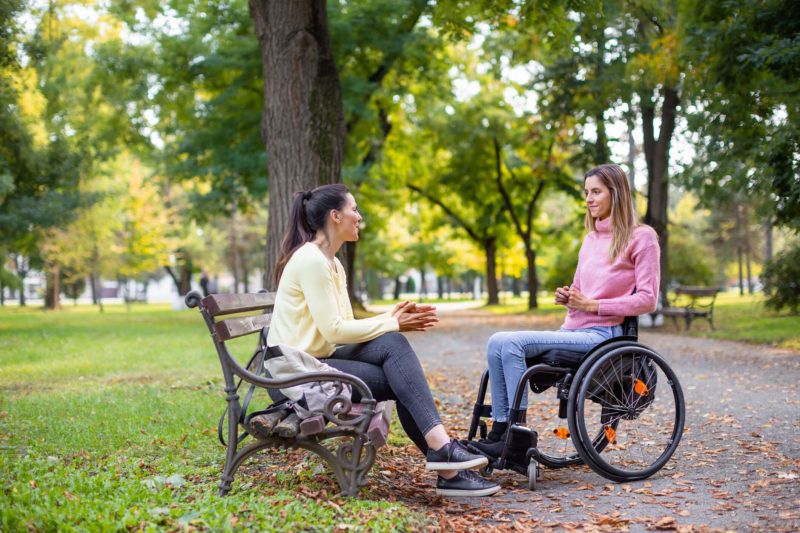
Creating and fostering friendships can take more effort and intention as an adult when one is no longer in school. This can depend in part on one’s workplace and role. However, many people report finding it more difficult to make friends as an adult than they did as a child – and for women, this challenge may feel pronounced. It is important to address any feelings of isolation and loneliness by actively cultivating friendships with other women to feel more bonded and supported. Friendships have been shown to help decrease anxiety, stress, and worry, positively impacting overall health and well-being.
4 Tips for Cultivating Female Friendships
#1 Take action and be consistent.
It is important to both respond to and reach out to female friends when it is authentic for one to do so. Of course, some balance in who is initiating contact is generally appreciated and valuable. Finding and maintaining a balance in who is initiating can be an important factor as you consider to what degree you’re moved to invest in a new friendship. You may assume that others are uninterested, when in fact, they may have some of the same needs, desires, concerns, and interests in a friendship that you do.
Get the ball rolling: You can give someone a compliment, initiate a conversation, and extend an invitation for a walk or to lunch.
#2 Know that rejection is part of the experience.
In your quest to develop and maintain friendships, feelings of rejection and abandonment may arise. It is best to expect that such feelings will arise sometimes. Remember that you are assessing the friendship, as well as being assessed by your new connection. Someone may not feel the same level of interest as you do and/or may not be a friendship match for you. If someone is not interested in continuing a friendship, their disinterest may be an accurate indicator of the viability of a friendship. This doesn’t mean anything is wrong with you. One-sided friendships hurt, and you don’t have to languish over them. Move forward and continue to look for like-minded companions with shared interests.
#3 Don’t focus on numbers; focus on quality relationships.
Many assume that someone with many friends is more socially successful and better off than those with just a few friends. It’s not quite so simple. Personalities differ; while some people thrive socializing with many people, others shine in relationships with a few people. It’s most important what works best for you. This knowledge about yourself is where self-care and self-acceptance come in.
#4 Keep it going!
If there is momentum created in a new female friendship, make sure to keep it up. Fostering adult friendship takes time, attention, focus, and care. There may be a longer lapse than usual between visits or phone calls, etc. You can be the one to pick up the ball and initiate contact to keep the relationship going. For some, it may be nice to settle into a routine when you have contact on a relatively regular basis—be that daily, weekly, monthly, or quarterly. Find what fits for you and each of your friends, knowing that there may be changes over a long friendship based on current circumstances.
If you’re feeling scared, lonely, or overwhelmed by feelings of isolation, reaching out to a therapist in your area for support might be the best thing you could do.
 What Is a Tribe?
Broadly defined, a tribe is a community which has shared interests and provides support to its members. A tribe can include family members, but it is not limited to them. Friends, coworkers, neighbors, pets, and many others can comprise our own “tribes.” (My tribe includes a rescued miniature poodle who believes he’s human.)
Why We Need a Tribe
We are born wired for connection. When our ancestors roamed the land for food, moving in numbers was vital to safety and survival. Early settlers in the United States had to rely on each other to survive harsh weather and living conditions. However, as America prospered, our dependence on each other for survival diminished.
[fat_widget_right]
A few years ago, I visited with a kind gentleman who identified as Hawaiian. He shared that many tourists are suspicious of Hawaiians’ friendly nature. The man explained that Hawaii was isolated for many years. Whenever storms came, neighbors had to pull together to support each other. It was wise to show everyone kindness because you never knew when you might need help. Hence the “aloha spirit” was born. He informed me that they are now teaching about the “aloha spirit” in Hawaii’s public schools. Elders are concerned about it fading with the rise of innovation.
Sadly, depression-, anxiety-, and trauma-based health concerns have risen with the dissolution of tribes. Being in connection with those who care about us reduces suffering. A powerful MRI study revealed that simply holding the hand of a loved one reduced one’s experience of pain (Carey, 2006). Tribes buffer us from the negative effects of stress. Connections heal.
Challenges of Finding a Tribe in Adulthood
Once young adults leave the family home, they often experience physical disconnection from major sources of support such as parents, siblings, and friends from childhood. Phone calls and texting can help bridge the gap, but they don’t replace human contact. College and the workplace create opportunities for tribe-building. However, this process becomes more challenging as we age, move, develop families of our own, and live in homes far apart from each other.
In most circumstances, we don’t need to rely on a community to meet our basic needs. If we need food, we go to the grocery store. If we need a tool, we rent it from a hardware store or order it online. Many of us lead busy lives, filled with commitments. Even though we’re trying our best, it can be challenging to find the time and energy to maintain the friendships we do have.
Ways to Find a Tribe
While it can feel challenging to build your tribe in adulthood, there are many ways to do so. A little effort can go a long way toward creating meaningful and supportive relationships. Below are five tips for moving into connection.
A little effort can go a long way toward creating meaningful and supportive relationships.
- Really get to know your neighbors: I moved into my neighborhood about eight months ago. I realized all my conversations with my neighbors took place in the driveway and lasted about 5 minutes. I recognized I knew little about them and their families. Conversely, they knew little about me and mine. I wanted to create meaningful connections with them, so I decided to take a step. During the holidays, my family and I whipped up loaves of gingerbread. We delivered them to all our neighbors. We enjoyed spreading this cheer. In the process, we got invited to a holiday party, where we met more of our neighbors. We also received a visit from our neighborhood Santa. Sometimes it involves taking the first step and moving outside your comfort zone. Consider organizing a block party, a multifamily garage sale, or a community garden.
- Find an interest group online: Sometimes, the best place to find like-minded individuals is at an activity you enjoy. Meetup, Facebook, and Nextdoor, among other websites and apps, offer opportunities to find local events of interest. It can feel intimidating to go to one of these events alone. However, it is helpful to remember that others attending likely feel the same way and are eager to meet someone like you. Easy conversation starters include: “What got you interested in [this activity]?” “How long have you been coming to these events?” “Hi, my name is [your name]. This is my first time attending this event. It’s nice to meet you.” If you’re feeling particularly nervous, it can be helpful to reach out to the event coordinator ahead of time to introduce yourself and learn more about the group. For example: “Hi, I’m Jane. I’m excited to see you created a group for rock climbers. I am new to the area and eager to connect with climbers. Is there a good way to locate you and the group once I arrive at the climbing gym?”
- Seek spiritual community: Churches, synagogues, temples, and mosques can be places to find faith communities. Spiritual communities can also be found outside of organized religions. Meditation groups, dinner groups, and nature groups are just a few examples of opportunities to connect with those who consider themselves spiritual but not necessarily religious.
- Volunteer: You will probably find like-minded people when you spend time supporting causes you value. Think about issues you care about—social justice, education, equality, etc. Then do an internet search for organizations that support your values. These organizations often have a volunteer area on their websites.
- Sign up for a class: Is there something you’ve been eager to learn? Perhaps knitting, playing an instrument, or learning a language? An organized class can be a wonderful way to develop new friendships. Many school districts and community colleges offer continuing education classes for nominal fees. Art and crafts shops often offer weekly classes.
“Call it a clan. Call it a network. Call it a tribe. Call it a family. Whatever you call it, whoever you are, you need one.” —Jane Howard
Reference:
Carey, B. (2006, January 31). Holding loved one’s hand can calm jittery nerves. Retrieved from http://www.nytimes.com/2006/01/31/health/psychology/holding-loved-ones-hand-can-calm-jittery-neurons.html