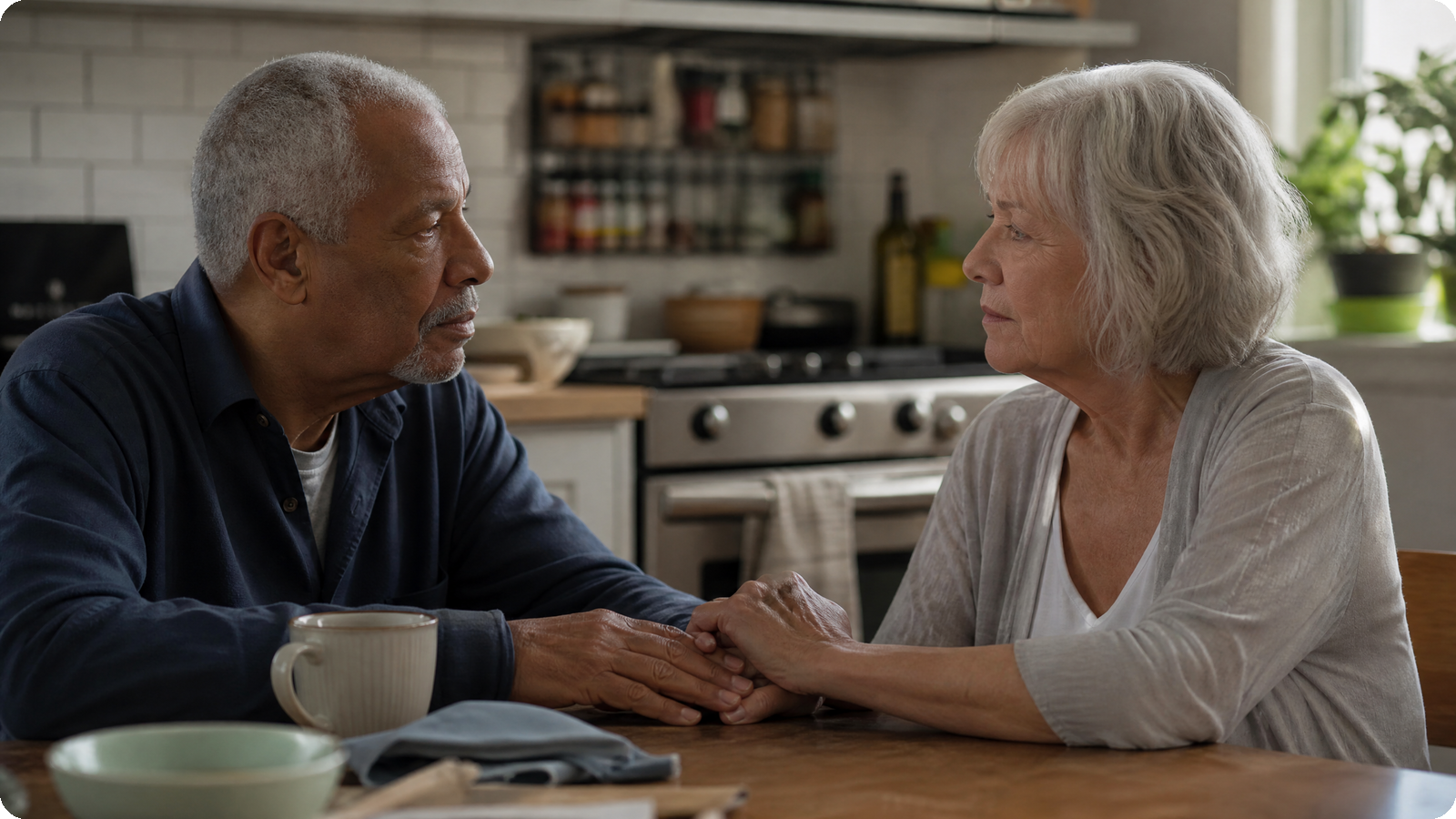
It might seem absurd or counterintuitive to think of a two-person relationship as consisting of three parts. So why would someone suggest you consider it?
Developing a coherent sense of self and establishing a long-term relationship are two developmental tasks during emerging adulthood, and these dual needs continue throughout our lives. Think of your relationship like a three-legged table, where each leg must be strong: you, your partner, and your relationship with each other. To bloom a truly happy partnership with lasting strength, each piece is an integral part of the equation. If one person absorbs too much energy, the other gets left out. If not enough attention is paid to the relationship itself, your partnership suffers. Take away one piece, neglect one part, and you have a wobbly table.
A positive sign of marriage identity is when both partners maintain their individual interests, hobbies, and friendships while also valuing and prioritizing time spent together. This balance allows for personal growth and a strong couple bond.
Meeting Each Other’s Needs
Many people believe that the only thing they can work on in their relationship is their partner’s happiness. The problem with looking at relationships this way is that the person trying to make sure their mate is doing well runs the risk of neglecting themselves. This person may be sacrificing what they want or need in the relationship so their partner will feel good.
That might work for a while, but eventually the person doing all the giving can run out of energy and feel exhausted and depleted. If the pattern continues, those feelings can turn into anger and resentment. If one partner feels like they are the giver and don’t receive anything in return, they can end up feeling used and alone.

Researchers describe this balancing act as “risk regulation”: we weigh our desire for closeness against our fear of rejection, and it is confidence in a partner’s care and positive regard that makes it feel safe to depend on them. In couples work, an early warning sign that this balance has tipped is “relational accounting”—keeping score of who has done what for whom. Once partners are tallying contributions, the assumption of good faith between them has usually already begun to erode.
The receiver of this energy doesn’t get their needs met either, they may be happy for a while, but this constant state of receiving can become tiresome, too. There is no room for real bonding between the two because their positions are not equal. There is imbalance in the relationship. Balance is essential in a healthy relationship because both partners have individual needs, desires, and aspirations that must be acknowledged and met to sustain personal well-being.
Meeting Your Own Needs
I recommend that each person learn about themselves as individuals as an important part of improving their relationship. Part of self-knowledge is understanding what makes you happy. Do you know what makes you feel happy and fulfilled? If you think that being loved by your partner is all you need, that is not the answer I’m looking for. Your answer though, could be something like this: “I love to spend time working in the garden, and I like to volunteer my time with the humane society.” These are endeavors that could make a person feel whole and worthwhile. What about your job? Some people find their happiness through their profession—maybe this is your source of enrichment. By working to understand yourself as an individual, you will learn what you need to make your leg of the table strong.
Self-care means taking the time to do things that help you live well and improve both your physical health and mental health. Self-care ensures you have the emotional and physical energy for yourself and others. Balancing caregiving with self-care improves the overall quality of your life and the health of your relationship.
When we as individuals have attained knowledge about ourselves, we are in a better position to stay in balance. Knowing what makes you happy is the best contribution you can make to your relationship. When you understand yourself and you know how to keep yourself in a good state, you will be a contributing member to the relationship. Without this knowledge, you may depend on your partner to provide you your happiness—and that can lead to problems. If a couple places too much emphasis on the relationship, one or both partners may feel suffocated, lose a sense of individuality, or sacrifice personal goals. On the other hand, if individual needs consistently take precedence, the relationship itself may weaken, leading to emotional distance, resentment, or a loss of intimacy.

When both people know themselves, they can spend time understanding their partners. When we learn what our mate loves, likes, wishes for, and enjoys, we become more adept at providing it to them. The Gottman Method calls this kind of ongoing curiosity building “Love Maps”—an intentional exploration of what makes your partner tick, what they worry about, and what they hope for. And when something is unclear, ask rather than assume: psychologist Carol Dweck describes hearing her husband say he “needed space” and, instead of interpreting it as distance, asking what he meant—he simply wanted to reposition his arm.
Meeting the Needs of Your Relationship
Building the relationship together is like solidifying the last leg of the table. What are your combined values, goals and dreams? What do the two of you as a unit stand for? What is your “mission statement?” In the Gottman Method, this is the work of “creating shared meaning”—the top level of the Sound Relationship House—where a couple names what is fun, uplifting, and purposeful about their life together and actively supports each other’s dreams.
Relationship researchers have a name for this sense of shared identity: “we-ness.” Across decades of studies, couples with a stronger sense of we-ness report greater satisfaction with, and commitment to, their relationship. Couples with a strong shared identity often refer to themselves as “we” or “us,” indicating a strong sense of being a team. They also likely use positive and affirming language when speaking to and about each other.
You have a chance to create something unique to the two of you. Understanding all the pieces of your three-legged table gives you the best opportunity to build a healthy, lasting relationship. Tending to this third leg may even pay physical dividends. In a 2022 study published in the Annals of Behavioral Medicine, couples who were more satisfied with their relationship also ate, slept, and exercised together more often—and both the satisfaction and the shared routines predicted better self-rated health and fewer depressive symptoms.
Please note: This article is for informational purposes only and is not a substitute for professional medical advice, diagnosis, or treatment. Always seek the advice of your physician or other qualified health provider with any questions you may have regarding your mental health or relationships.
Find a therapist who can help you balance your individual and relationship needs.
References:
- Auger, E., Thai, S., Birnie-Porter, C., & Lydon, J. E. (2025). On creating deeper relationship bonds: Felt understanding enhances relationship identification. Journal of Personality and Social Psychology, 128(3), 907-942. https://doi.org/10.1177/01461672241233419
- Canevello, A., & Crocker, J. (2010). Creating good relationships: Responsiveness, relationship quality, and interpersonal goals. Journal of Personality and Social Psychology, 99(1), 78-106. https://doi.org/10.1037/a0018186
- Cruwys, T., South, E. I., Halford, W. K., Murray, J. A., & Fladerer, M. P. (2023). Measuring “we‐ness” in couple relationships: A social identity approach. Family Process, 62, 795–817. https://doi.org/10.1111/famp.12811
- Dover, C. R., Serrano, C., López-Madrigal, C., García-Manglano, J., & Willoughby, B. J. (2024). Relational identity and relationship functioning in emerging adulthood: A brief report. Emerging Adulthood, 12(2), 245-253. https://doi.org/10.1177/21676968241234953
- McLean Hospital. (2024). How relationships impact mental health—and vice versa. https://www.mcleanhospital.org/essential/relationships
- Meridian Counseling. (2024). Balancing individual and relationship needs for long-term happiness. https://www.meridian-counseling.com/blog/how-to-balance-individual-and-relationship-needs-for-a-happier-relationship
- Murray, S. L., Holmes, J. G., & Collins, N. L. (2006). Optimizing assurance: The risk regulation system in relationships. Psychological Bulletin, 132(5), 641-666. https://doi.org/10.1037/0033-2909.132.5.641
- National Institute of Mental Health. (2024). Caring for your mental health. U.S. Department of Health and Human Services. https://www.nimh.nih.gov/health/topics/caring-for-your-mental-health
- Travers, M. (2024, May 31). 3 signs that a couple’s connection is bulletproof. Psychology Today. https://www.psychologytoday.com/us/blog/social-instincts/202405/3-signs-that-your-marriage-identity-is-bulletproof
- Wilson, S. J., Stadler, G., Milek, A., Kamarck, T. W., Otero, M. C., & Novak, S. A. (2022). The implications of being “in it together”: Relationship satisfaction and joint health behaviors predict better health and stronger concordance between partners. Annals of Behavioral Medicine, 56(12), 1259-1273. https://doi.org/10.1093/abm/kaac043