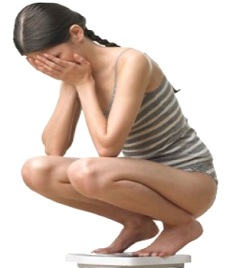
 Imagine a life where you are continually tormented by an inner dialogue that screams of your worthlessness, your hideous appearance, and your pitiful, meaningless existence. Imagine a life where you mange your day solely around food, either by avoiding it, getting rid of it, or consuming as much of it as you can. Imagine spending your birthday in a psychiatric ward, perhaps too sick and too weak to even stand up on your own. And now imagine that there is a very strong part of you that wants to be worse. This is the horrible trap of an eating disorder.
One of the most difficult aspects of eating disorder treatment is the mind-boggling fact that those suffering would often do almost anything to cling to their disease. As much as part of them wants to be happy and healthy and free from the constant torture, there is another part, often referred to as “the eating disorder self”, that convinces the sufferer that they will be nothing without it. When your eating disorder becomes your identity, medicals markers used to gauge its severity, such as amenorrhea (absence of menses in women), or the body mass index scale, are looked upon as levels of achievement. When you’re trapped in this mindset, worse really does seem better.
Throughout the years that I struggled with anorexia, I used the presence of my period as a way to prove to myself that I was still safe, that I still had weight to lose. Some individuals will stop menstruating fairly quickly after substantial weight loss, others, myself included, can maintain dangerously low weights yet continue to menstruate. I remember my therapist and my doctor both diagnosing me with anorexia nervosa, but I had seen and memorized what the Diagnostic and Statistical Manual of Mental Disorders said about anorexia. I had to lose my period to be “officially” classified. The diagnosis went in my charts nonetheless. Yet, I had this strange longing to fit the bill, to really be able to call myself anorexic, because it meant that at least I was doing something right. If I failed at everything else in life, at least I would master my eating disorder. I would be the best anorexic I could be.
I wanted to be the thinnest in the room, the sickest, and many times over I did hold that title. It became my prize, my sense of accomplishment. I became quite accustomed to the label “skinny, blonde girl.” Anorexia became my identity and when recovery (and the inevitable weight gain) threatened that, I would panic and slip right back into the disordered behaviors. Who would I be without it? I needed this disease to survive, or so my eating disorder constantly told me.
It is a very sick way of thinking, I know, but I also know that I was not alone in thinking. I have spent a great deal of time among other eating disordered individuals, and there is a definite cognitive pattern when it comes to symptoms and diagnostic labels. In short, it seems the worse you are, the better you feel. I can’t count how many times I’ve heard people with bulimia wish they had the “control” of their treatment peers with anorexia, and those who compulsively overeat long for the ability to easily purge like those with bulimia. There is an unfortunate perceived hierarchy among patients, with the “purity” and “cleanliness” of anorexia appearing to outrank the “hedonistic” behaviors of bulimia or compulsive eating. But in reality, they are all equally serious, and all deadly. Whether you’re starving or stuffing or purging, your eating disorder is a distraction, a desperate attempt to control the un-controllable.
Eating disorders, in general, are very control-focused. Whether it’s an attempt to control anxiety, or anger, or relationships, they trigger and feed off of the competitive and perfectionist personality traits that many sufferers share. I thought that if more control equaled more medical complications, so be it. But the crux of the matter is that sufferers inevitably reach a point, often quite quickly, where the lotus of control shifts completely out of their hands, and into the hands of the eating disorder.
It’s too hard to battle an eating disorder alone. Reaching out is the first step in successful recovery. Share your secret with a trusted friend or family member. Even that act of sharing a secret can often relieve some of the pain. Seek professional help. There are people who have been in your shoes and are willing to guide you out of the darkness. Hope is real. Recovery is real.

Cutting is the physical expression of hidden mental pain. Children may begin cutting or engaging in other forms of self-harm when their mental pain reaches a level that they can no longer deal with. While some children may find positive ways of coping with such pain, others seek negative coping methods including self-harm or drug use. Mental pain can be the result of built-up stress, past traumatic events, hurt feelings, rejection by peers, abandonment by significant others, or other life stressors.
Is My Child Just Trying to Get Attention?
If your child cuts in places that you can see and does not try to hide their wounds, then it is likely that, consciously or subconsciously, they are trying to let you know they are in pain. If they cut, or threaten to cut, in front of you, then they are likely crying for help. If your child has been hiding their cuts for a long period of time and has not told anyone about it, then they are likely trying to deal with their pain privately and are not seeking attention.
[fat_widget_right]
Why Do Children Cut?
This behavior, while it may appear to have no benefit, may actually provide several means to cope. I know what you are thinking: cutting hurts, right? Not for the cutter; for them, it actually releases pain. It allows the person who cuts to express how they are feeling on the inside by letting it outside. The chemical reactions that go on when people cut themselves make the behavior addictive. Once the person who cuts is used to dealing with pain in this way, it is hard for them to choose alternative coping methods. When a child who cuts becomes upset, they may go to the behavior as automatically as a person with alcoholism would turn to drinking to deal with a stressful day.
What Not to Do
It is important not to label self-harming behavior as “bad” or tell your child that they are doing something “wrong.” This kind of reaction will only make the child feel ashamed and desire to cut more to get rid of those negative feelings. Telling your child, “Just stop it,” is just as ineffective. Tell your child that you understand they are going through some difficult things, and that you want to find a way to help them.
Getting Help
Often when we ask teens, “What’s wrong?” they will invariably respond, “Nothing.” Many teens have a hard time opening up, especially to their parents. This is partially because it’s just not “cool,” or because they have a hard time bringing up certain topics our of fear that they will be misunderstood or get in trouble. It is important that they have someone who they are comfortable talking to, whether it is a family member, a friend, or a therapist. When looking for a therapist, it is important to find one whom your child will feel comfortable with so that your child can learn to release their pain in a healthy way.
Resources for Parents and Children
- GoodTherapy.org’s What To Do If You Are In Crisis
- Hollander, Micheal. (2008). Helping teens who cut: Understanding and ending self-injury. New York, NY: The Guilford Press.
- S.A.F.E. Alternatives/Self-Abuse Finally Ends (www.selfinjury.com or 1-800-DONT-CUT)