 Hypnotism can be a useful and versatile tool for addressing sexual concerns, including several types of sexual problems (such as non-medically caused erectile dysfunction and low desire) and negative body image, shame, and sexual inhibitions. Hypnotism can help discover and correct inner obstacles to sexual health and pleasure. As a skill set, hypnotism is used in a complementary way by many types of helping professionals. Hypnotism also provides the foundation for a growing group of professional practitioners variously known as consulting hypnotists and hypnotherapists.
I spent a good portion of 2011 working on a doctoral project related to this topic. The literature search was extensive, fascinating, and deeply frustrating. Part of my frustration had to do with the strange history and frequently tarnished reputation of hypnotism, which has created a number of public and professional myths and misconceptions. Another complication had to do with the diversity of practitioners who use hypnosis to address sexual problems; licensed therapists (and sex therapists in particular), clinical sexologists and sex coaches, professional hypnotists and hypnotherapists, and a wide variety of erotic hypnotists (professional and amateur) have all found human sexuality to be fertile and often lucrative terrain. This meant that my literature search ranged from peer-reviewed articles in journals, to popular “how to” erotic hypnosis books, and everything in between. While I labored on my project, I found myself thinking that one lifetime would not suffice to understand it all. The history and use of hypnotism for sexual concerns is that broad, that deep.
What does stand out is the efficacy and promise of hypnosis in this area. This is supported by numerous peer-reviewed articles, as well as books by authors and practitioners such as Dr. Daniel Aroaz, who has became a tremendous guiding light to me.
Another thing that stands out is the almost universal lack of training in the specialty I’ve come to call “sexological hypnosis” – the application of hypnotism to sexual and gender concerns. My concept of sexological hypnotism is based on the triple-pronged idea that:
- (1) more therapists, counselors, and other licensed professionals should be trained in sexology (a multi-disciplinary study of human sexuality, which includes but is not limited to clinical considerations)
- (2) more therapists, counselors, other licensed professionals, and sexologists should be trained in hypnotism
- (3) more consulting hypnotists and hypnotherapists should be trained in sexology, human sexuality, and gender studies – particularly those who want to offer hypnosis for sexual problems.
However, there are no comprehensive programs which specifically address the application of hypnotism to sexual and gender concerns. The one hypnotism school I found which includes sexuality courses in its curriculum was founded by a man (now deceased) who believed that most women don’t have an orgasm – they have a “climax” – and that “ethnic sexuals” are distinctly different than non-ethnic sexuals (whatever that means!). In other words, discredited ideas and inaccurate information is likely still a part of this school’s curriculum, as the books are still published and sold without revision. (Incidentally, none of these books cite even a morsel of research or contain a bibliography or list of sources – however dated!) Hypnotists trained in this school get something worse than no sexuality education at all – they are sold an old “clunker” when they rightfully deserve a Ferrari. Clients may suffer as a result.
Up-to-date, comprehensive training in human sexuality is crucial because people whose understanding of human sexuality is limited to their own experience (or a few books or workshops or outdated programs) may have a skewed perspective on the bigger picture of adult, consensual diversity. Such practitioners may pathologize or misinterpret any behavior or expression that seems out of the ordinary to them. This is a disservice to clients who seek assistance with sexual or gender concerns. Issues of erotic or gender authenticity – so crucial to sexual health and well being – may not be acknowledged, let alone addressed, respected, and supported.
I would like to see more real training and expertise in this area. In my doctoral project, I designed a 150-hour certificate course capable of delivering the triple-pronged training that I wish already existed. In 2012, I hope to teach the entire program, in addition to the partial courses I now offer online through Creative Sexuality and Sex Coach U. As a dual practitioner, I’ve experienced the value of combining clinical sexology with hypnosis and believe that my clients are generally well-served as a result.
Related Articles:
What Do Your Sexual Fantasies Mean?
An Introduction to Clinical Sexology
An Introduction to Holistic Psychotherapy
 Perhaps youʼve come across one of the many articles or videos with titles like, “In Love with the Eiffel Tower”, or a recent National Geographic Taboo program called “Forbidden Love?” The topic is Objectum Sexuality (OS), a rare sexual orientation which includes affectionate, romantic, and sometimes erotic attraction and relationships with objects. The beloved objects can range from transport to landmarks, from sporting equipment to fisheye buttons.
Such stories may make us shake our heads and mutter, “How can this be?” Are these people delusional, or worse – dangerous? How seriously should we take these stories, and the people who are featured in them?
In April 2009, my interest in autism and Aspergerʼs Syndrome (AS) sexuality led me to contact OS-Internationale, an organization of people who have relationships with objects. I had read on their website that a number of the organizationʼs members reported diagnoses of AS, or showed significant autism traits (while other members simply identified as animists). After some correspondence with Erika Eiffel, one of the most influential and well-known OS activists, I volunteered to do a sexological survey of the membership, so that they could have data to offer other interested professionals, as well as journalists.
I didnʼt know it at the time, but the accumulated information kindly provided by the 21 English-speaking members of OS-Internationale granted me a perspective unique among sexologists and mental health professionals. I suddenly became “the” expert in Objectum Sexuality – though obviously OS people are themselves the true experts on what it is like to live and love in this manner.
The most startling finding, from my perspective, is how natural object relationships feel to those who have this orientation. Most of the people I surveyed rejected the idea of human-to-human romance, and many have never had a desire to experience it. Only two people reported having a sexual human relationship in addition to object loves.
Other findings: A history of sexual trauma does not seem to cause OS – only a couple of respondents reported abuse. And aside from Aspergerʼs Syndrome and autism diagnoses, one case of Tourettes, and two cases of PTSD – object lovers are a fairly balanced bunch. Though some respondents mentioned feeling anxiety and depression due to social ostracism, all but one person said they were happy with their orientation toward object relationships.
And itʼs not because object relationships are simple, either. These relationships include jealousy, breakups, and the heartbreak of unrequited love (especially when the object is an inaccessible public landmark or large piece of public transportation) as well as blissful love. Some people who love objects are monogamous, and others are not.
And when two or more people love the same public object, this too requires a complex negotiation within the human community. You can read more about this research in “Love Among the Objectum Sexuals” in the Electronic Journal of Human Sexuality (vol. 13).
At first I saw autism as containing the most likely explanation for Objectum Sexuality – but this didnʼt account for the people who were adamant that they were not autistic! I knew there had to be some other explanation, or collection of explanations, to account for the feelings of “this is whatʼs natural for me!” held by so many OS people.
Then I happened across an article about object personification synesthesia and realized that if a person senses a pleasing personality in, say, a teapot – it is logical that a person may develop warm feelings for that object, and warm feelings may grow even warmer over time. Humans, being what they are, are capable of eroticizing nearly anything.
Interestingly, synesthesia is also known to be more prevalent among people with autism.
Voila! Object personification synesthesia emerged for me as an area of exploration! About a year later I followed up the first OS survey with a second, shorter one. Many respondents did report various synesthesia-like experiences, including sensing personalities in objects. I am convinced that this area merits more research. My modest (self-funded) efforts can only offer an intriguing glimpse into this mystery of love and brain function. A clever group of well-funded researchers could do so much more.
In the meantime, people who identify as OS have the same needs as the rest of us, and share much in common with other sexual and gender minorities. They need acceptance and understanding from informed helping professionals. They need help dealing with social discrimination, grieving, and all the usual developmental challenges we face in life. OS people ask for the same right to live and love as human-loving humans do, and for access to help as they need it.
OS people, and their lovers, may seem improbable to many of us. But it is my belief that they are not part of a circus side-show, far down the midway, but that they too are in the big tent of trying to make sense of it all. Their erotic and emotional preferences may be rare, but they are real.
As a sexologist, I see the need for professional training in understanding OS, and will begin to offer online classes on this topic next week. While you may never have an OS client yourself, I guarantee that making the effort to understand this group will pay off in expanding your concepts of love and intimacy.
So, is it love? Or is it object personification synesthesia? My answer is: it’s most likely both.
Related Articles:
What Do Your Sexual Fantasies Mean?
An Introduction to Clinical Sexology
Writing Your Personal Manifesto
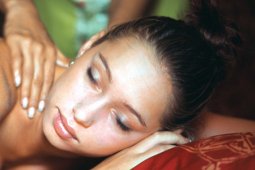 Non-demand touch, such as hand massage and other “sensate focus” exercises, are still recommended by many sex therapists who want to help couples struggling with sexual difficulties. Non-demand touch exercises help take the pressure off partners who are too focused or anxious about penis-vagina penetration to stay present with their own or their partner’s responses. These exercises are designed to build or restore emotional safety and sexual trust; cultivate awareness of sensual stimulation and preferences; and facilitate intimate communication through exploratory questions and answers as both partners experience giving and receiving touch.
The giver may ask questions like:
“Is this a good place to touch you?”
“Do you like this touch to be fast or slow, firm or light?”
The receiver may say things like:
“No, I don’t like my nipples touched until I am more aroused.”
“Yes, that feels good. But press just a little more firmly there.”
You may have experienced these “homeplay” exercises if you have consulted a sex therapist or clinical sexologist. If you are a sexologist or therapist yourself, you may be used to routinely including a program of sensate focus exercises in your clinical practice. However, some people experience anxiety during these exercises, or find them to be a turn-off, or otherwise counter-productive. Some people may resist doing these exercises, but are not sure why, and this resistance can add to the difficulties already experienced by the couple.
It’s time we were all more aware of sensory integration dysfunctions and their potential effects on sexual intimacy. We have to ask ourselves, “what is the impact of sensory dysfunction on sexual behavior?” A couple of years ago I coined an unofficial term for this problem, “adult sexual-sensory dysfunction” or ASSD. And though many of us are fed up with acronyms and the “alphabet soup” diagnoses, I’d like to use this term to advance a new meme and awareness. I see sensory integration dysfunction as one of the missing links in addressing and managing sexual concerns, particularly for people who also have a diagnosis of ADHD or ADD; or Asperger’s Syndrome or another autism spectrum condition; or any other pervasive developmental condition where sensory dysfunction often occurs. However, some people simply experience sensory integration problems which are not co-morbid. Children who are diagnosed with sensory disorders often receive help through “sensory diet” planned by occupational therapists. But for many adults, sensory dysfunction is seldom considered or diagnosed.
What is sensory dysfunction? Someone who has a low threshold for noise, touch, smell, taste, or sound is hypersensitive, and will avoid those things. A person who has a high threshold for various types of sensory input is hyposensitive, and will seek out these sensations. Many people combine low and high thresholds for various kinds of stimuli. For example, a person may crave super-spicy food (hyposensitive to taste) but be unable to tolerate the sound of a humming refrigerator (hypersensitive to sound). If you are hyposensitive, you will seek more of that kind of sensation. You will be a “sensory seeker.” Mosh pits and loud rock concerts are filled with hyposensitive sensation seekers. A hypersensitive person will be sensory avoidant. The person who flinches from touch is tactile avoidant. A person who cannot bear to kiss or give oral sex may have oral sensitivities. The senses of balance and body awareness are also included in sensory integration.
I have had a few clients who cannot bear to give oral sex. As children, these people hated having their face washed or their teeth brushed – any sensation around their face or mouth is unbearable. I have had a few clients who were aversive to certain types of touch. They may go through the roof with gentle stroking but enjoy a firm, non-moving grip. Even certain types of fabric – a change to flannel sheets, for example – can interrupt an otherwise promising sexual encounter.
There is growing anecdotal awareness in the BDSM and kink communities that for many people, consensual bondage, sensation play, and certain fetishes may be providing an eroticized – and much needed – adult sensory diet for people who experience some form of sensory dysfunction. As a “kink aware professional,” I feel we need much more research and understanding of the creative ways in which some adults cope with sensory dysfunction and its impact on sexual behavior and feelings.
Some sensory dysfunction websites provide checklists for sensory issues. While I do not suggest that these checklists will provide grounds for a diagnosis, they may indicate the wisdom of referring certain clients to occupational therapists for assessment. In the meantime, you can also use the results of these checklists to modify sensate focus and other homeplay strategies as needed. In the absence of abundant research on this topic, you may feel that you are “playing detective,” but please persist – this is an area which deserves diligent and careful inquiry.
 As a unique form of short-term, complementary and alternative modality (CAM), clinical sexologists are largely under-recognized and under-used. Though it’s said we specialize in studying “what people do and how they feel about it,” sexology touches on everything from erotology to anthropology, law, medicine, psychology, anatomy and physiology (naturally!), gender studies, public policy, history, and so on. That’s because human sexual behavior is pervasive, it affects everything we collectively do and create. As a sexologist, my interests have included Asperger’s Syndrome and sexuality, Native Hawaiian sexual traditions, objectum sexuality, parenting transgender children, the effect of sensory dysfunction on sexual behavior, and the use of hypnosis to address sexual concerns. Almost anything can provide delightful grist for a perpetual, intellectual mill and this has been my joy. Sometimes useful clinical insights emerge from regarding artifacts or incidents through a sexological lens. However, even when there is no immediate clinical application, the overall effect is a deepened respect for the unstoppable and endlessly creative human engagement with eros.
For some, this process accelerates during a “unique baptism by fire” known as the Sexual Attitude Restructuring (SAR) process. At the Institute for Advanced Study of Human Sexuality in San Francisco (which pioneered SARs during an earlier incarnation as the National Sex Forum), this is no mere weekend of “Sexuality 101 and 201”. At IASHS, you are immersed for eight days in everything you always wanted to know about sex and possibly a whole lot of things you may wish you’d never seen. Explicit media and small group processing are integral aspects. The experience is intense. Even seasoned sexologists have been known to melt down. But a good SAR results in a near-unconditional acceptance of one’s own erotic quirks, and those of fellow human beings. One goal of SAR process is to discover exactly what aspects of human sexuality are personal turn-ons or turn-offs, so that clients are not harmed by the reactions of untrained clinicians. I can say, after having experienced two eight-day SARs, that my ability to hear just about anything is pretty good – and I know when and how to gracefully suggest a referral when out of my depth. For this reason, the American Association of Sex Educators, Counselors and Therapists (AASECT) requires a (briefer) SAR experience of everyone seeking certification through the organization.
AASECT certifies the separate categories of sex educator and sex counselor, but not the hybrid practice of clinical sexology, which does both. Though I have recently completed requirements for sex counselor certification, I am sorry my own professional category is invisible within an organization that has so many of us as members. However, I recognize the reasons for this. For one thing, standards for clinical training in sexology are not as defined or generally agreed upon as they should be. For another, right now in the public mind a “sexologist” may be anything from Masters & Jonson to a woman in lingerie groped in a darkened room during an episode of The Pick Up Artist.
However, clinical sexologists practice with Annon’s PLISSIT model: permission (P), limited information (LI), and specific suggestions (SS). We make referrals for intensive therapy (IT) if necessary. Our understanding of human sexual behavior is fostered by our training, which exceeds the sexuality education requirements of other professions. This depth enables us to attend to clients seeking techniques for sexual enrichment and/or short-term management of non-medical sexual problems. As complementary specialists, we work well in consultation with a range of licensed professionals. Within the ethical scope of our practice, we support sexual health, function, self-esteem, and the intimate capacities of our clients.