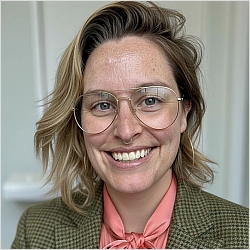
Phoenix Rosewood, PhD Counselor Education and Supervision; Licensed Mental Health Counselor
Northampton, Massachusetts
VerifiedFeaturedTelehealth Available
Professions: Licensed Professional Counselor, Other
Languages: English
Telephone: 570-799-8206
Website: Visit Website
My Approach to Therapy
I work toward supporting individual and collective liberation using anti-oppressive frameworks in therapy and supervision. I work with humans who recognize their own agency in their healing processes. I engage with people across different intersections of their identities that impact their lived experiences. By deepening our insights around the patterns, values, and narratives we hold about ourselves, and the systems and relationships we inhabit, we move toward greater understanding and compassion for ourselves and others. I offer a warm, compassionate, direct, engaged, and curious presence.
As a licensed, trauma-informed counselor educator and supervisor, I bring expertise in theory, critical and deconstructed application of counseling paradigms, and cutting-edge research translated into effective individual and systemic interventions to support people in their journey toward authenticity, acceptance, and vitality. My approach supports the ongoing processes of becoming and belonging, deepening insight, learning to attune to our own inherent wisdom, and gently welcoming even the parts of ourselves that have felt challenging or unwanted. Despite the messages many of us have received, I believe we each carry deep intelligence, resilience, and creative possibilities for growth. I believe that when we take committed action aligned with our values, meaningful change becomes both visible and felt. I aim to meet you where you are and to collaboratively create a map that supports your growth in therapy and in supervision.
My work is rooted in relational-cultural, attachment-based, transfeminist, and experiential approaches. This means I understand healing as something that happens in relationship, and I trust the present moment as a rich source of information and opportunity. Often, growth asks us to slow down, tune in, and sit with ourselves long enough for new possibilities to emerge. I hold each person as complex and interconnected, physically, emotionally, spiritually, and in community. I openly acknowledge the impact of systems of domination, including white supremacy, racism, transphobia, misogyny, classism, ableism, and fatphobia, on individual well-being and access to care. I believe ethical and competent counseling and supervision require ongoing reflection, accountability, and learning. I commit to this through my own supervision, consultation, training, and continuing education. In my role as a clinical supervisor, I integrate an intersectional and transfeminist framework alongside the integrative developmental model (IDM) to support counselors at all stages of development.
My practice is eclectic, rooted in somatic, relational, attachment, experiential, and transfeminist therapies. I have been trained in eye movement desensitization and reprocessing (EMDR) levels 1 and 2 for over five years, and I have completed basic exposure and response prevention (ERP) training. I believe we heal in relationship and through connection. I also enjoy offering clinical supervision and consultation.
My Practice & Services
Practicing as a counselor for over 15 years
Important Factors for Choosing a Therapist
Based on the experiences I've had with clients and the research, these are the questions I might consider in finding a therapist:
-is this person licensed?
-how do I feel talking to this person?
-has the prospective therapist broached aspects of identity in the therapeutic relationship which hold power andor subjugation (e.g. race, gender, ethnicity, size, class, religious affiliation) which will undeniably impact the working relationship and subsequent outcomes?
-can this person talk to me in concrete, simple terms and how they offer multiculturally responsive counseling or how they 'decolonize' their clinical work?
-does this person ask me about my pronouns and name to be used in therapy? does this person share their pronouns?
-what are this counselor's boundaries related to communication outside of therapy? how does this match or not match my own needs at this time?
-how does this person approach working with complex trauma? what are the specific theories, skills and interventions they use? how do I feel about them?
-who do they remind me of (if anyone) and is this ok?
Expertise & Specialties
Age Groups I Work With
TeensAdults
Groups I Work With
I specialize in eye movement desensitization and reprocessing (EMDR) and phase-based trauma integration therapies. Additionally, I work with people in dysfunctional family systems to support their recovery, including recovery from substance use and its effects on relationships. I support folks exploring gender and sexuality, and I provide gender-affirming care and resources. I enjoy working with other academics, as well as political movement organizers and leaders.
Therapy Services & Specialties
Concerns & Challenges Addressed
Abortion / Post Abortion IssuesAbuse / Abuse Survivor IssuesAttachment IssuesCodependency / DependencyFamily of Origin IssuesFertility IssuesGender DysphoriaIdentity Issues
Therapeutic Approaches & Evidence-Based Methods
Cognitive Behavioral Therapy (CBT)Culturally Sensitive TherapyDevelopmental PsychologyEmotion Focused TherapyExposure TherapyEye Movement Desensitization and Reprocessing Therapy (EMDR)Feminist TherapyHakomi
Industries & Communities
BIPOCEducationLGBTQ+Self-Employed and Freelance Professionals
Location & Contact
Follow on Social Media
