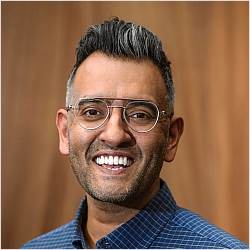
Dr. Nikhil Jain, Psy.D.
San Francisco, California
VerifiedTelehealth Available
My Approach to Therapy
You may look capable and composed on the outside while privately feeling anxious, overwhelmed, self-critical, or stuck. You may be dealing with overthinking, perfectionism, social anxiety, depression, relationship or family concerns, or a difficult life transition or decision. I help thoughtful adults and young adults understand what is keeping these patterns going and make practical changes that carry into daily life.
My style is warm, direct, active, and collaborative. I begin with a thoughtful clinical assessment of your symptoms, history, relationships, culture, strengths, values, and goals, then tailor treatment to you rather than forcing a one-size-fits-all model. I draw from Acceptance and Commitment Therapy (ACT), Cognitive Behavioral Therapy (CBT), psychodynamic and relational therapy, mindfulness, and culturally responsive care.
I am a California-licensed clinical psychologist who completed an American Psychological Association (APA)-accredited doctoral program, predoctoral internship, and postdoctoral fellowship, followed by nine years in Kaiser Permanente Adult Outpatient Psychiatry.
Therapy with me combines psychological depth with practical change: we work to understand the patterns keeping you stuck and practice new ways of responding so insight becomes useful outside the therapy room.
I offer individual therapy in person in San Francisco and online throughout California. My practice is private pay and out-of-network; superbills are available for clients seeking possible reimbursement. I provide individual therapy for relationship concerns and do not offer couples counseling. A free 10–15 minute video consultation is available to explore fit.
How Psychotherapy Can Help
Psychotherapy can help you understand why you keep getting pulled into the same thoughts, emotions, or relationship patterns, even when part of you knows they are not helping. It can give you a place to slow down, understand what is happening beneath the surface, and respond in a clearer, more intentional way. For many people, therapy leads not only to symptom relief, but to better decisions, healthier relationships, stronger boundaries, and a more grounded sense of self.
My Role as a Therapist
My role is to help you see what may be hard to see on your own. That includes patterns in your thoughts, emotions, relationships, and decisions that may be keeping you stuck. I listen carefully, ask meaningful questions, offer perspective, and help you translate insight into changes that feel thoughtful and realistic. Therapy with me is collaborative: I bring clinical training, experience, and honesty, and we work together to understand what is getting in the way and what can change.
On the Fence About Going to Therapy?
If you are wondering whether your concerns are serious enough for therapy, you are not alone. Many thoughtful people hesitate because they are used to handling things themselves, worry about being judged, or are unsure whether therapy will actually help. You do not need to be in crisis or have everything figured out before reaching out. A free 10–15 minute video consultation can help us determine whether working together feels like a good fit.
Had a Negative Therapy Experience?
A negative therapy experience can make it harder to trust the process again, and I take that seriously. You may have felt unseen, misunderstood, rushed, or as though therapy never moved beyond surface-level conversation. That does not mean therapy cannot still be helpful. The fit, style, or approach may not have been right for you. I welcome open conversations about what did and did not work before so we can approach our work thoughtfully and differently when needed.
Why Going to Therapy Does Not Mean You are Weak or Flawed
Many capable people are used to handling problems on their own, so asking for help can feel uncomfortable or unfamiliar. I do not see therapy as a sign of weakness or failure. It can be a deliberate choice to understand yourself more clearly, address patterns that are not changing on their own, and respond more effectively to your life and relationships. You do not have to wait until things become a crisis to begin.
The Duration and Frequency of Therapy
There is no single frequency or duration that fits everyone. Many clients begin weekly because consistency can help build trust and momentum. Over time, frequency may change based on your goals, progress, symptoms, schedule, and the level of support you need. Some clients come for focused work around a specific concern, while others stay longer to understand and change deeper patterns. I believe therapy should remain purposeful, so we can revisit your goals, progress, and frequency together as therapy continues.
Expertise & Specialties
Age Groups I Work With
Adults
Groups I Work With
I work with adults and young adults, including men, professionals, physicians and other healthcare professionals, college and graduate students, and Asian, South Asian, Indian-American, first-generation, and bicultural adults. I provide individual therapy for anxiety, including social anxiety and generalized anxiety, overthinking, perfectionism, depression, relationship challenges, family conflict, self-esteem, body image concerns, identity and cultural stress, life transitions, career and work stress, burnout, people-pleasing, and difficult decisions. I offer culturally attuned, evidence-based psychotherapy in person in San Francisco and online throughout California. I do not provide couples counseling.
Therapy Services & Specialties
Concerns & Challenges Addressed
Adjusting to Change / Life TransitionsAnxietyBody ImageCareer Issues Communication ProblemsDepressionFamily ProblemsIdentity Issues
Therapeutic Approaches & Evidence-Based Methods
Acceptance and Commitment Therapy (ACT)Cognitive Behavioral Therapy (CBT)Culturally Sensitive TherapyIntegration of different therapy modelsMindfulness-Based InterventionsMotivational Interviewing PsychodynamicRelational Psychotherapy
Industries & Communities
BIPOCFirst Responder/Medical ProfessionalsLGBTQ+
Video Introduction
Location & Contact
Follow on Social Media