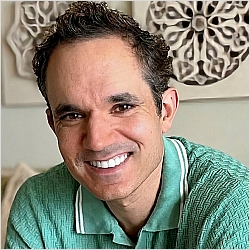
Gavin Versi, LMFT
Sammamish, Washington
VerifiedTelehealth Available
Professions: Marriage & Family Therapist, Psychotherapist
Languages: English
Telephone: 253-263-1282
Website: Visit Website
My Approach to Therapy
Are you feeling overwhelmed by pornography use or out-of-control sexual behaviors? Is it impacting your relationships, causing you anxiety, and perhaps shame? You’ve tried to stop, but you can’t think your way out of compulsive behaviors. Maybe the first step is admitting that you can’t do it alone. By facing your compulsivity, you can increase your resilience, reduce your anxiety and depression, and get in touch with who you really are. You can live again. You can be more authentic. You can experience levels of ease and joy you may never have thought possible.
By focusing on emotional regulation and drawing on my own transformational experiences, I aspire to co-create an environment that is ripe for getting to the bottom of all this, to look beneath the soil rather than just tending to the weeds. We will use tools such as brainspotting (similar to eye movement desensitization and reprocessing, or eye movement desensitization and reprocessing (EMDR)) to efficiently access the emotional part of your brain.
I have had success with clients who have had plenty of experience in therapy without achieving their goals. This is not a quick or easy process, and it is absolutely worth it because you are worth it. I will try to make it as gentle as possible for you, and we will go at your pace. Along with my extensive training, I try to lead with my heart.
Your mind wants to heal. Just as your body will heal from physical cuts and ailments when given the right conditions, so will your mind.
My Practice & Services
I am certified in brainspotting, a trauma-healing technique similar to eye movement desensitization and reprocessing (EMDR). I am trained in somatic experiential therapy (SomEx), recovery coaching, and trauma-informed care. I am a Certified Sex Addiction Therapist (CSAT) candidate. I am a Licensed Marriage and Family Therapist (LMFT).
I spent over a decade working in professional sports (media and marketing) before volunteering for years as a caregiver to children in Thailand. I have also worked as a recovery coach. Along with a master’s in couple and family therapy, I hold a BA and an honorary MA in social and political sciences from the University of Cambridge in the United Kingdom. I am British-American.
Specific Issue(s) I'm Skilled at Helping With
ADDICTION
I see addiction as a disease of the nervous system: an unhealthy way of regulating. Like any disease, nobody chooses it: it chooses you. And you can choose to overcome it. It is usually a maladaptive coping response to difficult experiences. It disconnects you from your authenticity and negatively impacts relationships. By addressing the trauma that led to addiction, you can overcome it. As well as substance addictions, I specialize in process addictions like sex, pornography and social media.
CODEPENDENCY
Codependency may show up as people pleasing and denying one's own needs. I like the famous analogy of being on an airplane: to be in a relationship, we must tend to ourselves (put on our own gas masks before helping others). Life is about relationships and there is none more important than the relationship we have with ourselves. To treat codependency, I draw on the teachings of theorists such as John Bradshaw, Pia Mellody, and Melody Beattie.
COMPLEX POST-TRAUMATIC STRESS DISORDER (CPTSD)
My extensive training in body-based approaches such as somatic therapy and Brainspotting can be effective for the treatment of PTSD. I believe that, like almost all so-called 'disorders', PTSD is the body's method of finding a way to cope with adverse experiences and environments, not least in childhood. Through a slow, intentional process of reconnecting with one's body, we can heal this trauma.
My View on the Purpose of Psychotherapy
There are multiple benefits to good therapy, including: understanding oneself better (and therefore being better equipped to make decisions, especially about relationships); enhanced emotional regulation; and bringing the unconscious to a level of consciousness. Somatic therapy, which I practice, goes a step further by promoting greater awareness of bodily sensations, which in many cases means reconnecting with one's intuition; gut feeling; and authenticity.
Why Going to Therapy Does Not Mean You are Weak or Flawed
The world is upside down, with strength often perceived as weakness, and the most emotional folks being seen as the least emotional. It is easy to isolate and be invulnerable; what takes courage and strength is to ask for help and be introspective. Showing up to a therapy session is an act of vulnerability. It is an act of strength.
My View on the Nature of 'Disorders'
There is a reason for everything, even if we don't always see it. There is nothing disorderly about "disorders": they are maladaptive coping mechanisms; ways in which we unconsciously adapted to survive, often at the expense of our authenticity. There are few disorders that cannot be overcome if one is willing to put in the hard work. It may lead to more ease and joy. :)
Expertise & Specialties
Age Groups I Work With
TeensAdultsElders
Groups I Work With
I work with teens and adults who want to understand themselves and their relationships better, and heal from adverse experiences.
Therapy Services & Specialties
ConsultationCounseling for OffendersFamily TherapyIndividual Therapy & CounselingMarriage, Couples, or Relationship CounselingTelehealth
Concerns & Challenges Addressed
Abuse / Abuse Survivor IssuesAddictions and CompulsionsAnxietyAttachment IssuesBreakupCodependency / DependencyDepressionDrug and Alcohol Addiction
Therapeutic Approaches & Evidence-Based Methods
Bowen Family TherapyBrainspotting (BSP)Experiential TherapyGestalt TherapyPsychodynamicSomatic Psychotherapy
Industries & Communities
BIPOCEducationEntertainment IndustryFirst Responder/Medical ProfessionalsLGBTQ+Military/Law EnforcementProfessional SportsSelf-Employed and Freelance Professionals