Most people who find their way to me are not in crisis. They are tired. Tired of the same argument returning. Tired of feeling unseen by the person closest to them. Tired of noticing themselves end up, again, in a version of the same dynamic, no matter who the partner is.
Maybe the connection in your relationship feels thinner than it used to, even when nothing dramatic has happened. Maybe you and your partner can barely sit through dinner without one of you shutting down or getting reactive. Maybe you are the one who keeps trying, keeps initiating, keeps holding the relationship together, and you are starting to ask whether you can keep doing it alone. Maybe everything looks fine from the outside, and only you know how lonely it has begun to feel.
If you are coming on your own rather than as a couple, you may be sitting with a different version of the same question. Why do I keep ending up in this kind of relationship? Why does my closest person bring out a side of me I do not recognize, or do not like? Why do I want closeness and resist it at the same time? Why is it so hard to be honest about what I actually need?
You may have tried therapy before. You may have read the books, listened to the podcasts, learned the communication skills, taken the assessments, made the lists. Some of it probably helped, at least for a while. And still, something underneath has not shifted.
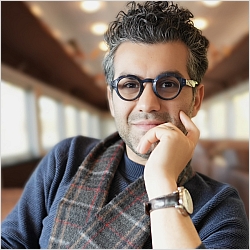
I am Dr. Ehsan Adib Shabahang, a doctoral-level therapist and the founder of AtReef Therapy in Cambridge, MA. I provide couples therapy and individual therapy, with a focus on the patterns that repeat in close relationships and within ourselves. My background is in psychology (PhD with a Social Psychology focus) and clinical mental health counseling. I do not work with everyone, and that is intentional. The work I do is best suited to adults who want depth, who can tolerate honest reflection, and who are ready to look at themselves with as much care as they look at their partner.
My approach is relationship-centered and reflective. I focus less on quick communication fixes and more on what often gets left unsaid in a relationship: the protective behaviors, the hidden expectations, the longings that have gone underground, the parts of ourselves we have learned to keep out of view. Communication skills matter, and we will use them. But communication is usually not the real problem. The real problem is what each person is protecting underneath the words.
This work is informed by Self-Reflective Relationship Therapy (SRRT), a framework I am developing. SRRT holds a core idea: what remains unseen within us often becomes repeated between us. The version of you that learned, early on, to anticipate disappointment, to manage other people's moods, to keep the peace, to perform competence, to stay quiet, to keep score, or to leave first will keep showing up in your relationship until you can see it clearly. SRRT is not a cure, not a hack, and not a substitute for therapy. It is the framework I bring to the room, and it is meant to give us a shared language for the patterns that are usually too close to see.
In our sessions, you can expect honesty, structure, and warmth held together. I will not tell you what to do or whether to stay. I will not perform neutrality when I see something worth naming. I will help you slow down enough to see what you and your partner (or you and yourself) have actually been carrying, and to make sense of why it has been so hard to put down. We will move between what is happening between you in the room and what each of you brought into the room before this relationship existed. The patterns usually live in both places at once.
Couples often come to me when they have stopped recognizing the relationship they once had, when one or both partners are quietly considering whether to stay, when trust has been ruptured, or when they want to do the deeper work before things become more strained. Individuals often come to me when they have noticed a pattern they cannot break alone, when a relationship has ended and they want to understand their part, or when self-reflection has stopped feeling like something they can do without help.
You will not be rushed. You will not be handed a worksheet and sent home. The work is slower than most therapy you have probably encountered, and that is on purpose. Real change in how we love and how we are loved tends to happen at the speed of honesty, not the speed of strategy.
If you are looking for short-term symptom relief, a place to vent without much pushback, or a therapist who will tell you what to do, I am probably not the right fit. If you are looking for depth, accountability, and a slower kind of work where understanding yourself in relationship is the point, I would be glad to hear from you.
I see couples and individuals in person in Cambridge, MA, and via secure telehealth throughout Massachusetts.