“For years it lay in an iron box buried so deep inside me that I was never sure just what it was. I knew it carried slippery, combustible things more secret than sex and more dangerous than any shadow or ghost. … I saw things I knew no little girl should see. Blood and shattered glass. Piles of skeletons and blackened barbed wire with bits of flesh stuck to it…The iron box contained a special room for my mother and father, warm and moist as a greenhouse. They lived there inside me, rare and separate from other beings. … I knew my parents had crossed over a chasm … The box became a vault, collecting in darkness, always collecting; pictures, words, my parent’s glances, becoming loaded with weight. It sank deeper as I grew older, so packed with undigested things that finally it became impossible to ignore.”
-Helen Epstein, Children of the Holocaust
 Experiencing a traumatic life event is horrific and terrifying, but this experience does not have to become your defining moment.
It is possible to grow through a traumatic event, or series of events, and there are loosely-structured phases of healing for that growth to follow. For a moment, stop and reflect on what it means for experts to have identified these patterns of healing: it means that you are not alone in having experienced trauma, and you are not alone on the healing journey.
The healing journey follows three loosely linear stages or phases. The rate of growth through each of the phases, as well as the details of what that growth looks like, will be unique to you. You will develop your own unique pattern of healing, which means that you will enter, exit, and revisit phases at various times in your life.
Always keep in mind that revisiting is not backwards movement. It is like the outer layers of a spiral: you pass by the same issues, but are in a different, deeper state of healing. As you near the end of your healing journey, you will be able to look back and notice an overarching progressive nature to your growth and healing.
[fat_widget_trauma_ptsd_left]This article will look at the first phase of healing, while future articles will address the second and third phases.
Understanding the Safety Phase
As you begin the first phase of healing, safety is both your main concern and the hardest task to achieve. Establishing safety—both within yourself and within your environment—can take days, weeks, or even years. The length of time required to develop genuine safety depends on your unique attributes, such as past life experiences, personality, and pretrauma baseline. The length of this phase also depends on how chronic the trauma. In general, the longer you were exposed to the trauma, the longer it will take to develop a sense of safety.
This is not an easy stage. Establishing safety requires a lot of hard work and may require that you, the survivor, dramatically change your life or lifestyle. While this is a difficult part of the healing journey, absolutely no survivor can skip this stage.
Safety Within
In order to truly have safety, you must establish safety within yourself. Focusing on your physical health lays the foundation for internal safety. Establishing internal safety requires you to tend to any ailments, as well as to eat healthy foods, exercise regularly, and sleep sufficiently. Self-harming behaviors preclude genuine safety, so cutting, burning, or addictions to drugs, alcohol, food, or sex, must be grown through and terminated.
Many self-harming behaviors are efforts at managing emotions or thoughts. Learning how to manage your thoughts and emotional world, including your trauma reactions (especially hyperarousal and intrusive reactions), is fundamental to being safe within yourself. Many people find it difficult to engage in this healing without the assistance, support, and guidance of a trained professional. Do not feel ashamed or hesitant to reach out for help.
Safety in the World
Safety within oneself is only half of the equation. No one can be fully safe unless the environment they live and interact in is also safe. Creating safety within your environment requires safety within your physical and relational spheres.
- Attaining a safe physical space includes your ability to move physically in society with a sense of safety and security. It may help to work on your ability to identify dangerous situations or individuals and, to the best of your ability, to get out of a dangerous situation if at all possible. Consider developing safety plans or learning self defense.
- Assess the physical and emotional safety of your social support network. It may be necessary to remove people from your life who are a potential source of physical or emotional danger, or to increase the number of people who can and do provide emotional support, protection, or practical help.
- For those who experienced trauma at the hands of other people, assess the degree of continuing threat and the potential for re-victimization or revenge, and develop appropriate precautions. Ensuring your safety is not 100% within your authority, since to live means to be vulnerable. But that does not mean it is 0% within your authority either.
Moving Through the First Phase
This phase of growth is gradual. It can have a sometimes halting stop-and-go pattern, and it can take a long time. However, if you continue to work on developing safety, and allow trustworthy others to help you, you will be able to grow through this phase.
Some indicators that you have grown through this phase include no longer feeling utterly vulnerable; having a degree of confidence in your ability to protect yourself physically and emotionally; knowing who to count on for safety and support, and being able to effectively manage most of your trauma reactions, including emotions, thoughts, and behaviors.
If learning about the tasks involved in this first phase of healing feels daunting, don’t give up. Reach out to a trained therapist and harness their skills and abilities in order to engage in this healing work. You have a right to reclaim the quality of life you deserve.
If this first phase of healing sounds like a review of work you have already completed, take a deep breath of congratulations and gratitude. You are on your way to continued and ever-deeper healing and growth.
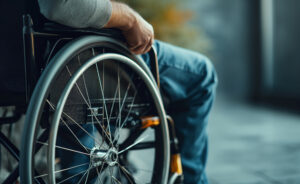
The onset of disabling illness or physical or sensory impairment is often accompanied by complicated grief processes, including depression and posttraumatic stress disorder. These grief processes are frequently developed in response to the concurrent losses people may experience when living with new abilities.
Most obviously, people who acquire a disability or disabling disease lose a part of their bodies and/or the functionality of parts of their bodies. Additionally, they may lose physical comfort, vigor, mobility, spontaneity, the ability to engage in certain activities, aspects of their previous lifestyles, privacy, a sense of dignity, a sense of control, a sense of efficacy/agency, a degree of independence, actual or perceived life roles, friends and other social supports, the ability to work, financial stability, their previous sense of identity and purpose, the ability to pursue previously established dreams, their previous body image, and, all in all, their previous sense of self as a whole. Therapists should be attuned to what a newly disabled person may have lost, or may perceive themselves to have lost, beyond the obvious loss of physical or sensory functionality.
[fat_widget_right]
How well people adjust to this potentially staggering array of losses is usually much more closely correlated to who they have been prior to the disability, and what social, emotional, and financial resources they have available to them, than to how “severe†the impairment itself is. The huge importance of social support after a disabling event cannot be overstated; people with new-onset disabilities may realize how lucky they are to have loving people in their lives as they have never realized it before, or they may feel almost completely socially and emotionally isolated. The most difficult disabilities to deal with in regard to social support seem to be “disenfranchised†disabilities (e.g., those resulting from Fibromyalgia/Chronic Fatigue Syndrome) in which others do not quite believe.
Non-professionals wishing to support a newly disabled person can be most helpful by being available to him or her as a friend who is willing to listen and meet him or her where he or she is emotionally. Trying artificially to cheer the person up or suggest that the person does not, or will not, have losses is not helpful. Newly disabled people will “cheer up†once they have finished grieving their losses and reorienting themselves to their new situation, often with the assistance of a counselor or therapist.
Another key to successful adaptation to a new disabling condition seems to be successful identity reconstruction, a process in which therapists can be particularly helpful. This may often entail psychological, existential, and/or spiritual shifts in perspective toward valuing innate qualities (as opposed to physical or comparative ones), authenticity, and taking life slowly and savoring it. Identity reconstruction, it should be noted, is not necessarily a finite process, as some disabling conditions are progressive and require constant readjustment.
Keep in mind that a large number of the losses with which a person with an acquired disability must learn to cope are not due to the physical impairment itself but rather to limitations imposed on the person by society. Therefore, therapists should not insist that people with disabilities “accept†their condition of disablement as theirs to adjust to, rather than, say, as an invitation to fight injustice.
Ultimately, it is much more helpful for therapists to view identity reconstruction, rather than “acceptance†of one’s disability, as the end-stage of grieving an acquired disability.