Traumatic brain injury (TBI) represents a uniquely challenging medical condition. Repair of the physical, emotional, and cognitive damage is a long and often grueling process. In the wake of brain injury, patients often experience amnesia, altered consciousness, and profound confusion. Many of these symptoms mirror the psychotic states of schizophrenia; however, the root causes of these symptoms are, of course, quite distinct. Still, it’s not an uncommon practice for attending physicians to prescribe antipsychotic drugs such as Haldol (haloperidol) for TBI patients who exhibit aggression or restlessness. This practice is not without controversy, as several studies have shown that psychotropic medications, especially the typical antipsychotic drugs, may slow recovery from brain injury. A study published in Life Sciences adds even more compelling data to the argument against antipsychotic drugs for patients with TBI.
In a study of brain recovery rates under different conditions, a small group of rats were subjected to a controlled brain injury. The control group was anesthetized but no surgery was performed. The rats were further divided into three distinct groups. One group received a regular dose of Haldol, another received Risperdal (risperidone, an atypical antipsychotic), and a third group received neither drug. All the rats were given daily assessments of motor skills, reflexes, and cognitive functioning. Because antipsychotic drugs have a sedative effect, the drugs were only administered after each day’s performance testing. This is an important distinction because previous studies often gave drugs before testing, potentially skewing the results. Researchers sought to uncover any ill effects from these medications independent of sedation.
Although the sample size of this particular study was small, the results were quite significant. Regardless of whether the rats were given Haldol or Risperdal, their performance tests showed a slower rate of improvement than their unmedicated counterparts. They were slower to regain reflexes and slower to make their way through a specific kind of maze. It was previously argued that the newer so-called atypical antipsychotic drugs like Risperdal might be a better choice for aggressive or psychotic TBI patients. This study argues that there is no significant difference between the older and newer drugs. What does that mean for humans with brain injuries? In a nutshell, these results argue for avoidance of antipsychotic medications while recovering from TBI unless absolutely necessary.
References
Hoffman, A., Cheng, J., Zafonte, R., Kline, A. (2008). Administration of haloperidol and risperidone after neurobehavioral testing hinders the recovery of traumatic brain injury-induced deficits. Life Sciences, 83(17-18), 602-607. doi: 10.1016/j.lfs.2008.08.007
I recently stumbled across a new blog called Infinite Daze where the author poignantly writes about her daily struggles with Fibromyalgia and Chronic Fatigue Syndrome (CFS). In a recent post titled Should I Stay or Should I Go Now, she has this to say about her marriage:
“I had a revelation today. During my son’s graduation ceremony at his high school, my husband came up to me and squatted down next to my wheelchair to share a story with me. Without thinking I ran my hand over his hair and down his arm. I’m still in love with this guy. He can be very nice. He can be very sweet. I married him because of this. This is why I find his behavior so baffling. I’ve known this guy just shy of 25 years. That is a long time. The meanness, the temper tantrums, the spitefulness is all new. I’ve never seen this in him before. Living with someone for 25 years means this isn’t behavior that has been hidden away. It is brand spanking new. It is why I’ve been blindsided with it. I so didn’t see this coming. It also makes the whole idea of divorce so messy. If he was always nasty this would be a no-brainer. I would up and leave in a heartbeat. But he swings hot and cold. One day he is super nice to me; takes good care of me and even gives me hugs. The next day he is slamming doors and telling me he wants out. I am so very confused.”
Ever feel like you’re living with Dr. Jekyll and Mr. Hyde? Your partner is warm, loving and compassionate one moment and angry, silent or indifferent the next. What’s up with that? You’ve most likely rubbed your partner’s “raw spot.”
We all struggle with vulnerable feelings in love whether we want to admit it or not. It’s inevitable that we will hurt each other with careless words or selfish actions. While these occasions sting, the pain is often fleeting and we get over it quickly. But according to Dr. Sue Johnson, founder of Emotionally Focused Therapy, almost all of us have at least one hypersensitivity – a raw spot in our emotional skin– that is tender to the touch, easily rubbed, and deeply painful. When this spot gets rubbed often enough, it can bleed all over our relationship.
For those of us in chronic marriages, this hypersensitivity can emerge seemingly out of nowhere at the onset of our illness when the need for support from our partner is particularly intense, but it doesn’t come. When our need for attachment and connection is repeatedly neglected, ignored or dismissed, it results in two potential raw spots: feeling emotionally deprived or deserted/abandoned.
I know my raw spot rather well. When I hear a tone of impatience in my husband’s voice (chronic illness-related or not), I get angry and defensive. It sends me back to days when my father would dismiss me as not being important or worthy enough of his time. My father’s impatience was his way of disconnecting from the relationship. This experience made me hypersensitive – impatience signals emotional abandonment to me.
Many of us have no idea what our own raw spots are, let alone our partners’. We simply get caught up in the same old vicious cycle of petty squabbles and conflicts when in actuality they are symptoms of a raw and tender spot on our emotional skin.
So how do you identify your raw spot?
Think about a time in your marriage when you got suddenly thrown off balance, when a small response or lack of response suddenly seemed to change your sense of safety or connection with your spouse, or when you got totally caught up in reacting in a way that you knew would spiral you into your usual dysfunctional pattern of relating. Maybe you are aware of a moment when you found yourself reacting very angrily or numbing out.
Let’s unpack this incident:
- What was happening in the relationship? What was the trigger that created a sense of emotional disconnection for you? What was your general feeling in the split second before you reacted and got mad or numb? What did your spouse specifically do or say that sparked this response?
- As you think of a moment when your own raw spot is rubbed, what happens to your body? You might feel spacey, detached, hot, breathless, tight in the chest, very small, empty, shaky, tearful, cold, on fire.
- What does your brain decide about the meaning of all this? What do you say to yourself when this happens?
- What did you do then? How do you move into action?
- See if you can tie in all these elements together by filling in the blanks below:
In this incident, the trigger for my raw feeling was _________. On the surface, I probably showed _____________. But deep down, I just felt (pick one of the basic negative emotions, sadness, anger, shame, fear). What I longed for was ___________. The main message I got about our bond, about me or my love was _________________.
Here are some common scenarios:
You experience a flare-up and it’s worse than usual. You are really struggling and looking for support and empathy from your husband. He begins to suggest ways you can get your flare-up under control. You hear his suggestions as him lecturing you. In your head you say to yourself, “He’s judging me. He’s not with me in this. I have to do this all on my own. My need for support doesn’t matter. This is scary”. What happens next? You start yelling and tell him he’s a jerk and you don’t need his help anyway.
Or how about this scenario?
Your husband asks you to watch a movie with him on the couch after dinner. Your head is pounding from a migraine and you tell him you’re tired and going to bed. The next morning you ask him if a certain outfit looks good on you. He says “it’s OK but since when does my opinion really make a difference here? Wear what you want. What I want is irrelevant.” Still stuck in feelings of rejection from the previous night, his sadness over lack of connection with you force him into withdrawal and giving you the silent treatment.
In both scenarios, rage and withdrawal mask the emotions that are central in vulnerability: sadness, shame, and most of all, fear.
If you find yourself continually stuck in an unhealthy pattern of relating with your spouse, you can bet it is being sparked by attempts to deal with the pain of a sore spot, or more likely, sore spots in both of you. And unfortunately, your raw spots almost inevitably rub against your spouse’s. Rub one in your spouse, and his or her reaction often irritates one in you.
What’s the dead giveaway that tells you your raw spot or your spouse’s raw spot has been hit?
First, there is a sudden and radical shift in the emotional tone of the conversation. You and your spouse were joking just a minute ago, but now one of you is upset or angry, or, conversely, aloof and cold. You are thrown off balance. It’s as if the rules changed and no one told you.
Second, your spouse’s reaction to a perceived offense seems way out of proportion.
These signs are all about attachment needs and fears popping up. They are all about our deepest and most powerful emotions suddenly taking over. We get set to move in a particular way, toward, away from, or against our spouse. This readiness to act is wired into every emotion. Anger tells us to approach and fight. Shame tells us to withdraw and hide. Fear tells us to flee or freeze, or in real extremes to turn back and attack back. Sadness tells us to grieve and let go.
All this happens in a nanosecond.
Stopping these destructive patterns depends not only on identifying and stopping our unhealthy ways of relating but also on finding and soothing our raw spots and helping our spouse to do the same.
Here’s how you do just that:
- Stop the Game – one or both of you has to say “Can we stop this? This is the place we always go. We get trapped here and we end up totally exhausted and defeated.”
- Claim Your Own Moves – together come up with a short summary of your moves. e.g. you lose it while your spouse pretends not to be affected; you get louder and threaten; your spouse sees you as impossible and withdraws.
- Claim Your Own Feelings – talk about your own feelings rather than focusing on your spouse and blaming everything on him/her.
- Own How You Shape Your Partner’s Feelings – Recognize how your usual way of dealing with your emotions pulls your spouse off balance and turns on deeper attachment fears.
- Ask About Your Partner’s Deeper Emotions – Look at the big picture and slow down a little. Begin to be curious about your spouse’s softer, underlying emotions, rather than just listening to your own hurts and fears and assuming the worst about your spouse.
- Share Your Own Deeper, Softer Emotions – Although voicing your deepest emotions, especially fears around not being connected or attached to your spouse, may be the most difficult step for you, it is also the most rewarding. Let your spouse see what’s really at stake when you argue.
- Stand Together – Take the above steps and forge a renewed and true partnership. You now have a common ground and cause. You no longer see each other as enemies but allies. You can take control of escalating negative conversations that feed your insecurities and face those insecurities together.
Content for this article has been adapted from the book Hold Me Tight by Dr. Sue Johnson.
1 out of 2 people in the U.S. has a chronic illness and in 96% of these cases, the chronic illness is invisible. This means the illness is not readily apparent to others because the person doesn’t use an assistive device like a cane or a wheelchair. Most people with an invisible illness can tell you story after story of family members, friends, co-workers, bosses, etc. who don’t actually believe they’re ill. They’ve been given snide looks when exiting their car after parking in a handicapped spot. They’ve been told by their friends that they look too good to be sick. They’ve been questioned by bosses as to why they miss so many days of work when even a doctor can’t determine an appropriate diagnosis.
These scenarios are all too common and happen to millions of people every day. Most of us are able to shrug it off and move on in spite of anger, frustration and hurt. But what happens when the person who promised to love you in sickness and in health doesn’t believe you’re actually sick? (more…)
Starting the day with fibromyalgia pain made Vera angry
Fibromyalgia made it hard for 46 year old Vera to get her legs out of bed in the morning. As she moved toward the bathroom and began her toilette, the pangs of pain moved to her hands, head and neck. It brought tears to her eyes. It made her angry to think that Kurt hadn’t even thought of organizing things around the house to make life a little easier for her. Vera remembered the arguments about accompanying her on doctor appointments and got even angrier. But she never said anything to him. She turned her mind to the support group she would attend later that day, although it wasn’t successful in easing her physical discomfort.
Vera found it easier to focus on the fibromyalgia pain than her scary emotions
As she ate breakfast, flashbacks of her early family file flooded Vera’s vision. She relived the tension she used to feel coming home from school wondering if her parents would fight out loud or give each other the cold shoulder. Her mother would take out her frustration on Vera the oldest and quietest of her kids. Her muscles tightened up as she recalled the fear of uncertainty and not knowing how to speak about her worries. It was the same thing now. She didn’t know how to talk about the anxiety of not being able to take care of herself. Vera had no words for the anger at her father for not making her mother happy, and at Kurt for being equally insensitive and uncaring. What she did have was body pain that ranged from dull aches to excruciating pain for which no specific organic cause had been found. Fibromyalgia was the diagnosis. It came with fatigue, slowing down of actions and restricting her life. It was making Vera dependent on pain medication and on a husband who let her down, repeating the cycle of her childhood. (more…)
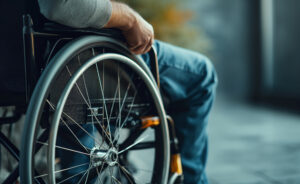
The onset of disabling illness or physical or sensory impairment is often accompanied by complicated grief processes, including depression and posttraumatic stress disorder. These grief processes are frequently developed in response to the concurrent losses people may experience when living with new abilities.
Most obviously, people who acquire a disability or disabling disease lose a part of their bodies and/or the functionality of parts of their bodies. Additionally, they may lose physical comfort, vigor, mobility, spontaneity, the ability to engage in certain activities, aspects of their previous lifestyles, privacy, a sense of dignity, a sense of control, a sense of efficacy/agency, a degree of independence, actual or perceived life roles, friends and other social supports, the ability to work, financial stability, their previous sense of identity and purpose, the ability to pursue previously established dreams, their previous body image, and, all in all, their previous sense of self as a whole. Therapists should be attuned to what a newly disabled person may have lost, or may perceive themselves to have lost, beyond the obvious loss of physical or sensory functionality.
[fat_widget_right]
How well people adjust to this potentially staggering array of losses is usually much more closely correlated to who they have been prior to the disability, and what social, emotional, and financial resources they have available to them, than to how “severe” the impairment itself is. The huge importance of social support after a disabling event cannot be overstated; people with new-onset disabilities may realize how lucky they are to have loving people in their lives as they have never realized it before, or they may feel almost completely socially and emotionally isolated. The most difficult disabilities to deal with in regard to social support seem to be “disenfranchised” disabilities (e.g., those resulting from Fibromyalgia/Chronic Fatigue Syndrome) in which others do not quite believe.
Non-professionals wishing to support a newly disabled person can be most helpful by being available to him or her as a friend who is willing to listen and meet him or her where he or she is emotionally. Trying artificially to cheer the person up or suggest that the person does not, or will not, have losses is not helpful. Newly disabled people will “cheer up” once they have finished grieving their losses and reorienting themselves to their new situation, often with the assistance of a counselor or therapist.
Another key to successful adaptation to a new disabling condition seems to be successful identity reconstruction, a process in which therapists can be particularly helpful. This may often entail psychological, existential, and/or spiritual shifts in perspective toward valuing innate qualities (as opposed to physical or comparative ones), authenticity, and taking life slowly and savoring it. Identity reconstruction, it should be noted, is not necessarily a finite process, as some disabling conditions are progressive and require constant readjustment.
Keep in mind that a large number of the losses with which a person with an acquired disability must learn to cope are not due to the physical impairment itself but rather to limitations imposed on the person by society. Therefore, therapists should not insist that people with disabilities “accept” their condition of disablement as theirs to adjust to, rather than, say, as an invitation to fight injustice.
Ultimately, it is much more helpful for therapists to view identity reconstruction, rather than “acceptance” of one’s disability, as the end-stage of grieving an acquired disability.