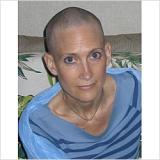
Linda Jame, LCSW

Linda Jame, LCSW

Verified Credentials

  • Profession(s):

    Psychotherapy, Marriage & Family Therapy, Mental Health Counseling

  • License Status:

    I'm a licensed professional.

  • Primary License:

    LCSW - R045702

 
My Approach to Helping
Contemplative psychotherapy invites you to slow down, to feel into moment-to-moment sensations and thoughts, and to examine what is the truth of experience. It is my position that the key to satisfaction and the end of suffering is in acceptance rather than resistance; that it is more a matter of noticing what is right than one of noticing what is wrong. Yet, most of us have an extremely hard time letting go of our critical self or of personalizing our suffering. I've spent my clinical career integrating Eastern Buddhist psychology with Western psychological theory. My interest stems from the fact that insight alone does not produce the change that people are seeking when they enter therapy. What supports the necessary shift is awareness which is cultivated through heartfelt presence and mindfulness--two qualities that are learned through the practice of sitting with yourself and watching your moment-to-moment experiencing. Therefore, this practice of mindfulness is cultivated in our work together; it is used along with a more traditional exploration of the origin of the "symptom" (or our suffering) whether that be eating difficulties, intimacy struggles, anxiety, depression, creative blocks or other areas of your life in which you feel stuck.

In our work together, we will practice a soft, mindful opening (learning to use the breath as an anchor to staying with the present moment); we will observe what you are feeling. Experiencing a feeling means that you disconnect from the thoughts supporting a feeling (again this requires mindfulness--which is learning to be present to whatever arises in the moment without judgment) and enter into an embodied awareness of the moment without attachment. Have you ever tried this? Once you do, you will notice that openness or awareness is much bigger and stronger than anything causing you to be anxious or unable to act. This discovery puts you in touch with your capacity for strength, kindness, stability and understanding. As you allow yourself to acknowledge, allow and open to your embodied experience you learn to have a fresh, warm, friendly encounter with "this" - right here, right now! In Buddhist philosophy and psychology this is called "the great medicine"--this ability to flow with whatever arises. In order to achieve this end to suffering, one must practice training the mind to be less reactive, and that's what we will do together! It's not easy but it is well worth the investment of time and practice to learn to live more fully awake despite difficult circumstances.


More Info About My Practice
Dyad Work
Basically, couples' sessions means that you work on yourself (much as above), but together! Dyad work is not about the other person changing, but about your taking responsibility for your projections, which are the displacing of your historical wounds onto your partner. Each of us wants to be wanted and loved--it is our deepest longing. However, what holds us back from getting this need met is our secret belief that we are actually unworthy of love. We see ourselves as deficient and that deficiency often gets projected onto our partner. The work we do together involves making a commitment to one another to find safety in the resisted, vulnerable places that reflect what you know to be true about yourself--whether you like it or not! As you experience your own pain, and the way you've defended against that pain, a mysterious, expanded sense of softening occurs allowing that fearful, conflicted place within to be less resisted. This unconditional, mindful, heartfelt presence leads to gentle acceptance, forgiveness, spaciousness, patience and love for yourself. It softens the way you relate to your partner because as we increasingly accept ourselves we learn to extend that gentleness to our partner.
Services I Provide
  • Individual Therapy & Counseling
  • Marriage, Couples, or Relationship Counseling
  • Group Therapy
  • Clinical Supervision
  • Online Counseling / Phone Therapy
Ages I Work With
  • Teens
  • Adults
Languages I Speak
  • English
Therapy Approaches I Use
  • Body-Mind Psychotherapy
  • Breathwork
  • Cognitive Behavioral Therapy /REBT
  • Contemplative Psychotherapy
  • Dialectical Behavioral Therapy
  • Focusing
  • Guided Therapeutic Imagery
  • Holistic Psychotherapy
  • Integration of different therapy models
  • Intensive Short-Term Dynamic Psychotherapy
  • Mindfulness Based Approaches
  • Mindfulness Based Cognitive Therapy
  • Object Relations
  • Relational Psychotherapy
  • Transpersonal Psychotherapy
By using this site, you signify your assent and agreement to the terms of service.

Locations & Maps

Office 1:
15 Pine St
Katonah, NY 10536 United States
Click for Map Click for Directions


Office 2:
235 West End Avenue/W. 71St. Upper West Side
New York, NY 10023 United States
Click for Map Click for Directions

Concerns & Issues I Help With
  • Identity Issues
  • Attachment
  • Trauma
  • Abuse: Emotional, Physical, or Sexual
  • Life Changes
  • Emotion Management
  • Social Skills & Problems
  • Anxiety, Fear, & Stress
  • Depression & Mood
  • Occupational & Academic Issues
  • Relationships & Marriage
  • Health & Body
  • Family Problems
  • Self-Esteem & Confidence
  • Childhood & Adolescence
  • Sexuality
  • Spirituality
  • Self-Harm & Suicide