An Introduction to Internal Family Systems Therapy
Presented by Richard Schwartz, PhD, LMFT on 01-18-2008 at 9 a.m. Pacific to 10:30 a.m. Pacific (1:30 p.m. Eastern)

Internal Family Systems (IFS) is a powerful form of psychotherapy for individuals, couples, and families and is considered by some to be the cutting edge in therapy today. IFS theory was developed by carefully listening to clients, rather than trying to fit clients into a preconceived model, and it offers a clear, non-pathological, and empowering understanding of human problems. It is extremely effective at healing the root causes which underlie symptoms. The IFS Model has been taught to thousands of practitioners around the world and is one of the fastest growing models of therapy in use today.
IFS was developed by Richard Schwartz when he took an unexpected left turn fifteen years into his career as a family therapy clinician, historian, and educator. At a time in the early 1980s when the importance of the family system was making waves in the field of psychology, Dr. Schwartz rediscovered the rich and overlooked aspects of the psyche and gave it a grounding in systems thinking that had long been missing. This was radical thinking, even for the trailblazers of family therapy. They had fought long and hard for the field to recognize the importance of external relationships and were against returning to any kind of intrapsychic focus. Despite his training in and allegiance to family systems, Dr. Schwartz trusted that there was no need to ignore any level of human experience and that systems thinking could apply to all levels.
In the course of applying some family therapy concepts and techniques to clients' inner process, he found a way to illuminate and transform the psyche as had never been done before. Since its development, the Internal Family Systems model of psychotherapy has helped clinicians from all areas of mental and social health, and their clients, to understand and unburden the blocks to our most precious human resource: the Self. This intuitive method helps people separate their extreme beliefs and emotions so as to release a healing state called the Self that we all contain. In this compassionate and wise Self-state, people are able to transform their inner relationships with extreme parts of them and their outer relationships with people around them. They find that they know how to heal themselves and to relate harmoniously. In addition, the Internal Family Systems Model offers an approach to harmonizing larger human systems like polarized communities, corporations, and countries.
IFS advances the practice of therapy in a number of unique ways:
- First, by showing respect and appreciation for the client's protective parts, it reduces resistance and backlash.
- Second, it helps clients fully unburden the extreme beliefs and emotions accrued from trauma so they often leave sessions feeling lighter rather than labile.
- Third, affect is regulated in a simple and effective way so that clients are not overwhelmed during sessions.
- Fourth, because it is the client's Self that is leading in the healing, transference is reduced and clients do much of the work on their own between sessions. Consequently, clients feel empowered and the therapy is often briefer than more traditional approaches.
- Fifth, IFS gives therapists practical ways to understand and work with their countertransference so they can remain in the openhearted state of Self-leadership with clients.
- Sixth, it frees therapists from the role of trying to police clients' trauma-related symptoms like suicide, eating disorders, addictions, and self-mutilation.
- Seventh, therapists are free to be themselves, without having to be clever or controlling, and come to enjoy partnering in the fascinating and sacred process that naturally unfolds as clients heal themselves.
The IFS Model continues to grow at a rapid pace, well beyond its mid-western origins. Dr. Schwartz has presented IFS material at hundreds of workshops and conducts yearlong training programs in every region of the United States, as well as in Canada and Europe. More information about IFS is available at www.selfleadership.org
Continuing Education (CE) Information
1.5 CE credits will be provided by GoodTherapy.org for attending this web conference in its entirety. GoodTherapy.org is also an Approved Education Provider by NAADAC, The Association for Addiction Professionals (provider #135463). Of the eight counselor skill groups ascribed to by NAADAC, this course is classified within counseling services. GoodTherapy.org is an NBCC-Approved Continuing Education Provider (ACEPTM) and may offer NBCC-approved clock hours for events that meet NBCC requirements. GoodTherapy.org, provider #1352, is approved as a provider for social work continuing education by the Association of Social Work Boards (ASWB) www.aswb.org, through the Approved Continuing Education (ACE) program. ASWB Approval Period: March 30, 2016 through March 30, 2019. Social workers should contact their regulatory board to determine course approval. Social workers participating in this course will receive two clinical continuing education clock hours. GoodTherapy.org maintains responsibility for this program and its content and is solely responsible for all aspects of the program.
GoodTherapy.org, SW CPE is recognized by the New York State Education Department's State Board for Social Work as an approved provider of continuing education for licensed social workers #0395.
To receive CE credit hours for an archived event, you will need to complete a survey as well as a 12 or 15-question exam, verifying that you listened to or watched the event in its entirety. Archived CE events generally are considered "homestudy" by licensing boards.
Registration Information
Premium or Pro Membership with GoodTherapy includes access to this web conference at no cost. Not yet a Premium or Pro Member? Mental health professionals can attend this live web conference for $30.95 or access the homestudy recording for $15.50.
If the event is canceled by GoodTherapy, registrants who purchased the event will be notified and the charge for the event will be refunded
If you have any questions or would like information regarding disability accommodations, please contact us.
Meet the Presenter
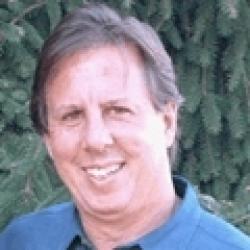
Richard Schwartz, PhD, LMFT
After earning his PhD in Marriage and Family Therapy from Purdue University, Dr. Schwartz began a long association with the Institute for Juvenile Research at the University of Illinois, Chicago, and more recently at The Family Institute at Northwestern University, attaining the status of Associate Professor in both institutions. He is Fellow of the American Association for Marriage and Family Therapy; author of the books, Internal Family Systems Therapy and Introduction to the Internal Family Systems Model; and co-author of Family Therapy: Concepts and Methods, the most widely-read family therapy textbook. He has co-authored the books, The Mosaic Mind: Empowering the Tormented Selves of Child Abuse Survivors and Metaframeworks: Transcending the Models of Family Therapy. He has written more than forty articles on various psychotherapy-related topics and is on the editorial board of four professional journals. As a teacher, Dr. Schwartz is known for his warmth, sensitivity, and clarity as well as his talent for creating a safe and empowering learning environment.
Continuing Education Provider Approvals
 GoodTherapy.org has been approved by NBCC as an Approved Continuing Education Provider, ACEP No. 6380. Programs that do not qualify for NBCC credit are clearly identified. GoodTherapy.org is solely responsible for all aspects of the programs.
 This course has been approved by GoodTherapy.org, as a NAADAC Approved Education Provider, for educational credits. NAADAC Provider #135463. GoodTherapy.org is responsible for all aspects of their programming.
- GoodTherapy.org, LLC is recognized by the New York State Education Department's State Board for Social Work as an approved provider of continuing education for licensed social workers #SW-0395.
- GoodTherapy.org, LLC is recognized by the New York State Education Department's State Board for Mental Health Practitioners as an approved provider of continuing education for licensed marriage and family therapists #MFT-0022 and for licensed mental health counselors #MHC-0031.
Earn CE Credit Hours
Live and homestudy continuing education courses are included withPremium and Pro Membership!
Sign Up Here